
Navigating significant life events while maintaining your professional commitments and personal well-being is a core aspect of a balanced lifestyle. In California, the Family and Medical Leave Act (FMLA) and its state counterpart, the California Family Rights Act (CFRA), provide crucial protections, allowing individuals to take job-protected leave for family and medical reasons without sacrificing their careers. Understanding how to apply for these vital protections is not just a matter of compliance; it’s about empowering yourself to manage personal and family health challenges, welcoming new family members, or caring for ill loved ones, all while safeguarding your lifestyle and professional standing.
This comprehensive guide delves into the practical steps and considerations for applying for FMLA/CFRA in California. We’ll explore the eligibility criteria, the reasons for leave, the application process itself, and essential considerations to ensure your leave supports your lifestyle needs effectively. By demystifying this process, we aim to equip you with the knowledge to confidently access the leave you’re entitled to, ensuring that life’s most challenging or joyous moments can be fully embraced without undue professional stress.
Understanding FMLA and CFRA in California: Pillars of Lifestyle Protection
The availability of job-protected leave is a cornerstone of a supportive lifestyle, particularly when facing unforeseen health issues or expanding your family. In California, employees benefit from both federal FMLA and state-specific CFRA, which often run concurrently, offering robust protection. These acts are designed to help employees balance their work and family responsibilities by allowing them to take reasonable unpaid leave for certain family and medical reasons. It’s about ensuring that a personal crisis or a joyous family event doesn’t force you to choose between your job and your life.
Key Eligibility Requirements for a Secure Lifestyle
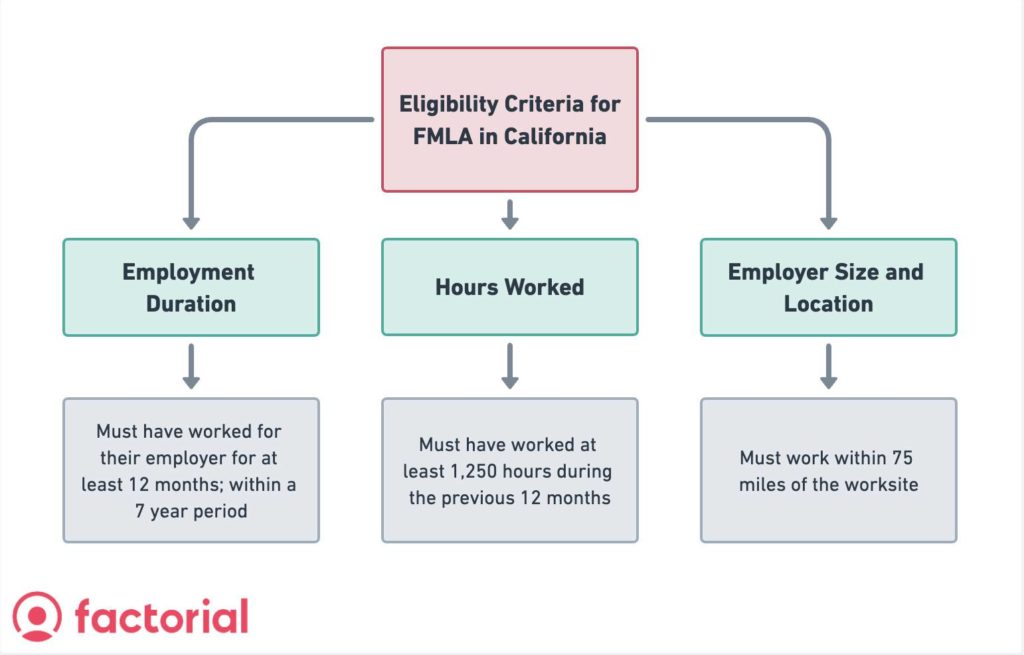
To qualify for FMLA/CFRA leave, both you and your employer must meet specific criteria. Understanding these requirements is the first step toward securing your lifestyle during times of need:
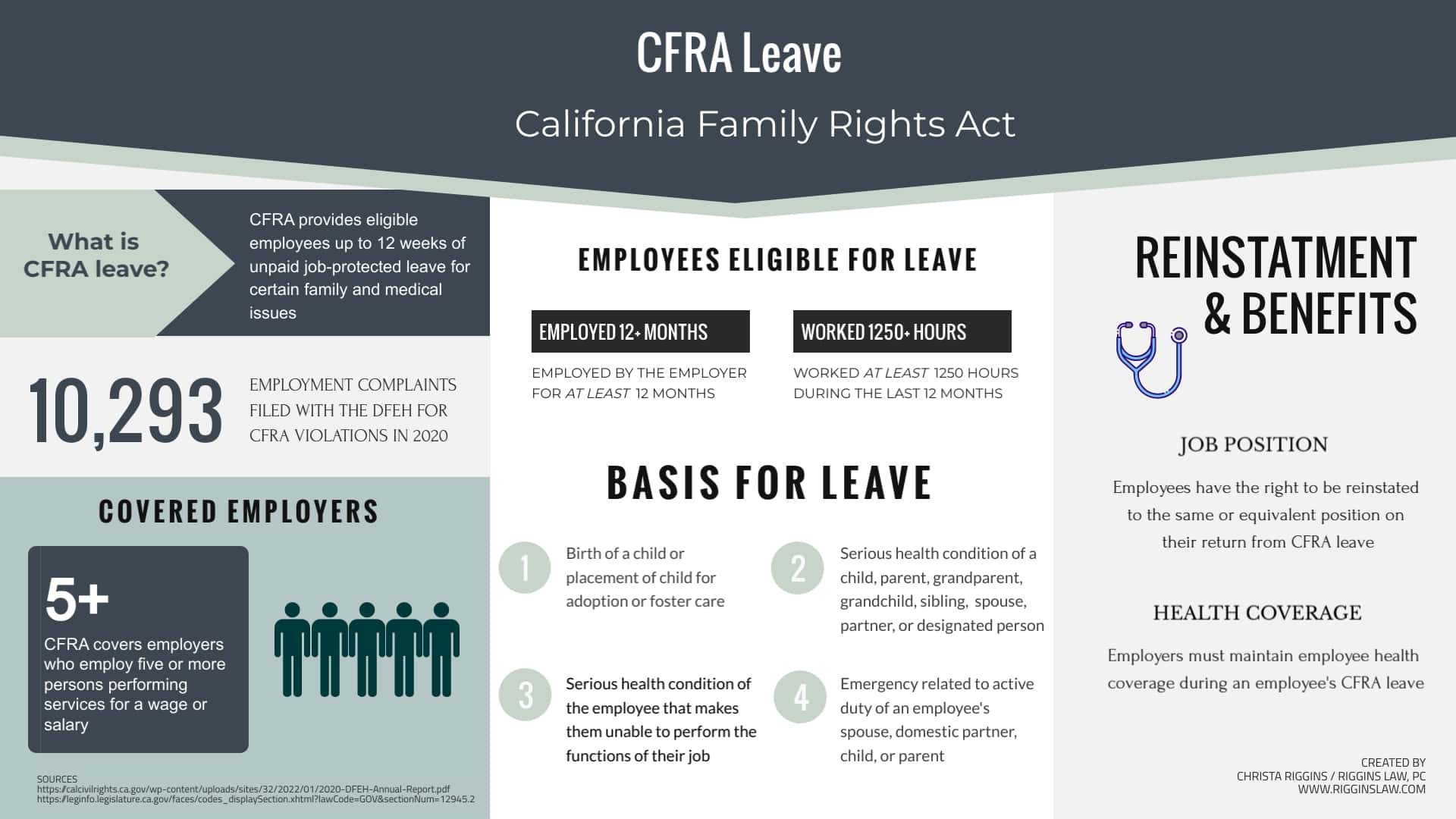
- Employer Eligibility: Your employer must be covered by FMLA/CFRA. This generally means private employers with 50 or more employees within a 75-mile radius, for FMLA. CFRA generally applies to private employers with 5 or more employees. Public agencies (federal, state, and local) and public or private elementary and secondary schools are covered regardless of the number of employees.
- Employee Eligibility: You, as an employee, must meet three conditions:
- You must have worked for the employer for at least 12 months (not necessarily consecutive).
- You must have worked at least 1,250 hours during the 12-month period immediately preceding the start of the leave.
- You must work at a location where the employer has at least 50 employees within 75 miles (for FMLA). CFRA has a broader reach regarding employee count, applying to workplaces with 5 or more employees.
Meeting these criteria establishes your right to request leave, laying the groundwork for maintaining your lifestyle during critical periods. It’s important to note that while FMLA and CFRA are largely similar, California’s CFRA offers some broader protections, for example, it covers registered domestic partners and can extend leave for specific reasons beyond what FMLA covers, making it even more supportive for diverse family structures and needs in the state.
Qualifying Reasons: When Your Lifestyle Needs Support
FMLA and CFRA provide leave for a variety of significant life events, all of which directly impact an individual’s lifestyle. These include:
- Birth of a Child or Placement for Adoption/Foster Care: This allows new parents to bond with a newborn or a newly placed child, a critical period for family integration and lifestyle adjustment.
- Serious Health Condition of the Employee: If you are unable to perform your job functions due to your own serious health condition, FMLA/CFRA provides the necessary time for recovery without job loss.
- Caring for a Family Member with a Serious Health Condition: This covers situations where you need to care for a spouse, child, or parent (FMLA), or a parent, child, spouse, registered domestic partner, grandparent, grandchild, or sibling (CFRA), offering broader family support in California.
- Military Family Leave: This includes “qualifying exigency” leave for certain situations arising from a family member’s military deployment and “servicemember caregiver” leave to care for a covered servicemember with a serious injury or illness.
Each of these reasons underscores the acts’ commitment to supporting your lifestyle, ensuring that you can attend to critical personal or family needs when they arise, rather than being forced to compromise your health or family well-being for work.
Navigating the Application Process: A Step-by-Step Lifestyle Guide
Applying for FMLA/CFRA doesn’t have to be daunting. By following a structured approach, you can ensure a smooth process that effectively secures your job-protected leave, allowing you to focus on the life event at hand. This process is about asserting your right to a balanced lifestyle, even amidst challenging circumstances.
Initial Notification: Setting the Foundation for Your Leave
The first and most critical step is to notify your employer of your need for leave. This should be done as soon as you become aware of the need, providing as much advance notice as possible.
- Advance Notice: If the need for leave is foreseeable (e.g., planned medical treatment, birth of a child), you generally must provide at least 30 days’ notice. If 30 days is not practicable, you must provide notice as soon as possible.
- Verbal or Written: While verbal notice is often sufficient to trigger your employer’s FMLA responsibilities, providing written notice is highly recommended. It creates a clear record and helps prevent misunderstandings. State the reason for your leave and the anticipated duration.
- Contact HR or Your Manager: Typically, you’ll notify your direct manager and/or the Human Resources department. They are responsible for guiding you through the employer-specific procedures.
This initial notification is key to setting the expectation for your absence and initiating the formal application process, thereby safeguarding your lifestyle by making proactive arrangements for your time away from work.
Documentation: Supporting Your Lifestyle Needs
Once you’ve notified your employer, they will likely request documentation to certify your need for leave. This is a standard part of the process and crucial for substantiating your request.
- Medical Certification: For leave due to your own or a family member’s serious health condition, your employer will provide forms for a healthcare provider to complete. These forms confirm the nature of the condition, its duration, and the necessity of leave.
- Other Documentation: For birth, adoption, or foster care, documentation such as a birth certificate, adoption papers, or placement agreements will be required. For military family leave, specific military orders or certifications may be needed.
- Timely Submission: Return all requested documentation promptly. Employers typically give you 15 calendar days to provide the certification, but this can vary. Delays can result in denial or postponement of your leave.
Accurate and timely documentation ensures that your application is processed efficiently, allowing you to transition into your leave period with peace of mind, confident that your lifestyle protections are in place.
Employer Responsibilities: Your Lifestyle, Their Support
Your employer also has responsibilities once you request FMLA/CFRA leave. They must:
- Provide Notice of Eligibility: Within five business days of your request, they must inform you whether you are eligible for FMLA/CFRA leave.
- Provide Notice of Rights and Responsibilities: If eligible, they must provide a written notice detailing your rights and responsibilities under FMLA/CFRA. This includes information about maintaining health benefits, job restoration, and any requirements for paying premiums.
- Designate Leave: Once sufficient information is provided, the employer must designate the leave as FMLA/CFRA-qualifying and notify you of this designation.
- Maintain Benefits: During your leave, your employer must maintain your group health benefits under the same conditions as if you had continued to work.
Understanding these employer responsibilities empowers you to ensure they are upholding their end of the agreement, which is fundamental to maintaining your lifestyle security during your absence.
Maximizing Your Leave: Lifestyle Considerations and Best Practices
Taking FMLA/CFRA leave is more than just an absence from work; it’s an opportunity to address critical personal and family needs. To truly maximize the benefits of this protected time and ensure it supports your lifestyle, strategic planning and effective communication are essential.
Financial Planning: Protecting Your Lifestyle During Leave
While FMLA/CFRA provides job protection, it generally does not provide paid leave. This can significantly impact your financial lifestyle, making proactive planning crucial.
- Paid Leave Integration: Explore whether your employer offers paid sick leave, vacation time, or other paid time off (PTO) that can run concurrently with or supplement your FMLA/CFRA leave. In California, you may also be eligible for wage replacement benefits through the state’s Employment Development Department (EDD) programs, such as Paid Family Leave (PFL) or Disability Insurance (DI).
- Budgeting: Develop a budget for your leave period, accounting for reduced income and any additional expenses related to medical care or childcare.
- Benefit Contributions: Understand how your health and other benefit contributions will be handled during your leave. Your employer must maintain your group health benefits, but you may be responsible for paying your portion of the premiums.
By carefully managing your finances, you can alleviate stress during your leave, allowing you to focus on your recovery or family without the added burden of financial worry, thus protecting your overall lifestyle.
Communication Strategies for a Smooth Transition
Effective communication before, during, and after your leave is vital for a seamless transition and to maintain good professional relationships.
- Pre-Leave Planning: Work with your manager and team to delegate tasks, complete urgent projects, and prepare for your absence. A well-prepared handoff minimizes disruption.
- During Leave: While on leave, you generally are not expected to work. However, establishing clear communication boundaries (e.g., checking email once a week for urgent matters, if agreeable) can prevent misunderstandings.
- Return-to-Work Plan: Discuss your return-to-work date and any potential adjustments (e.g., part-time return, temporary accommodations) with your employer well in advance.
Proactive communication helps manage expectations and fosters a supportive environment, ensuring that your lifestyle adjustments due to leave are accommodated smoothly by your workplace.
Returning to Work: Reintegrating Your Professional Lifestyle
Upon returning from FMLA/CFRA leave, you are entitled to be restored to your original job or an equivalent job with equivalent pay, benefits, and other terms and conditions of employment. This is a critical protection for your professional lifestyle.
- Job Restoration: Be clear about your expected return date and any potential need for reasonable accommodation due to ongoing medical conditions.
- Re-acclimation: Give yourself time to re-acclimate to your work environment. The first few weeks back can be challenging as you catch up on missed work and re-establish routines.
- Post-Leave Follow-up: A brief meeting with your manager to discuss any changes or updates that occurred during your absence can be beneficial for a smooth reintegration.
The right to job restoration ensures that your decision to prioritize family or medical needs during a critical time does not derail your career progression, truly underpinning the “lifestyle” protections offered by FMLA/CFRA.
Beyond the Application: Your Rights and Resources for a Balanced Lifestyle
Securing FMLA/CFRA leave is a significant step, but understanding your ongoing rights and knowing where to turn for additional support are equally important for maintaining a balanced lifestyle in California.
Understanding Job Protection and Health Benefits
The core promise of FMLA/CFRA is job protection. This means your employer cannot terminate your employment simply because you took eligible leave.
- Reinstatement Guarantee: You have the right to be returned to the same or an equivalent position upon your return from leave. This equivalent position must have the same pay, benefits, and working conditions.
- Health Benefit Continuation: Your employer must continue your group health benefits under the same conditions as if you had not taken leave. This is a vital aspect of maintaining your and your family’s well-being.
- No Loss of Seniority: Your seniority and benefits accrued prior to your leave must be preserved. Your leave counts towards the 12-month employment period and 1,250 hours of service required for future FMLA/CFRA eligibility.
These protections are fundamental to your overall lifestyle stability, ensuring that your personal and family responsibilities don’t come at the cost of your career or health security.
Addressing Challenges: When Lifestyle Protections are Tested
While FMLA/CFRA provides strong protections, issues can sometimes arise. It’s crucial to know your rights and options if you believe your FMLA/CFRA rights have been violated.
- Internal Resolution: First, try to resolve any issues directly with your employer, perhaps through the HR department.
- Legal Guidance: If internal resolution fails, or if you suspect unlawful denial or retaliation, consider seeking advice from an employment law attorney.
- Government Agencies: You can file a complaint with the U.S. Department of Labor (for FMLA violations) or the California Civil Rights Department (for CFRA violations). These agencies investigate complaints and can help enforce your rights.
Knowing these avenues of recourse empowers you to stand firm in protecting your lifestyle and employment rights, ensuring that the spirit of FMLA/CFRA is upheld.
Additional Resources for California Residents
California offers additional resources that can complement FMLA/CFRA leave, providing further support for various lifestyle needs:
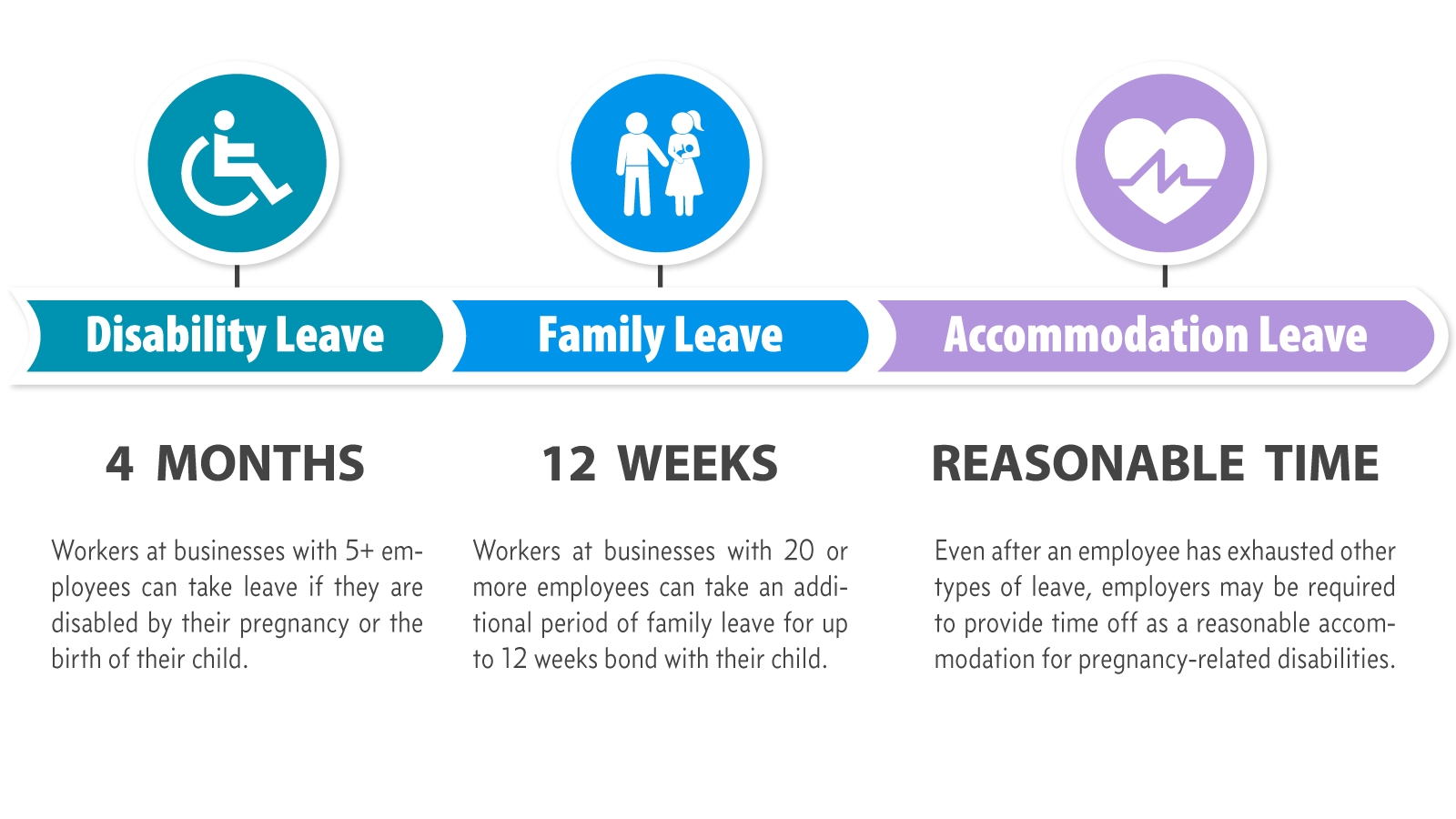
- Paid Family Leave (PFL): Administered by the EDD, PFL provides wage replacement benefits for individuals who need to take time off to care for a seriously ill family member, bond with a new child, or participate in a qualifying event due to a family member’s military deployment. This is separate from FMLA/CFRA’s job protection but can provide much-needed financial relief.
- Disability Insurance (DI): Also through the EDD, DI provides short-term wage replacement benefits to eligible workers who are unable to work due to a non-work-related illness, injury, or pregnancy. This can supplement FMLA/CFRA leave for your own serious health condition.
- California Civil Rights Department (CRD): The CRD enforces California’s civil rights laws, including those related to family and medical leave under CFRA. Their website offers extensive information and resources.
By integrating your understanding of FMLA/CFRA with these additional California programs, you create a robust safety net that fully supports your lifestyle during critical personal and family events. This comprehensive approach ensures that you are not only protected in your job but also have access to financial assistance and legal recourse, allowing you to focus on what truly matters: your health and your family.
LifeOutOfTheBox is a participant in the Amazon Services LLC Associates Program, an affiliate advertising program designed to provide a means for sites to earn advertising fees by advertising and linking to Amazon.com. Amazon, the Amazon logo, AmazonSupply, and the AmazonSupply logo are trademarks of Amazon.com, Inc. or its affiliates. As an Amazon Associate we earn affiliate commissions from qualifying purchases.