
The sprawling expanse of the United States offers a myriad of geographical wonders and cultural experiences, with its two most prominent coasts acting as vibrant bookends. On one side, the golden shores of California beckon with their unique blend of natural beauty and innovative spirit. On the other, the iconic metropolis of New York stands as a beacon of global influence and urban dynamism. For travelers contemplating a journey between these two titans, the fundamental question often arises: just how far is California to New York? This query isn’t merely about a number; it’s an invitation to explore the vast distances, diverse landscapes, and varied modes of travel that connect these pivotal regions, offering a comprehensive understanding for anyone planning a transcontinental adventure.
The Geographical Divide: Unveiling the Distance
Understanding the distance between California and New York is the first step in planning any cross-country itinerary. This isn’t a single, fixed number, but rather a range influenced by the specific starting and ending points within these large states and the chosen method of measurement.
Straight-Line vs. Practical Travel Distance
When we talk about “how far,” there are typically two ways to measure: the straight-line distance (as the crow flies) and the practical travel distance. The straight-line distance, which ignores geographical obstacles and existing infrastructure, offers a theoretical minimum. For instance, the aerial distance between major hubs like Los Angeles, California and New York City, New York is approximately 2,450 miles (3,940 kilometers). This figure serves as a baseline, primarily relevant for air travel.
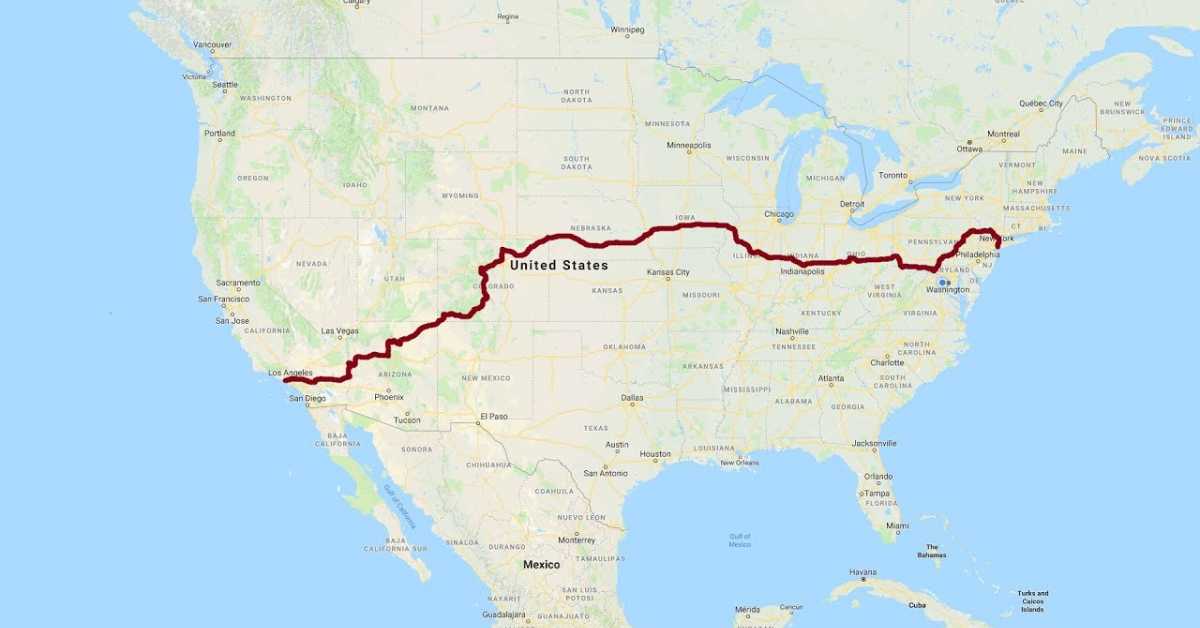
However, for anyone venturing by land, the practical travel distance is significantly longer. Roads and rail lines must navigate mountains, rivers, and cities, adding curves and detours. A typical driving route between Los Angeles and New York City often spans between 2,750 to 3,000 miles (4,425 to 4,830 kilometers), depending on the chosen route and specific destinations within each state. For example, traveling from San Francisco, California to New York City might extend this range slightly, often closer to the 3,000-mile mark. The sheer scale of this distance underscores the epic nature of a cross-country journey.
Key Geographical Markers Along the Route
Traversing the United States from west to East Coast means encountering an incredible array of landscapes. Starting from the West Coast of California, travelers typically cross the vast deserts of Nevada and Utah, then ascend into the majestic Rocky Mountains of Colorado. Beyond the mountains, the journey flattens into the seemingly endless Great Plains stretching across states like Nebraska, Iowa, and Illinois. As one continues eastward, the landscape gradually becomes more undulating through Indiana, Ohio, and Pennsylvania, before reaching the dense urban corridors of New Jersey and finally New York. Each of these geographical shifts presents unique driving conditions, weather patterns, and scenic opportunities, all contributing to the magnitude of the journey.
Modes of Transport: Navigating the Continental Span
The immense distance between California and New York necessitates careful consideration of transportation methods. Each option offers distinct advantages in terms of speed, cost, and the overall travel experience.
Air Travel: The Fastest Connection
Without a doubt, flying is the quickest way to bridge the continental divide. A direct flight from a major California airport like Los Angeles International Airport (LAX) or San Francisco International Airport (SFO) to a New York hub such as JFK International Airport, LaGuardia Airport, or Newark Liberty International Airport typically takes between 5.5 to 6.5 hours. This flight time does not include pre-flight check-in, security, boarding, or post-flight disembarkation and baggage claim, which can easily add another 3-4 hours to the total door-to-door travel time. Despite these additional considerations, air travel remains the most efficient option for those prioritizing speed and minimizing time spent in transit. Multiple airlines offer frequent flights daily, providing flexibility for business travelers and tourists alike.
Road Trip Adventures: Traversing the American Landscape
For many, the idea of a cross-country road trip from California to New York embodies the quintessential American adventure. Covering roughly 2,750 to 3,000 miles, this journey typically requires a minimum of 4-6 days of solid driving, assuming 8-10 hours behind the wheel daily. However, to truly experience the diverse landscapes and attractions along the way, most travelers allocate 7-14 days or even longer. Popular routes include following Interstate 80 through the northern states, or Interstate 40 (which partially traces the historic Route 66) through the southern states, connecting to various interstates leading to New York.
A road trip offers unparalleled flexibility and the opportunity to discover hidden gems, national parks, and vibrant cities like Denver or Chicago en route. It requires careful planning for accommodation, fuel stops, and vehicle maintenance, but rewards travelers with a profound sense of accomplishment and a deeper appreciation for the country’s vastness.
Rail Journeys: A Scenic Alternative

Traveling by train offers a unique perspective on the American landscape, combining comfort with a slower, more reflective pace. Amtrak, the national passenger rail corporation, operates several long-distance routes that connect California to the East Coast. Popular routes like the “California Zephyr” or “Southwest Chief” can take passengers from California to Chicago, where connections can be made to New York City via services like the “Lake Shore Limited.”
The entire journey, including transfers, typically spans 3 to 4 days. While considerably slower than flying, rail travel eliminates the stress of driving and offers amenities like dining cars, observation cars, and sleeping accommodations. It’s an ideal choice for those who value the journey itself, appreciate scenic views, and prefer a more relaxed mode of transit. Similarly, bus services like Greyhound also cover this route, offering a budget-friendly but significantly longer travel time, often exceeding 3 days with multiple stops.
Planning Your Transcontinental Journey
Embarking on a journey from California to [New York](https://lifeoutofthebox.com/new-york] requires careful planning, regardless of the chosen mode of transport. Several factors can significantly impact the experience, from time differences to financial outlay.
Time Zones and Their Impact
Crossing the United States from west to east involves traversing three or four major time zones, depending on your exact route and destination within California (Pacific Time) and New York (Eastern Time). The three-hour difference between California and New York can lead to jet lag, particularly when flying. When heading East Coast, you “lose” time, making early morning arrivals feel even earlier. When driving or taking the train, the transition is more gradual, but coordinating schedules (e.g., booking accommodations, meeting friends) across different time zones remains a key consideration. Adjusting to the new time zone upon arrival is crucial for enjoying the destination fully.
Cost Considerations Across Travel Methods
The financial implications of traveling between California and New York vary widely. Airfare can range from budget-friendly deals (especially when booked in advance or during off-peak seasons) to premium prices for last-minute or business-class tickets. A typical round trip might cost anywhere from $200 to $600+, excluding baggage fees.
A road trip involves significant costs for fuel (which can easily add up to $400-$600+ one-way for a typical vehicle), accommodation along the way (budget motels to mid-range hotels), food, and potential vehicle maintenance. This can easily amount to $1,000 to $2,000+ for a one-way trip, depending on spending habits and duration. Rail travel offers a range of pricing from basic coach seats to private sleeping compartments, with a one-way ticket potentially costing $150 to $700+ depending on the level of service and how far in advance it’s booked. Bus travel is typically the most economical, but also the slowest and often least comfortable. Weighing these costs against the value of time and desired experience is paramount.
Essential Packing and Preparation Tips
Regardless of your chosen travel method, preparing adequately is key. For air travel, adhere to airline baggage restrictions, pack essentials in a carry-on, and consider comfortable clothing for the flight. For a road trip, a comprehensive vehicle check-up is essential, along with emergency supplies, navigation tools (both digital and physical maps), and a curated playlist or audiobooks for entertainment. Pack versatile clothing suitable for different climates you’ll encounter and comfortable walking shoes. For rail travel, layers are advisable as train temperatures can vary, and don’t forget entertainment for the longer journey. Always ensure important documents like ID, tickets, and reservations are easily accessible.
What to Expect: Destinations at Either End
The journey itself is only half the story; the destinations at either end of this transcontinental trek are equally compelling, offering unique experiences that reflect the diverse fabric of the United States.
California: A Land of Diverse Travel Experiences
Upon arriving in California, travelers are greeted by a state renowned for its incredible variety. From the sun-drenched beaches of San Diego and Los Angeles to the iconic Golden Gate Bridge of San Francisco and the political hub of Sacramento, there’s an abundance to explore. Beyond its major cities, California boasts stunning national parks like Yosemite and Redwood, world-class wineries in Napa Valley, and the majestic Sierra Nevada mountains. The state offers everything from outdoor adventures to cultural immersion, cutting-edge cuisine, and vibrant arts scenes. Travelers can indulge in surfing, hiking, theme park thrills, or simply relax by the Pacific Ocean.

New York: The Quintessential East Coast Hub
At the eastern terminus of your journey, New York awaits, particularly New York City, a global epicenter of finance, fashion, art, and entertainment. The city’s five boroughs, especially Manhattan, are home to countless iconic landmarks, including Times Square, Central Park, the Statue of Liberty, and Broadway. Beyond the city’s electric energy, the rest of New York State offers equally rich experiences, from the scenic beauty of the Finger Lakes region and the Adirondack Mountains to the historic charm of upstate towns. Whether you’re seeking world-class museums, culinary delights, or a stroll through historic neighborhoods, New York promises an unforgettable East Coast adventure.
In conclusion, the distance from California to New York is more than just a measurement; it’s a testament to the vastness and diversity of the United States. Whether you choose the speed of air travel, the adventure of a road trip, or the scenic comfort of a train, traversing this distance is an epic journey filled with discovery, offering a profound appreciation for the landscapes and cultures that connect these two iconic regions.
LifeOutOfTheBox is a participant in the Amazon Services LLC Associates Program, an affiliate advertising program designed to provide a means for sites to earn advertising fees by advertising and linking to Amazon.com. Amazon, the Amazon logo, AmazonSupply, and the AmazonSupply logo are trademarks of Amazon.com, Inc. or its affiliates. As an Amazon Associate we earn affiliate commissions from qualifying purchases.