
The Golden State of California is renowned for its diverse landscapes, stretching from pristine coastlines to towering mountain ranges, and from arid deserts to ancient forests. Among its most treasured natural wonders are its national parks, vast expanses of protected land that safeguard unparalleled biodiversity, geological marvels, and significant cultural heritage. For many, the question isn’t just about visiting California, but about immersing oneself in the grandeur of these iconic landmarks. So, how many national parks does this magnificent state boast? The answer is a remarkable nine, each offering a unique window into the Earth’s natural artistry and the forces that shaped it. These nine distinct entities stand as monumental testaments to nature’s power and beauty, inviting exploration and profound appreciation.
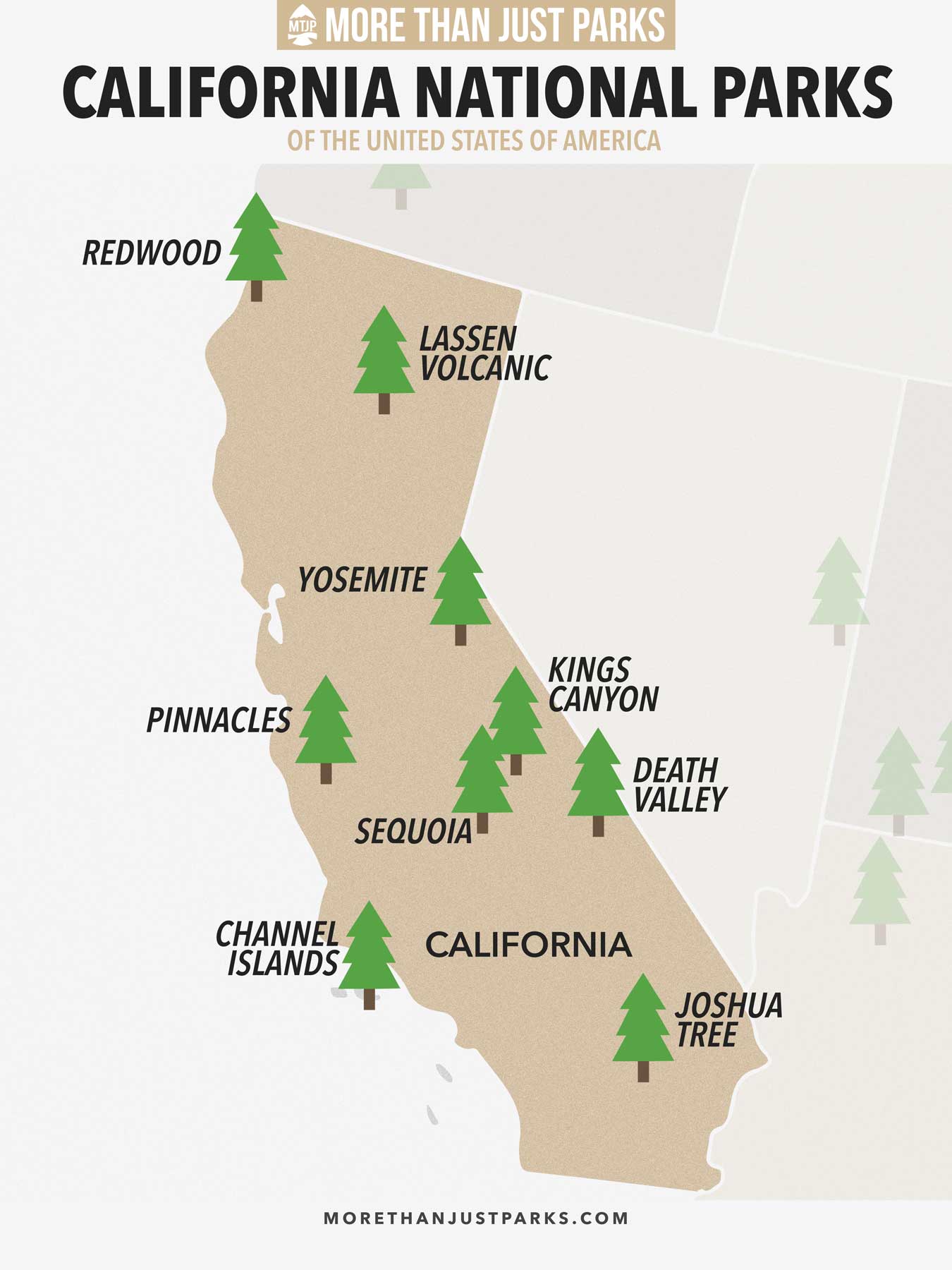
California’s Crown Jewels: A Glimpse into Nine Natural Sanctuaries
Each of California’s nine national parks possesses a distinct character, contributing to the state’s incredible environmental tapestry. From the deepest valleys to the highest peaks, these parks encapsulate a breathtaking spectrum of ecological zones and geological formations.
Yosemite National Park
Perhaps the most famous of California’s national parks, Yosemite National Park is an icon of the American wilderness, celebrated globally for its magnificent granite cliffs, giant sequoia groves, and spectacular waterfalls. Nestled in the Sierra Nevada mountains, the park’s central feature is Yosemite Valley, carved by glaciers over millennia. Landmarks such as El Capitan and Half Dome dominate the skyline, while Yosemite Falls, North America’s highest waterfall, captivates visitors with its thundering cascades. Beyond the valley, vast wilderness areas offer alpine meadows, pristine lakes, and a haven for diverse wildlife. It’s a place where the sheer scale of nature humbles and inspires.
Sequoia National Park & Kings Canyon National Park
Often managed as one contiguous unit, Sequoia National Park and Kings Canyon National Park are home to some of the planet’s most colossal living organisms: the giant sequoia trees. Sequoia National Park is particularly famous for the Giant Forest, which contains the General Sherman Tree, the largest tree on Earth by volume. These ancient giants, with their reddish-brown bark and immense stature, create an ethereal atmosphere unlike anywhere else. Adjacent Kings Canyon National Park plunges into one of North America’s deepest canyons, offering dramatic glacial valleys, roaring rivers, and rugged wilderness. Together, they represent the extremes of elevation, from deep canyons to the towering peak of Mount Whitney, the highest point in the contiguous United States.
Death Valley National Park
Contrasting sharply with the alpine environments, Death Valley National Park stands as a monument to extremes. It is the hottest, driest, and lowest national park in the United States, featuring surreal landscapes sculpted by wind and water. Iconic landmarks include Badwater Basin, the lowest point in North America at 282 feet below sea level, and the vast salt flats that stretch to the horizon. Despite its harsh name, Death Valley teems with surprising life, adapted to its unforgiving climate, and boasts vibrant wildflower blooms in spring following rare rains. Its stark beauty, vibrant sunsets, and incredible geological formations make it a photographers’ paradise and a testament to nature’s resilience.
Joshua Tree National Park
Where the Mojave Desert meets the Colorado Desert, Joshua Tree National Park presents an otherworldly landscape characterized by its distinctive, spiky Joshua Trees and massive, often smooth, rock formations. This park is a wonderland for rock climbers, hikers, and stargazers, offering a unique blend of two desert ecosystems. The juxtaposition of sculptural rocks against the backdrop of the iconic trees creates a truly unique aesthetic. Its desert flora and fauna showcase incredible adaptations to arid conditions, making it a living laboratory for ecological study.
Lassen Volcanic National Park
A captivating testament to the Earth’s fiery interior, Lassen Volcanic National Park is one of the few places in the world where all four types of volcanoes can be found. Its landscape is dotted with bubbling mud pots, fumaroles, and sulfur vents, remnants of its active geological past. The central feature is Mount Lassen Peak, the largest plug dome volcano in the world, which last erupted explosively in 1915. This park offers a fascinating blend of geothermal wonders, serene alpine lakes, and lush forests, making it a unique outdoor classroom for geology enthusiasts.
Redwood National Park
Along California’s rugged northern coast, Redwood National Park (often combined with several State Parks) protects nearly half of the world’s remaining old-growth redwood forests. These coastal redwoods are the tallest trees on Earth, soaring hundreds of feet into the misty canopy. Walking through these ancient groves is an awe-inspiring experience, with sunlight dappling through the colossal trees and a profound sense of history enveloping visitors. The park is a vital sanctuary for endangered species and a living relic of primeval forests, inspiring conservation efforts worldwide.
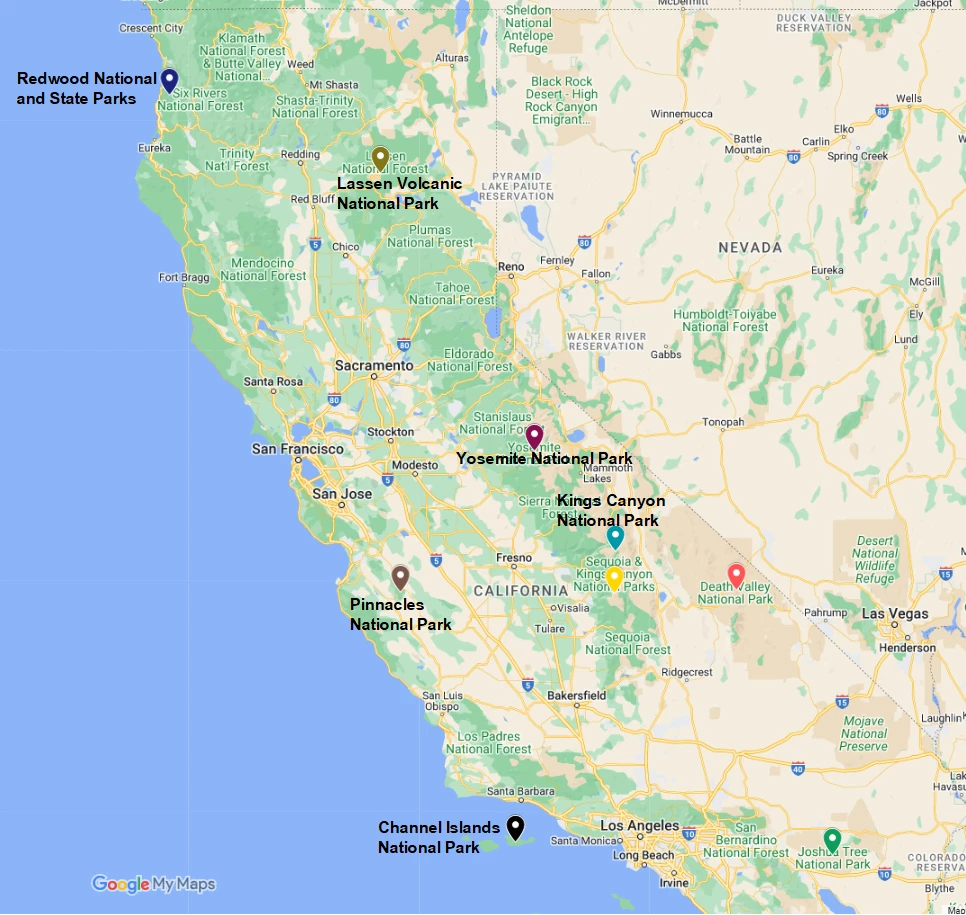
Pinnacles National Park
Pinnacles National Park, located in central California, is a landscape born of ancient volcanoes and dramatic tectonic activity. Its defining features are the towering rock spires, caves, and canyons that dominate the terrain, formed by millions of years of erosion and geological uplift. This park is a critical habitat for the endangered California Condor, North America’s largest land bird, making it a vital landmark for wildlife conservation. Its unique rock formations offer excellent opportunities for rock climbing and cave exploration, revealing a distinct geological narrative.
Channel Islands National Park
Off the coast of Southern California lies Channel Islands National Park, often referred to as “North America’s Galapagos.” This archipelago of five remote islands and their surrounding ocean waters preserves a unique ecosystem with species found nowhere else on Earth. The islands are characterized by their rugged coastlines, sea caves, kelp forests, and endemic flora and fauna. Accessible primarily by boat, the park offers an unparalleled opportunity for kayaking, snorkeling, diving, and observing marine wildlife, from playful seals and dolphins to migrating whales. It’s a pristine natural laboratory, emphasizing the delicate balance of island ecosystems.
The Defining Characteristics of California’s National Park System
Beyond simply counting them, understanding what makes California’s national parks a truly extraordinary collection of landmarks reveals their profound significance. They are not merely destinations but crucial natural and cultural repositories.
Unparalleled Biodiversity and Geological Diversity
California’s national parks collectively encompass an astonishing range of ecological zones, from the lowest desert basins in Death Valley to the highest peaks of the Sierra Nevada in Sequoia and Kings Canyon. This geographical span fosters an incredible biodiversity, protecting countless species of plants and animals, many of which are endemic or endangered. Geologically, the parks offer a masterclass in Earth sciences, displaying everything from ancient glacial carving in Yosemite, to active volcanism in Lassen, to uplifted sea beds in Pinnacles, and the isolated evolution of island systems in the Channel Islands. Each park is a unique landform, telling a distinct story of planetary processes.
Historical and Cultural Significance
These parks are not only natural landmarks but also cultural ones, preserving the history of human interaction with these landscapes. Indigenous peoples have inhabited these lands for millennia, leaving behind a rich legacy that is still being understood and honored. The establishment of these national parks also marks significant milestones in the American conservation movement, highlighting efforts to protect wilderness for future generations. Landmarks within the parks, such as petroglyphs, historic structures, and old wagon roads, serve as tangible links to the past, reminding visitors of the enduring human connection to these powerful places. They represent a collective human endeavor to safeguard the wild and beautiful.
Accessibility to Iconic Natural Wonders
The network of California’s national parks ensures that some of the world’s most iconic natural landmarks are preserved and accessible. Whether it’s standing beneath the world’s tallest trees in Redwood, marveling at the sheer granite walls of Yosemite Valley, or exploring the surreal desert-scapes of Joshua Tree and Death Valley, these parks offer experiences that are both profound and deeply memorable. Their status as national parks grants them a level of protection and recognition that ensures their integrity as irreplaceable landmarks for generations to come.
Preserving California’s Natural Heritage
Visiting California’s national parks is more than just a trip; it’s an immersive encounter with the raw, untamed beauty of our planet. While each park offers its unique set of challenges and wonders, responsible exploration is paramount. Adhering to Leave No Trace principles, respecting wildlife, and staying on marked trails ensures that these precious landmarks remain pristine for everyone. Understanding the specific seasonal conditions for each park, from the brutal summer heat of Death Valley to the snowy winters of Yosemite and Lassen, is crucial for a safe and enriching experience.

Conclusion
California is home to nine extraordinary national parks, each a distinct and vital landmark of natural splendor. From the majestic groves of Sequoia and Redwood to the dramatic valleys of Yosemite and Kings Canyon, the extreme deserts of Death Valley and Joshua Tree, the volcanic landscapes of Lassen, the unique formations of Pinnacles, and the remote ecosystems of the Channel Islands, these protected areas embody the incredible diversity and grandeur of the American West. They are not merely numbers on a map but irreplaceable treasures, inviting continuous discovery, inspiration, and stewardship. Exploring these nine national parks offers a profound journey into the heart of California’s natural legacy, a testament to the enduring power and beauty of our planet’s most cherished landmarks.
LifeOutOfTheBox is a participant in the Amazon Services LLC Associates Program, an affiliate advertising program designed to provide a means for sites to earn advertising fees by advertising and linking to Amazon.com. Amazon, the Amazon logo, AmazonSupply, and the AmazonSupply logo are trademarks of Amazon.com, Inc. or its affiliates. As an Amazon Associate we earn affiliate commissions from qualifying purchases.