
Navigating legal disputes can often feel like traversing a labyrinth without a map. For individuals and small businesses seeking to resolve minor financial disagreements without the complexities and high costs of traditional litigation, the Small Claims Court system in California offers a streamlined and accessible pathway to justice. This guide is designed to demystify the process, providing you with the knowledge and confidence to effectively file and pursue a small claims lawsuit in the Golden State. Whether you’re recovering unpaid rent, seeking compensation for damaged property, or resolving a dispute over a service, understanding the nuances of California’s Small Claims Court is a crucial life skill that can empower you to protect your rights and finances.
Understanding Small Claims Court in California
Small Claims Court in California is a special division within the state’s Superior Court system designed to handle disputes involving relatively small amounts of money. It’s an informal, user-friendly environment where individuals can represent themselves without the need for an attorney, significantly reducing legal costs and simplifying procedures.
What is Small Claims Court?
At its core, Small Claims Court is about providing a fair and efficient forum for resolving minor financial disputes. Unlike other courts, the rules of evidence and procedure are relaxed, making it easier for everyday citizens to present their case. The primary goal is to achieve a swift and equitable resolution between parties, often through a judge’s ruling after hearing both sides of the story. Typical cases involve disagreements over contracts, property damage, unpaid debts, or faulty services. It is important to note that certain types of cases, such as divorce, bankruptcy, or child custody, cannot be heard in Small Claims Court.
Maximum Claim Limits and Jurisdiction
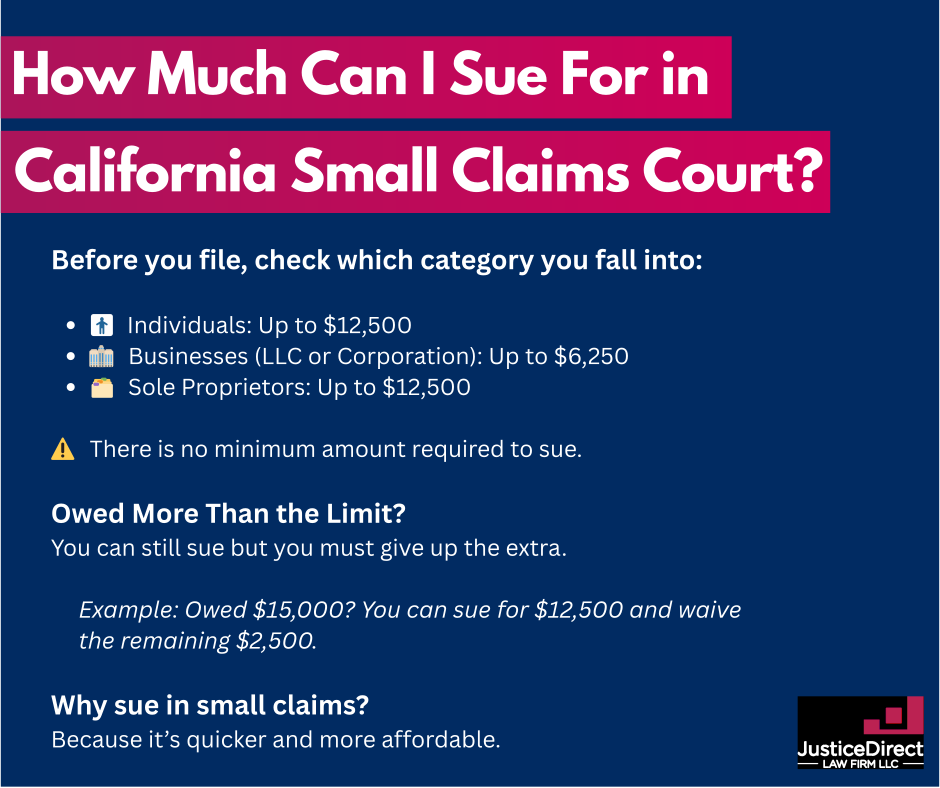
One of the defining features of California Small Claims Court is its monetary limit. As of the current regulations, individuals can sue for up to $12,500. Businesses, on the other hand, are generally limited to suing for up to $5,000. There are specific exceptions, such as claims for bodily injury or property damage arising from a car accident, which might have different limits, or claims against a guarantor. It’s crucial to verify the current limits as they can change.
Jurisdiction refers to the court’s authority to hear a case. In California, you generally must file your lawsuit in the county where the defendant lives, where the business is located, or where the contract was entered into and performed. Understanding these rules is vital to ensure your case is filed in the correct court, preventing delays or even dismissal.
Advantages and Disadvantages
The advantages of Small Claims Court are numerous. Foremost is its simplicity and cost-effectiveness. The filing fees are relatively low, and as attorneys are generally not allowed (though they can offer advice outside court), you save on legal fees. The process is also much faster than a conventional lawsuit, with cases typically resolved within a few months. It’s designed to be accessible, allowing people to resolve disputes that might otherwise be too costly or complex to pursue.
However, there are also disadvantages. The primary one is the limited right to appeal. If you lose your case, you generally cannot appeal the judge’s decision if you are the plaintiff (the person who filed the lawsuit). Only the defendant has a right to appeal. Furthermore, collecting a judgment can sometimes be challenging, even if you win your case, as the court doesn’t enforce the collection for you. You’ll need to take additional steps to collect the money owed.
Preparing Your Case
Success in Small Claims Court often hinges on thorough preparation. While the process is informal, presenting a well-organized and compelling case is paramount.
Gathering Evidence
Evidence is the bedrock of any successful lawsuit. Before you even consider filing, meticulously collect all documents, communications, and other items that support your claim. This might include:
- Contracts or agreements: Written contracts, invoices, receipts, or purchase orders.
- Correspondence: Emails, text messages, letters, or voicemails (if legally recorded) related to the dispute.
- Photographs or videos: Documenting damage, conditions, or relevant events.
- Witness statements: Names and contact information of anyone who saw or heard something relevant.
- Financial records: Bank statements, cancelled checks, or payment histories.
- Repair estimates or appraisals: Demonstrating the cost of damages or value of property.
Organize your evidence chronologically and logically. Having a clear timeline and well-labeled exhibits will make it easier for you and the judge to follow your story.
Identifying the Defendant
Accurately identifying the person or business you are suing is critical. If you sue the wrong party, your case could be dismissed, and you might have to start over.
- For individuals: You need their full legal name and current address.
- For businesses (sole proprietorships or partnerships): You need the legal name of the owner(s) and their business address.
- For corporations or LLCs: You need the exact legal name of the corporation/LLC and the name and address of their registered agent for service of process. This information can usually be found through the California Secretary of State’s website.
If you don’t have this information, you may need to conduct some investigation before filing.
Sending a Demand Letter
Before filing a lawsuit, it’s often a good practice, and sometimes required, to send a formal demand letter to the party you intend to sue. This letter outlines your grievance, states the amount you are seeking, and sets a deadline for payment or resolution before you take legal action.
- Purpose: A demand letter serves multiple functions. It formally notifies the other party of your claim, demonstrates your willingness to resolve the issue amicably, and can sometimes prompt a settlement without going to court.
- Content: Clearly state the facts of the dispute, the damages incurred, the specific amount you are seeking, and a deadline for response. Keep it professional and attach copies of supporting documents (not originals).
- Proof of mailing: Send the letter via certified mail with a return receipt requested, or another method that provides proof of delivery. This provides documentation that the other party received your demand.
A demand letter can often resolve disputes before they escalate to court, saving time and stress for both parties.
The Filing Process
Once you have gathered your evidence and identified the defendant, the next step is to formally initiate the lawsuit by filing your claim with the court.
Choosing the Right Court
As mentioned previously, selecting the correct court is crucial. In California, Small Claims cases are filed in the Superior Court of the county where the defendant resides or where the dispute occurred. For example, if you live in San Diego but the defendant lives in Los Angeles and the dispute arose there, you would likely file in Los Angeles County Superior Court. Each county’s Superior Court has multiple courthouses, so identify the correct branch or district that handles small claims for the specific jurisdiction. The court’s website or clerk’s office can help you determine the appropriate location.
Completing and Filing Forms
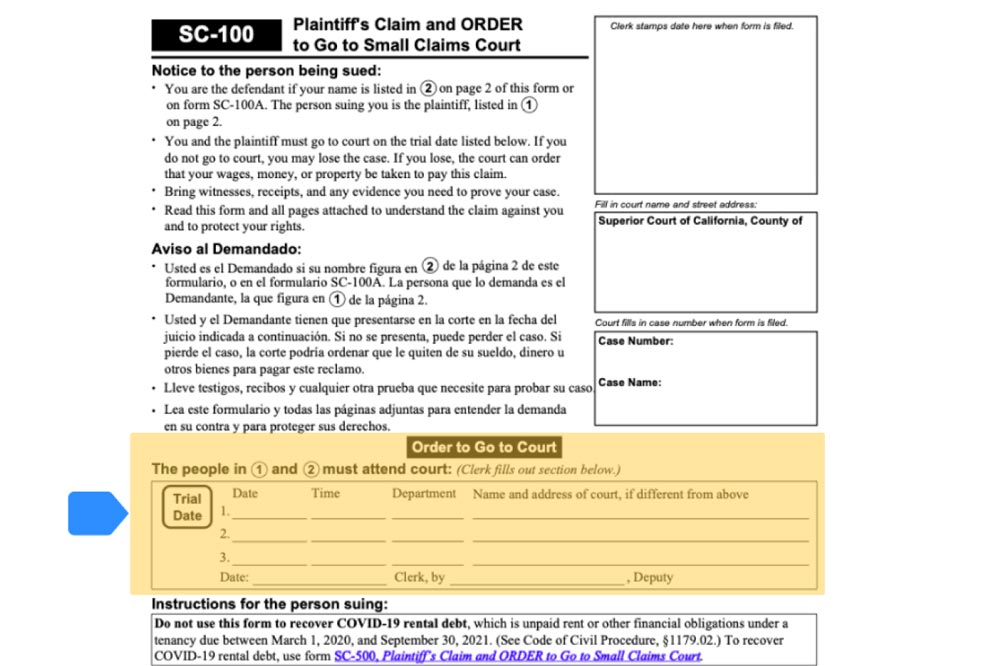
The process begins by filling out a form called “Plaintiff’s Claim and Order to Go to Small Claims Court” (Form SC-100). This form requires you to state:
- Your name (the plaintiff) and the defendant’s name.
- The amount of money you are claiming.
- A brief, clear explanation of why the defendant owes you money.
- The date(s) the incident occurred.
Be concise but thorough in your explanation. Attach any supporting documents you plan to use as evidence. Once completed, you will file this form with the Small Claims Court clerk. You will need to pay a filing fee, which varies based on the amount you are suing for and how many times you’ve filed in the past 12 months. If you cannot afford the fee, you may be able to apply for a fee waiver (Form FW-001). The clerk will then schedule a court date for your hearing.
Serving the Defendant
After filing your claim, the law requires that the defendant be formally notified of the lawsuit. This process is called “service of process.” Proper service is essential; if the defendant is not legally served, your case cannot proceed.
- Who can serve: Someone who is 18 years or older and not a party to the case can serve the defendant. This could be a friend, a family member, a professional process server, or the sheriff’s department.
- Methods of service: The defendant can be served in person, by certified mail (requiring a signed return receipt), or by substituted service (leaving the papers with another adult at their home or business, followed by mailing a copy). Personal service is generally the most reliable.
- Proof of service: After service is completed, the person who served the papers must fill out and sign a “Proof of Service” form (Form SC-104 or SC-104A) and return it to you. You must then file this form with the court to show that the defendant has been properly notified. There are specific deadlines for service before your court date, so ensure this is done in a timely manner.
Navigating the Court Hearing
The court hearing is your opportunity to present your case to the judge. While informal, it’s a serious proceeding where you must articulate your position clearly and concisely.
Presenting Your Case Effectively
Preparation is key to a successful hearing.
- Organize your thoughts: Before the hearing, outline the key points you want to make. Practice what you will say.
- Be concise and clear: Judges have many cases to hear. Present your story logically, sticking to the facts. Avoid emotional outbursts or irrelevant details.
- Present your evidence: Have all your documents, photos, and other evidence organized and ready to show the judge. Offer clear copies, not originals, unless specifically requested. Explain each piece of evidence as you present it.
- Bring witnesses: If you have witnesses, ensure they are present and prepared to testify. Explain to the judge who they are and what information they can provide.
- Listen carefully: Pay attention to what the judge and the defendant say. Respond directly to questions and arguments.
- Be respectful: Always address the judge respectfully. Even if the defendant is antagonistic, maintain a professional demeanor.
What to Expect from the Judge
The judge’s role is to hear both sides of the story and make an impartial decision based on the evidence presented. They may ask questions to clarify points, interrupt to move the process along, or suggest a compromise. The judge will typically listen to your side first, then the defendant’s side, and may review any evidence you both bring. In some cases, the judge might make a decision on the spot. More often, they will “take the matter under submission” and mail their decision (the “Judgment”) to both parties within a few days or weeks.
Potential Outcomes
There are several possible outcomes to a Small Claims Court hearing:
- Judgment for the plaintiff: The judge rules in your favor, awarding you all or part of the money you requested.
- Judgment for the defendant: The judge rules in favor of the defendant, meaning you lose your case and receive no money.
- Dismissal: The case might be dismissed without prejudice (meaning you can refile it later) or with prejudice (meaning you cannot refile it). Dismissals can occur for various reasons, such as improper service or a lack of jurisdiction.
- Settlement: Both parties might agree to a settlement before or during the hearing. If a settlement is reached, it can be formally entered as a court order.
Enforcing the Judgment
Winning your case is a significant step, but it’s not the end of the process if the defendant doesn’t voluntarily pay. The court does not collect the money for you; you are responsible for enforcing the judgment.
Collecting Your Money
If the defendant does not pay the judgment voluntarily, you have several options to collect:
- Writ of Execution: You can obtain a “Writ of Execution” from the court. This is a legal document that allows the sheriff or a marshal to seize the defendant’s property (like bank accounts, wages, or certain physical assets) to satisfy the judgment.
- Wage Garnishment: If the defendant is employed, you can garnish their wages, meaning a portion of their paycheck will be sent directly to you.
- Bank Levy: You can levy the defendant’s bank accounts, seizing funds to cover the judgment.
- Property Lien: You can place a lien on the defendant’s real estate (like a house). If they sell the property, you get paid from the proceeds.
- Debtor’s Examination: If you don’t know where the defendant works or banks, you can ask the court to order a “Debtor’s Examination.” This requires the defendant to appear in court and answer questions under oath about their assets and income.
Collecting a judgment can be complex and time-consuming, sometimes requiring additional fees and legal procedures. It’s important to understand these steps or seek guidance from legal aid resources.

Appeals Process
As previously noted, the right to appeal in California Small Claims Court is limited.
- Defendant’s Right to Appeal: If you are the defendant and you lose your case, you have the right to appeal the judgment to a higher court (the Superior Court appellate division). This involves filing an “Appellant’s Notice of Appeal” (Form SC-135) within 30 days of the judgment. The appeal will be heard by a different judge, and it will be a completely new trial (a “trial de novo”), where both parties present their cases again.
- Plaintiff’s Limited Right to Appeal: If you are the plaintiff and you lose your case, you generally do not have the right to appeal. The judge’s decision is usually final. There are very rare exceptions, such as if the judge made a clerical error or if the judgment was obtained by fraud, but these are highly uncommon.
Navigating a small claims lawsuit in California can be a straightforward and empowering experience if approached with diligence and a clear understanding of the process. While the journey from dispute to resolution requires careful preparation and attention to detail, the accessible nature of Small Claims Court ensures that justice remains within reach for everyone. By understanding your rights and responsibilities, you can effectively advocate for yourself and safeguard your financial well-being.
LifeOutOfTheBox is a participant in the Amazon Services LLC Associates Program, an affiliate advertising program designed to provide a means for sites to earn advertising fees by advertising and linking to Amazon.com. Amazon, the Amazon logo, AmazonSupply, and the AmazonSupply logo are trademarks of Amazon.com, Inc. or its affiliates. As an Amazon Associate we earn affiliate commissions from qualifying purchases.