
Embarking on a career in real estate in the Grand Canyon State offers a unique blend of professional opportunity and an enviable lifestyle. Arizona, with its stunning landscapes, burgeoning cities, and consistent population growth, presents a dynamic market for aspiring real estate professionals. Obtaining your realtor license here isn’t just about gaining a qualification; it’s about unlocking a pathway to a flexible, rewarding career that can profoundly shape your personal and professional lifestyle. This comprehensive guide will walk you through every step of the journey, ensuring you’re well-equipped to navigate the requirements and establish a thriving real estate practice in this vibrant state.

Understanding the Arizona Real Estate Landscape
The real estate market in Arizona is as diverse and attractive as its geography. From bustling urban centers to serene desert communities and lucrative vacation home markets, the state offers myriad opportunities for those with the right skills and licensing.
Why Arizona is a Prime Market for Real Estate Professionals
Arizona’s appeal stems from several factors. Its year-round sunny weather draws retirees and snowbirds, while a booming tech industry and robust job market attract young professionals and families. Cities like Phoenix, the state capital, consistently rank among the fastest-growing metropolitan areas in the U.S. This growth fuels a constant demand for housing, commercial spaces, and investment properties.
The market in Phoenix and its surrounding areas like Scottsdale is particularly competitive and rewarding, with a high concentration of luxury properties, vacation rentals, and new constructions. Further south, Tucson offers a more laid-back yet equally active market, characterized by historic homes, a vibrant arts scene, and proximity to national parks. Beyond these major hubs, communities across the state boast unique real estate niches, from agricultural lands to scenic mountain retreats. This diversity means that a licensed realtor can choose to specialize in areas that align with their interests and desired professional lifestyle, whether it’s working with first-time homebuyers, high-net-worth investors, or vacation property owners.
The Role of a Licensed Realtor in Arizona
A licensed realtor in Arizona serves as an indispensable guide in what is often the most significant financial transaction of a person’s life. Their responsibilities extend far beyond simply showing properties. They act as trusted advisors, negotiators, and project managers, navigating clients through complex legal documents, market trends, and financing options.
Key duties include:
- Market Analysis: Providing clients with up-to-date information on property values, market trends, and neighborhood specifics.
- Client Representation: Representing buyers or sellers, advocating for their best interests, and ensuring legal compliance.
- Negotiation: Skillfully negotiating purchase prices, terms, and contingencies.
- Transaction Management: Coordinating with lenders, inspectors, appraisers, and title companies to ensure a smooth closing.
- Ethical Conduct: Adhering to a strict code of ethics and professional standards set by the Arizona Department of Real Estate (ADRE) and industry associations.
The lifestyle of a realtor is characterized by its dynamic nature. No two days are ever truly the same. It offers significant autonomy and the potential for substantial income, directly linked to effort and skill. This career path can afford you the flexibility to manage your own schedule, build a personal brand, and become a respected professional within your community, all while enjoying the sunny Arizona climate.
Eligibility and Pre-License Requirements
Before you can dream of closing deals in Arizona’s bustling market, you must meet specific eligibility criteria and complete the mandatory pre-license education. These foundational steps ensure that all aspiring realtors possess the basic knowledge and ethical standing required to protect the public and maintain the integrity of the profession.
Meeting the Basic Criteria
The requirements set forth by the Arizona Department of Real Estate (ADRE) are straightforward:
- Age: You must be at least 18 years old at the time of licensure.
- Legal Presence: You must be legally present in the United States.
- Criminal History: While not automatically disqualifying, certain felony convictions or misdemeanor offenses related to real estate or moral turpitude may impact your eligibility. The ADRE conducts a thorough background check, and it’s advisable to disclose any past issues upfront and potentially request a “waiver of criminal conviction” review prior to investing in education and examination.
- Honesty and Integrity: Applicants are expected to demonstrate honesty, truthfulness, and good character.
These criteria serve as the gateway to the real estate profession, ensuring a baseline of maturity and trustworthiness from all licensees.
Embarking on Pre-License Education
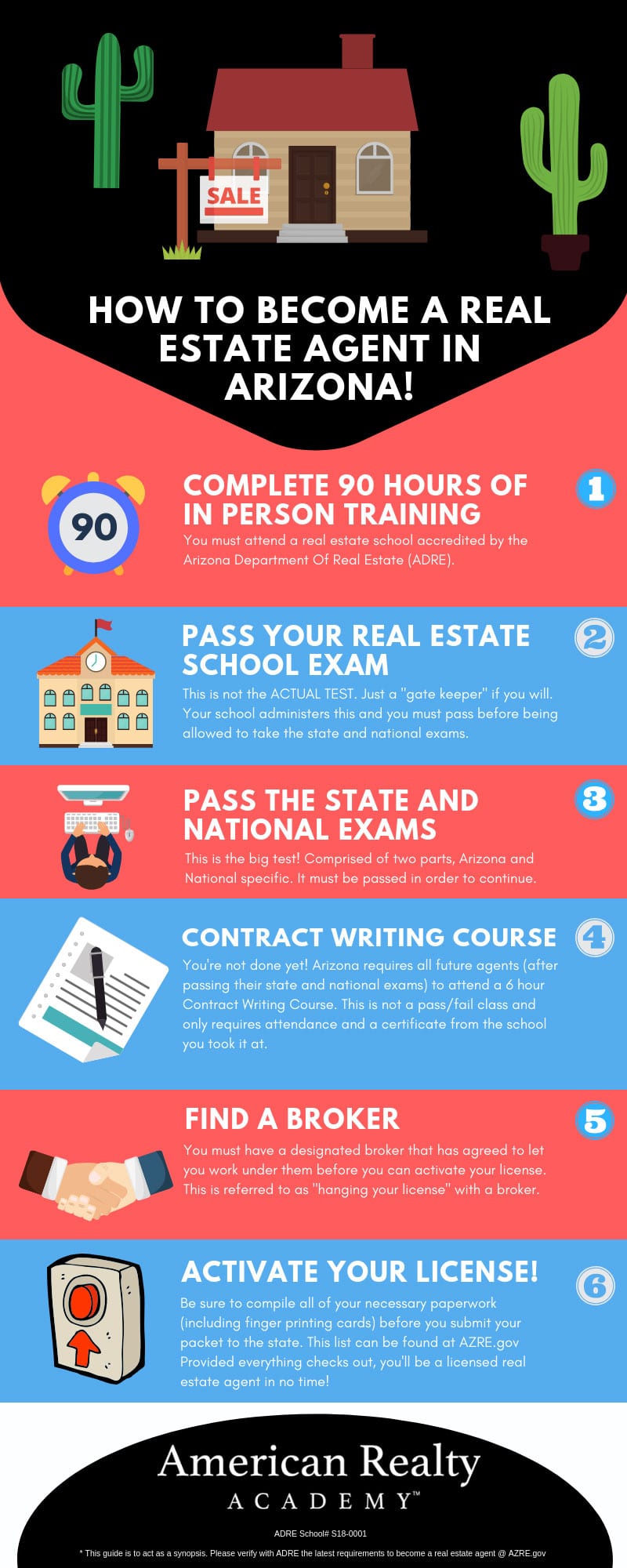
This is perhaps the most significant initial hurdle. Arizona mandates that all prospective real estate salespersons complete a 90-hour pre-license education course from an ADRE-approved real estate school. This comprehensive course is designed to provide you with a fundamental understanding of real estate principles and practices relevant to Arizona law.
The curriculum typically covers a broad range of topics, including:
- Real Estate Law: Agency law, contracts, property ownership, easements, and encumbrances.
- Real Estate Finance: Mortgage types, lending practices, and the escrow process.
- Appraisal and Valuation: Methods for determining property value.
- Property Management: Basic principles of managing rental properties.
- Ethics and Professional Conduct: The realtor’s code of ethics and fair housing laws.
- Arizona State-Specific Laws: Unique aspects of real estate law particular to Arizona.
You can choose between in-person classes, online courses, or a hybrid format, offering flexibility to integrate your studies into your current lifestyle. Many schools offer various schedules, including evenings and weekends, to accommodate working professionals. Upon successful completion of the course, you’ll receive a certificate that is valid for five years for exam eligibility.
The Fingerprint Clearance Card Application
Before you can receive your license, you must obtain an Arizona Fingerprint Clearance Card. This is a separate process managed by the Arizona Department of Public Safety. The purpose is to conduct a thorough background check to ensure public safety and maintain professional standards within the real estate industry.
The process involves:
- Application: Completing an application form for the Fingerprint Clearance Card.
- Fingerprinting: Submitting your fingerprints electronically or via a traditional ink card at an approved vendor.
- Processing: The Arizona Department of Public Safety processes the application and conducts the background check.
It’s highly recommended to apply for your Fingerprint Clearance Card as early as possible in your licensing journey, as processing times can vary and may take several weeks. You must possess a valid Fingerprint Clearance Card to apply for your real estate license.
Conquering the Arizona Real Estate Exam
With your pre-license education complete and your Fingerprint Clearance Card in progress, the next major hurdle is passing the Arizona Real Estate Salesperson Examination. This exam is designed to test your knowledge of real estate principles and state-specific laws, ensuring you’re ready to competently serve the public.
Structure and Content of the State Exam
The Arizona real estate exam is administered by an independent testing service contracted by the ADRE. It typically consists of two main parts:
- National Portion: This section covers general real estate principles and practices that are common across most states, including property ownership, contracts, finance, agency relationships, and appraisal. It usually comprises around 100-110 questions.
- State Portion: This section focuses specifically on Arizona real estate laws, rules, and regulations. It’s crucial to thoroughly understand the nuances of Arizona statutes as this portion can be particularly challenging. It typically has 40-50 questions.
You will be given a set amount of time for each section (e.g., 2.5 hours for national, 1.5 hours for state), totaling approximately 4 hours for the entire exam. A passing score of 75% or higher is generally required for both portions. If you pass one section but fail the other, you may only need to retake the failed section within a specific timeframe.
Effective Study Strategies for Success
Success on the state exam hinges on diligent preparation. Simply completing the 90-hour course isn’t always enough; active study and review are key.
- Review Course Material Thoroughly: Revisit your textbooks, notes, and handouts from your pre-license course. Identify areas where you feel less confident.
- Utilize Practice Exams: Many real estate schools and online platforms offer practice exams. These are invaluable for familiarizing yourself with the format, question types, and time constraints of the actual exam. Pay attention to your incorrect answers to identify knowledge gaps.
- Flashcards and Memorization Aids: Key terms, legal definitions, and specific Arizona laws are excellent candidates for flashcards.
- Study Groups: Collaborating with peers can provide different perspectives and help reinforce understanding of complex topics.
- Focus on Arizona Law: Dedicate extra time to the state-specific regulations, as this is often where candidates struggle. Understanding the specifics of water rights, property taxes, and disclosure requirements in Arizona is critical.
- Get Enough Rest: Ensure you’re well-rested and clear-headed on exam day.
What to Expect on Exam Day
Preparing for exam day logistics can help alleviate stress.
- Scheduling: Once you complete your pre-license education, you’ll receive instructions on how to schedule your exam through the ADRE’s approved testing vendor.
- Identification: Bring one or two forms of valid, government-issued photo identification (e.g., driver’s license, passport).
- Arrival Time: Arrive at the testing center at least 30 minutes before your scheduled appointment to allow for check-in procedures.
- Allowed Items: Be aware of what items are permitted in the testing room. Typically, only a non-programmable calculator is allowed. Personal belongings like phones, bags, and smartwatches are usually prohibited.
- Breaks: You may have a short scheduled break between the national and state portions.
- Results: You will typically receive your exam results immediately after completion. If you pass, you’ll receive instructions on how to proceed with your license application.
Passing the exam is a significant milestone, validating your dedication and readiness to embark on your real estate career.
Applying for Your Arizona Real Estate License
After successfully passing the state exam, you’re on the home stretch! The final step in becoming a licensed realtor in Arizona involves submitting your application to the Arizona Department of Real Estate (ADRE). This process ties together all your efforts and formally grants you the authority to practice real estate.
Submitting Your Application to ADRE
Once you’ve passed both sections of the real estate exam, you have one year from the date of your exam to apply for your license. It’s crucial not to delay, as exceeding this timeframe will require you to retake the exam.
The application package to the ADRE typically requires:
- Completed Application Form: Ensure all sections are filled out accurately and completely.
- Proof of Pre-License Education: Your original certificate of completion for the 90-hour course.
- Original Exam Score Report: Proof of passing both sections of the state exam.
- Valid Fingerprint Clearance Card: A copy of your active Fingerprint Clearance Card.
- Disclosure Documents: Any required disclosures regarding criminal history or disciplinary actions, if applicable.
- Application Fee: The non-refundable fee for your salesperson license, which can vary. Check the ADRE website for current fee schedules.
You can typically submit your application online through the ADRE’s portal, or by mail. Double-check all requirements on the official ADRE website to ensure you have the most up-to-date information and submit a complete package, preventing delays.
The Post-Licensing Education Requirement
The learning doesn’t stop once you get your license. Arizona recognizes the importance of continued professional development. As a new licensee, you are required to complete a 6-hour contract writing course within your first year of licensure. This course focuses specifically on the practical aspects of drafting and understanding real estate contracts in Arizona, further enhancing your ability to protect clients and ensure smooth transactions. This is separate from the continuing education (CE) requirements for license renewal, which typically involve 24 hours of approved CE courses every two years.
Finding a Sponsoring Broker
One of the most critical steps after getting your license (or even while applying) is to associate with a licensed real estate broker. In Arizona, a real estate salesperson cannot legally practice independently; they must operate under the supervision of a designated broker.
Choosing the right brokerage is paramount to your early career success and overall professional lifestyle. Consider factors such as:
- Training and Mentorship: Many brokerages offer extensive training programs, mentorship opportunities, and coaching for new agents.
- Commission Splits: Understand the financial model and how commissions are shared between you and the brokerage.
- Company Culture: Look for a brokerage whose values align with yours and where you feel supported.
- Support Services: What resources do they provide (administrative support, marketing tools, office space, technology)?
- Specialization: If you plan to specialize in a particular niche (e.g., luxury, commercial, rural), find a brokerage with expertise in that area.
- Location and Market Reach: Does the brokerage have a strong presence in the areas where you want to work?
Interviewing with several brokers is highly recommended. Ask questions, meet team members, and ensure the environment fosters your growth and allows you to build the kind of professional lifestyle you envision.
Building a Successful Real Estate Career in Arizona
Obtaining your license is just the beginning. The real journey of a successful real estate professional in Arizona involves continuous growth, strategic networking, and a deep appreciation for the unique opportunities the state offers.
Continuous Learning and Professional Development
The real estate market is constantly evolving, driven by economic shifts, technological advancements, and legislative changes. To remain competitive and provide the best service to your clients, continuous learning is non-negotiable.
- Continuing Education (CE): Beyond the initial 6-hour contract writing course, you’ll need to complete 24 hours of approved CE courses every two years to renew your license. These courses cover a variety of topics, from legal updates to ethics, agency law, and property management.
- Industry Designations: Consider pursuing professional designations to enhance your expertise and credibility. Examples include:
- GRI (Graduate, REALTOR® Institute): A foundational designation indicating advanced knowledge in real estate subjects.
- CRS (Certified Residential Specialist): The highest credential awarded to residential sales agents, recognizing experience and education.
- ABR (Accredited Buyer’s Representative): Focuses on working directly with buyer-clients at every stage of the home-buying process.
- SRES (Seniors Real Estate Specialist): Specializes in meeting the needs of clients aged 50 and over.
- MRP (Military Relocation Professional): Helps military service members and veterans find housing that best suits their needs.
- Market Trends: Stay abreast of local, regional, and national market trends. Subscribe to industry publications, attend webinars, and analyze data to better advise your clients.
Investing in your education directly translates to better service, increased client trust, and a more fulfilling professional life.
Networking and Community Engagement
Real estate is fundamentally a people business. Building a robust network and actively engaging with your community are cornerstones of long-term success.
- Join Professional Associations: Become a member of the Arizona Association of REALTORS® and your local board (e.g., Phoenix REALTORS®, Tucson Association of REALTORS®). These organizations provide valuable resources, networking events, legislative advocacy, and access to the Multiple Listing Service (MLS).
- Attend Industry Events: Participate in conferences, workshops, and local real estate meetups. These are excellent opportunities to learn from seasoned professionals, forge partnerships, and stay informed.
- Engage with Your Community: Volunteer for local charities, join local business associations, or sponsor community events. Becoming a visible and respected figure in your community not only generates goodwill but also positions you as a local expert and potential referral source.
- Build Relationships with Ancillary Professionals: Cultivate strong relationships with lenders, home inspectors, appraisers, title officers, and contractors. These connections are vital for providing comprehensive service to your clients and can lead to reciprocal referrals.
A strong network provides support, referral opportunities, and a sense of belonging within your professional community, enriching your overall lifestyle.

Embracing the Arizona Lifestyle as a Realtor
One of the most attractive aspects of a real estate career in Arizona is the ability to integrate your professional life with the state’s desirable lifestyle. The flexibility inherent in the profession means you can largely set your own schedule, allowing you to enjoy Arizona’s abundant sunshine, outdoor activities, and cultural offerings.
Imagine starting your day with a hike in the Phoenix Mountain Preserve, spending your afternoon showing properties in Scottsdale’s vibrant market, and ending it with a sunset golf game or an evening enjoying Tucson’s renowned culinary scene. A career in Arizona real estate offers:
- Work-Life Balance: The ability to tailor your work hours to fit your personal commitments and leisure pursuits.
- Financial Independence: The potential for a high income that rewards hard work and strategic thinking.
- Personal Growth: Continuously developing negotiation skills, market knowledge, and client relationship expertise.
- Community Connection: Becoming an integral part of your chosen community, helping individuals and families achieve their homeownership dreams.
Becoming a licensed realtor in Arizona is more than just obtaining a credential; it’s about investing in a professional lifestyle that is both challenging and profoundly rewarding. By diligently following these steps and embracing continuous development, you can carve out a successful and fulfilling career in one of the nation’s most dynamic real estate markets.
LifeOutOfTheBox is a participant in the Amazon Services LLC Associates Program, an affiliate advertising program designed to provide a means for sites to earn advertising fees by advertising and linking to Amazon.com. Amazon, the Amazon logo, AmazonSupply, and the AmazonSupply logo are trademarks of Amazon.com, Inc. or its affiliates. As an Amazon Associate we earn affiliate commissions from qualifying purchases.