
Navigating the administrative processes of life can often feel daunting, especially when it concerns vital documents like a birth certificate. Whether you’re planning international travel, applying for a passport, registering for school, or simply updating personal records, a certified copy of your birth certificate is an indispensable document. For those residing in or born in California, understanding the correct procedures to request a new birth certificate is crucial. This guide offers a professional, insightful, and engaging walkthrough, ensuring you have all the information needed to secure this foundational document efficiently and without unnecessary delays.

A birth certificate serves as the primary legal record of an individual’s birth, establishing identity, citizenship, and parentage. Its importance transcends mere paperwork, acting as a gateway to various rights and services. From confirming eligibility for social security benefits to obtaining a driver’s license or even proving your legal age, a valid birth certificate is a cornerstone of personal administration. Mastering the request process in California ensures that your lifestyle, whether it involves frequent travel, establishing new roots, or simply managing daily affairs, remains unhindered by bureaucratic hurdles.
Understanding the Importance of Your Birth Certificate
Your birth certificate is more than just a piece of paper; it’s a fundamental legal document that verifies your existence and identity. Its utility spans across virtually every significant life event, making its accessibility paramount.
Why You Might Need a New Copy
There are numerous reasons why an individual might need to request a new copy of their birth certificate. Common scenarios include:
- Travel Documents: A certified birth certificate is almost always required when applying for a U.S. passport, especially for first-time applicants or renewals where the previous passport is unavailable. This is crucial for anyone planning international travel, whether for leisure, business, or family visits.
- Proof of Identity and Age: It’s a primary document for verifying identity and age for various purposes, such as enrolling in school, applying for employment, or establishing eligibility for certain programs.
- Government Services: Obtaining a Social Security card, applying for a driver’s license or state ID, and registering for Medicare or other benefits often necessitate a birth certificate.
- Legal and Financial Matters: It’s essential for marriage applications, adoption proceedings, probate issues, and sometimes even for opening bank accounts or securing loans.
- Damaged, Lost, or Stolen Original: Life happens, and original documents can be misplaced, destroyed, or stolen. Replacing a lost or damaged certificate is a common reason for a request.
Having an accessible and valid copy of your birth certificate helps streamline these processes, contributing to a smoother and less stressful lifestyle.
Key Information on a California Birth Certificate
A standard California birth certificate typically contains critical identifying information. Understanding what details are recorded can help ensure accuracy when you make a request. This includes:
- Registrant’s Information: Full legal name at birth, date of birth, place of birth (city and county), sex, and sometimes birth weight.
- Parents’ Information: Full names of both parents (mother’s maiden name), their birthplaces, and sometimes their ages and occupations at the time of birth.
- Registration Details: The date the birth was registered, the certificate number, and the signature of the attending physician or midwife.
It’s important to note that California offers two types of certified copies: an “Authorized Certified Copy” and an “Informational Certified Copy.” The authorized copy displays all birth information and is required for most legal purposes. The informational copy, while identical in content, is marked “INFORMATIONAL, NOT A VALID DOCUMENT TO ESTABLISH IDENTITY” and cannot be used for legal purposes. When requesting, ensure you select the appropriate type based on your needs.
Eligibility and Required Documentation
Before embarking on the application process, it’s vital to confirm your eligibility to receive an authorized certified copy and to gather all necessary supporting documentation. California maintains strict rules regarding who can obtain these sensitive records to protect privacy.
Who Can Request a Birth Certificate?
To obtain an authorized certified copy of a birth certificate in California, you must be an authorized individual. These typically include:
- The Registrant: The person named on the birth certificate, provided they are 18 years of age or older.
- A Parent or Legal Guardian: Whose name appears on the birth certificate.
- A Child, Grandparent, Grandchild, Sibling, Spouse, or Domestic Partner: Of the registrant, with proof of relationship.
- A Party Entitled by Order of a Court of Law: Requiring the certificate.
- A Member of a Law Enforcement Agency or a Representative of Another Governmental Agency: Conducted as part of official duties.
- An Attorney Representing the Registrant or the Registrant’s Estate: Or an authorized agent such as a paralegal for the attorney.
- A Funeral Director: Acting on behalf of the family.
If you do not fall into one of these categories, you may only be eligible for an “Informational Certified Copy.”
Essential Documents for Your Application
Regardless of whether you apply in person or by mail, certain documents are consistently required to process your request:
- Completed Application Form: This is the primary document detailing the birth record you are seeking. It must be filled out accurately and completely.
- Valid Photo Identification: A clear, legible photocopy of your government-issued photo ID is essential. Acceptable IDs include a U.S. driver’s license or state ID card, a U.S. passport, or a military ID card. If you do not have one of these, two alternative forms of ID may be accepted, such as a utility bill, vehicle registration, or an insurance card.
- Proof of Relationship (if applicable): If you are not the registrant, you must provide documentation proving your relationship to the person named on the certificate (e.g., your own birth certificate to prove parentage, a marriage certificate to prove spousal relationship).
- Notarized Sworn Statement (for mail applications): This is a critical requirement for mail-in requests for authorized copies. You must sign a sworn statement, under penalty of perjury, affirming your identity and eligibility, and have it notarized. This statement is typically part of the application form itself.
Gathering these documents beforehand will significantly expedite your application process and prevent potential delays.
Step-by-Step Guide to Applying in California
Requesting a new birth certificate in California can be done through several channels, each with its own advantages regarding convenience and processing time. The primary methods are in-person, by mail, and through approved third-party services.
Option 1: Applying In Person
For the quickest turnaround, applying in person is often the best choice. This method allows you to verify documents, clarify any questions, and often receive the certificate on the same day.
- Locate the Correct Office: Birth certificates are managed at the county level where the birth occurred, or through the California Department of Public Health (CDPH – Vital Records Branch) for statewide records. For county-specific records, contact the County Registrar-Recorder/County Clerk’s office in the county of birth. For example, if born in Los Angeles County, you would visit the Los Angeles County Registrar-Recorder/County Clerk.
- Complete the Application Form: Forms are usually available online for download or at the office. Fill it out accurately before or during your visit.
- Present ID and Pay Fees: Bring your valid photo ID and be prepared to pay the required fees. Payment methods typically include cash, check, money order, or credit/debit card, though this can vary by county.
- Receive Your Certificate: If all documents are in order and you meet eligibility, you can often receive your authorized certified copy on the spot or within a few days.
Option 2: Applying By Mail
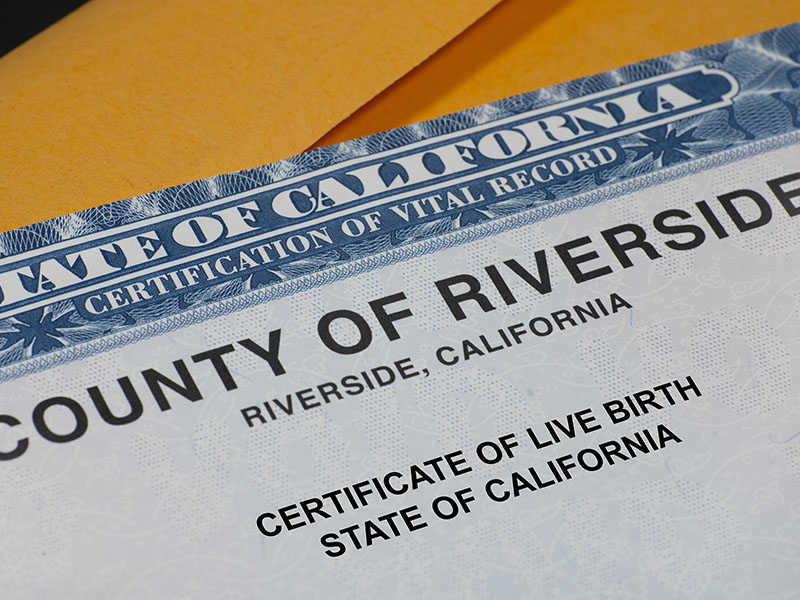
Applying by mail offers convenience for those who cannot visit an office in person but generally involves longer processing times.
- Download the Application Form: Obtain the correct application form from the California Department of Public Health (CDPH) website or the relevant county’s vital records website.
- Complete Accurately: Fill out the form meticulously, providing all requested information.
- Include Notarized Sworn Statement: This is critical. For an authorized copy, you must complete and sign the sworn statement on the application form and have it notarized by a public notary.
- Attach Required Documents: Include a clear photocopy of your valid government-issued photo ID and any necessary proof of relationship documents.
- Include Payment: Enclose a check or money order payable to the appropriate agency (CDPH or the specific county’s Registrar-Recorder/County Clerk) for the correct fee. Do not send cash through the mail.
- Mail to the Appropriate Office: Send your complete application packet to either the CDPH – Vital Records Branch or the specific county vital records office where the birth occurred.
Option 3: Online or Third-Party Services
For added convenience, several government-approved third-party vendors are authorized to process birth certificate requests online.
- Official Vendors: The California Department of Public Health website often lists authorized online vendors. These services streamline the application process, but typically charge additional processing fees.
- Process: You will fill out an online form, upload scanned copies of your ID and sworn statement (which may need to be notarized and then uploaded), and pay via credit card. The vendor then submits your request to the appropriate vital records office.
- Caution: Be wary of unofficial or scam websites. Always ensure you are using a state-approved vendor or applying directly through official government channels to protect your personal information and avoid unnecessary costs.
Fees, Processing Times, and Common Pitfalls
Understanding the financial aspects, anticipated wait times, and potential obstacles can help manage expectations and ensure a smooth request process.
Understanding the Costs
The fees for birth certificates in California are standardized by state law, though slight variations might occur with expedited services or third-party vendors.
- Standard Fee: As of the latest updates, the fee for a certified copy of a birth certificate is typically around $29 per copy. It’s always advisable to check the current fee on the official CDPH or county vital records website before submitting your application.
- Payment Methods: In-person offices generally accept cash, credit/debit cards, checks, and money orders. Mail-in applications usually require a check or money order. Online services will require credit/debit card payments.
- Additional Fees: Third-party online services will add their own processing fees, which can significantly increase the total cost. Expedited processing for in-person requests might also incur a small additional charge.
What to Expect: Processing Times
Processing times can vary significantly based on the method of application and current demand.
- In-Person: Often the fastest, with certificates sometimes issued the same day or within a few business days, depending on the county and time of visit.
- By Mail: This method typically has the longest wait times, ranging from a few weeks to several months, especially during peak periods or due to mail service delays. It’s crucial to factor this in if you have an urgent need.
- Online/Third-Party: Can be quicker than mail, often delivering within 1-3 weeks, as these services usually have more efficient submission processes. However, the actual time taken by the vital records office remains a factor.
It is always recommended to apply well in advance of any deadlines you might have, such as passport application dates or travel plans.
Avoiding Delays and Rejections
Several common errors can lead to delays or the outright rejection of your birth certificate request:
- Incomplete Application Forms: Failing to fill out all required fields accurately is a frequent cause of delay. Double-check every section.
- Missing or Invalid Identification: Submitting an expired, unclear, or unaccepted form of ID will cause rejection. Ensure your ID photocopy is legible.
- Incorrect Fees or Payment Method: Sending the wrong amount or an unaccepted payment type will halt the process. Always verify current fees and acceptable payment methods.
- Non-Notarized Sworn Statement: For mail-in authorized copy requests, a sworn statement that is not properly notarized is a guaranteed reason for rejection.
- Applying to the Wrong Office: If the birth occurred in a different county than where you apply, or if you send it to the wrong state agency, your application will be returned. Confirm the correct jurisdiction.
Careful attention to these details can save you time and frustration, ensuring a smoother administrative experience.
Special Circumstances and Amendments
Life events sometimes necessitate changes or specific handling of birth records. California provides processes for amending certificates and accessing records under special conditions.
Amending a Birth Certificate
Mistakes happen, or life circumstances change, requiring an amendment to your birth certificate. Common reasons for amendments include:
- Correcting Errors: Typographical errors in names, dates, or places can be corrected through an amendment process. This usually requires submitting an Affidavit to Amend a Record, along with supporting documentation that proves the correct information.
- Legal Name Changes: If an individual legally changes their name (e.g., through marriage, divorce, or court order), they can apply to have their birth certificate updated to reflect the new name.
- Gender Marker Changes: California law allows for individuals to petition to change the gender marker on their birth certificate. This typically requires a court order and/or a physician’s affidavit.
- Adoption Records: When a child is adopted, a new birth certificate is issued reflecting the adoptive parents. The original birth certificate is sealed and can only be accessed by court order.
Each of these processes involves specific forms, supporting documentation, and often court involvement. It’s best to consult the California Department of Public Health website or a legal professional for detailed guidance on amendments.

Accessing Restricted Certificates
While most birth certificates are accessible to authorized individuals, some records are sealed or restricted to protect privacy.
- Adoption Records: Original birth certificates for adopted individuals are sealed and confidential. Access typically requires a court order or, in some cases, can be requested by the adopted person upon reaching adulthood, though this often involves specific procedures to balance privacy with the right to know one’s origins.
- Confidentiality for Specific Cases: In very rare instances, a birth record might be sealed by court order for specific legal reasons. Accessing these requires direct court intervention.
For any complex situation involving amendments or restricted access, engaging with legal counsel or directly contacting the California Department of Public Health Vital Records Branch is the most prudent course of action.
Requesting a new birth certificate in California is a straightforward process once you understand the requirements and options available. By carefully following the guidelines, gathering all necessary documentation, and choosing the most appropriate application method, you can efficiently secure this vital document. A valid birth certificate is a cornerstone for numerous life events, from establishing residency in a new city to embarking on international adventures, ensuring your lifestyle remains supported by essential legal documentation.
LifeOutOfTheBox is a participant in the Amazon Services LLC Associates Program, an affiliate advertising program designed to provide a means for sites to earn advertising fees by advertising and linking to Amazon.com. Amazon, the Amazon logo, AmazonSupply, and the AmazonSupply logo are trademarks of Amazon.com, Inc. or its affiliates. As an Amazon Associate we earn affiliate commissions from qualifying purchases.