
The history of California is inextricably linked to a single, pivotal moment: the discovery of gold. This event did not just reshape a vast, sparsely populated territory; it ignited a global phenomenon, triggering one of the most significant migrations in human history and fundamentally altering the trajectory of the United States. Understanding when this epoch-making discovery occurred is to grasp the genesis of modern California, a state whose identity was forged in the crucible of ambition, hardship, and the glittering promise of instant wealth. The exact date, January 24, 1848, marks the beginning of an era that would define the American West and contribute immensely to the nation’s economic and cultural tapestry, transforming a quiet mill site into the epicenter of a worldwide frenzy.

The Fateful Day at Sutter’s Mill
The discovery of gold in California was not a planned expedition but rather an accidental find during a routine construction project. This serendipitous event occurred in a remote, idyllic setting that would soon become world-renowned.
James W. Marshall’s Serendipitous Find
The man credited with the initial discovery was James W. Marshall, a carpenter hired by John Sutter to build a sawmill. On the morning of January 24, 1848, Marshall was inspecting the tailrace of the newly constructed Sutter’s Mill, located on the South Fork of the American River near present-day Coloma. He was checking for debris that might impede the water flow when he noticed several glittering flakes in the shallow stream bed. Curious, he gathered a few pieces and, after a rudimentary test (hammering them to confirm malleability), suspected they might be gold. Though initially cautious, the weight and luster of the metal convinced him that he had stumbled upon something extraordinary. This unassuming moment, witnessed by only a handful of workers, was the spark that would ignite the California Gold Rush. Marshall’s find was a pivotal instance of human serendipity intersecting with vast natural resources, forever altering the landscape and destiny of the region.
Sutter’s Fort and Its Ambitions
John Sutter, a Swiss immigrant, was an ambitious entrepreneur who had established a vast agricultural and commercial empire near the confluence of the American and Sacramento Rivers, known as Sutter’s Fort. His vision was to create a self-sufficient domain, a “New Helvetia,” in the then-Mexican territory of California. The sawmill project, overseen by Marshall, was crucial to his plans, intended to provide lumber for his growing settlement and to support trade. When Marshall first brought the glittering flakes to Sutter, the latter, a shrewd businessman, immediately understood the immense implications. However, he also recognized the potential for chaos and disruption to his meticulously built empire. Sutter’s initial reaction was to attempt to keep the discovery a secret, fearing that a gold rush would decimate his workforce and destroy his agricultural enterprises. His ambition was land and development, not the frenzied search for precious metals. Ironically, the very resource that promised untold riches would ultimately lead to the ruin of Sutter’s carefully constructed world, as his laborers abandoned him en masse for the goldfields.
The Initial Reaction and Secrecy
Following Marshall’s discovery, Sutter and his trusted men conducted further tests to confirm the authenticity of the gold. These tests, including boiling the metal in lye and hammering it, consistently indicated its purity. Aware of the potentially catastrophic consequences a public announcement could bring to his agricultural enterprises, Sutter attempted to enforce secrecy among his workers. He made them swear an oath of silence for at least six weeks, hoping to complete his mill and secure his land claims before the news inevitably broke. For a short period, the secret held, confined primarily to the workers at Sutter’s Mill and Sutter’s Fort. However, such a monumental secret was destined to leak. Word began to spread through whispers and casual observations, particularly when workers began using gold dust to pay for goods. The vastness of the discovery, coupled with human nature, ensured that secrecy was an impossible endeavor, laying the groundwork for a societal explosion.
The Spark Ignites: From Local Rumor to Global Phenomenon
Despite attempts at secrecy, the news of gold in California could not be contained. Its dissemination, fueled by a savvy entrepreneur and confirmed by official reports, swiftly transformed a local secret into an international sensation.
Spreading the Word: Sam Brannan’s Entrepreneurial Flair
The pivotal figure in publicizing the gold discovery was Sam Brannan, a shrewd merchant and newspaper publisher from San Francisco. Brannan was not merely a passive observer; he strategically leveraged the news for his own gain. In early May 1848, after visiting the goldfields himself to confirm the rumors and stocking his store with mining supplies, Brannan returned to San Francisco. He walked through the streets with a bottle filled with gold dust, shouting, “Gold! Gold! Gold from the American River!” This dramatic public display, coupled with his newspaper reports, served as the catalyst that shattered the remaining secrecy. His actions transformed the quiet trickle of local knowledge into a raging torrent of public awareness. Within days, San Francisco emptied as its citizens, from laborers to professionals, abandoned their homes and businesses to rush to the goldfields. Brannan’s theatrical announcement is often cited as the moment the California Gold Rush truly began in earnest, setting off a chain reaction that would soon encompass the entire globe.
The Rush Begins: Mass Migration and Its Immediate Impacts
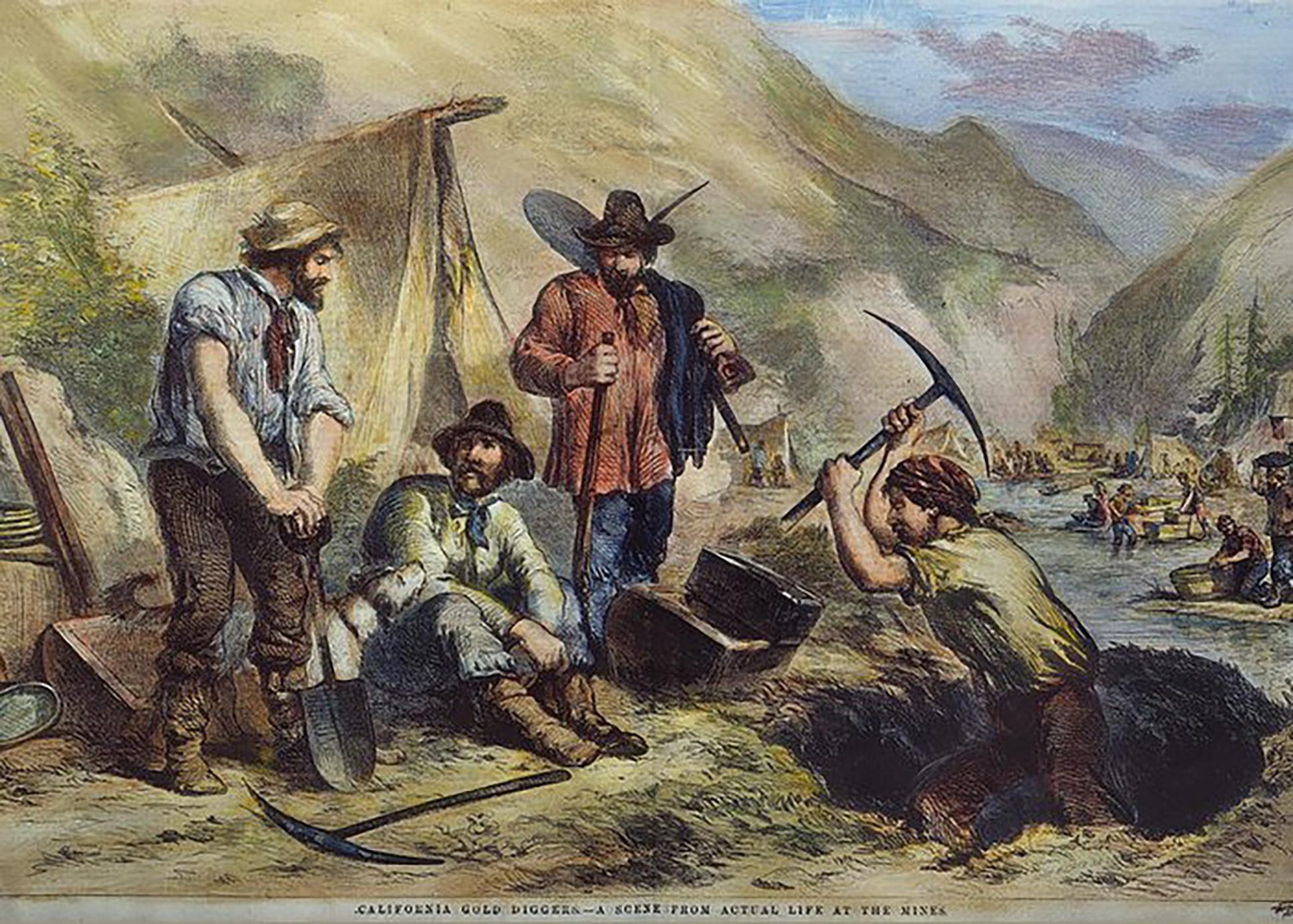
Once Sam Brannan broke the news, the trickle of fortune-seekers rapidly swelled into a flood. By summer 1848, thousands were already digging in the Sierra Nevada foothills. Official confirmation came later that year, in December 1848, when President James K. Polk addressed Congress, validating the “abundance of gold” in California. This presidential endorsement, coupled with widespread newspaper reports, ignited an even larger, international migration. People from all corners of the world—the United States East Coast, Europe, Asia, Australia, and Latin America—began to embark on arduous journeys by land and sea to reach the promised land. The immediate impact on California was staggering. Population numbers exploded, small settlements like San Francisco and Sacramento became boomtowns almost overnight, and the existing social and economic structures were completely overwhelmed. The pursuit of gold quickly overshadowed all other activities, leading to both unprecedented prosperity and widespread lawlessness.
Transforming a Territory: California During the Gold Rush
The influx of gold seekers profoundly transformed California from a quiet, agrarian outpost into a vibrant, chaotic, and rapidly developing territory. This period laid the foundational elements of its future as a global economic powerhouse.
Boomtowns and Ghost Towns: The Rise and Fall of Settlements
The Gold Rush era was characterized by the ephemeral nature of its settlements. As gold strikes were announced, rudimentary camps sprang up almost instantly, attracting thousands seeking their fortune. These “boomtowns”—like Placerville, Sonora, and Nevada City—were vibrant, chaotic hubs of activity, quickly developing stores, saloons, gambling houses, and services catering to the miners. Prices for goods and services soared, creating immense wealth for some entrepreneurs and merchants. However, the lifespan of many boomtowns was tied directly to the productivity of the surrounding mines. Once the easily accessible gold veins were exhausted, miners moved on, often leaving behind entire settlements to become “ghost towns.” These abandoned relics, now scattered across the Sierra Nevada foothills, stand as poignant reminders of the transient nature of the gold rush economy and the fleeting dreams of many who sought instant riches. The cycle of boom and bust became a defining characteristic of California’s development during this turbulent period.
Technological Innovations in Gold Mining
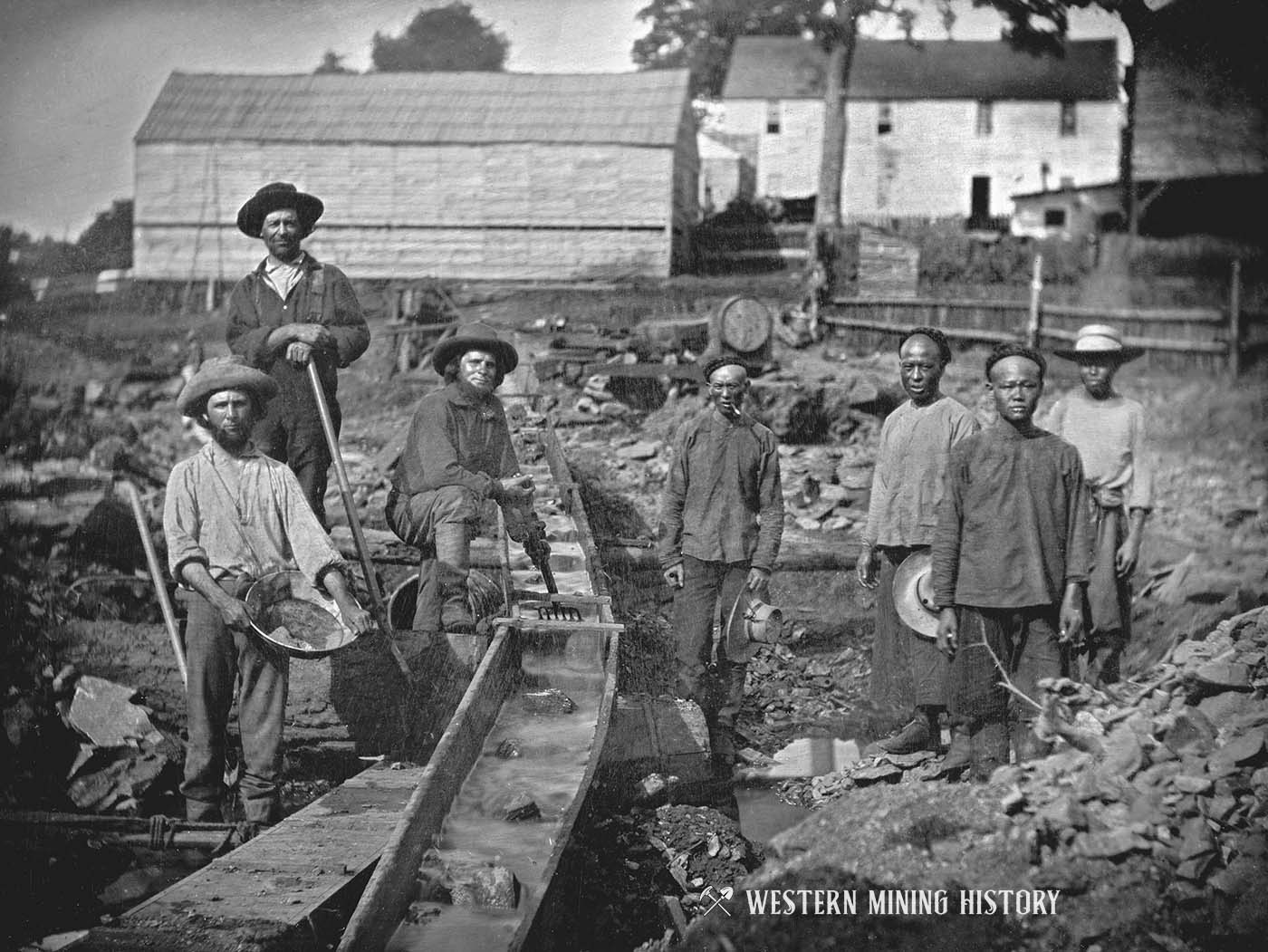
Initially, gold mining relied on simple, rudimentary methods, primarily placer mining, where prospectors would pan for gold in riverbeds and streams. However, as the easily accessible surface gold dwindled, the need for more efficient and scalable techniques spurred significant technological innovation. The “cradle” or “rocker,” a wooden box on rockers used to separate gold from gravel, quickly became popular. Later, the “long tom” and “sluice box” allowed miners to process larger quantities of material. For extracting gold from underground veins, hard-rock mining techniques emerged, requiring shafts, tunnels, and more complex machinery. Hydraulic mining, which used powerful jets of water to dislodge gravel from hillsides, became controversial due to its devastating environmental impact, leading to its eventual ban. These innovations, driven by necessity and the relentless pursuit of profit, not only increased gold extraction but also laid the groundwork for future mining technologies and impacted the landscape of the California landscape profoundly.
Demographic Shifts and Cultural Mélange
The California Gold Rush precipitated an unprecedented demographic transformation. Prior to 1848, California was sparsely populated, predominantly by indigenous communities and a small number of Mexican Californios and American settlers. The gold discovery unleashed a torrent of migration, dramatically increasing the population from approximately 15,000 in 1848 to over 300,000 by 1854. This influx was incredibly diverse, bringing people from across the United States, Mexico, Chile, Peru, Europe (especially France and Germany), Australia, and most notably, China. This created a vibrant, albeit often volatile, cultural melting pot. Each group brought its own languages, customs, and traditions, contributing to a rich tapestry of cultural exchange while also experiencing prejudice and discrimination. The gender imbalance was stark, with men heavily outnumbering women, leading to unique social dynamics and the emergence of “female entrepreneurs” providing services. This rapid and diverse demographic shift profoundly shaped California’s distinct multicultural identity, making it a microcosm of global migration and human aspiration.
The Enduring Legacy of the Gold Rush
The California Gold Rush was a brief, intense period, yet its repercussions stretched far beyond its initial decade, leaving an indelible mark on California and the broader American narrative.
California’s Statehood and Economic Boom
Perhaps the most immediate and impactful political consequence of the Gold Rush was California’s rapid ascension to statehood. The dramatic increase in population, combined with the immense wealth being generated, necessitated a stable government and infrastructure. Just two years after Marshall’s discovery, in September 1850, California was admitted to the Union as the 31st state, bypassing the traditional territorial phase. This quick transition was largely due to the urgent need to establish law and order and integrate the prosperous new region into the national framework. Economically, the gold extracted from California fueled the United States Treasury, helping to finance national expansion and development, including the construction of the transcontinental railroad. Beyond gold, the rush spurred the growth of support industries like agriculture, transportation, and finance, laying the groundwork for California’s future as an economic powerhouse in diverse sectors. The gold might have eventually run out, but the infrastructure, capital, and population it attracted remained.
Shaping the American West and National Identity
The Gold Rush fundamentally reshaped the American West. It accelerated westward expansion, pushing the frontier further across the continent and consolidating American control over newly acquired territories. The routes forged by the forty-niners, whether by land or sea, became vital arteries for future settlement and trade. The “spirit of ’49,” characterized by rugged individualism, risk-taking, and the relentless pursuit of opportunity, became deeply ingrained in the American psyche and contributed to the narrative of American exceptionalism and Manifest Destiny. It fostered a culture of innovation, as prospectors and entrepreneurs devised new methods for mining and commerce. The Gold Rush also highlighted the complexities of multiculturalism and frontier justice, challenging the nascent nation to grapple with issues of race, labor, and governance in a rapidly changing environment. It was a crucible where a diverse populace, driven by a common dream, helped to define what it meant to be American in a new and expansive land.
California’s Modern Identity: Echoes of the Past
Even today, the legacy of the Gold Rush resonates deeply in California’s modern identity. The state’s emblem features a grizzly bear standing over a miner, and the state motto, “Eureka!” (meaning “I have found it!”), directly references the thrill of discovery. Iconic landmarks such as Sutter’s Fort and numerous historical mining towns preserve the tangible remnants of this era, attracting tourists who seek to connect with this dramatic past. The entrepreneurial spirit, the willingness to embrace change, and the attraction of diverse populations, all hallmarks of modern California, can be traced directly back to the Gold Rush. From the tech booms of Silicon Valley to the agricultural might of the Central Valley, the drive for innovation and prosperity that characterized the forty-niners continues to define the state. The gold discovery of January 24, 1848, therefore, was not merely a historical event; it was the seminal moment that sculpted the very essence of California, a state forever defined by its golden beginnings.
LifeOutOfTheBox is a participant in the Amazon Services LLC Associates Program, an affiliate advertising program designed to provide a means for sites to earn advertising fees by advertising and linking to Amazon.com. Amazon, the Amazon logo, AmazonSupply, and the AmazonSupply logo are trademarks of Amazon.com, Inc. or its affiliates. As an Amazon Associate we earn affiliate commissions from qualifying purchases.