
For individuals whose lifestyle includes responsible firearm ownership, understanding the intricate web of state-specific laws is paramount, particularly when contemplating travel, relocation, or simply navigating daily life with specific personal equipment. The Golden State, with its unique legislative framework, often presents a complex challenge. One question frequently arises for owners of popular modern firearms: “Is Sig P365 California Legal?” This article delves into the specifics of California’s firearm regulations, examining how they apply to the renowned Sig P365 and providing essential insights for both residents and those whose lifestyle brings them to the state. We aim to offer a professional, insightful, and engaging overview to help responsible citizens make informed decisions.

Understanding California’s Strict Firearm Laws
California boasts some of the most stringent firearm regulations in the United States. These laws are designed to control the sale, possession, and transfer of firearms within the state, impacting everything from handgun availability to ammunition capacity. For anyone considering firearm ownership in California, or traveling through it with a firearm, a thorough understanding of these laws is not just recommended, but essential.
The Roster of Approved Handguns
Perhaps the most significant hurdle for modern semi-automatic pistols like the Sig P365 is California’s “Roster of Certified Handguns” (often simply called the “DOJ Roster”). This roster lists specific handgun models that have been tested and certified by the California Department of Justice as meeting certain safety standards. For a new handgun model to be added to this roster for sale to the general public, it must possess several specific features:
- Loaded Chamber Indicator (LCI): A visual and tactile indication that a round is present in the chamber.
- Magazine Disconnect Mechanism (MDM): A safety device that prevents the pistol from firing when the magazine is removed.
- Microstamping Capability: This controversial technology is the most significant barrier. It requires the firearm to “microstamp” a unique identification code on the primer of spent casings each time it is fired. As of early 2024, no manufacturer has successfully implemented this technology in a way that satisfies California’s requirements for mass production.
Handguns not on this roster generally cannot be sold by licensed dealers to the vast majority of California residents. This impacts manufacturers’ willingness to produce “CA compliant” versions, as the microstamping requirement remains a technological and legal challenge.
Magazine Capacity Restrictions
Another crucial aspect of California’s firearm laws pertains to magazine capacity. Standard capacity magazines, those capable of holding more than 10 rounds, are generally prohibited for acquisition, possession, or sale by civilians within California. While there have been legal challenges to this law (notably “Duncan v. Bonta”), the prohibition has largely remained in effect due to ongoing appeals and injunctions. This means that if you own a firearm that typically comes with standard capacity magazines (like the Sig P365, which often ships with 10+ round magazines), you must ensure that any magazines you bring into or possess within California comply with the 10-round limit. Non-compliant magazines must be permanently altered to accept no more than 10 rounds or be legally disposed of outside the state.
Private Party Transfers and Importation
Even private party transfers within California must go through a licensed firearms dealer (FFL), ensuring background checks and compliance with all state laws, including the Roster. This means that an off-roster handgun generally cannot be sold or transferred between private citizens unless an exemption applies.
For those moving to California with existing firearms, specific rules apply. New residents are typically allowed to bring their off-roster handguns into the state, provided they are declared to the California Department of Justice within a specified timeframe and were legally owned in their previous state of residence. However, these off-roster firearms cannot then be sold or transferred to other non-exempt California residents.
The Sig P365 and Its Status in the Golden State
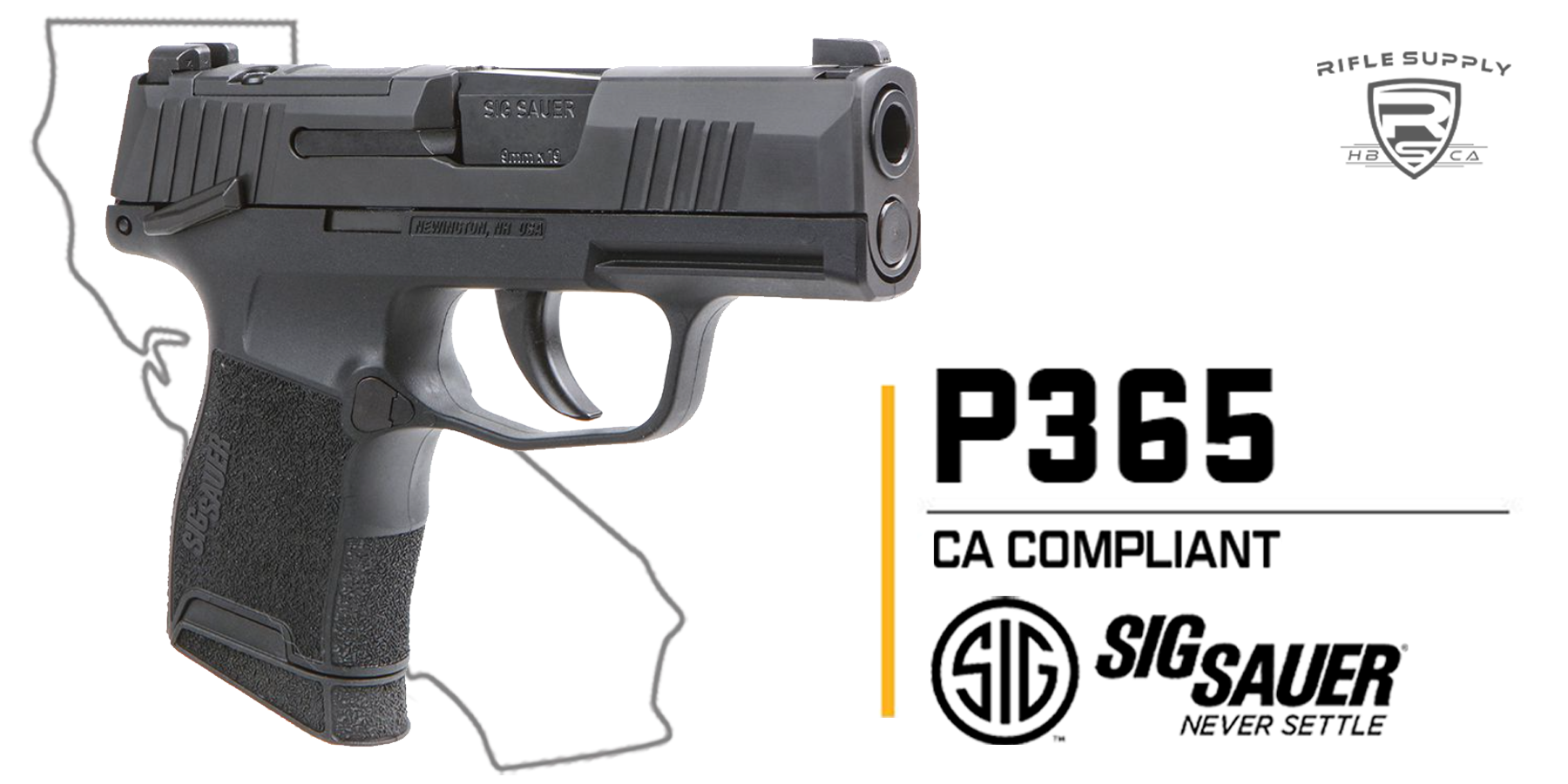
The Sig P365 is a highly popular micro-compact pistol, lauded for its impressive capacity-to-size ratio, excellent ergonomics, and reliability. It has become a favorite for concealed carry outside of California. However, its modern design presents significant challenges for legality within the Golden State.
Specific Features that Affect Legality
The standard Sig P365 models, as produced for the general market, do not possess the specific safety features mandated by California’s Roster of Approved Handguns.
- Loaded Chamber Indicator (LCI): While some variants of the Sig P365 might have an extractor that serves as a rudimentary LCI, it typically does not meet the specific visual and tactile requirements outlined by California law for a rostered handgun.
- Magazine Disconnect Mechanism (MDM): The standard Sig P365 does not incorporate an MDM, meaning it can fire with the magazine removed. This is a common feature on many modern pistols, but it disqualifies them from the California roster.
- Microstamping: Crucially, no variant of the Sig P365 currently incorporates the microstamping technology required for new handguns to be added to the roster.
Due to the absence of these features, the vast majority of Sig P365 models are not on the California Roster of Approved Handguns. This means that a licensed firearms dealer in California cannot legally sell a new Sig P365 to a non-exempt civilian resident.
Variants and Generations: Which Ones are Compliant?
While the standard Sig P365 is off-roster, the market sometimes sees specific, albeit rare, “CA Compliant” variants of other firearms. However, for the Sig P365, such a widely available, dealer-sold, compliant version meeting all current roster requirements (especially microstamping) does not exist.
There are limited, lawful pathways for some California residents to acquire an off-roster Sig P365:
- Law Enforcement Exemption: Active duty law enforcement officers are exempt from the roster requirements and can purchase off-roster handguns. They may then legally sell these firearms to non-exempt civilians through a private party transfer, provided the firearm itself is not an “assault weapon” and has compliant magazines. This is often the primary (and legal) route for non-exempt civilians to acquire an off-roster handgun in California.
- Intrafamilial Transfer: A handgun (even off-roster) may be legally transferred from an immediate family member (parent, grandparent, child) residing outside of California to an immediate family member residing in California. This transfer must still be processed through a California FFL.
- Single-Shot Exemption (SSE): Historically, a loophole existed where a semi-automatic pistol could be temporarily converted into a single-shot pistol (with a specific barrel length and overall length) to bypass the roster, then converted back to its original configuration. This “SSE 2.0” method is now largely restricted and difficult to perform legally without specific FFL licensing and adherence to very strict interpretation of the law, making it not a viable option for the general public seeking a Sig P365.
It is crucial to understand that merely owning a Sig P365 if you are a long-term California resident who acquired it outside of these specific, narrow legal pathways, could lead to serious legal consequences.
Implications for California Residents and Out-of-State Travelers
The legal status of the Sig P365 in California has distinct implications depending on whether you are a resident or an out-of-state visitor. Responsible firearm owners prioritize compliance, which means understanding these nuances.
Purchasing and Possession for Residents
For the vast majority of California residents, purchasing a new Sig P365 from a licensed dealer within the state is not possible due to its off-roster status. As discussed, the only legal avenues for acquisition typically involve specialized transfers (law enforcement, intrafamilial). If a California resident comes into possession of an off-roster Sig P365 outside of these legal methods, they could be in violation of state law, potentially facing charges for illegal possession of an unregistered or non-compliant handgun.
Furthermore, any Sig P365 legally acquired must only be used with 10-round magazines or magazines permanently modified to hold no more than 10 rounds. Possession of standard capacity magazines (over 10 rounds) is generally illegal for civilians in California.
Traveling Through California with a Firearm
For out-of-state travelers whose lifestyle includes carrying a firearm for self-defense or sport, navigating California’s laws is critical. While federal law (the Firearm Owners’ Protection Act, or FOPA) provides some protection for individuals transporting firearms through states where they might otherwise be illegal, this protection is very narrow.
- FOPA Protection: FOPA generally allows for the interstate transport of unloaded, cased firearms in a locked container, inaccessible from the passenger compartment. However, this only applies to direct travel between two points where the firearm is legal, and deviations from this direct route can void the protection.
- California’s Requirements: Even with FOPA, California requires specific conditions:
- Unloaded: The firearm must be unloaded.
- Locked Container: It must be in a locked container. A glove compartment or console is generally not considered a locked container. The trunk of a vehicle is considered a locked container.
- Inaccessible: It must be inaccessible to the occupants of the vehicle (e.g., in the trunk).
- Ammunition: Ammunition must be stored separately, also in a locked container, or in the trunk.
- Magazine Capacity: Any magazines brought into California must comply with the 10-round capacity limit.
Crucially, FOPA does NOT allow for concealed or open carry within California unless you possess a valid California Concealed Carry Weapon (CCW) permit, which is rarely issued to non-residents. Travelers stopping for extended periods, or for purposes other than direct transit, could find themselves outside FOPA’s protection and subject to California’s strict local laws. It is strongly advised to leave off-roster firearms at home or secure them out of state if your visit involves anything more than direct transit.
Relocating to California with Existing Firearms
For individuals embracing a new lifestyle in California and moving from another state where they legally owned a Sig P365 (or any other off-roster handgun), there is a specific pathway for legal possession. New residents have a grace period (typically 60 days) to register their firearms with the California Department of Justice. This involves submitting a “New Resident Firearm Ownership Report.” Importantly, this registration only allows continued possession; it does not authorize the subsequent sale or transfer of that off-roster firearm to another non-exempt California resident. Any magazines for these firearms must also comply with the 10-round limit.
Navigating the Legal Landscape: Best Practices and Resources
Given the complexity and strictness of California’s firearm laws, responsible firearm ownership, especially for those whose lifestyle involves travel or relocation, demands proactive due diligence.
Consulting Legal Counsel
For any specific questions or complex situations, particularly concerning legal acquisition, possession, or transport of firearms like the Sig P365 within California, it is highly advisable to consult with a qualified attorney specializing in California firearm law. Legal interpretations can be nuanced, and laws can change. An attorney can provide personalized advice based on your specific circumstances, ensuring full compliance and avoiding potential legal pitfalls. Organizations dedicated to protecting Second Amendment rights often provide resources or lists of attorneys specializing in firearm law in California.
Staying Informed on Legislative Changes
California’s firearm laws are dynamic, with new legislation frequently introduced and existing laws challenged in courts. Staying abreast of these changes is part of a responsible firearm owner’s lifestyle. Reputable legal defense organizations, firearm rights advocacy groups, and the official California Department of Justice website are excellent resources for monitoring legislative updates, understanding new requirements, and ensuring ongoing compliance. Subscribing to newsletters from these organizations can help you stay informed without constantly searching for updates.

The Broader Lifestyle Context: Responsible Firearm Ownership
The question “Is Sig P365 California Legal?” extends beyond a simple yes or no answer; it illuminates the broader responsibilities inherent in firearm ownership. For those whose lifestyle includes firearms, navigating state-specific laws is a fundamental aspect of responsible stewardship. This includes understanding roster requirements, magazine capacity limits, and proper transport procedures.
Ultimately, while the Sig P365 is an exceptional firearm, its status in California for the general civilian population is largely “off-roster,” making direct acquisition from dealers impossible. Legal possession for residents is restricted to specific, narrow exemptions, and travelers must adhere to stringent transport rules. By understanding these complexities and prioritizing legal compliance, firearm owners can maintain their lifestyle responsibly, even within California’s unique legal environment.
LifeOutOfTheBox is a participant in the Amazon Services LLC Associates Program, an affiliate advertising program designed to provide a means for sites to earn advertising fees by advertising and linking to Amazon.com. Amazon, the Amazon logo, AmazonSupply, and the AmazonSupply logo are trademarks of Amazon.com, Inc. or its affiliates. As an Amazon Associate we earn affiliate commissions from qualifying purchases.