
California, a state renowned for its diverse landscapes, vibrant cities, and unique culture, attracts millions of tourists annually. From the sun-drenched beaches of Los Angeles to the iconic Golden Gate Bridge in San Francisco, there’s an endless array of experiences waiting. However, like any destination, California has its own set of laws and regulations that visitors and residents alike must navigate. Among these, the laws surrounding the legal size and type of knife one can carry can be particularly nuanced, often leading to confusion. For anyone planning to visit or explore the Golden State, understanding these regulations is not just a matter of compliance but also a crucial tip for ensuring a smooth and enjoyable trip.
This guide aims to demystify California’s knife laws, offering insights into what is permissible, what is prohibited, and the contextual factors that can influence legality. While this information serves as a comprehensive overview for educational purposes and is an essential tip for tourists, it is not a substitute for legal advice. Always consult with a legal professional for specific guidance.
Understanding Knife Laws in California
Navigating the legal landscape of knife carry in California requires an understanding of several key distinctions and definitions. Unlike some other states, California does not have a statewide maximum blade length for most knives carried openly. The complexities often arise from the manner of carry (open versus concealed), the type of knife, and the specific location.
California State Law vs. Local Ordinances
One of the primary challenges in understanding knife laws in California is the interplay between state law and local ordinances. While the California Penal Code provides a foundational framework, individual cities and counties have the authority to enact stricter regulations. For instance, while state law might permit open carry of a fixed-blade knife, a city like Los Angeles or San Francisco might have specific restrictions on blade length in certain public areas or even prohibit the open carry of particular knife types. As a tourist, it’s a vital tip to be aware that what is legal in one city might not be in another, even within the same state. Always check local municipal codes for your specific destination within California.
The “Concealed Carry” Distinction
The concept of “concealed carry” is paramount in California knife law. Generally, it is illegal to carry a “dirk or dagger” concealed. The law defines a “dirk or dagger” broadly as a knife or other instrument with or without a handguard that is capable of ready use as a stabbing weapon that may inflict great bodily injury or death. This definition is crucial because it’s less about the knife’s specific design and more about its potential use and how it’s carried.
- Folding Knives: Most folding knives, when in the folded position, are not considered “dirks or daggers” and can generally be carried concealed, provided they are not switchblades or other prohibited types. However, if a folding knife is carried in an open position and concealed, it could be interpreted as a concealed dirk or dagger.
- Fixed-Blade Knives: Fixed-blade knives, by their nature, are typically considered “dirks or daggers” and therefore must be carried openly. Concealing a fixed-blade knife is almost always illegal in California.
The key tip here is: if it’s a fixed-blade knife, carry it openly. If it’s a folding knife, ensure it’s closed if carried concealed.
Defining a “Dirk or Dagger”
The legal definition of a “dirk or dagger” (Penal Code § 16470) is particularly broad and can be a point of confusion. It refers to any “knife or other instrument with or without a handguard that is capable of ready use as a stabbing weapon that may inflict great bodily injury or death.” The crucial part is “capable of ready use as a stabbing weapon.” This broad interpretation means that even items not traditionally thought of as daggers, such as certain screwdrivers or sharpened files, could be deemed a dirk or dagger if carried in a manner indicating intent for use as a stabbing weapon. This emphasizes the importance of context and intent in legal interpretations.
Specific Knife Types and Their Regulations
Beyond the open vs. concealed carry rule, California law has specific stipulations for various knife types. Tourists and visitors should be especially mindful of these regulations to avoid legal complications.
Folding Knives: The Everyday Carry
Folding knives (also known as pocketknives) are generally the least restricted type of knife in California. There is no statewide blade length limit for carrying a folding knife. They can be carried concealed, provided they are in the folded position. The most significant caveat is that they should not be easily deployable as a stabbing weapon if concealed, to avoid being classified as a “dirk or dagger.” Knives that can be opened with one hand, often referred to as “one-hand opening” or “assisted opening” knives, are generally legal to own and carry concealed in California, as long as they do not meet the definition of a switchblade.
Fixed-Blade Knives: Open Carry Requirements
Fixed-blade knives, including hunting knives, survival knives, and kitchen knives, are generally legal to own in California. However, as discussed, they must be carried openly. This means they should be sheathed and visibly carried on your person, for example, on a belt or backpack, in a way that is easily observable by others. There is no statewide blade length limit for openly carried fixed-blade knives, but local ordinances might impose restrictions. For someone enjoying [California](https://lifeoutofthebox.com/california]’s vast wilderness for hiking or camping, this is a crucial tip for carrying utility knives.
Automatic Knives and Switchblades: Strict Limitations
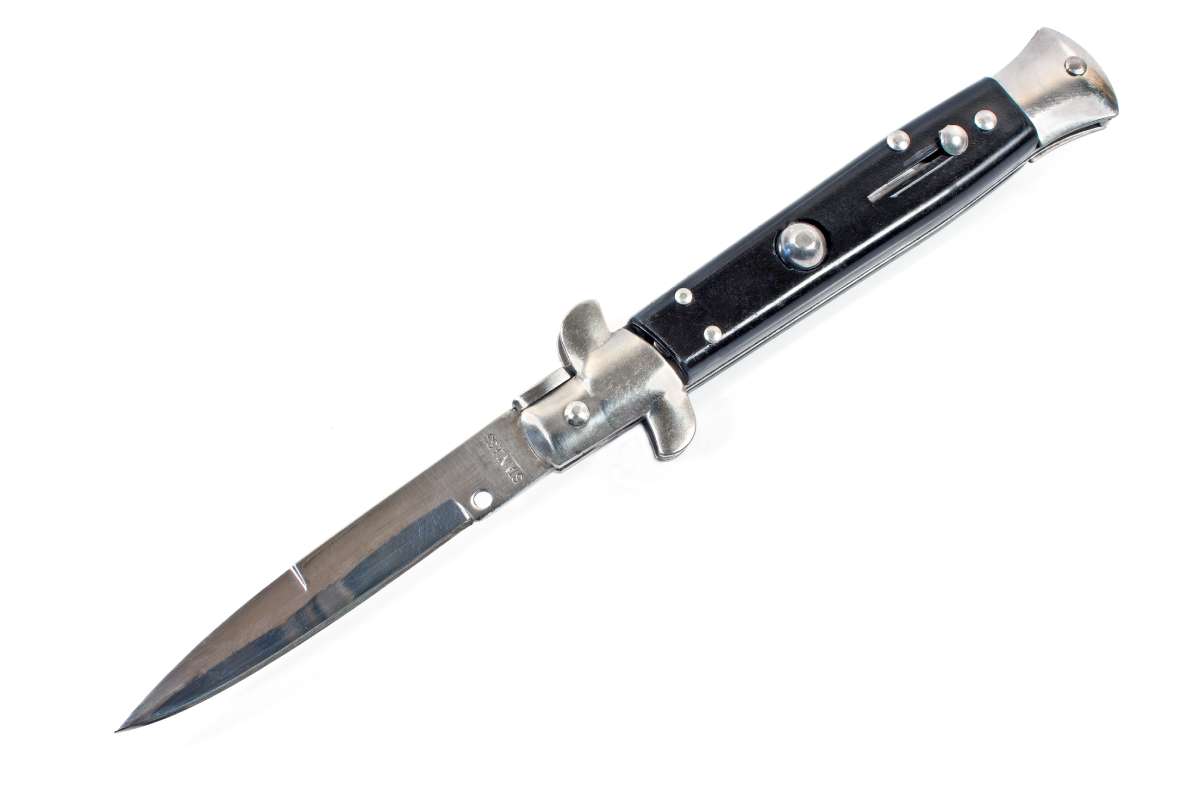
California has strict laws regarding automatic knives, commonly known as switchblades. It is illegal to openly carry a switchblade. It is also illegal to carry a switchblade with a blade length of two inches or more concealed. While it is legal to own a switchblade with a blade length under two inches, carrying one can still be problematic if it’s considered a “dirk or dagger” when concealed. The sale and possession of switchblades are also heavily regulated. An automatic knife is typically defined as a knife that has a blade that opens automatically by hand pressure applied to a button, spring, or other device in the handle, or by the force of gravity or inertia.

Butterfly Knives and Ballistic Knives: Illegal by Nature
Certain types of knives are outright illegal to possess, import, or sell in California. These include:
- Ballistic Knives: These knives have a detachable blade that can be propelled from the handle by a spring-operated mechanism. They are federally and state-prohibited.
- Butterfly Knives (Balisongs): While popular for their aesthetic and manipulation techniques, California law prohibits the sale, possession, or carry of butterfly knives.
- Shurikens/Throwing Stars: Also illegal to possess or carry.
This list is not exhaustive, and the general tip is to avoid carrying any knife that seems specifically designed for combat or has unusual, rapid deployment mechanisms, unless specifically verified as legal.
Context Matters: Where You Carry Your Knife
Even if a knife type is generally legal to carry, certain locations in California have specific prohibitions. Being aware of these restricted zones is a critical tip for avoiding legal issues, especially for tourists who might unknowingly wander into such areas.
Public Places and Government Buildings
Carrying knives, regardless of type or length, is generally prohibited in most government buildings, courthouses, airports, and other secure public facilities. This often includes city halls (such as in Sacramento, the state capital), state offices, and federal buildings. Security checks at the entrance of such venues will typically detect and confiscate knives.
Schools and Educational Institutions
California law explicitly prohibits carrying any knife onto the grounds of, or into, any public or private K-12 school, or any public or private university, college, or community college. There are very few exceptions, typically only for law enforcement or authorized personnel. This is a crucial regulation for anyone, especially tourists who might be visiting campuses or dropping off/picking up children.
Private Property and Business Establishments
While general knife laws apply in public spaces, private property owners and business establishments have the right to set their own rules. A restaurant, bar, or store can prohibit knives on their premises, and failure to comply can lead to being asked to leave or even trespassing charges. Always respect the signage and policies of private establishments.
Parks and Wilderness Areas
For those enjoying California’s stunning natural beauty, such as national or state parks, carrying a utility knife for camping, hiking, or fishing is common. Generally, standard fixed-blade knives (carried openly) and folding knives are permissible in these contexts. However, always check specific park regulations, as some may have restrictions, particularly around visitor centers or developed areas. Intent also plays a role; a knife carried for legitimate outdoor activities is viewed differently than one carried with malicious intent.
Consequences of Non-Compliance and Best Practices
Violating California’s knife laws can lead to significant legal consequences, ranging from misdemeanors to felonies, depending on the severity of the offense and the type of knife involved. Penalties can include fines, jail time, or both. For tourists, an arrest can significantly disrupt travel plans, incur unexpected legal expenses, and potentially impact future travel.
Exercising Caution and Common Sense
The best tip for navigating California’s knife laws is to err on the side of caution. If you are unsure about the legality of carrying a particular knife in a specific situation or location, it’s often best to leave it behind. Always consider the purpose for which you are carrying a knife. A utility knife for camping is generally understood, but carrying a large, combat-style knife in an urban setting might raise immediate suspicion, regardless of strict legality.
Seeking Legal Advice
This guide provides general information and essential tips for tourists. However, it is not a substitute for legal advice. If you have specific questions about knife ownership or carry, particularly if you are a resident or frequently carry knives for professional or recreational purposes, consult with a qualified attorney in California. Legal nuances can be complex, and personal circumstances can significantly influence legal interpretation.
In conclusion, while California offers immense opportunities for adventure and exploration, understanding its local laws, particularly those concerning knife carry, is an indispensable tip for any visitor. By being informed about the distinctions between knife types, carry methods, and restricted locations, tourists can ensure their time in the Golden State remains enjoyable and free of legal complications.
LifeOutOfTheBox is a participant in the Amazon Services LLC Associates Program, an affiliate advertising program designed to provide a means for sites to earn advertising fees by advertising and linking to Amazon.com. Amazon, the Amazon logo, AmazonSupply, and the AmazonSupply logo are trademarks of Amazon.com, Inc. or its affiliates. As an Amazon Associate we earn affiliate commissions from qualifying purchases.