
The housing landscape in California has long been characterized by a severe shortage of affordable accommodation options, driving up prices and limiting accessibility for many residents. In response to this pressing challenge, the state has actively promoted the development of Accessory Dwelling Units (ADUs) as a pragmatic solution to increase housing supply. To further incentivize homeowners to build these versatile structures, the California Department of Housing and Community Development (HCD) introduced the ADU Grant Program. This initiative aims to alleviate some of the financial burdens associated with ADU construction, making it more feasible for eligible homeowners to contribute to the state’s housing stock. Understanding who qualifies for this valuable grant is the first critical step for any homeowner contemplating an ADU project, offering a pathway to not only enhance their property but also provide much-needed accommodation.
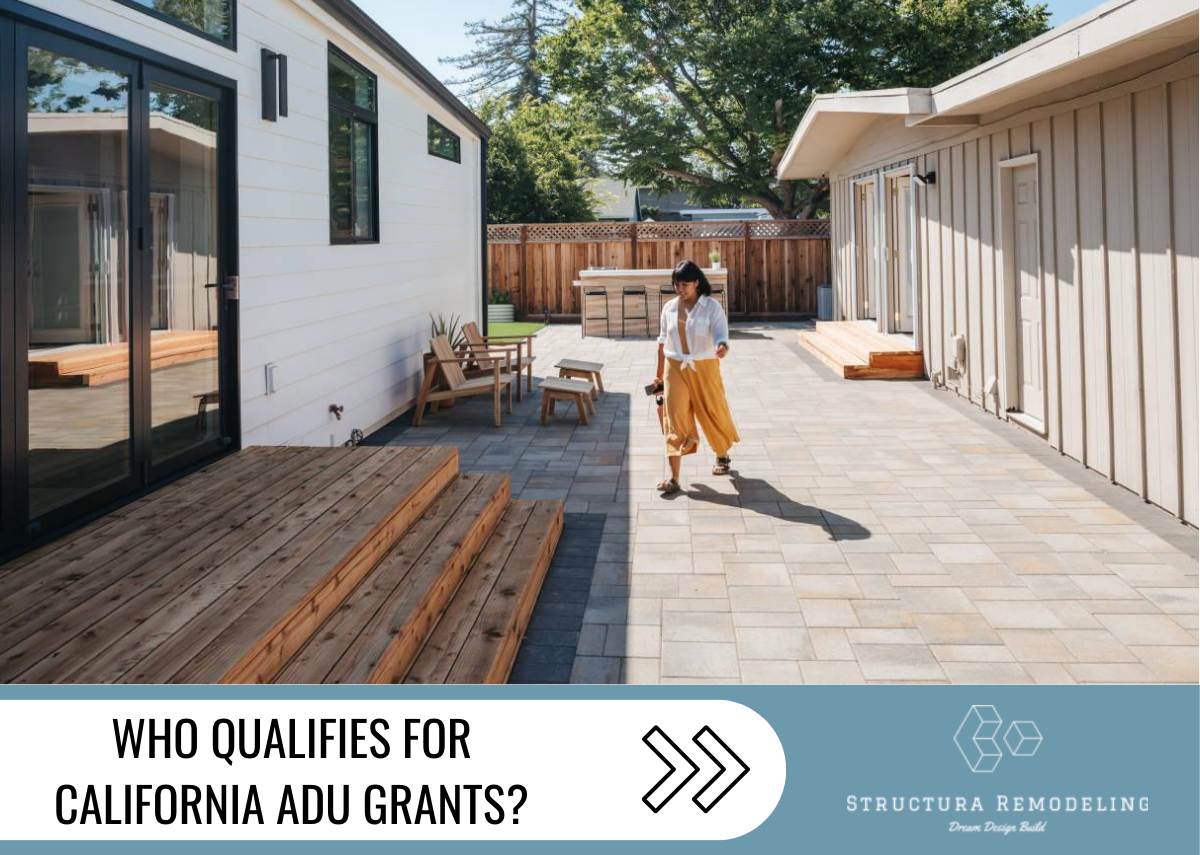
Understanding the California ADU Grant Program and Its Purpose
The California ADU Grant Program represents a significant effort by the state to combat its housing crisis. It’s designed to provide financial assistance to low- and moderate-income homeowners to offset the high costs associated with ADU development, from planning to permitting and connection fees.
What is an Accessory Dwelling Unit (ADU)?
An Accessory Dwelling Unit, commonly known as an ADU, is a secondary housing unit on a single-family residential lot. These units can take various forms: a detached structure in the backyard, a conversion of an existing garage or basement, or an addition to the main house. ADUs are fully self-contained, including a kitchen, bathroom, and sleeping area, making them suitable for long-term accommodation. They are lauded for their flexibility, offering homeowners opportunities for rental income, multi-generational living, or dedicated space for caregivers, all while blending seamlessly into existing neighborhoods. From a broader perspective of accommodation, ADUs represent an agile and relatively quick way to add housing units without requiring extensive new infrastructure or land development.
Addressing California’s Housing Crisis
California’s housing crisis is multifaceted, stemming from rapid population growth, restrictive zoning laws, and a historical underproduction of housing. This has led to exorbitant rents and home prices, pushing many residents out of the state or into precarious living situations. ADUs emerged as a viable component of the solution due to their relatively low cost of construction compared to traditional multi-family developments and their ability to integrate into existing communities without dramatically altering neighborhood character. The state recognized that while regulations had been eased to permit ADUs more readily, the initial financial hurdle for homeowners remained substantial.
The Role of the ADU Grant Program
The ADU Grant Program was established to bridge this financial gap. It provides up to $40,000 in grant funding to eligible homeowners for pre-development costs associated with constructing an ADU. These costs can include architectural plans, site preparation, permitting fees, utility hookups, and other expenses incurred before the physical construction begins. By targeting these initial expenses, which can often be a significant barrier, the grant aims to make ADU development accessible to a wider range of homeowners, particularly those who might otherwise be unable to afford the upfront investment. This directly contributes to increasing the supply of diverse and affordable accommodation across the state.
Core Eligibility Criteria for Applicants
Understanding the specific criteria for the California ADU Grant is paramount. Eligibility is determined by a combination of factors related to the homeowner, the property, and the nature of the ADU project itself. Missing even one requirement can disqualify an applicant, so careful review is essential.
Owner-Occupancy and Property Type Requirements
One of the foundational requirements for the California ADU Grant is that the applicant must be the owner-occupant of the single-family property where the ADU will be built. This means the primary residence must be the homeowner’s principal dwelling. The program is specifically designed to support owner-occupants who are adding accommodation to their existing property, not investors or absentee landlords. The property itself must be a single-family home located within California, providing the necessary space for an ADU. The program focuses on encouraging homeowners to utilize their existing land efficiently to create new housing units.
Navigating Income Limitations
The ADU Grant Program is targeted at low- and moderate-income homeowners to ensure that the financial assistance reaches those who need it most and to maximize the program’s impact on housing affordability. Specifically, applicants’ household income must not exceed 80% of the Area Median Income (AMI) for their respective county. This threshold is subject to change annually and varies significantly from county to county across California. For instance, 80% AMI in San Francisco County will be substantially higher than 80% AMI in Fresno County. Prospective applicants must verify the current AMI limits for their specific location through the California HCD website or through participating lenders. This income cap ensures that the grant effectively subsidizes accommodation solutions for those most impacted by the housing crisis.
Pre-Construction Loan Requirements
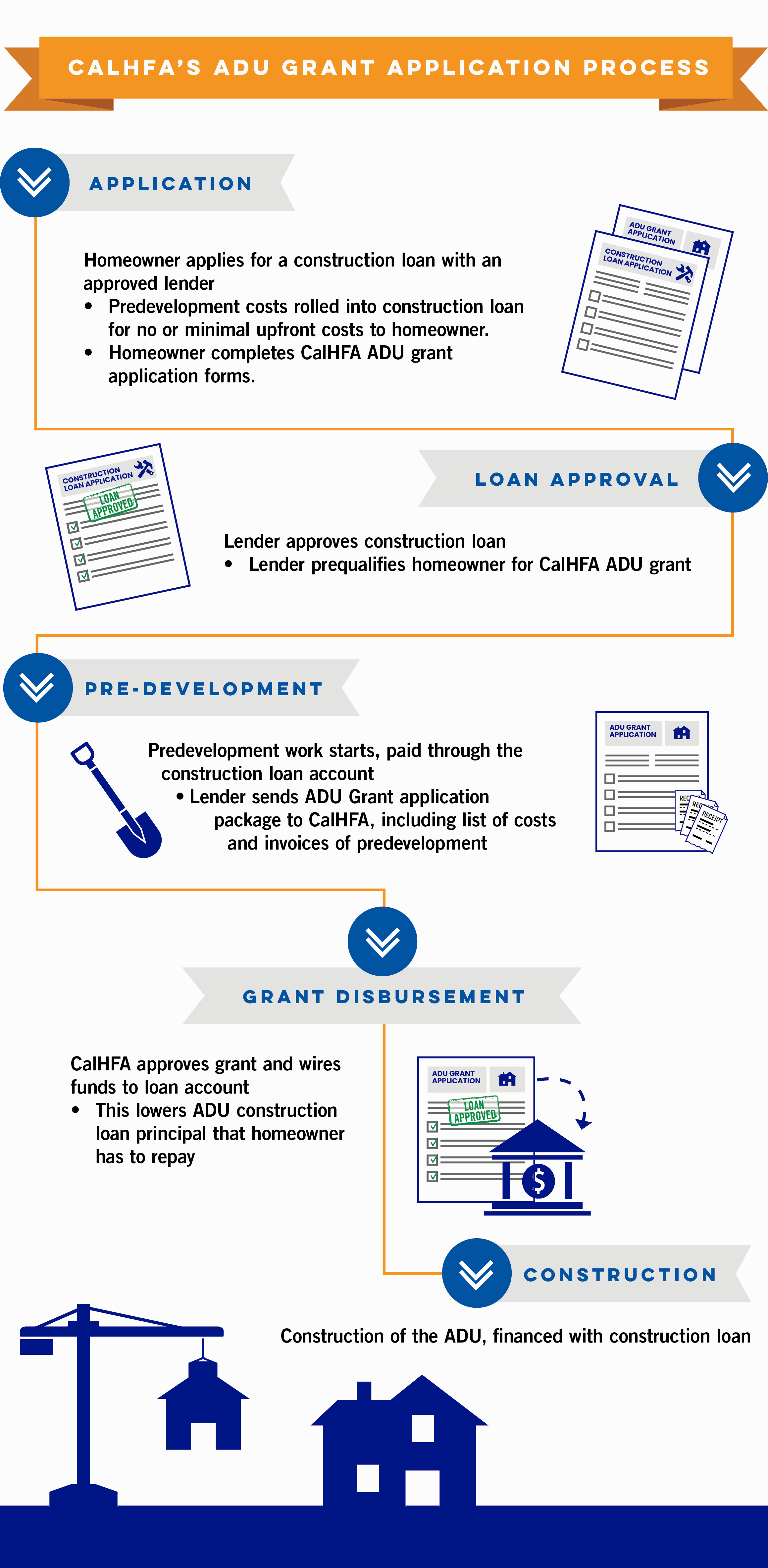
Crucially, the ADU Grant is not a standalone cash handout; it is designed to complement and be paired with a construction loan for the ADU. Applicants must have secured or be in the process of securing a pre-construction or construction loan for their ADU project from a participating lender. The grant specifically covers eligible pre-development costs incurred before the construction loan is fully disbursed. This structure ensures that the grant funds are used efficiently in conjunction with a larger financing plan for the ADU’s development. It’s important to note that the grant itself does not cover the full cost of construction but rather the initial, often daunting, setup fees. This requirement reinforces the grant’s role as a catalyst, enabling homeowners to overcome the initial financial hurdle to begin their ADU accommodation project.
Delving Deeper into Property and Project Specifics
Beyond the applicant’s personal and financial profile, the ADU project itself must meet certain criteria to be eligible for the grant. These specifics ensure that the funds are used for legitimate, compliant, and impactful housing developments.
Permitting and Regulatory Compliance
All ADU projects seeking grant funding must be fully compliant with local zoning ordinances and state ADU laws. This means obtaining all necessary permits from the local planning department and adhering to building codes, environmental regulations, and any other municipal requirements. The grant specifically targets costs associated with this regulatory journey, such as permit fees and impact fees. Homeowners must demonstrate that their ADU plans have either received approval or are in the advanced stages of the permitting process. This ensures that the accommodation being developed is safe, legal, and contributes positively to the community’s housing stock. A project that cannot secure proper permitting will not qualify for grant assistance, emphasizing the importance of detailed planning and adherence to regulations.
Qualified ADU Project Costs
The California ADU Grant is specifically allocated for pre-development costs. These typically include:
- Architectural and Engineering Fees: Costs for design plans, structural engineering, and other professional drawings.
- Permit and Impact Fees: Payments to local jurisdictions for various permits required to build.
- Site Preparation: Expenses related to preparing the land, such as grading or utility trenching, before actual construction begins.
- Utility Connection Fees: Costs for connecting the ADU to existing utilities like water, sewer, and electricity.
- Soil Testing and Surveys: Necessary assessments to ensure the site is suitable for construction.
It is crucial to understand that the grant does not cover direct construction costs like materials, labor for framing, roofing, or interior finishes. Its purpose is to alleviate the initial financial barrier, allowing homeowners to get their projects off the ground and secure their primary construction financing. This focus on pre-development ensures that the grant stimulates the early stages of ADU accommodation creation.
Working with Approved Lenders
The California ADU Grant Program operates through a network of participating lenders. These financial institutions are approved by the HCD to process both the ADU construction loans and the associated grant applications. Homeowners cannot apply for the grant directly through the state; instead, they must work with one of these approved lenders. These lenders are responsible for:
- Verifying applicant eligibility (income, owner-occupancy).
- Assessing the ADU project’s viability and compliance.
- Packaging the loan and grant application.
- Facilitating the disbursement of grant funds once approved.
This structure streamlines the process and ensures that all financial and regulatory requirements are met under the guidance of experienced financial professionals. Prospective applicants should begin by contacting a lender on the HCD’s list of approved participants to discuss their project and eligibility.
The Application Journey: Steps and Considerations
Navigating the application process for the California ADU Grant requires meticulous preparation and engagement with the right financial partners. Understanding each phase can significantly improve an applicant’s chances of success.
Preparing Your Documentation
The application process is documentation-intensive. Homeowners will need to gather a comprehensive set of documents to prove their eligibility and the validity of their ADU project. This typically includes:
- Proof of Income: Tax returns, pay stubs, and other financial statements to verify household income against the AMI limits.
- Proof of Owner-Occupancy: Property deeds, utility bills, and driver’s license showing the property as the primary residence.
- Property Information: Deed, property surveys, and existing mortgage statements.
- ADU Project Plans: Architectural drawings, cost estimates for pre-development, and evidence of pending or approved permits.
- Loan Pre-Approval/Application: Documentation from a participating lender demonstrating intent or progress on securing a construction loan.
Organizing these documents beforehand will make the application process smoother and prevent delays. Accuracy and completeness are paramount to avoid rejection.
Engaging with Participating Lenders
As mentioned, direct application to the state is not possible. The first practical step is to identify and engage with a participating lender. These lenders are well-versed in the specifics of the California ADU Grant Program and can guide applicants through the eligibility requirements and necessary documentation. They will assess both the homeowner’s financial standing for the construction loan and their eligibility for the grant. The lender acts as the primary point of contact and facilitator for the grant application, submitting it on the homeowner’s behalf to the HCD. Establishing a good working relationship with an experienced lender is crucial for a successful application.
Understanding Grant Disbursement and Limitations
Once approved, the grant funds are typically disbursed directly to the homeowner or relevant service providers (e.g., architects, permitting offices) to cover the specified pre-development costs. It is vital to understand that the maximum grant amount is $40,000, or the actual documented pre-development costs, whichever is less. This means if a homeowner’s eligible pre-development costs are $25,000, they will receive $25,000, not the full $40,000. The grant is not a reimbursement for costs already paid out-of-pocket before application and approval; it is intended to fund future pre-development expenses in conjunction with the construction loan. This structure ensures the funds are used proactively to facilitate new ADU accommodation.
Maximizing Your Chances and Long-Term Benefits
Securing a California ADU Grant can significantly ease the path to building an ADU. However, understanding how to best navigate the program and recognizing its broader implications for accommodation are key.
Common Pitfalls to Avoid
Applicants should be aware of several common reasons for grant application rejection:
- Exceeding Income Limits: Carefully verify current AMI limits for your county.
- Lack of Owner-Occupancy: The property must be your primary residence.
- Incomplete or Inaccurate Documentation: Meticulously review all forms and supporting documents.
- No Pre-Construction Loan Secured: The grant is tied to obtaining a construction loan from a participating lender.
- Non-Eligible Costs: Attempting to use grant funds for direct construction expenses.
- Past Development: The grant is for new ADU projects, not those already completed.
- Working with Non-Participating Lenders: Ensure your lender is HCD-approved.
Avoiding these pitfalls through thorough preparation and clear communication with a participating lender will greatly increase the likelihood of approval.

The Broader Impact on Accommodation and Affordability
For homeowners, the California ADU Grant offers a tangible benefit, reducing the initial financial barrier to creating additional accommodation on their property. This can lead to increased property value, potential rental income, or flexible living arrangements for family members. From a societal perspective, each approved ADU project contributes directly to alleviating California’s acute housing shortage. By incentivizing the development of smaller, more affordable housing units, the program helps diversify the housing stock, make communities more inclusive, and offer a wider range of accommodation choices to residents. The cumulative effect of thousands of ADUs, made possible in part by this grant, creates a significant positive ripple effect on housing availability and affordability across the state, fostering sustainable growth and accessible living environments. The ADU Grant is more than just financial aid; it’s an investment in the future of California’s accommodation landscape.
LifeOutOfTheBox is a participant in the Amazon Services LLC Associates Program, an affiliate advertising program designed to provide a means for sites to earn advertising fees by advertising and linking to Amazon.com. Amazon, the Amazon logo, AmazonSupply, and the AmazonSupply logo are trademarks of Amazon.com, Inc. or its affiliates. As an Amazon Associate we earn affiliate commissions from qualifying purchases.