
Florida, with its sun-drenched beaches, vibrant cities like Miami and Orlando, and endless attractions, draws millions of visitors each year. Whether you’re exploring the historical streets of St. Augustine, enjoying the theme parks, or conducting business in Tampa, you’ll undoubtedly engage in numerous conversations. In our increasingly digital world, recording these interactions, whether for personal memory, professional records, or even as evidence, has become commonplace. However, the legal landscape surrounding conversational recordings varies significantly from state to state, and Florida has specific laws that tourists and residents alike must understand to avoid severe legal repercussions.
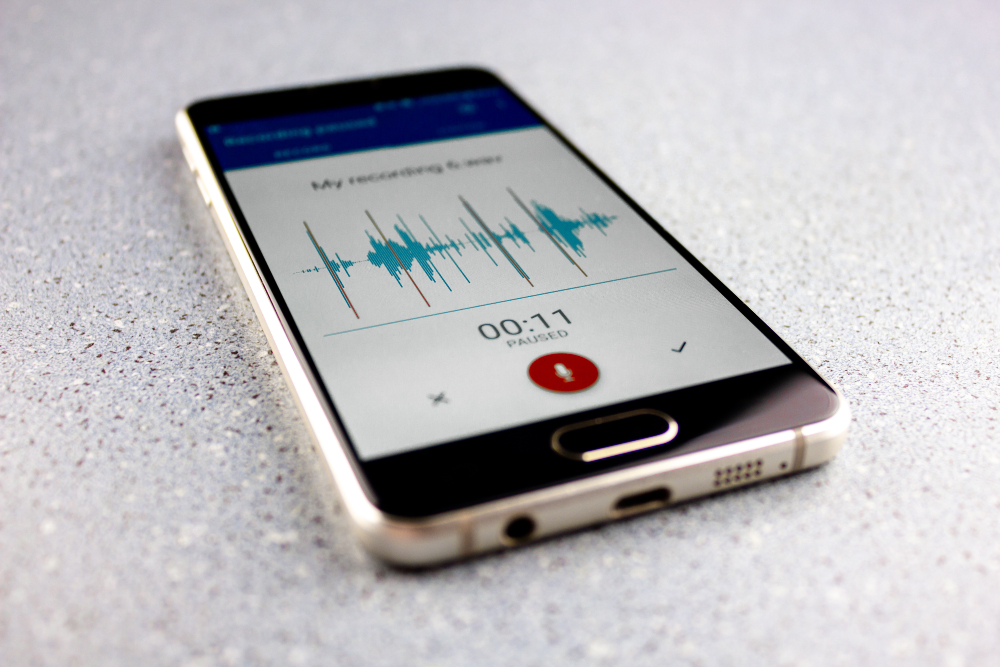
For visitors immersing themselves in [Florida]’s diverse local culture, enjoying its unique food scene, or participating in various activities, knowing the rules around recording conversations is a crucial “tip” for responsible and respectful engagement. Misunderstanding these laws could inadvertently lead to criminal charges or civil lawsuits, transforming a memorable trip into a legal headache. This article delves into the specifics of [Florida]’s conversation recording laws, offering insights and practical advice to ensure you navigate the Sunshine State safely and legally.
Understanding Florida’s Consent Laws: A Tourist’s Primer
[Florida]’s legal framework regarding the recording of oral communications is often a point of confusion for those accustomed to different regulations in their home states or countries. Unlike some jurisdictions, [Florida] operates under what is commonly known as a “two-party consent” law. This fundamental distinction is paramount for anyone considering recording a conversation within the state’s borders.The “Two-Party Consent” Rule Explained
At the heart of [Florida]’s recording laws is the “two-party consent” (or “all-party consent”) rule, codified under the Florida Wiretap Act (Chapter 934 of the Florida Statutes). This means that, with very limited exceptions, it is illegal to record an in-person conversation or phone call unless all parties to the conversation have given their explicit consent to be recorded. This isn’t just a polite request; it’s a legal requirement.
The intent behind this law is to protect the reasonable expectation of privacy that individuals have in their conversations. When you engage in a dialogue, the law assumes you expect that conversation to remain private between the participants, unless you are clearly informed and agree otherwise. This applies whether the conversation takes place face-to-face, over the phone, or through other electronic means. Simply put, if you plan to hit ‘record,’ everyone involved needs to know and agree. Failure to obtain this consent can lead to serious legal consequences, including felony charges and significant fines.
What Constitutes a “Conversation” Under Florida Law?
The scope of what constitutes a “conversation” under [Florida] law is broad and designed to cover nearly any form of oral communication where there’s an expectation of privacy. This isn’t limited to intimate personal discussions but extends to professional interactions, customer service calls, and even casual chats. The key determinant is whether the participants have a reasonable expectation that their words are not being intercepted or recorded by another party without their knowledge.
For example, a discussion with a hotel manager about a billing dispute, a conversation with a tour guide regarding an excursion, or a phone call to a local restaurant for a reservation all fall under this umbrella. Even if the conversation is mundane, if it occurs in a setting where privacy is reasonably expected, [Florida]’s two-party consent rule applies. It’s not about the content of the conversation, but the act of recording it without collective consent. Understanding this broad interpretation is vital for tourists who might encounter various situations where recording seems convenient but could be legally problematic.
Public vs. Private Settings: Where Does the Law Apply?
The application of [Florida]’s recording laws often hinges on the distinction between public and private settings, specifically concerning the expectation of privacy. Generally, the two-party consent rule applies to conversations where there is a “reasonable expectation of privacy.”
In a private setting, such as inside a home, a private office, or a non-public area of a business, the expectation of privacy is typically high. Recording conversations in these locations without all parties’ consent is almost certainly illegal. This also extends to many common interactions a tourist might have, like talking to staff in a hotel lobby, discussing details with a car rental agent, or speaking with a doctor in a clinic.
However, the situation becomes more nuanced in public settings. If a conversation takes place in a public area—like a bustling street in South Beach, a crowded theme park, or a public square in Key West—where there is no reasonable expectation of privacy from observation or overhearing, then [Florida]’s two-party consent law generally does not prohibit recording. For instance, if you are openly speaking in a loud voice on a park bench, and someone records that audible conversation, it might not be illegal because you likely have no reasonable expectation of privacy in such an open, public forum. The key is “openly speaking” and the absence of a reasonable expectation of privacy.
It’s crucial to distinguish between recording a public event or ambient sounds and intentionally recording a conversation between individuals. While capturing the general atmosphere or filming a parade in public is usually permissible, specifically targeting and recording a private conversation occurring in that public space without consent could still be a violation if the individuals speaking had a reasonable expectation of privacy (e.g., they were speaking quietly to each other, not to the public). When in doubt, it’s always safest to assume an expectation of privacy exists and to seek consent.
Navigating Common Scenarios for Visitors
For visitors to [Florida], the application of these laws can arise in a multitude of daily interactions. Understanding how [Florida]’s two-party consent rule plays out in common scenarios is essential for a worry-free experience.
Recording Customer Service Interactions
Tourists often interact with customer service representatives, whether it’s with airlines, hotels, car rental agencies, or local businesses. It’s common for individuals to want to record these conversations to document agreements, clarify details, or address disputes. However, in [Florida], you cannot legally record your customer service interaction unless the representative is aware they are being recorded and explicitly consents.
Conversely, many businesses record their customer service calls. In such cases, they are legally required to inform you at the outset of the call (e.g., “This call may be recorded for quality assurance…”). Your continued participation in the call after this notification typically constitutes implied consent, making their recording legal. However, this implied consent does not extend to your recording of their side of the conversation without their direct and explicit acknowledgment and agreement. If you wish to record your interaction, you must state your intention clearly and obtain their verbal permission before proceeding.
Capturing Memories: Street Photography and Incidental Recording
[Florida]’s vibrant streetscapes and attractions naturally lead to a desire to capture memories through photos and videos. This is generally permissible in public spaces. You are free to photograph or video people in public places where they have no reasonable expectation of privacy. This includes general street scenes, public events, concerts, or protests.The challenge arises when your video recording inadvertently or intentionally captures private conversations. While filming a general scene, if specific individuals’ conversations are picked up and become the focus of your recording, it could potentially breach the two-party consent rule if they had a reasonable expectation of privacy. For example, filming a street performer is fine, but zooming in to record a quiet discussion between two audience members without their knowledge could be problematic.
The key takeaway for capturing memories is to focus on visual aspects and general audio. If you’re recording a person or group specifically for their conversation, you must obtain their consent. When in doubt, err on the side of caution and ensure that your recordings of public spaces don’t inadvertently become unauthorized recordings of private dialogues.
Business Dealings and Professional Encounters
For those visiting [Florida] for business, the recording of professional encounters, meetings, or negotiations warrants particular attention. While it might be standard practice in some industries or states to record meetings for minutes or record calls for reference, [Florida]’s two-party consent law applies rigorously here.
If you are conducting a business meeting in [Orlando], a sales pitch in Jacksonville, or negotiating a contract in [Miami], you cannot legally record the conversation unless every participant explicitly agrees to it. This includes both in-person meetings and conference calls. Even if only one person objects, the recording becomes illegal.
It is best practice to formally request permission at the beginning of any meeting or call, perhaps even in writing or via an email before the encounter, stating the purpose of the recording. This transparency helps avoid misunderstandings and ensures compliance with [Florida] law. Attempting to record surreptitiously in a business context could not only lead to legal penalties but also severely damage professional relationships and trust.
Potential Legal Ramifications and Best Practices
Ignoring [Florida]’s strict two-party consent laws carries significant risks, not just for residents but especially for visitors who might be unaware. The consequences can be both criminal and civil, impacting one’s freedom and financial well-being.
Civil and Criminal Penalties for Unlawful Recording
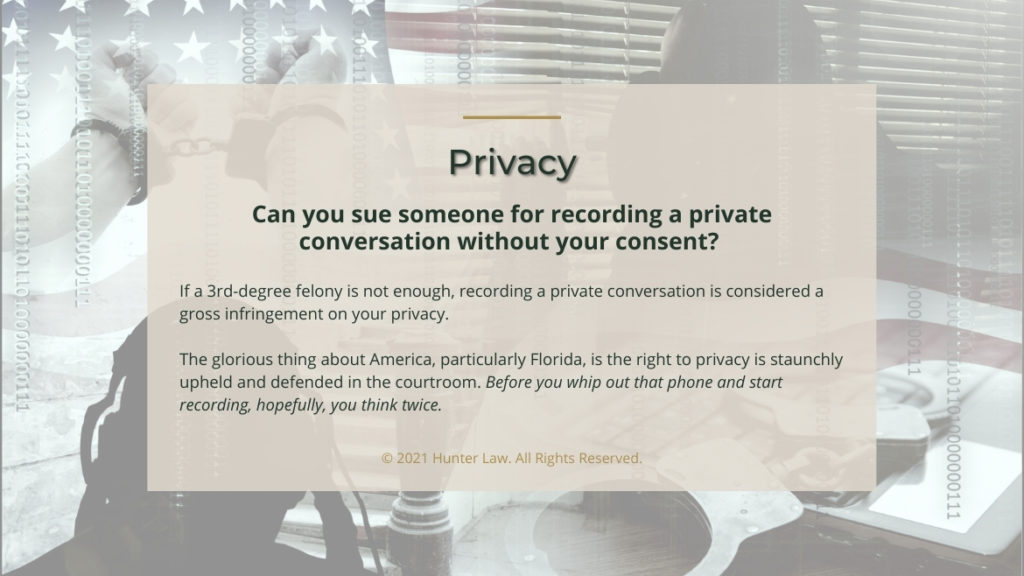
Violation of [Florida]’s Wiretap Act is not merely a civil infraction; it can be a felony offense. Illegally recording an oral communication is considered a felony of the third degree, which can carry penalties of up to five years in prison and a fine of up to $5,000. These are serious consequences that can dramatically alter a person’s life, including potential extradition if they’ve left the state.
Beyond criminal charges, individuals who have been unlawfully recorded can also pursue civil lawsuits against the person who recorded them. These civil actions can result in significant financial damages, including actual damages, punitive damages, and attorney’s fees. Imagine a tourist recording a dispute with a local vendor, only to face a lawsuit demanding tens of thousands of dollars. The costs and stress of defending such a case, especially from out of state, can be substantial. Understanding these severe penalties underscores the importance of strict adherence to the law.
The Importance of Express Consent
Given the gravity of the potential penalties, the most crucial best practice is always to obtain express consent from all parties before recording any conversation where there’s a reasonable expectation of privacy. “Express consent” means clear, unambiguous, and verbal or written agreement. It should not be assumed or implied unless the circumstances make it unequivocally clear (e.g., a clearly stated warning on a customer service call, followed by continued participation).
When seeking consent, be direct and upfront. A simple statement like, “I’d like to record this conversation for my records; do you consent to that?” is usually sufficient. It’s often wise to capture this consent at the very beginning of your recording, ensuring that the act of consent itself is documented. This provides undeniable proof that all parties agreed to be recorded, offering a strong defense against any future allegations of unlawful recording.
Practical Tips for Responsible Recording in Florida
To ensure you stay on the right side of the law while enjoying your time in [Florida], consider these practical tips:
- Always Ask First: This is the golden rule. If you’re unsure, ask. It’s better to miss recording a conversation than to face legal action.
- Verify Consent: Don’t just assume. Get clear, verbal consent from everyone involved before you press record. For important discussions, consider getting written consent.
- Be Aware of Your Surroundings: Before recording in a public space, consider if the individuals you are recording might have a reasonable expectation of privacy. Conversations in loud, bustling areas generally have less expectation of privacy than those spoken quietly in a relatively secluded public spot.
- Inform Others if You’re Recording: If you’re hosting a call or meeting, make it known upfront if you intend to record. For instance, “This call is being recorded.” This allows participants to either consent by continuing or to object and disconnect.
- Educate Yourself on Federal Law: While [Florida] law governs within the state, the Federal Wiretap Act (18 U.S.C. § 2511) also applies and generally allows one-party consent for interstate communications. However, when state law is more restrictive (like [Florida]’s two-party consent), the state law usually takes precedence for intrastate communications or in-person conversations. Always adhere to the stricter law.
- Do Not Rely on Implied Consent (Unless Explicitly Stated): In most scenarios, implied consent is not enough. The business recording a customer service call is the exception, where their upfront disclosure implies consent if you continue the call.
- Seek Legal Counsel for Specific Cases: If you have specific, complex scenarios where recording is critical (e.g., legal disputes, business investigations), consult with a [Florida] attorney to ensure full compliance.
Special Considerations and Exceptions
While [Florida]’s two-party consent rule is broad, there are limited exceptions and special considerations that visitors should be aware of, primarily involving law enforcement and certain regulated industries.
Law Enforcement and Public Officials
The rules around recording can differ when it comes to law enforcement officers and public officials acting in their official capacity. Generally, individuals have a First Amendment right to record public officials, including police officers, performing their duties in public spaces, as long as it does not interfere with their duties. This is a crucial right that protects transparency and accountability.
However, this right does not negate [Florida]’s two-party consent law regarding conversations. While you can record an officer’s actions, secretly recording their conversation with a colleague or a private citizen without their consent could still be problematic if they have a reasonable expectation of privacy in that specific dialogue. The focus is usually on the actions and public interactions, not surreptitious eavesdropping on private discussions. It’s a nuanced area, and caution is advised.
Exemptions for Communications Common Carriers
Certain entities, particularly communications common carriers (like telephone companies), are granted specific exemptions under the law. These exemptions typically allow them to record communications for legitimate business purposes, such as service quality testing, fraud prevention, or billing, without needing individual consent for every instance. These are highly specific exemptions designed to allow the underlying infrastructure of communication to function and are not applicable to the general public or tourists.
Court Proceedings and Official Recordings
Within the context of legal proceedings, rules for recording are distinct and typically fall under court regulations rather than general wiretap laws. Courtrooms usually have strict rules about recording devices, and official court reporters are authorized to create verbatim transcripts. Any recordings made within a courtroom without explicit judicial permission are generally prohibited and can lead to severe penalties, including contempt of court. Tourists visiting courthouses as spectators should be mindful of these rules and refrain from any unauthorized recording.
Final Thoughts for Responsible Florida Visitors
[Florida]’s charm lies in its vibrant atmosphere and diverse experiences. To fully enjoy all that the state has to offer, understanding and respecting its laws, particularly those concerning privacy and recording conversations, is paramount. The “two-party consent” rule is a defining feature of [Florida]’s legal landscape, designed to protect the privacy of its residents and visitors alike.As you navigate the bustling streets of [Miami], relax on the serene beaches of Sarasota, or explore the natural wonders of the Everglades, remember that transparency and respect are your best guides. Always assume an expectation of privacy and, when in doubt, ask for explicit consent before pressing record. By adhering to these guidelines, you can ensure your [Florida] adventures remain memorable for all the right reasons, free from legal complications.
LifeOutOfTheBox is a participant in the Amazon Services LLC Associates Program, an affiliate advertising program designed to provide a means for sites to earn advertising fees by advertising and linking to Amazon.com. Amazon, the Amazon logo, AmazonSupply, and the AmazonSupply logo are trademarks of Amazon.com, Inc. or its affiliates. As an Amazon Associate we earn affiliate commissions from qualifying purchases.