
Navigating the extensive road networks of Florida can be an exhilarating experience, offering seamless connections to world-renowned attractions, pristine beaches, and vibrant cities. However, a significant portion of the Sunshine State’s infrastructure, designed to keep traffic flowing efficiently, operates on a toll-based system. For visitors and new residents alike, understanding how to properly pay for these tolls is crucial to avoid unexpected fines and ensure a smooth journey. This comprehensive guide will demystify Florida’s toll collection methods, equipping you with the knowledge to travel with confidence.
Understanding Florida’s Extensive Toll Road Network
Florida boasts one of the most comprehensive toll road systems in the United States, critical for managing traffic flow, particularly in its densely populated and tourist-heavy regions. These toll roads are integral to the state’s transportation strategy, providing high-speed corridors that bypass local traffic and connect major metropolitan areas efficiently.
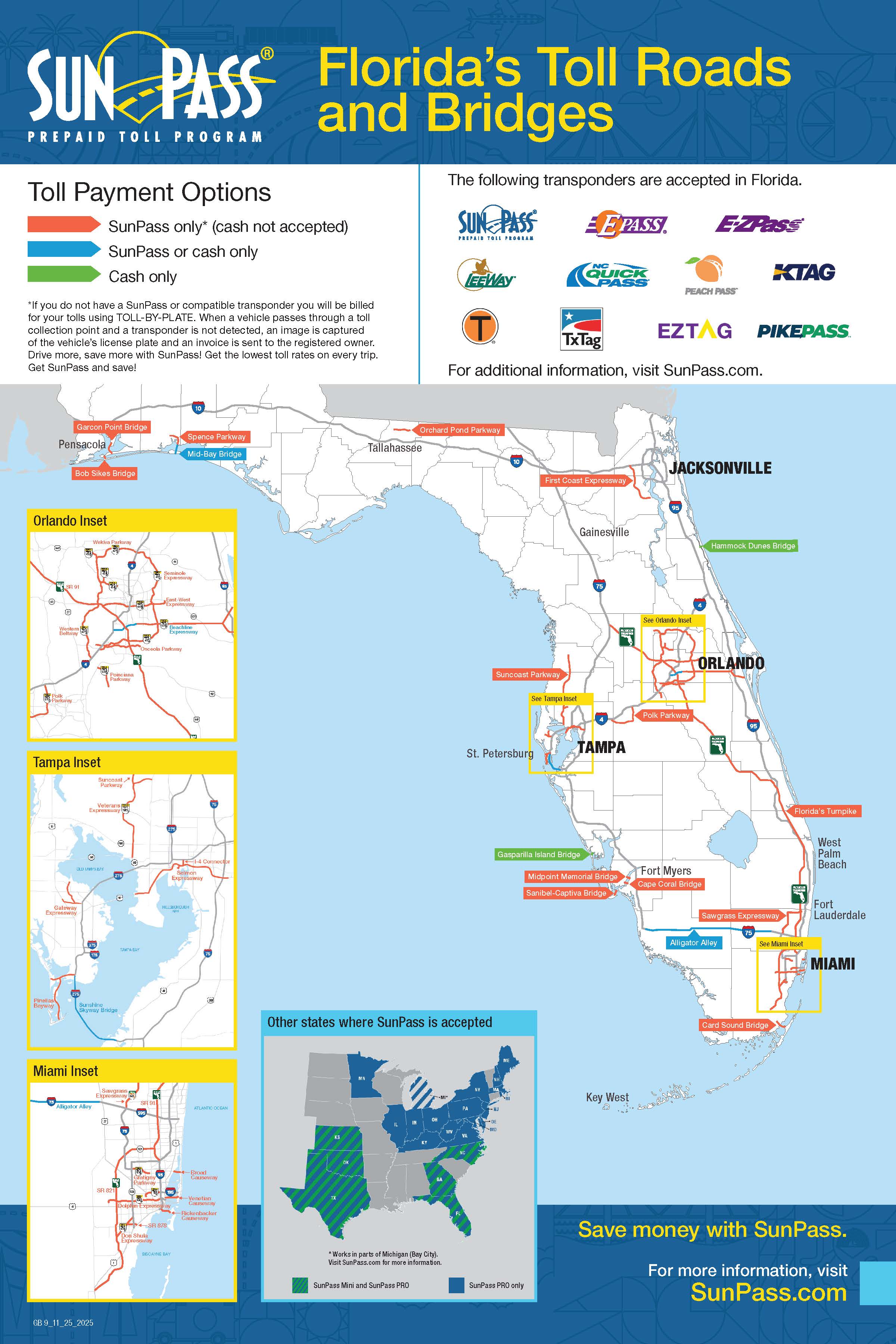
The Extent of Florida’s Toll Roads
The state’s toll network spans thousands of miles, including major arteries that are indispensable for travel. The most prominent example is Florida’s Turnpike, a critical north-south corridor stretching from Homestead in the south to just past Ocala in the north, serving major hubs like Orlando and Miami. Beyond the Turnpike, travelers will encounter numerous other toll facilities. These include various expressways managed by regional authorities, such as the Central Florida Expressway Authority (CFX) around Orlando, the Miami-Dade Expressway Authority (MDX) in South Florida, and the Tampa Hillsborough Expressway Authority (THEA) in Tampa. Furthermore, newer additions like the I-4 Express lanes in Orlando and the I-75 Express lanes near Fort Lauderdale and Miami offer variable-priced toll options for expedited travel. Many bridges and smaller connectors also operate as toll facilities, emphasizing the pervasiveness of the system.
Why Florida Utilizes Tolls
The primary reason Florida relies heavily on toll roads is to fund the construction, maintenance, and expansion of its vast transportation infrastructure. With a rapidly growing population and a thriving tourism industry, the demand on roads is immense. Toll revenues provide a dedicated and sustainable funding source that supplements state and federal allocations, allowing for continuous improvements and new construction projects without solely burdening general taxpayers. This system ensures that those who use the specific tolled facilities contribute directly to their upkeep and development, helping to manage congestion and facilitate smoother travel for everyone.
“Toll-by-Plate” vs. Dedicated Electronic Lanes
Understanding the different toll collection methods is paramount. Florida primarily operates on an all-electronic tolling system, especially on newer facilities and major highways. This means there are typically no cash lanes, relying instead on transponders or photographic license plate recognition.
- Dedicated Electronic Lanes (Transponder Only): These lanes are clearly marked for transponder users only. Vehicles equipped with an accepted transponder (like SunPass or E-ZPass) can pass through these lanes without stopping, and the toll is automatically deducted from their account. These lanes often offer faster throughput and sometimes discounted rates compared to other methods.
- “Toll-by-Plate” / “Pay By Mail”: If a vehicle passes through an electronic toll plaza without an active transponder, cameras capture an image of the vehicle’s license plate. A bill is then mailed to the registered owner of the vehicle for the toll amount, often with an additional administrative fee. This system ensures that all vehicles using the toll road are accounted for, even without a transponder, though it is generally the most expensive way to pay due to the added fees.
Popular Electronic Payment Methods
The most efficient and cost-effective way to pay for tolls in Florida is through electronic transponders. These small devices mounted on your windshield allow for seamless passage through toll gantries, eliminating the need for cash and often providing a discount on tolls.
SunPass: The Preferred Choice
SunPass is Florida’s prepaid electronic toll program and is by far the most widely accepted and recommended method for paying tolls within the state. It offers significant convenience and cost savings.
- How it Works: A small transponder is affixed to your vehicle’s windshield. When you drive through a SunPass-equipped toll plaza, the transponder communicates with an overhead antenna, and the toll amount is electronically deducted from your prepaid SunPass account.
- Transponder Types:
- SunPass Mini: A sticker transponder that adheres to the windshield. It’s inexpensive, one-time use (cannot be moved between vehicles), and costs around $5.
- SunPass PRO: A portable device that can be moved between vehicles. It costs approximately $20 and offers interoperability with other toll systems outside of Florida.
- Acquiring a SunPass: You can purchase a SunPass transponder at various retail locations throughout Florida, including Publix supermarkets, CVS Pharmacies, Walgreens, and AAA offices. They are also available online through the SunPass website.
- Funding Your Account: Once purchased, you need to activate your SunPass online or by phone and load it with funds. You can set up automatic replenishment from a credit card or bank account to ensure you always have a sufficient balance.
- Benefits: SunPass users typically pay the lowest toll rates and avoid any administrative fees associated with “Toll-by-Plate.”
E-ZPass Compatibility
In recent years, Florida has expanded its interoperability with other major toll systems. The most significant development has been the acceptance of E-ZPass.
- What is E-ZPass? E-ZPass is a widely used electronic toll collection system across 19 states in the Eastern United States, from Maine to Virginia and west to Illinois.
- Working in Florida: As of 2021, most major toll roads in Florida, including Florida’s Turnpike and facilities operated by CFX, MDX, and THEA, accept E-ZPass transponders. This is a huge convenience for travelers from other states already using E-ZPass, as it eliminates the need to acquire a separate SunPass.
- Important Note: While accepted, E-ZPass users in Florida typically pay the “cash” or “Toll-by-Plate” rate, which is higher than the discounted SunPass rate. For frequent visitors or residents, a SunPass remains the most economical option.
Other Compatible Transponders
Beyond E-ZPass, Florida’s toll systems also have interoperability agreements with a few other regional transponders:
- Peach Pass: The electronic tolling system used in Georgia.
- NC Quick Pass: The electronic tolling system used in North Carolina.
If you possess one of these transponders, you can generally use it on Florida’s toll roads. Similar to E-ZPass, you might pay the higher, non-SunPass rate. Always check with your transponder provider for the latest information on interoperability and rates.
Cash and Other Payment Alternatives
While Florida has largely transitioned to all-electronic tolling, it’s helpful to understand the limited alternatives that might still exist and the default system for those without a transponder.
The Decline of Cash Lanes
The days of plentiful cash toll booths in Florida are largely over. To improve traffic flow, reduce operational costs, and enhance safety, most major toll facilities, including Florida’s Turnpike and expressways around Orlando, Miami, and Tampa, have converted to all-electronic tolling. This means you will rarely encounter a manned cash booth on these routes. Attempting to pay with cash where it’s not accepted will result in a “Toll-by-Plate” transaction, incurring additional fees.
“Toll-by-Plate” / “Pay By Mail” Explained
For drivers who do not have an active transponder (like SunPass, E-ZPass, etc.) and pass through an electronic toll gantry, the “Toll-by-Plate” system automatically takes over.
- How it Works: Cameras at the toll plaza photograph your vehicle’s license plate. The system then identifies the registered owner of the vehicle.
- Receiving a Bill: A bill for the toll amount, plus a small administrative fee (typically $2.50 to $5.00 per billing cycle, not per toll), is mailed to the address on file with the Department of Motor Vehicles (DMV) for that license plate.
- Payment Options: The bill will provide instructions on how to pay online, by mail, or sometimes by phone.
- Potential Surcharges: It’s crucial to pay these bills promptly. Failure to pay by the due date can result in escalating fees, fines, and even a hold on your vehicle registration.
- Importance of Updated Address: Ensure your vehicle registration details are up to date with the DMV. If the bill is sent to an old address and you don’t receive it, you are still liable for the tolls and any accumulated penalties.

Specific Toll Facilities That Still Accept Cash (Rare)
While the vast majority of tolls are electronic, there might be a few isolated, smaller toll bridges or older facilities, often locally managed, that still retain a cash payment option. These are exceptions rather than the norm. For instance, some causeways leading to barrier islands or older drawbridges might have a single manned lane. However, it’s increasingly rare, and relying on finding a cash lane is not a practical strategy for general travel in Florida. Always assume tolls are electronic and plan accordingly. If you encounter a toll booth with a cash option, it will be clearly marked, but do not expect them on major highways.
Navigating Rental Cars and Tolls
Rental cars present a unique challenge when it comes to tolls in Florida. Rental companies often have their own programs, which, while convenient, can sometimes be more expensive than using your own transponder.
Rental Car Toll Programs
Most major rental car companies operating in Florida (e.g., Enterprise, Hertz, Avis, Budget, National, Alamo, Dollar, Thrifty) offer automated toll payment programs. These programs are designed to simplify the toll-paying process for renters who might not have a SunPass or E-ZPass.
- How They Work: Rental vehicles are often equipped with a transponder (either a hard-case device or a sticker) or are registered with the toll authorities for “Toll-by-Plate” billing. When the rental car passes through an electronic toll, the toll is recorded, and the rental company pays it on your behalf.
- Fees: The rental company will then charge your credit card for the accumulated tolls, plus an additional daily administrative fee for the use of their toll program. This administrative fee can vary widely, from a few dollars per day (often capped at a certain amount per rental period) to much higher charges, even on days you don’t use a toll road if the service is activated. It’s crucial to read the terms and conditions of your rental agreement carefully to understand these fees.
Opting Out or Using Your Own Transponder
Travelers have options to manage tolls in a rental car, potentially saving money.
- Using Your Own SunPass / E-ZPass: If you have your own portable SunPass PRO transponder or an E-ZPass transponder, you can use it in your rental car. To avoid being double-charged (once by your transponder and once by the rental company’s system), ensure the rental company’s transponder is properly covered or stowed away (e.g., in a “faraday bag” often provided by the rental company, or inside a foil bag) so it doesn’t activate. Registering your rental car’s license plate to your personal SunPass account for the duration of your rental can also ensure tolls are charged to your account, but this needs to be done carefully and timely removed to avoid future charges.
- Declining the Rental Company Program: In some cases, you might be able to decline the rental company’s toll program and opt for “Toll-by-Plate.” However, this is generally not recommended as it’s the most expensive option, involving the highest administrative fees charged by the state or toll authority, plus potential additional fees from the rental company for processing these violations. Some companies also automatically enroll you, making opting out difficult.
Avoiding Surprise Charges
The key to managing tolls with a rental car is proactive planning:
- Read Your Rental Agreement: Before signing, carefully review the toll payment terms. Understand the daily fees, maximum charges, and how tolls are processed.
- Ask Questions: Don’t hesitate to ask the rental agent about their specific toll program and options for opting out or using your own transponder.
- Document: Take photos of any transponder devices in the car and note their status (e.g., covered or uncovered) at pickup and drop-off.
- Check Your Statement: After your trip, meticulously review your credit card statement for any unexpected toll charges from the rental company. Discrepancies should be addressed immediately.
Tips for a Smooth Toll Road Experience in Florida
A little preparation goes a long way when encountering Florida’s toll roads. Follow these tips to ensure your travels are hassle-free and economical.
Plan Your Route in Advance
Before embarking on your journey, especially if unfamiliar with Florida’s road network, take the time to plan your route.
- Utilize GPS/Mapping Apps: Use navigation apps like Google Maps, Waze, or Apple Maps. Most of these apps have settings that allow you to “Avoid Tolls” or show you the toll cost for your route. This foresight will help you decide whether to take toll roads for speed or seek alternative, toll-free routes if saving money is a priority.
- Identify Toll Locations: Knowing where tolls are located can help you anticipate payments or avoid specific sections if desired.
- Estimate Costs: If using tolls, try to estimate the approximate cost to better budget for your trip.
Monitor Your SunPass Account
If you’re using a SunPass transponder, regular monitoring of your account is essential to prevent issues.
- Keep Funds Topped Up: Ensure your SunPass account always has a sufficient balance. Set up auto-replenishment with a credit card or bank account to automatically add funds when your balance drops below a certain threshold.
- Check Transaction History: Periodically review your transaction history online. This helps you track your spending, verify that tolls are correctly recorded, and quickly identify any potential discrepancies.
- Update Vehicle Information: If you get a new car or change license plates, update your vehicle information on your SunPass account immediately. Incorrect information can lead to “Toll-by-Plate” charges.
Understand Signage
Florida’s toll road signage is generally clear, but understanding what to look for is crucial, especially when approaching gantries or exits.
- “SunPass Only”: These lanes are exclusively for vehicles with active SunPass or compatible transponders. Driving through these lanes without a transponder will result in a “Toll-by-Plate” bill.
- “Cash/Coin”: As mentioned, these are rare but will be clearly marked if available. Expect them primarily on older, smaller facilities.
- “Toll-by-Plate”: This indicates that electronic tolling is in effect, and if you don’t have a transponder, your license plate will be photographed, and a bill will be mailed to you.
- Express Lanes: Look for signs indicating “Express Lanes” or “Managed Lanes.” These often have variable pricing and require an electronic transponder.
What to Do if You Miss a Toll
It happens. You might inadvertently pass through a toll without a transponder or available cash. Don’t panic, but act swiftly.
- Don’t Ignore It: Ignoring a missed toll will lead to accumulating fines and potentially a hold on your vehicle registration.
- Online Resolution: Many toll authorities in Florida offer online portals where you can search for and pay missed tolls using your license plate number. For example, Florida’s Turnpike Enterprise has a “Pay A Toll” section on its website.
- Contact the Authority: If you’re unsure how to proceed, contact the specific toll authority (e.g., Florida’s Turnpike Enterprise, CFX) as soon as possible to resolve the issue.

Budgeting for Tolls
Toll costs can add up, especially on longer journeys or if you frequently use expressways around major cities.
- Estimate Average Costs: For common routes like Miami to Orlando on Florida’s Turnpike, expect tolls to be in the $20-30 range one-way with SunPass, potentially more without. Shorter expressways might be $1-5 per segment.
- Factor into Travel Budget: Incorporate an estimated toll budget into your overall travel expenses to avoid surprises. Using a SunPass will always provide the most cost-effective solution.
By understanding Florida’s tolling system and leveraging the available electronic payment options, you can ensure a smooth, efficient, and penalty-free journey across the Sunshine State. Happy travels!
LifeOutOfTheBox is a participant in the Amazon Services LLC Associates Program, an affiliate advertising program designed to provide a means for sites to earn advertising fees by advertising and linking to Amazon.com. Amazon, the Amazon logo, AmazonSupply, and the AmazonSupply logo are trademarks of Amazon.com, Inc. or its affiliates. As an Amazon Associate we earn affiliate commissions from qualifying purchases.