
Florida, often referred to as the Sunshine State, has long captured the imagination of individuals seeking a new chapter filled with warmth, opportunity, and a distinct way of life. The question of “how many people move to Florida each day” is not merely an inquiry into demographic statistics; it delves into the profound lifestyle choices driving mass migration patterns and the subsequent transformation of a state’s social, economic, and cultural fabric. This constant influx of new residents underscores a dynamic narrative of growth, aspiration, and the evolving American dream. Understanding this daily migration offers crucial insights into both the allure of Florida and the challenges and opportunities it presents for its new and existing communities.
The Sunshine State’s Irresistible Lifestyle Pull
The magnetic appeal of Florida stems from a multifaceted blend of lifestyle advantages that cater to a diverse array of preferences and life stages. From retirees seeking tranquil golden years to young professionals chasing career advancements, the state offers compelling reasons to relocate, solidifying its status as a premier destination for significant life transitions. These lifestyle factors collectively contribute to the sustained daily migration.
Climate and Outdoor Living
Perhaps the most obvious draw is Florida’s idyllic subtropical climate. With abundant sunshine year-round and mild winters, the state offers an unparalleled setting for outdoor living. This weather fosters a lifestyle rich in recreational activities, from pristine beaches and boating in places like Miami and Fort Lauderdale to world-class golf courses in Naples and Sarasota. Residents can enjoy everything from swimming, fishing, and kayaking to hiking and cycling virtually every day of the year. The state’s natural beauty, exemplified by its unique ecosystems like the Everglades National Park, provides endless opportunities for exploration and a deep connection with nature, promoting a healthy and active lifestyle that is difficult to replicate in colder climates.
Economic Opportunities and Business Environment
Beyond leisure, Florida presents a robust and expanding economic landscape that attracts a significant portion of its new residents. The state boasts a pro-business environment, characterized by no state income tax, which is a substantial financial incentive for individuals and businesses alike. Key industries such as tourism, hospitality, aerospace, logistics, international trade, and technology are thriving, creating a wealth of employment opportunities. Cities like Orlando thrive on tourism and theme parks like Walt Disney World Resort and Universal Orlando Resort, while Tampa and Jacksonville serve as major financial and logistics hubs. The growth of tech sectors in cities like St. Petersburg and the space industry around the Kennedy Space Center further diversify the job market, appealing to professionals seeking dynamic career paths and a lower overall tax burden. This economic vibrancy allows individuals to not only find work but also to achieve a higher quality of life.
Retirement Haven and Senior Lifestyle
Florida has long been synonymous with retirement, and for good reason. The combination of warm weather, a lower cost of living compared to many northern states, and a vast array of age-restricted communities specifically designed for seniors creates an ideal environment for those looking to enjoy their post-career years. These communities often provide extensive amenities, social activities, and healthcare services, fostering a vibrant and supportive lifestyle for retirees. The ability to pursue hobbies like golf, fishing, or simply relaxing by the beach without the harsh realities of winter contributes significantly to the state’s enduring appeal as a retirement haven. Areas like Boca Raton and Palm Beach are particularly popular for their luxurious senior living options, while more affordable options abound throughout the state.
Quantifying the Influx: Daily Migration Data
The perception of a steady stream of newcomers to Florida is backed by compelling data, though pinpointing an exact daily number requires careful analysis of various demographic indicators. Understanding these statistics reveals the scale of this lifestyle shift and its broader implications.
Data Sources and Challenges
Accurately calculating the precise number of people moving to Florida each day involves synthesizing data from several sources, including the U.S. Census Bureau, state demographic reports, moving company statistics, and utility hookup data. The U.S. Census Bureau provides annual population estimates and migration data, offering a macro view. However, daily figures are typically extrapolations. Challenges arise from the transient nature of some moves, the distinction between seasonal residents and permanent relocations, and the lag in official data compilation. Despite these complexities, consistent trends emerge, indicating a significant and sustained daily inflow.
Key Demographic Trends
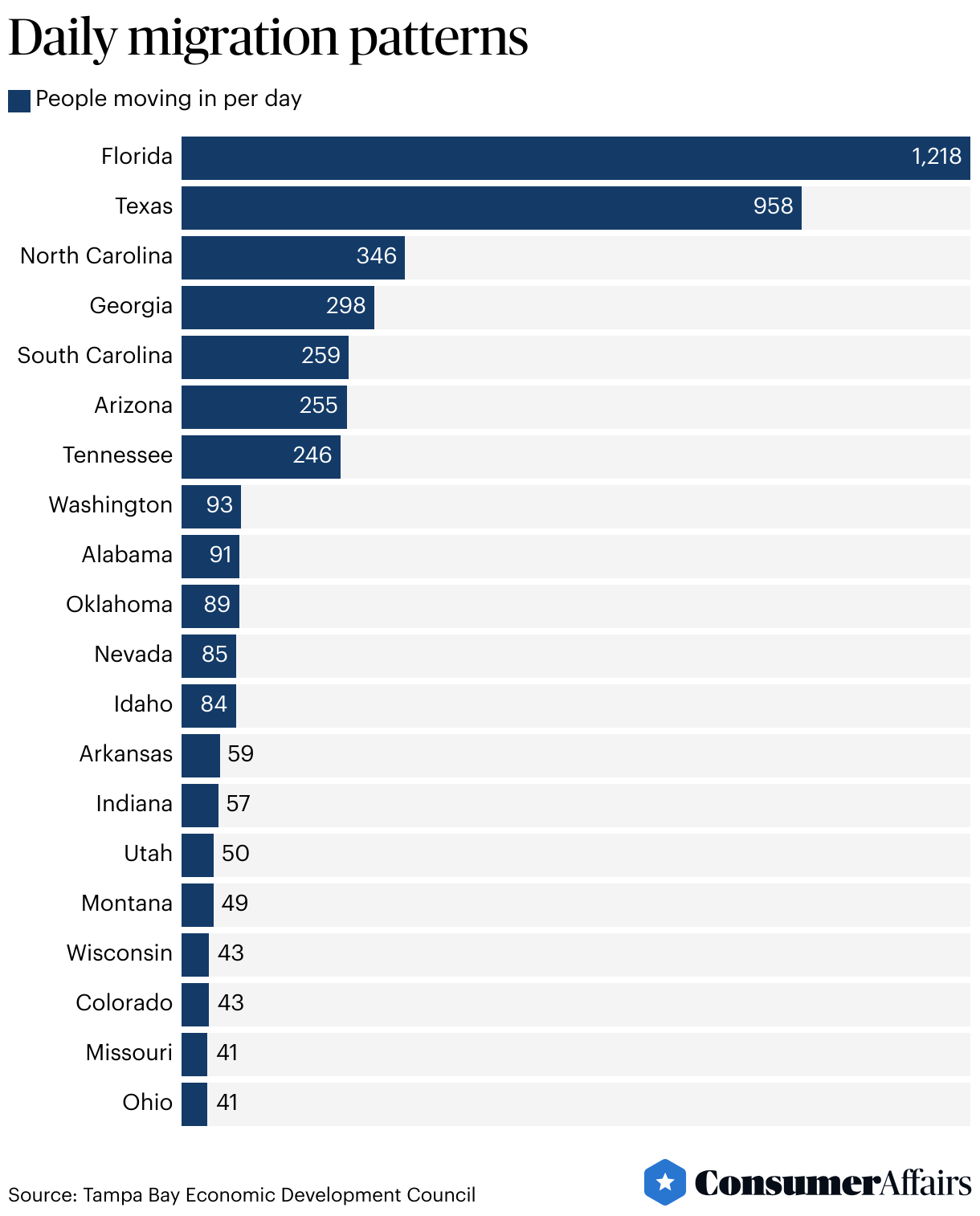
Based on recent U.S. Census Bureau data and state estimates, Florida has consistently ranked among the top states for population growth. For several years, it has added hundreds of thousands of new residents annually. When annualized figures are broken down, it’s often estimated that Florida gains anywhere from 800 to over 1,000 new residents each day, sometimes even higher during peak periods of migration. This number includes both domestic migrants (from other U.S. states) and international arrivals. The majority of domestic movers come from northeastern states like New York and New Jersey, and Midwestern states, often driven by a search for lower taxes, warmer weather, and a more relaxed lifestyle.
Fastest Growing Areas

The impact of this migration is not evenly distributed across the state. Certain metropolitan areas and counties experience disproportionately high growth rates. South Florida (including Miami, Fort Lauderdale, and Palm Beach) and Central Florida (especially the Orlando-Kissimmee-Sanford corridor and the Tampa-St. Petersburg-Clearwater area) are perennial leaders. The southwest coast, with cities like Naples and Sarasota, also continues to see substantial growth, particularly among retirees. Even smaller, once-sleepy towns adjacent to major hubs are experiencing rapid development as new residents seek more affordable housing and a quieter lifestyle while remaining close to amenities. This concentrated growth points to specific lifestyle preferences driving location choices within the state.
The Lifestyle Ripple Effect: Impact on Florida
The continuous daily influx of people profoundly reshapes the landscape of Florida. This constant demographic shift creates a ripple effect across various aspects of life in the state, influencing everything from the housing market to the cultural identity of its communities. These impacts are a direct consequence of so many individuals choosing to embrace the Florida lifestyle.
Housing Market Dynamics
One of the most immediate and significant impacts of sustained daily migration is on the housing market. High demand, coupled with finite land resources, especially in desirable coastal areas, drives up housing prices and rental costs. This creates both opportunities for developers and challenges for existing residents and new arrivals seeking affordable accommodation. Metropolitan areas like Miami, Tampa, and Orlando have seen rapid appreciation, making homeownership more challenging for some. The demand also fuels new construction, leading to the development of new communities and the expansion of suburban areas, changing the visual and infrastructural landscape of many regions. This dynamic directly affects the lifestyle affordability for many.
Infrastructure and Urban Development
With hundreds of new residents arriving daily, Florida’s infrastructure is constantly under pressure. Roads become more congested, public transportation needs expand, and utilities (water, electricity, waste management) face increased strain. State and local governments in cities like Jacksonville and Gainesville are continually investing in infrastructure projects to accommodate this growth, including new highways, public transit systems, and expansions of water treatment facilities. Urban development strategies increasingly focus on smart growth, aiming to balance economic expansion with environmental sustainability and quality of life for residents. The need for schools, healthcare facilities, and public services also escalates, requiring significant planning and resource allocation to maintain desirable lifestyle standards.
Cultural Evolution and Community Fabric
The diverse origins of Florida’s new residents enrich its cultural tapestry. People moving from various U.S. states and countries bring with them unique traditions, cuisines, perspectives, and skills. This cultural fusion contributes to a dynamic and evolving community fabric, particularly in cosmopolitan centers like Miami, known for its vibrant Latin American influences, or Key West, with its laid-back, bohemian atmosphere. New restaurants, cultural festivals, and community organizations emerge, reflecting the diverse interests of the expanding population. While this enriches the lifestyle experience for many, it can also lead to shifts in community identity and, at times, challenges in integrating diverse groups harmoniously.
Navigating the Relocation Journey: A Lifestyle Choice
For those contemplating becoming one of the hundreds who move to Florida each day, the journey is more than just a logistical exercise; it’s a profound lifestyle choice that requires careful consideration and planning.
Planning Your Florida Lifestyle
Relocating to Florida means envisioning a new daily routine, social circles, and leisure pursuits. Prospective residents should research different regions to find the best fit for their desired lifestyle. Do they prefer the bustling urban energy of Orlando, the laid-back beach vibe of Destin or Daytona Beach, or the quiet charm of a smaller town? Considerations should include proximity to work, schools, family, preferred recreational activities, and specific community amenities. Understanding the local culture, whether it’s the academic feel of Gainesville or the governmental pulse of Tallahassee, is crucial for a smooth transition. This involves not just finding a place to live but finding a place where one’s desired lifestyle can flourish.
Integrating into New Communities
Successfully integrating into a new community is key to a fulfilling Florida lifestyle. This involves actively seeking out social opportunities, joining local clubs or volunteer groups, and engaging with neighbors. Many communities, especially those with a high influx of new residents, offer welcome programs and events designed to help newcomers connect. Building a support network, understanding local customs, and exploring the unique offerings of one’s new surroundings contribute significantly to feeling at home and embracing the chosen lifestyle.

Understanding the Cost of Living
While Florida offers advantages like no state income tax, the overall cost of living can vary significantly by region. Housing costs, as mentioned, are a major factor, with metropolitan areas generally being more expensive. Other expenses, such as insurance (especially homeowner’s insurance in coastal areas prone to hurricanes), transportation, and utilities, should be carefully factored into any relocation budget. While the absence of state income tax is a draw, individuals should fully understand property taxes, sales tax, and other local fees that contribute to the total cost of maintaining their new Florida lifestyle.
The daily migration to Florida is a testament to the state’s enduring appeal as a land of opportunity and a destination for diverse lifestyle aspirations. Whether driven by the promise of year-round sunshine, economic growth, or a peaceful retirement, hundreds continue to choose Florida as their new home each day, perpetually reshaping its identity and future.
LifeOutOfTheBox is a participant in the Amazon Services LLC Associates Program, an affiliate advertising program designed to provide a means for sites to earn advertising fees by advertising and linking to Amazon.com. Amazon, the Amazon logo, AmazonSupply, and the AmazonSupply logo are trademarks of Amazon.com, Inc. or its affiliates. As an Amazon Associate we earn affiliate commissions from qualifying purchases.