
Embarking on a new professional path in Hawaii offers a unique blend of opportunity and island charm. For those seeking a flexible, impactful role that contributes directly to their community, becoming a Notary Public in the Aloha State presents an appealing option. This comprehensive guide delves into the process, requirements, and lifestyle implications of taking on this essential role, empowering you to navigate the journey with confidence and clarity.
The Allure of a Notary Lifestyle in Hawaii
The decision to become a Notary Public often stems from a desire for professional autonomy, supplemental income, or a deeper involvement in local affairs. In Hawaii, these motivations are amplified by the state’s distinct culture, vibrant economy, and diverse population, which includes both long-term residents and a constant flow of visitors. The notary profession offers a gateway to understanding and supporting the various legal and business transactions that underpin island life, making it a truly integral part of the local lifestyle.

Why Choose Notarization as a Profession?
Becoming a Notary Public offers a wealth of advantages that appeal to a wide range of individuals. Primarily, it provides an unparalleled level of flexibility. Many notaries operate on a part-time basis, fitting their services around other commitments, whether that’s a full-time job, family responsibilities, or the pursuit of personal passions. This adaptability is particularly attractive in Hawaii, where a balanced lifestyle is highly valued. The role can serve as an excellent source of supplemental income, offering a practical way to boost financial stability without requiring a significant time commitment. For entrepreneurs, it can even be a foundational step towards building a small business, offering mobile notarization services, or specializing in areas like loan signings.
Beyond the financial and logistical benefits, the notary profession carries significant societal weight. Notaries are entrusted with the crucial responsibility of verifying identities and witnessing signatures, thereby preventing fraud and ensuring the integrity of vital documents. This public service aspect provides a deep sense of purpose and community contribution. Notaries act as impartial witnesses, serving as a trusted safeguard in transactions ranging from real estate deals and legal affidavits to powers of attorney and medical directives. For those who enjoy interacting with people and providing an essential service, notarization offers a rewarding avenue to make a tangible difference in the lives of individuals and the smooth functioning of local commerce.
The Unique Context of Notarizing in the Aloha State
Notarizing documents in Hawaii comes with its own set of distinct characteristics and opportunities, shaped by the state’s unique demographic and economic landscape. The constant influx of tourists, combined with a dynamic real estate market and a close-knit local community, creates a consistent demand for notary services. Residents require notarization for everyday legal matters, while visitors often need documents attested for out-of-state or international purposes. This diverse clientele means that notaries in Hawaii engage with a broad spectrum of individuals and document types, ensuring a varied and engaging professional experience.
The lifestyle of a notary in Hawaii can be remarkably varied. Some choose to operate from a fixed office location, perhaps within a legal firm or real estate agency, while others opt for a mobile notary service, traveling to clients’ homes, workplaces, or even scenic outdoor locations when appropriate. This mobile flexibility perfectly aligns with the island spirit, allowing notaries to integrate their work into the natural beauty and relaxed pace of life. Imagine conducting a notarization overlooking the Pacific Ocean or after a surf session – such scenarios, while not the norm, highlight the potential for a truly unique professional lifestyle that blends work with the unparalleled environment of Hawaii. Furthermore, the role provides an excellent opportunity to network within the local business community, connecting with lawyers, real estate agents, loan officers, and other professionals, thereby fostering deeper ties within the island’s economic fabric.
Essential Qualifications for Hawaiian Notaries
To uphold the integrity and trustworthiness of the notary profession, the State of Hawaii has established clear and stringent requirements for aspiring Notaries Public. These qualifications are designed to ensure that all appointed notaries possess the necessary legal understanding, ethical grounding, and personal reliability to fulfill their duties effectively and responsibly. Meeting these prerequisites is the foundational step on your journey to becoming a commissioned notary.
Meeting the Core Requirements
The initial set of qualifications for becoming a Notary Public in Hawaii revolves around establishing your eligibility as a responsible adult and a resident of the state. Firstly, applicants must be at least 18 years of age, demonstrating the legal capacity to enter into a binding agreement and perform the duties of a public officer. This age requirement ensures a certain level of maturity and judgment essential for the role. Secondly, and critically for a position that serves the local populace, applicants must be a legal resident of the State of Hawaii. This typically means having a physical address within one of the Hawaiian islands and an intent to reside there. Proof of residency is a standard component of the application process.
Beyond age and residency, a crucial hurdle for all prospective notaries is the background check. The State of Hawaii requires all applicants to undergo a thorough criminal background investigation to ensure they possess the moral character and integrity necessary for handling sensitive legal documents. Any felony convictions, or certain misdemeanors, may disqualify an individual from becoming a notary. This rigorous vetting process is in place to protect the public from potential fraud or misconduct and reinforces the high level of trust placed in Notaries Public. It underscores the professional and ethical standards expected of those who hold this important public office. Successful completion of this background check is non-negotiable and fundamental to the application process.
Understanding Legal Foundations
A profound understanding of the legal framework governing notarization is paramount for any Notary Public, and Hawaii is no exception. While notaries are not attorneys and cannot provide legal advice, they must be intimately familiar with the statutes that define their powers, responsibilities, and limitations. The primary legal text guiding notaries in Hawaii is the Hawaii Revised Statutes, specifically chapter 456, which pertains directly to Notaries Public. This chapter outlines everything from appointment qualifications and bond requirements to acceptable forms of identification, authorized notarial acts, and prohibitions.
Aspiring notaries are expected to study and comprehend these statutes thoroughly. This involves understanding what constitutes a valid notarial act (e.g., acknowledgments, jurats, certified copies of specific documents), the necessity of personal appearance, acceptable identification methods, and the crucial requirement of impartiality. A deep grasp of these legal foundations ensures that notaries perform their duties in strict accordance with the law, thereby preventing errors that could invalidate documents or expose them to legal liability. Many resources, including study guides and workshops, are available to help prospective notaries master this legal knowledge. Demonstrating this understanding is key to successfully navigating the application process and competently serving the public.
The Application and Appointment Process
Once you’ve confirmed your eligibility and built a foundational understanding of the legal requirements, the next phase involves navigating the official application and appointment procedures set forth by the State of Hawaii. This structured process ensures that all notaries are properly vetted, bonded, and officially recognized, thereby maintaining the integrity and public trust associated with the office. Diligence and attention to detail are crucial at every step.
Navigating the Application Form
The journey to becoming a Notary Public in Hawaii officially begins with completing and submitting the designated application form to the Lieutenant Governor’s Office. This form serves as your primary introduction to the state, requiring accurate and comprehensive information about your personal details, residency, and qualifications. Expect to provide your full legal name, contact information, social security number, and details regarding your employment history. It’s imperative that all information provided is truthful and matches any supporting documentation you submit. Any discrepancies or inaccuracies can lead to delays or even rejection of your application.
In addition to personal data, the application form will likely require you to attest to your eligibility, confirming that you meet the age, residency, and moral character requirements. This typically involves signing an affirmation acknowledging your understanding of the duties and responsibilities of a Notary Public and confirming that you have not been disqualified by certain criminal convictions. Pay meticulous attention to every section of the form, ensuring all fields are correctly filled and any necessary attachments are included. While the process is designed to be straightforward, a careful approach will prevent common pitfalls and facilitate a smoother review by the commissioning authority.
The Oath and Bonding Requirements
A pivotal step in the appointment process for any Notary Public in Hawaii is fulfilling the oath and bonding requirements. Before a commission can be issued, you must take an official oath of office. This oath is a solemn promise to faithfully discharge the duties of a Notary Public in accordance with the laws of Hawaii. It underscores the serious nature of the office and your commitment to impartial and lawful service. Typically, this oath is administered by a qualified official, and you will receive a certificate confirming its completion.

Concurrently, all Notaries Public in Hawaii are required to secure and maintain a surety bond. A surety bond is a form of financial guarantee that protects the public from any financial harm caused by a notary’s negligence, error, or misconduct. The amount of the bond is specified by state law – for example, a $10,000 bond is a common requirement in many jurisdictions, including Hawaii. This bond is not insurance for the notary; rather, it provides a means of restitution for individuals who suffer losses due to a notary’s improper actions. You will need to obtain this bond from a licensed surety company and provide proof of its existence to the commissioning office. This requirement is a critical layer of protection for the public and a non-negotiable part of becoming a commissioned notary.
Receiving Your Commission
After successfully completing the application, passing the background check, taking your oath, and submitting proof of your surety bond, the final stage is the official issuance of your Notary Public commission. This is the moment when you officially become recognized by the State of Hawaii as a public officer authorized to perform notarial acts. Your commission document will typically include your name, the date your commission begins, and the date it expires. Notary commissions in Hawaii are generally valid for a specific term, usually four years, requiring renewal upon expiration.
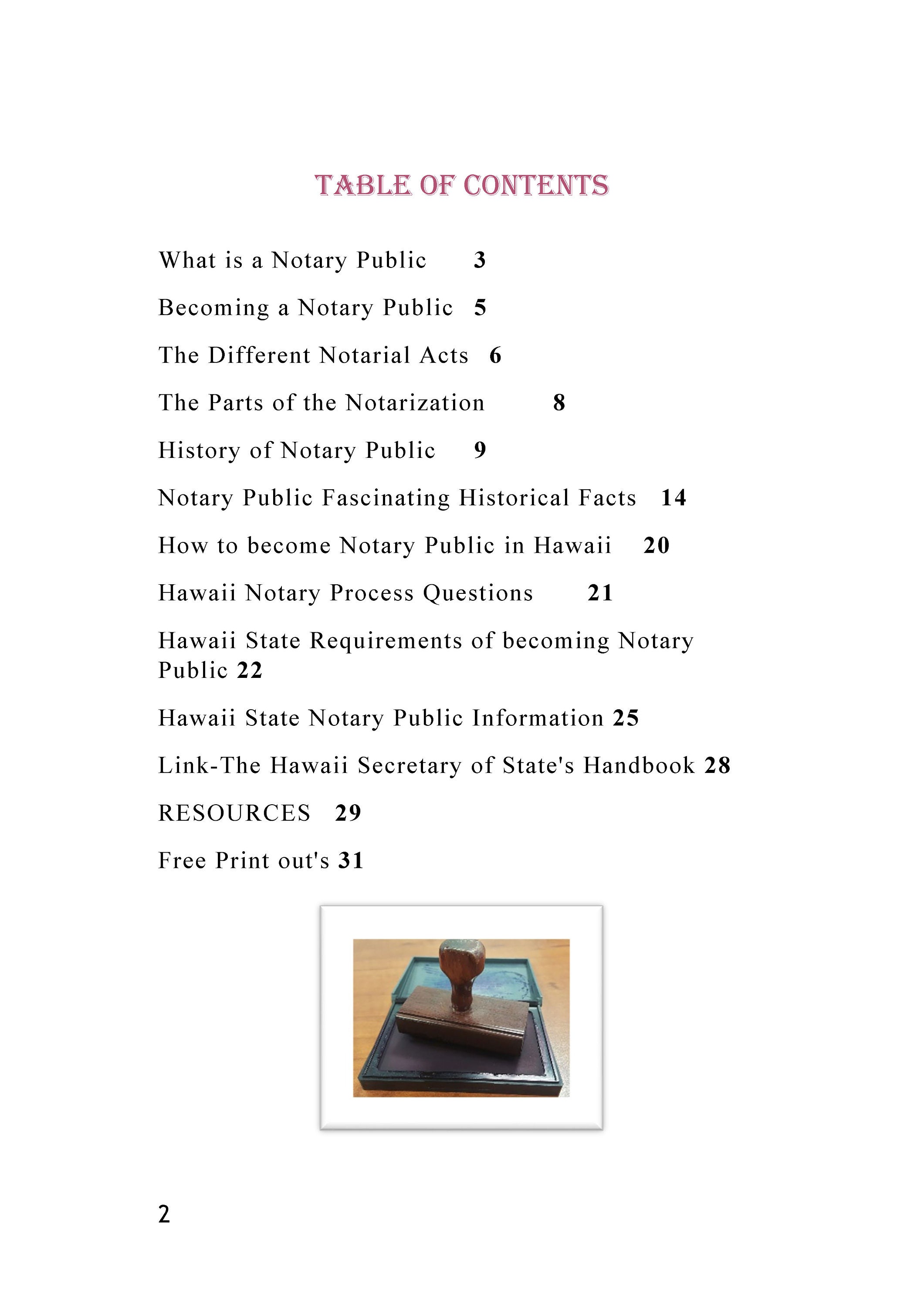
Upon receiving your commission, it is crucial to procure your official notary stamp or seal and a notary journal. The stamp or seal is the official impression you will place on documents you notarize, containing your name, commission number, and the words “Notary Public, State of Hawaii”. The notary journal is a legal requirement in Hawaii and serves as a detailed record of every notarial act you perform. Both the stamp and the journal are indispensable tools for fulfilling your duties and maintaining proper compliance. With these items in hand and your commission secured, you are officially ready to begin your service as a Notary Public, contributing to the legal and professional landscape of Hawaii.
Upholding Professionalism and Best Practices
Becoming a Notary Public is not merely about receiving a commission; it’s about embracing a role of public trust and responsibility. To truly thrive and maintain credibility in this profession, especially within the unique context of Hawaii, adhering to stringent professional standards and best practices is paramount. This commitment ensures not only your legal compliance but also your reputation for integrity and competence.
Maintaining Impeccable Record-Keeping
One of the most critical responsibilities of a Notary Public in Hawaii is the meticulous maintenance of a notary journal. This journal is more than just a logbook; it is a legally mandated record of every notarial act performed, serving as an invaluable tool for legal compliance, fraud prevention, and personal protection. The Hawaii Revised Statutes specifically detail the information that must be recorded for each transaction, including the date and time of the act, the type of notarial act performed, a description of the document, the signature of the person whose signature was notarized, and how their identity was verified.
Maintaining an impeccable journal is non-negotiable. Each entry must be accurate, complete, and legible. The journal must be securely stored when not in use to prevent unauthorized access, theft, or damage. In the event of a legal challenge, a well-maintained journal can serve as crucial evidence, protecting both the notary and the integrity of the notarized document. Furthermore, being diligent with your record-keeping demonstrates professionalism and a commitment to upholding the law, fostering trust among clients and legal professionals alike. Regular review of journal entries also helps to identify any patterns or areas for improvement in your notarial practice.
Ethical Conduct and Avoiding Pitfalls
The cornerstone of the notary profession is impartiality and unwavering ethical conduct. As a Notary Public, you serve as an unbiased third party, and any perceived conflict of interest or bias can undermine the validity of your actions and damage public trust. It is imperative to perform all notarial acts without personal interest in the transaction, treating all signers equally and without prejudice. This means refusing to notarize documents where you are a party to the transaction, or if the signer is a close relative, to avoid even the appearance of impropriety.
One of the most significant pitfalls to avoid is providing legal advice. Notaries are explicitly prohibited from practicing law unless they are also licensed attorneys. Your role is limited to verifying identities, witnessing signatures, and administering oaths – not to explain the legal implications of a document or advise on its content. Overstepping this boundary can lead to serious legal consequences, including fines, suspension of your commission, or even criminal charges. Another critical ethical consideration is never to notarize a document if the signer is not physically present before you. This rule, known as “personal appearance,” is fundamental to preventing fraud and maintaining the integrity of the notarial act. Adhering strictly to these ethical guidelines and statutory requirements will safeguard your commission and solidify your reputation as a trustworthy and professional Notary Public in Hawaii.
Continuous Learning and Resource Utilization
The legal landscape is not static, and laws pertaining to notaries can be updated or clarified over time. Therefore, a commitment to continuous learning is vital for any Notary Public in Hawaii. Staying informed about changes to the Hawaii Revised Statutes or new interpretations of notarial law ensures that your practice remains compliant and effective. This might involve subscribing to relevant newsletters, participating in online forums, or attending refresher courses offered by professional organizations.
Furthermore, leveraging available resources is crucial for professional development and problem-solving. The Lieutenant Governor’s Office, which commissions notaries in Hawaii, typically provides official guidelines, FAQs, and contact information for inquiries. Professional notary associations, both national and state-specific, offer a wealth of support, including educational materials, best practice guides, and networking opportunities. These resources can be invaluable for clarifying complex scenarios, seeking advice from experienced notaries, and staying connected with the broader notary community. By actively engaging in ongoing education and utilizing these support systems, you can ensure that you consistently perform your duties with the highest level of competence and confidence, enriching your notary lifestyle in Hawaii.
Building Your Notary Business and Lifestyle
Becoming a commissioned Notary Public in Hawaii is a significant achievement, but it’s often just the beginning of leveraging this role to enhance your professional and personal lifestyle. For many, the notary commission opens doors to entrepreneurship, providing a flexible means to earn income, build a business, and integrate seamlessly into the local community. Crafting a successful notary business involves strategic marketing, continuous skill development, and a clear vision of how this role fits into your desired life in the islands.
Marketing Your Services
Once you are commissioned and fully equipped, effectively marketing your notary services is crucial for attracting clients and establishing your presence in Hawaii. The key is to make potential clients aware of your availability and the convenience you offer. Start by creating a professional online presence. This could be a simple website or a dedicated business page on social media platforms, detailing your services, hours of operation, and contact information. Optimize your online listings for local searches, ensuring that residents and businesses in your area can easily find you when they need a notary.
Networking within your community is equally vital. Connect with local businesses that frequently require notarization, such as real estate agencies, law firms, financial institutions, and auto dealerships. Introduce yourself, leave business cards, and explain the benefits of your services, particularly if you offer mobile notarization which provides unparalleled convenience. Participating in local community events or business expos can also be effective ways to meet potential clients and build relationships. Word-of-mouth referrals are powerful in a place like Hawaii, so consistently providing excellent, reliable service will naturally lead to more business over time. Consider offering specialized services, such as after-hours or weekend availability, to cater to clients with unique schedules.
Expanding Your Notary Skills
While a general Notary Public commission allows you to perform basic notarial acts, expanding your skill set can significantly broaden your service offerings and earning potential in Hawaii. One of the most popular specializations is loan signing agent work. Loan signing agents, also known as Notary Signing Agents (NSAs), are trained to facilitate loan document signings for mortgage closings. This requires additional training and often a separate certification process, as it involves understanding complex loan documents and ensuring their proper execution. The demand for NSAs is high, especially in a dynamic real estate market like Hawaii, and it typically commands higher fees per appointment.
Another valuable area of specialization is apostille services. An apostille is a certification issued by the Secretary of State (or Lieutenant Governor in Hawaii) that authenticates the seals and signatures of officials on public documents to be used in foreign countries that are part of the Hague Apostille Convention. While notaries don’t issue apostilles, they often perform the initial notarization on documents that will later require an apostille. Understanding this process allows you to guide clients effectively and potentially offer a full-service package that includes preparing documents for apostille processing. These advanced skills not only increase your income opportunities but also position you as a more comprehensive and valuable resource for clients, further cementing your professional standing in the community.
The Impact on Your Hawaii Lifestyle
Ultimately, becoming a Notary Public in Hawaii offers a pathway to a distinctive lifestyle characterized by flexibility, community engagement, and a sense of purpose. The ability to set your own hours, especially with a mobile notary service, means you can structure your work around the activities that make living in [Hawaii](https://lifeoutofthebox.com/hawaii] so desirable – whether that’s surfing, hiking, spending time with family, or pursuing other passions. This level of autonomy can significantly enhance your work-life balance, allowing you to fully embrace the island lifestyle.
Financially, the income generated from notary services, whether supplemental or as a primary business, can contribute to greater independence and stability. It provides a means to support your life in Hawaii while contributing meaningfully to its economic and legal infrastructure. Beyond the personal benefits, your role as a notary deepens your connection to the community. You become a trusted figure, assisting residents and businesses with critical transactions, and through these interactions, you gain a unique insight into the rhythms of island life. By committing to professionalism, ethical conduct, and continuous growth, your journey as a Notary Public in Hawaii can be both personally rewarding and a valuable contribution to the vibrant community you serve.
LifeOutOfTheBox is a participant in the Amazon Services LLC Associates Program, an affiliate advertising program designed to provide a means for sites to earn advertising fees by advertising and linking to Amazon.com. Amazon, the Amazon logo, AmazonSupply, and the AmazonSupply logo are trademarks of Amazon.com, Inc. or its affiliates. As an Amazon Associate we earn affiliate commissions from qualifying purchases.