
The state capital of Hawaii is Honolulu, a vibrant and historic city located on the southeastern shores of the island of Oahu. Often referred to as the “Crossroads of the Pacific,” Honolulu is not only the administrative heart of the 50th state of the United States but also a global epicenter for culture, history, and iconic landmarks. The city serves as a bridge between the ancient traditions of the Polynesian people and the modern architectural marvels of a contemporary American metropolis. From the majestic heights of volcanic craters to the solemn grounds of naval memorials, the landmarks of Honolulu tell a story of royalty, resilience, and transformation.

The Historical Heartland: Royal Landmarks of the Monarchy
To understand Honolulu today, one must first look at its royal past. Before it became a state capital, the city was the seat of power for the Kingdom of Hawaii. Unlike any other city in the United States, Honolulu boasts a legacy of sovereign monarchs who left behind architectural treasures that stand as symbols of national pride.
Iolani Palace: A Royal Masterpiece
The most significant historical landmark in the capital is Iolani Palace. Completed in 1882, it is the only official royal palace located on American soil. Built by King Kalakaua, known as the “Merrie Monarch,” the palace was designed to demonstrate the modernity and prestige of the Hawaiian monarchy to the rest of the world. The architecture, known as American Florentine, features grand halls, intricate koa wood carvings, and the first electric light system in the islands—predating even the White House. After the monarchy was overthrown in 1893, the palace served as the capitol building for decades before being meticulously restored to its former glory.
The King Kamehameha I Statue and Aliiolani Hale
Standing directly across from the palace is the iconic King Kamehameha I Statue. This bronze figure, draped in a traditional gold-leaf feather cloak and helmet, honors the warrior king who first unified the Hawaiian Islands. Behind the statue lies Aliiolani Hale, an impressive structure that currently houses the Hawaii State Supreme Court. Its name translates to “House of Heavenly Kings,” and its design reflects the European influences that were prevalent during the 19th-century Hawaiian administration.
Kawaiahao Church and the Mission Houses
A short walk from the palace leads to Kawaiahao Church, often called the “Westminster Abbey of the Pacific.” Constructed from 14,000 coral slabs harvested from local reefs, this landmark served as the national church of the Hawaiian kingdom. Adjacent to it are the Mission Houses Museum, which include the oldest frame house in the islands, showcasing the early interactions between New England missionaries and the native population.
Architectural Icons and the Seat of Government
As Honolulu transitioned from a royal capital to a territorial and eventually a state capital, its architecture evolved to reflect its unique geographical and cultural identity. The landmarks in the downtown district are a testament to this blend of tradition and modernism.
The Hawaii State Capitol: Volcanic Inspiration
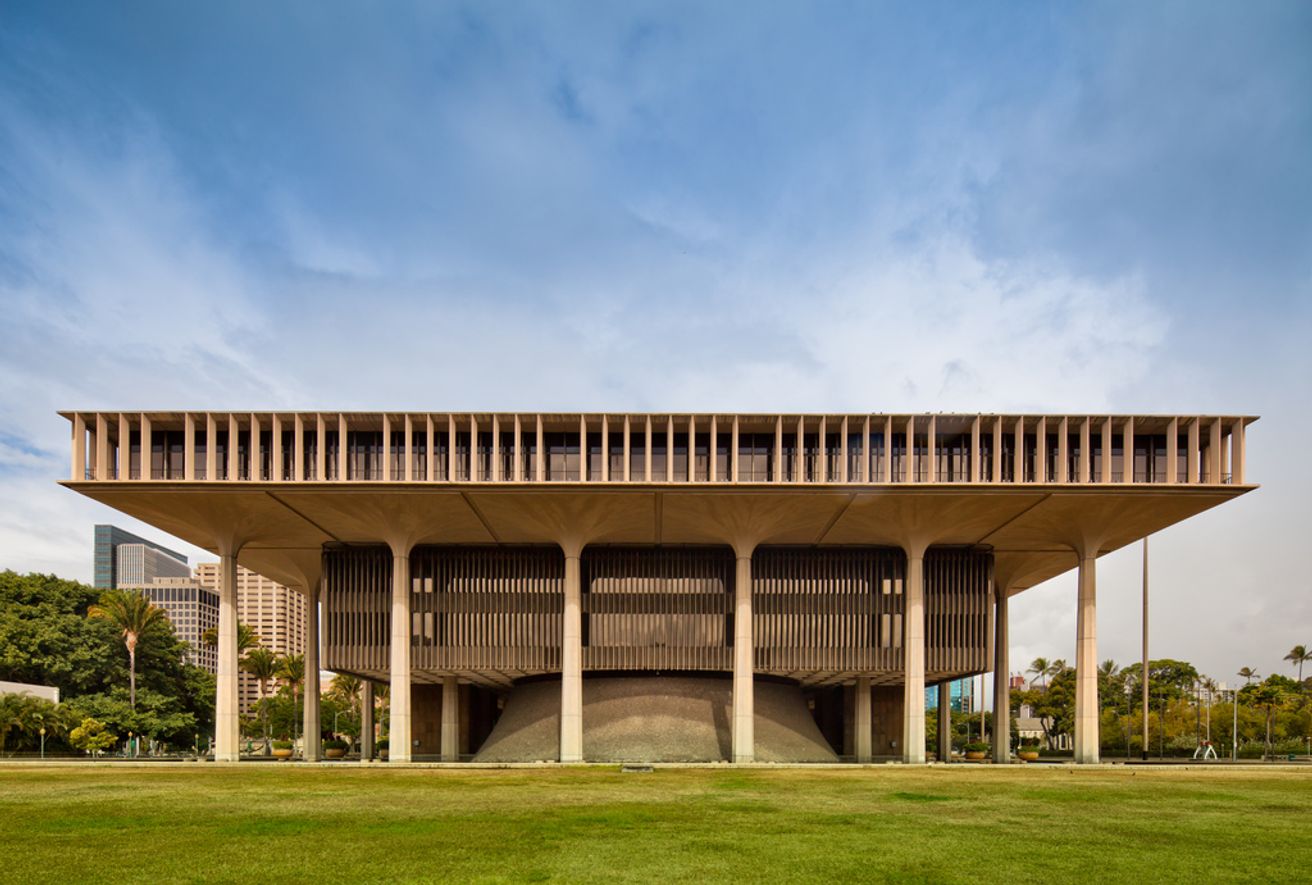
The Hawaii State Capitol is perhaps the most unique legislative building in the world. Unlike the domed structures found in most other states, this building was designed to symbolize the natural environment of Hawaii. The two legislative chambers are cone-shaped to represent volcanoes, and the building’s supporting columns are reminiscent of palm trees. Perhaps most strikingly, the center of the building is open to the sky, allowing rain and sunlight to enter the courtyard, symbolizing the transparency and openness of the democratic process in the Aloha State.
Washington Place
Located near the capitol, Washington Place is a landmark of profound historical weight. This Greek Revival mansion was the private residence of Queen Liliuokalani, the last reigning monarch of Hawaii. It was here that she was arrested during the overthrow and where she lived until her passing in 1917. Today, it serves as a museum and the official residence of the Governor of Hawaii, standing as a quiet sentinel of the island’s complex political history.

Aloha Tower: The Gateway to the City
For many years, the Aloha Tower was the tallest building in Honolulu. Built in 1926 at Honolulu Harbor, it served as a welcoming beacon for travelers arriving by sea. The word “Aloha” is emblazoned on its four sides, greeting ships from the Pacific Ocean. While it is now dwarfed by modern skyscrapers, it remains a cherished landmark and a symbol of the city’s hospitality and maritime heritage.
Natural Landmarks Defining the Capital Skyline
Honolulu is a city defined by its relationship with the land. The natural landmarks that surround the capital are not just scenic backdrops; they are geological wonders with deep cultural significance.
Diamond Head (Leahi)
No landmark is more synonymous with Honolulu than Diamond Head, or Leahi as it is known in Hawaiian. This tuff cinder cone was formed about 300,000 years ago during a single, explosive eruption. Its jagged silhouette dominates the view from Waikiki Beach. Originally used by the United States Army as a coastal defense site, it is now a National Natural Landmark. The trail to the summit offers panoramic views of the entire capital, stretching from the coastline to the Koolau Range.
Punchbowl Crater and the National Memorial Cemetery of the Pacific
Nestled within the remains of an extinct volcano, Punchbowl Crater is home to the National Memorial Cemetery of the Pacific. This site is one of the most solemn and beautiful landmarks in Honolulu. The cemetery serves as a final resting place for thousands of service members who fought in World War II, the Korean War, and the Vietnam War. The “Courts of the Missing” and the sweeping views of the city below make it a place of deep reflection for residents and visitors alike.
Nuuanu Pali Lookout
Located just a short drive from the city center, the Nuuanu Pali Lookout offers a glimpse into the dramatic geography of Oahu. The site is famous for its fierce winds and the sheer cliffs of the Koolau Range. Historically, this was the site of the Battle of Nuuanu, a pivotal conflict where King Kamehameha I defeated the forces of Oahu to solidify his rule over the islands. The lookout provides a stunning perspective of the windward coast and the lush valleys that surround the capital.
Maritime and Military Heritage
The capital’s location in the center of the Pacific Ocean has made it a strategic military hub, leading to the creation of landmarks that have shaped global history.
Pearl Harbor and the USS Arizona Memorial
Perhaps the most globally recognized landmark associated with Honolulu is Pearl Harbor. This active naval base is the site of the USS Arizona Memorial, which straddles the sunken remains of the battleship. The memorial honors the 1,177 sailors and Marines who lost their lives during the attack on December 7, 1941. It is a place of profound silence and respect, standing as a reminder of the event that brought the United States into World War II.
The Battleship Missouri and Ford Island
Near the USS Arizona Memorial sits the USS Missouri, also known as “Mighty Mo.” This massive battleship was the site where the Empire of Japan officially surrendered, ending the war. Together with the Pacific Aviation Museum on Ford Island, these landmarks create a chronological narrative of the conflict, from the “day which will live in infamy” to the final restoration of peace.
Bishop Museum: The Keeper of Culture
While many landmarks are structural or geological, the Bishop Museum serves as a landmark of knowledge. Founded in 1889 by Charles Reed Bishop in memory of his wife, Princess Bernice Pauahi Bishop, the museum houses the world’s largest collection of Hawaiian and Polynesian artifacts. Its Hawaiian Hall, with its Victorian-era architecture and deep blue galleries, is a landmark in its own right, preserving the stories and treasures of the Pacific for future generations.
In conclusion, the state capital of Hawaii is far more than just a destination for sun and surf. Honolulu is a city of layers, where every landmark—from the volcanic heights of Diamond Head to the regal halls of Iolani Palace—tells a part of a much larger story. Whether exploring the remnants of a sovereign kingdom or the memorials of a global conflict, the landmarks of this capital city offer a unique window into the soul of the Pacific. While other islands like Maui, Kauai, Molokai, Lanai, and the Big Island offer their own wonders, it is Honolulu that remains the definitive gateway to the history and future of the Hawaiian Islands.
LifeOutOfTheBox is a participant in the Amazon Services LLC Associates Program, an affiliate advertising program designed to provide a means for sites to earn advertising fees by advertising and linking to Amazon.com. Amazon, the Amazon logo, AmazonSupply, and the AmazonSupply logo are trademarks of Amazon.com, Inc. or its affiliates. As an Amazon Associate we earn affiliate commissions from qualifying purchases.