
The state of Maine stands as a sentinel of the northeastern United States, a land defined by its jagged coastline, dense pine forests, and a history as deep and cold as the Atlantic Ocean waters that lap at its shores. For travelers and historians alike, the “Pine Tree State” evokes a sense of rugged independence. Yet, for all its fame as a premier destination for nature lovers, a curious question remains that often eludes even the most seasoned visitors: How did Maine get its name? Unlike many states in New England that clearly derive their names from indigenous languages or prominent English cities, the etymology of Maine is shrouded in historical debate, blending royal heritage with the practical vernacular of 17th-century mariners.

The Etymological Mystery: From French Estates to Nautical Terms
The naming of Maine is not a settled matter of record but rather a fascinating intersection of two primary theories. Each theory offers a glimpse into the forces that shaped the early landmarks and cultural identity of the region.
The Henrietta Maria Hypothesis
One of the most persistent theories suggests that the state was named in honor of Henrietta Maria, the Queen Consort of King Charles I of England. Henrietta Maria was a French princess, the daughter of Henry IV of France, and she was said to have owned the private estate of Meyne in the French province of Maine.
Proponents of this theory point to the 1622 land grant given to Sir Ferdinando Gorges and Captain John Mason, which referred to the territory as the Province of Maine. In the royal charters of the era, it was common practice to name new territories after the homelands or personal holdings of the monarchy. However, historical skeptics note that Henrietta Maria did not actually have a direct connection to the province of Maine in France, making this a charming but perhaps apocryphal origin story.
The “Mainland” Theory
A more pragmatic explanation favored by many historians is rooted in the maritime history of the New England coast. During the early 1600s, the coast of what is now Maine was frequented by European fishermen and explorers who navigated the thousands of islands dotting the shoreline, such as those in Casco Bay.
To distinguish the expansive landmass from the smaller islands, sailors referred to the continent as “the main” or the “Maineland.” Early records from English explorers frequently used the term “the Mayne” to describe the vast territory. Over time, this descriptive term evolved into a formal proper noun. This theory aligns with the practical nature of the early settlers and the geographic landmarks that defined their survival—the distinction between a small, rocky outcrop and the endless forests of the mainland was a matter of life and death.
Defining the Borders: Landmarks of the Colonial Era
The transition from a vaguely defined “mainland” to a recognized political entity involved decades of colonial maneuvering and the establishment of landmark settlements that still stand as historical touchstones today.
The Influence of the Massachusetts Bay Colony
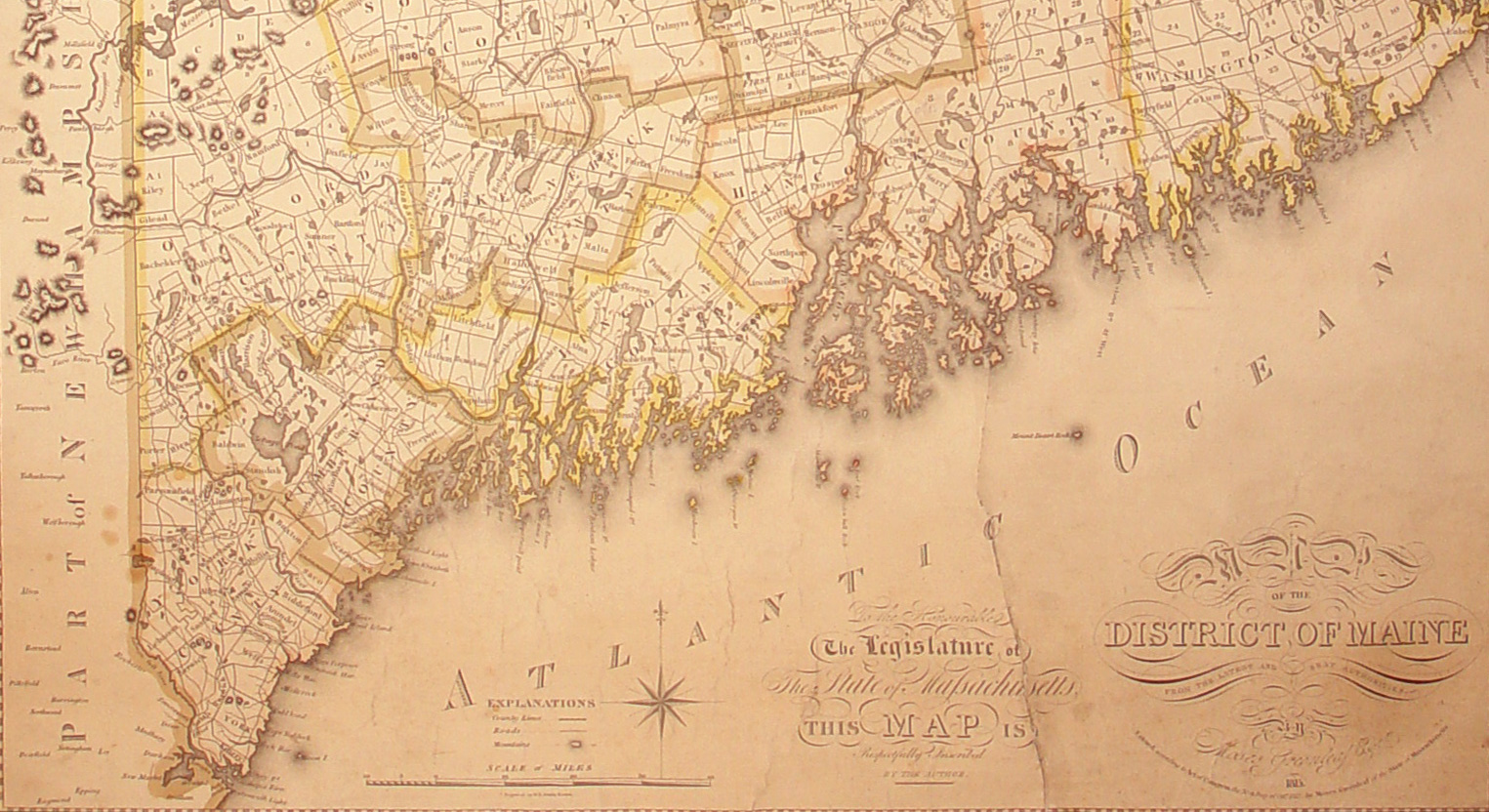
For much of its early history, Maine was not an independent state but a district of the Massachusetts Bay Colony. This administrative connection began in the mid-17th century when Massachusetts purchased the rights to the Province of Maine from the heirs of Sir Ferdinando Gorges.
This period saw the rise of significant coastal landmarks. The city of Portland, originally known as Falmouth, became a vital port and a target during various colonial conflicts. The architectural footprint of Massachusetts is still visible in the federal-style homes of Wiscasset and the layout of early towns. It wasn’t until the Missouri Compromise of 1820 that Maine finally achieved statehood, separating from Massachusetts to become the 23rd state in the United States.
Historic Forts and Frontiers
Because Maine shared a border with British Canada—specifically New Brunswick and Quebec—the region was a contested frontier. This led to the construction of massive stone fortifications that remain some of the state’s most impressive landmarks. Fort Knox, located on the Penobscot River, is one of the best-preserved examples of mid-19th-century granite coastal defense. Though it never saw combat, its imposing architecture serves as a monument to the era when the name “Maine” represented the edge of the American experiment. Similarly, Fort McClary in Kittery offers a window into the defensive posture required to protect the burgeoning trade in the Gulf of Maine.
Natural Landmarks That Shaped Maine’s Identity
Beyond the etymology of its name, Maine is defined by its physical landmarks. These natural wonders are the reason the state became a destination for the “rusticators” of the 19th century and remains a pinnacle of American tourism today.
The Rugged Atlantic Coastline and its Lighthouses
The name Maine is inseparable from the image of a lighthouse perched on a fog-shrouded cliff. These architectural landmarks were essential for navigating the treacherous “Maineland” coast. The Portland Head Light, commissioned by George Washington in 1791, is perhaps the most famous. Located in Cape Elizabeth, it symbolizes the state’s historical reliance on the sea. Further north, the Pemaquid Point Lighthouse stands atop unique, stratified rock formations that look like the very skeleton of the earth. These landmarks are more than just photo opportunities; they are the physical manifestations of the state’s maritime name and heritage.
The Majesty of Mount Katahdin and the North Woods
While the coast offers the “main” land, the interior is dominated by Mount Katahdin. Located within Baxter State Park, this mountain is the highest point in the state and the northern terminus of the Appalachian Trail. The name “Katahdin” comes from the Penobscot language, meaning “The Greatest Mountain.”
The presence of such indigenous names reminds us that before it was the Province of Maine, this land was the home of the Wabanaki Confederacy, including the Passamaquoddy, Penobscot, Micmac, and Maliseet peoples. The intersection of European names like Maine and indigenous landmarks like the Kennebec River creates a rich, layered history that defines the state’s character.
Preserving the Legacy: Modern Landmarks and Historical Memory
Today, the name Maine carries a brand of quality and serenity. The preservation of its landmarks ensures that the story of how the state got its name—and how it kept its spirit—continues to be told.
The Significance of Augusta and the State House
In the center of the state lies Augusta, the capital city. The Maine State House, designed by the famed architect Charles Bulfinch, is a landmark of governance. Constructed using native Maine granite, the building reflects the solidity and permanence of the state’s identity. Inside, the Maine State Museum offers visitors a chance to see the original charters and maps that debated the very naming of the territory, providing a scholarly anchor to the state’s legends.

National Treasures: Acadia and Beyond
No discussion of Maine as a landmark destination is complete without Acadia National Park. Primarily located on Mount Desert Island, the park is a masterclass in conservation. Landmarks within the park, such as Cadillac Mountain, provide the first view of the sunrise in the United States during certain times of the year. The town of Bar Harbor, serving as the gateway to the park, retains the Victorian charm of the era when wealthy travelers from Boston and New York first began to associate the name Maine with elite summer retreats and untouched natural beauty.
Further south, the long sandy stretches of Old Orchard Beach and the historic homes of Kennebunkport show a different side of the state—one of leisure and coastal elegance. Each of these locations, from the bustling streets of Bangor to the quiet woods near New Hampshire and Portsmouth, contributes to the collective understanding of what Maine represents.
Whether the name was a tribute to a French province or a simple descriptor for the “main” land, it has become a word that signifies a unique way of life. The landmarks of Maine serve as the physical chapters of a book that is still being written, inviting everyone to explore its rocky shores and discover the meaning behind the name for themselves.
LifeOutOfTheBox is a participant in the Amazon Services LLC Associates Program, an affiliate advertising program designed to provide a means for sites to earn advertising fees by advertising and linking to Amazon.com. Amazon, the Amazon logo, AmazonSupply, and the AmazonSupply logo are trademarks of Amazon.com, Inc. or its affiliates. As an Amazon Associate we earn affiliate commissions from qualifying purchases.