
Embarking on a journey across the Atlantic is a classic travel aspiration for many. The question of distance, specifically “How Many Miles From New York To London, England?”, is not merely a matter of geographical curiosity but a foundational piece of information for anyone planning this iconic transatlantic voyage. Understanding this distance influences everything from flight times and jet lag expectations to the sheer scale of the adventure ahead. This article delves into the specifics of the mileage, exploring the different ways to measure it and the implications for travelers.
The Great Atlantic Divide: Measuring the Distance
The journey between New York and London is a substantial one, traversing the vast expanse of the Atlantic Ocean. When discussing the distance, it’s important to clarify what measurement we are using, as “miles” can refer to different types of distances.
Great Circle Distance: The Shortest Path
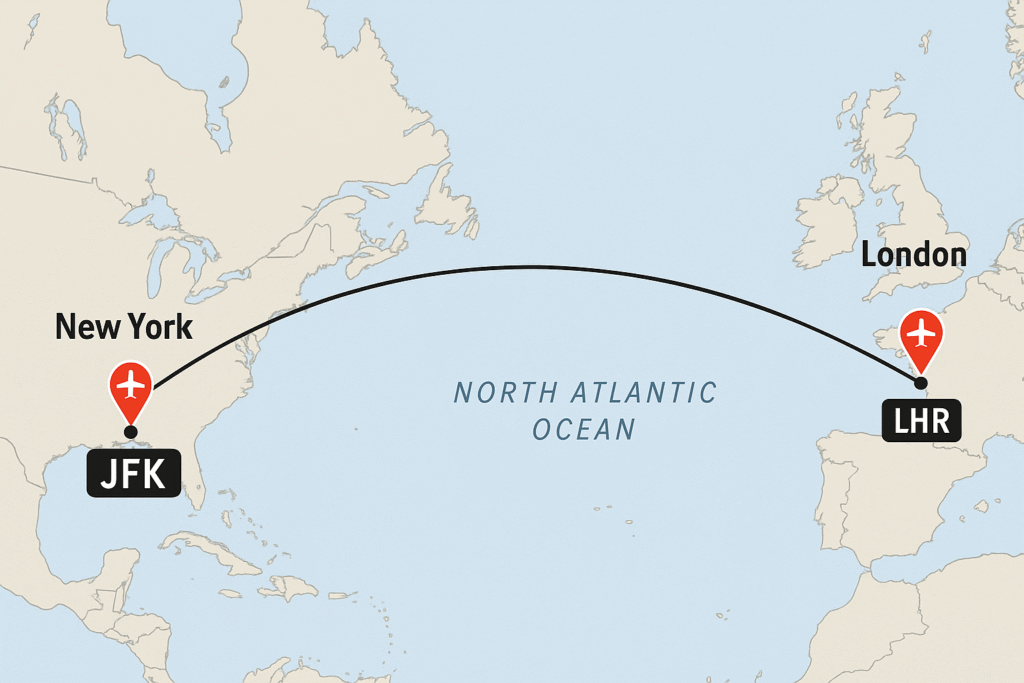
The most commonly cited and geographically accurate measurement for the distance between two points on a sphere, like the Earth, is the great-circle distance. This represents the shortest possible route between the two cities. For New York and London, this distance is approximately 3,460 miles (or about 5,570 kilometers). This figure is derived from the curvature of the Earth and is the path most aircraft will aim to follow, accounting for prevailing winds and air traffic control. It’s the benchmark against which all other travel calculations are made.
Flight Path Considerations
While the great-circle distance provides the theoretical shortest route, actual flight paths can vary. Several factors influence the precise route taken by an aircraft:
- Jet Streams: These high-altitude air currents can significantly impact flight times and, consequently, the actual distance covered. Flights heading eastbound from New York to London often benefit from tailwinds of the jet stream, making the journey slightly shorter or faster than the great-circle distance might suggest. Conversely, westbound flights can encounter headwinds.
- Air Traffic Control: Airspace is a complex and regulated environment. Pilots must adhere to specific routes and altitudes dictated by air traffic control to ensure safety and efficiency. This can sometimes lead to slight detours from the absolute shortest path.
- Weather Conditions: Severe weather, such as thunderstorms or hurricanes, can necessitate rerouting to avoid hazardous conditions, adding to the overall distance flown.
- Aircraft Performance: Different aircraft have varying optimal cruising altitudes and speeds, which can also influence flight path selection.
Therefore, while the base mileage remains constant, the actual distance flown by a commercial airliner can fluctuate slightly on any given flight.
Planning Your Transatlantic Passage
Knowing the approximate mileage is crucial for practical travel planning. It directly informs expectations about the duration of your flight and the potential impact of jet lag.
Flight Duration and Time Zones
The average flight time from New York to London is typically around 7 to 8 hours. This duration can be influenced by the factors mentioned above, particularly the jet stream. When planning, it’s also essential to remember the 5-hour time difference between New York (Eastern Standard Time or Eastern Daylight Time) and London (Greenwich Mean Time or British Summer Time). This means that departing New York in the morning will often result in an arrival in London late in the evening or even the following morning, depending on the exact departure time and flight duration.

Navigating Jet Lag
The significant distance and time difference contribute to the common phenomenon of jet lag. Jet lag occurs when your body’s internal clock (circadian rhythm) is out of sync with the new time zone.
- Understanding the Impact: Traveling eastwards, as from New York to London, can be more disruptive for some than traveling westwards. This is because you are essentially trying to “advance” your body clock.
- Strategies for Mitigation: To help minimize jet lag, travelers can:
- Adjust Sleep Schedule: Gradually shift your sleep and wake times in the days leading up to your departure.
- Stay Hydrated: Drink plenty of water during the flight and avoid excessive alcohol and caffeine, which can dehydrate you.
- Seek Sunlight: Upon arrival in London, expose yourself to natural light, especially in the morning, to help reset your internal clock.
- Eat According to Local Time: Try to eat your meals according to the local time in London to further aid your body’s adjustment.
- Rest and Activity: Balance periods of rest with light activity to help you stay awake during daylight hours in your new time zone.
Choosing Your Mode of Transport
For the journey between New York and London, air travel is overwhelmingly the most practical and common method. While historically there have been other options, they are now largely niche or historical curiosities for this specific route.
- Commercial Airlines: Numerous airlines operate direct and connecting flights between major airports in the New York metropolitan area (such as John F. Kennedy International Airport or Newark Liberty International Airport) and London’s airports (primarily Heathrow Airport and Gatwick Airport). This remains the fastest and most efficient way to cover the approximately 3,460 miles.
- Private Jets: For those seeking greater control over their schedule and a more personalized experience, private jet charters are available. These flights also adhere to similar airspace and weather considerations, but offer enhanced flexibility.
- Historical and Novelty Travel: While not a practical current option for covering the mileage efficiently, it’s worth noting that the concept of transatlantic travel has evolved. The era of ocean liners saw passengers spending several days at sea to cover the distance. Today, however, the time and distance involved make air travel the de facto standard for travel between these two global cities.
The Significance of the Distance for Travelers
The 3,460-mile journey is more than just a number; it shapes the entire travel experience, influencing preparation, expectations, and the eventual arrival in a new hemisphere.
Impact on Travel Budget and Planning
The substantial distance between New York and London has a direct impact on travel costs.
- Airfare: Longer flight routes generally translate to higher airfares due to increased fuel consumption, flight crew hours, and airport fees. The competitiveness of the New York-London route means there’s often a range of pricing options, but it remains a significant component of the overall trip budget.
- Travel Insurance: Given the distance and potential for flight disruptions, travel insurance is highly recommended. Policies can cover cancellations, delays, lost luggage, and medical emergencies, providing peace of mind for such a considerable journey.
- Time Investment: The flight duration itself is a significant time investment. Travelers need to factor in not only the flight time but also travel to and from airports, check-in procedures, and potential delays. This often means dedicating a full day, or even more, to the transit portion of the trip.

Cultural and Experiential Considerations
The geographical separation of New York and London is a crucial element in their distinct cultural identities. Covering the miles means bridging a divide that has fostered unique traditions, histories, and ways of life.
- Divergent Histories: While sharing a common historical root, New York and London have evolved along vastly different paths. New York has grown into a melting pot of global cultures, shaped by waves of immigration and its role as a beacon of the United States. London, on the other hand, boasts a rich tapestry of centuries of British history, royal traditions, and a cosmopolitan flair that is distinctly its own.
- Language Nuances: While both cities speak English, the variations in accent, slang, and idiom are pronounced. Understanding these nuances adds a layer of richness to the travel experience.
- Culinary Journeys: The culinary scenes in both cities are world-renowned but offer distinct flavors. From the diverse street food and classic diners of New York to the traditional pubs and innovative fine dining of London, the gastronomic landscape is a testament to their separate evolutions.
In essence, the 3,460 miles from New York to London represent not just a physical distance but a journey between two distinct cultural universes, each offering a unique and unforgettable travel experience.
LifeOutOfTheBox is a participant in the Amazon Services LLC Associates Program, an affiliate advertising program designed to provide a means for sites to earn advertising fees by advertising and linking to Amazon.com. Amazon, the Amazon logo, AmazonSupply, and the AmazonSupply logo are trademarks of Amazon.com, Inc. or its affiliates. As an Amazon Associate we earn affiliate commissions from qualifying purchases.