
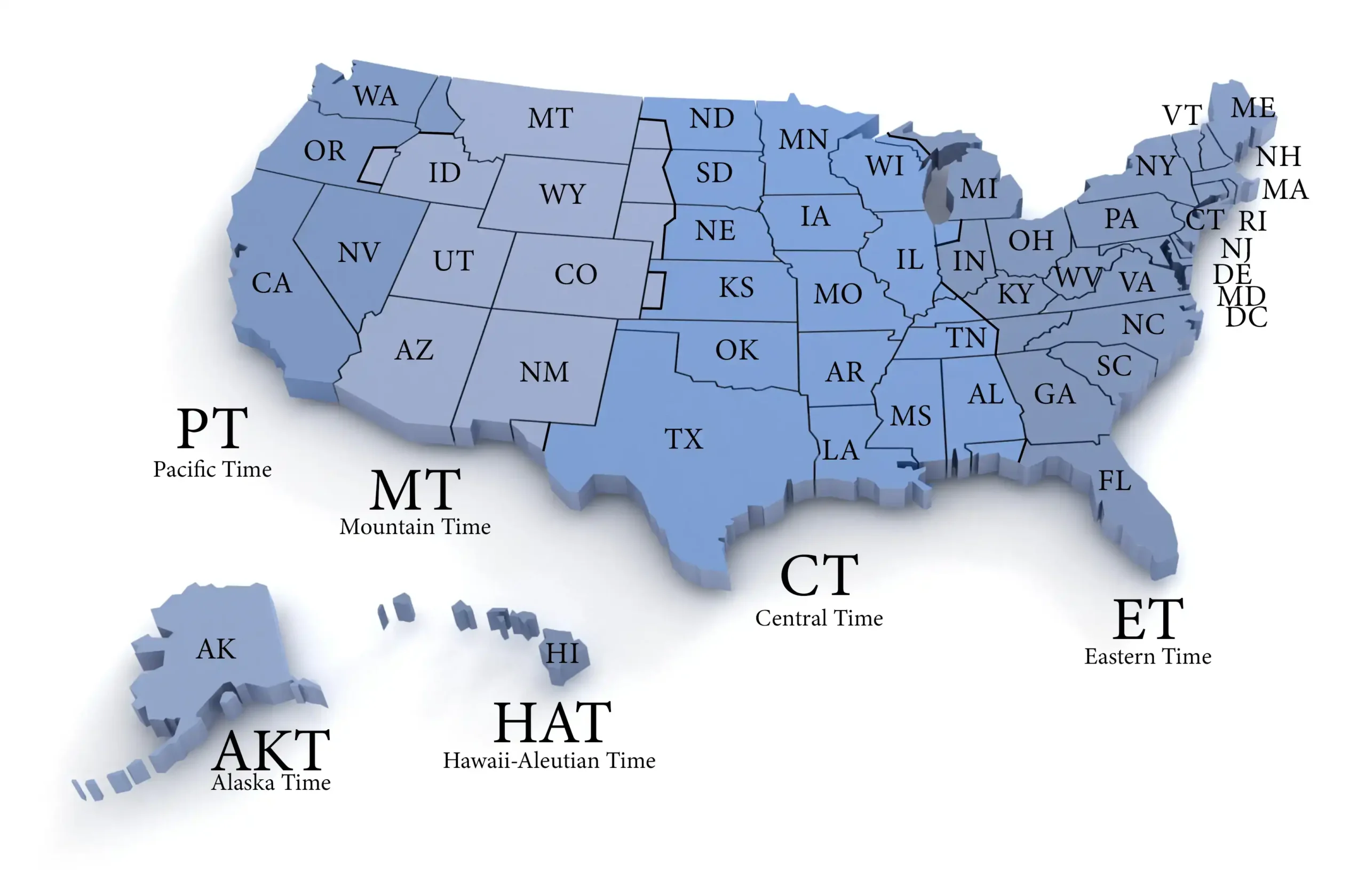
The question of whether Texas observes Pacific Standard Time is a common one, particularly for travelers and businesses coordinating across different regions of the United States. While the westernmost contiguous states—California, Oregon, and Washington—along with parts of Idaho and Nevada, fall under the Pacific Time Zone, Texas does not. Instead, the vast Lone Star State operates on a different temporal schedule that significantly impacts travel planning, business operations, and daily life for its residents and visitors. Understanding this distinction is crucial for anyone navigating the temporal landscape of the U.S.
Texas Time Zones: A Brief Overview
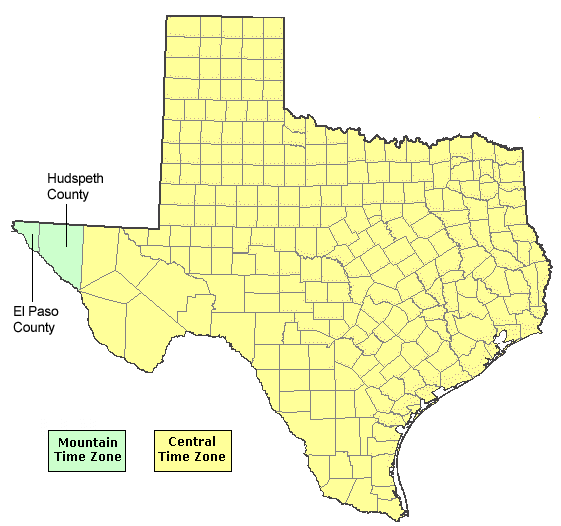
Texas is firmly situated within the Central Time Zone (CT). This zone is UTC-6 during standard time and UTC-5 during daylight saving time. Central Standard Time (CST) is observed from the first Sunday in November until the second Sunday in March, while Central Daylight Time (CDT) is in effect from the second Sunday in March until the first Sunday in November. This consistent observance of Central Time across the entire state simplifies matters for those within its borders, but it creates a distinct temporal difference when compared to the Pacific Time Zone.
The Central Time Zone Explained
The Central Time Zone is the second most populous time zone in the United States, covering large portions of the Midwest, Central, and Southern United States. Its geographical expanse means that the sun rises and sets at different times across its breadth, but for the sake of standardized timekeeping, a single offset from Coordinated Universal Time (UTC) is applied. For Texas, this means being one hour ahead of Mountain Time and two hours ahead of Pacific Time.
This two-hour difference is a key consideration for travelers. For instance, if it is 10:00 AM in Los Angeles, California, it is already 12:00 PM (noon) in Dallas, Texas. This temporal disparity affects flight schedules, meeting arrangements, and the general rhythm of activities when moving between these regions.
Daylight Saving Time in Texas
Like most of the United States, Texas observes Daylight Saving Time (DST). This means that clocks are advanced by one hour during the warmer months to make better use of natural daylight. The transition dates for DST are federally mandated, ensuring that the shift occurs simultaneously across the country, with the exception of states that have opted out, such as Arizona (with the exception of the Navajo Nation). Texas, however, fully participates in DST, moving from Central Standard Time (CST) to Central Daylight Time (CDT) and back again.
The observance of DST further emphasizes the distinct temporal identity of Texas relative to the Pacific Time Zone. During DST, the difference between Texas and the Pacific Time Zone remains a consistent two hours, with Texas always being two hours ahead.
Implications for Travel to and from Texas
The distinction between Central Time and Pacific Time has significant ramifications for travelers, impacting everything from flight bookings to day trip planning.
Air Travel Coordination
When booking flights between Texas and California, for example, it is essential to pay close attention to the departure and arrival times listed in local times for each city. A flight departing Dallas at 2:00 PM CDT will arrive in San Francisco at 3:30 PM PST, despite a flight duration of approximately 3.5 to 4 hours. This is because of the two-hour time difference. Understanding this temporal shift prevents confusion and ensures timely arrivals for connecting flights, hotel check-ins, and scheduled activities.
Business and Conference Planning
For businesses with operations or clients in both time zones, precise time management is critical. Scheduling virtual meetings, conference calls, or in-person events requires careful consideration of the time difference. A 9:00 AM meeting in Houston would necessitate an early 7:00 AM start for participants in Seattle, Washington. Miscalculations can lead to missed opportunities or disruptions in workflow. Many businesses adopt scheduling tools that automatically adjust for time zones, but a fundamental understanding of the difference remains invaluable.

Leisure Travel and Activities
When planning a vacation, the time difference can influence how you structure your days. Arriving in Austin, Texas from Phoenix, Arizona (which observes Mountain Time, one hour behind Central Time), means adjusting your internal clock by one hour. If coming from the Pacific Time Zone, the adjustment is two hours. This can affect your ability to immediately engage in activities upon arrival, especially if you are traveling eastward. For instance, a desire to catch an early morning hike in the Texas Hill Country might feel even earlier when factoring in the time zone shift from the West Coast. Conversely, enjoying a late dinner in Texas might mean dining at a time that corresponds to an earlier hour on the Pacific coast.
Navigating the Temporal Divide: Tips for Travelers
To ensure a smooth travel experience when moving between Texas and regions observing Pacific Standard Time, consider these practical tips:
Adjust Your Watch and Devices
The first and most obvious step upon arrival is to adjust your watch and any electronic devices that do not automatically sync to local time. This simple act helps you orient yourself to the new temporal reality and avoid immediate disorientation.
Communicate Clearly
When making arrangements, always specify the time zone or the city and state to avoid ambiguity. Instead of saying “meet at 2 PM,” say “meet at 2 PM Central Time” or “meet at 2 PM Dallas time.” This is particularly important for international travelers who may not be familiar with the nuances of North American time zones.
Factor in Jet Lag and Acclimation
The two-hour difference between Texas and the Pacific Time Zone, while not as extreme as longer intercontinental flights, can still contribute to jet lag. Allow yourself some time to acclimate upon arrival, especially if your travel schedule is tight. For early morning meetings or activities, consider arriving a day in advance to adjust.
Utilize Time Zone Converters
Numerous online tools and smartphone apps are available that can quickly convert times between different zones. These are invaluable for coordinating with people in other regions or for planning activities that span multiple time zones.
Be Mindful of Business Hours
Business operating hours can vary, but a general understanding of temporal differences helps. When calling businesses in California from Texas, remember that their workday may have already concluded or is just beginning, depending on the time of your call. Similarly, if you are a business in Texas trying to reach a client in Oregon, be aware of the two-hour gap.
Conclusion: A Tale of Two Time Zones
In conclusion, Texas does not observe Pacific Standard Time. It operates entirely within the Central Time Zone. This fundamental distinction is vital for anyone planning travel, conducting business, or simply trying to stay synchronized with friends and family across the vast geographical expanse of the United States. While the Pacific coast might be enjoying the afternoon sun, Texas is already well into its own temporal rhythm, two hours ahead. Understanding this temporal geography ensures smoother transitions, fewer logistical headaches, and a more enjoyable experience for all involved. Whether you are landing at Dallas/Fort Worth International Airport or planning a road trip from El Paso to San Diego, keeping the Central Time Zone firmly in mind will be your most reliable travel companion.
LifeOutOfTheBox is a participant in the Amazon Services LLC Associates Program, an affiliate advertising program designed to provide a means for sites to earn advertising fees by advertising and linking to Amazon.com. Amazon, the Amazon logo, AmazonSupply, and the AmazonSupply logo are trademarks of Amazon.com, Inc. or its affiliates. As an Amazon Associate we earn affiliate commissions from qualifying purchases.