
For many travelers venturing to the diverse landscapes of California, understanding local regulations is an essential part of a smooth and enjoyable journey. This often extends beyond traffic laws or public consumption rules to more nuanced areas, such as the legality of carrying certain items. One such item that frequently prompts questions from enthusiasts and self-defense practitioners alike is the karambit. This distinctive curved knife, originating from Southeast Asia, has a unique design that can place it in a complex legal grey area depending on jurisdiction. For those planning a trip through the Golden State, from the bustling streets of Los Angeles to the scenic beauty of San Francisco, knowing the intricacies of California’s knife laws, particularly concerning karambits, is paramount to avoid unwelcome legal encounters.
Navigating California’s Knife Laws: A Traveler’s Primer
California has a comprehensive, albeit sometimes intricate, set of laws governing the possession and carry of knives. These laws are not always straightforward, and what might be permissible in one state could lead to legal trouble in another. For travelers, this means a proactive approach to understanding local statutes is crucial. The state’s regulations generally differentiate between various types of knives and their specific characteristics, such as blade length, whether they are fixed or folding, and how they are carried. Furthermore, specific locations and contexts can impose additional restrictions, making a blanket assumption about legality risky.
Open vs. Concealed Carry Regulations
One of the most significant distinctions in California knife law that directly impacts travelers is the difference between open and concealed carry. Generally, it is legal for an adult to openly carry an unconcealed knife with a fixed blade, regardless of length, in most public places that are not specifically prohibited. This includes knives like daggers, dirks, and even swords. However, the definition of “openly carried” is critical: the knife must be carried in a sheath suspended from the waist of the wearer, or sheathed on the wearer’s person in plain view. It cannot be covered by clothing or otherwise hidden.
Conversely, concealed carry of a dirk or dagger, which California law broadly defines as any knife or other instrument with or without a handguard that is capable of ready use as a stabbing weapon, is generally illegal. This prohibition applies whether the blade is fixed or folding, if it can be locked in an open position and used as a stabbing weapon. This distinction is especially relevant for karambits, which are often designed for stabbing or slashing motions. Travelers should be acutely aware that placing a fixed-blade karambit in a backpack, purse, or even a pocket (even if a portion is visible) could be interpreted as concealed carry, leading to potential charges.
For folding knives, California law permits concealed carry as long as the blade is not locked in the open position and the knife is not otherwise defined as a dirk or dagger. This means most standard pocket knives are legal to carry concealed. However, if a folding knife can be opened rapidly via gravity, a spring mechanism, or wrist flick (e.g., switchblades or gravity knives), it falls into the category of “illegal knives” and is generally prohibited from both open and concealed carry.
Blade Length and Type Restrictions
While California does not impose a statewide maximum blade length for openly carried fixed-blade knives, certain types of knives are outright prohibited, regardless of length or carry method. These include:
- Switchblades: Knives that open automatically by a spring or other device, or by gravity, or by inertia, and that have a blade longer than two inches. Even if under two inches, they may still be restricted by local ordinances.
- Ballistic knives: Knives with a detachable blade that can be propelled by a spring-operated mechanism.
- Shuriken (throwing stars): Generally prohibited.
- Belt buckle knives and lipstick case knives: Designed for concealment.
For travelers, the key takeaway is that while many common knives are permitted, specific types with mechanisms designed for rapid deployment or extreme concealment are almost always illegal. The karambit, depending on its specific design (fixed blade vs. folding, assisted opening), can potentially fall into one of these restricted categories, or at least be subject to intense scrutiny under the concealed carry laws.
Prohibited Areas and Specific Jurisdictions
Beyond general statewide regulations, California law also designates certain areas where carrying any knife, regardless of type, is prohibited. These commonly include:
- Federal Buildings and Courthouses: Any government building or facility.
- Schools and Universities: K-12 schools, colleges, and university campuses.
- Airports and Public Transportation Hubs: Security checkpoints will confiscate any prohibited items.
- Specific Local Ordinances: Cities like Los Angeles and San Francisco, as well as various counties, may have their own additional restrictions on knife possession, particularly concerning blade length or specific types of knives within city limits or public parks. Travelers should always check local municipal codes for their specific destination within California. For instance, some cities might have stricter rules about carrying fixed-blade knives in public spaces, even if openly carried.
Karambits in California: Specific Legal Interpretations
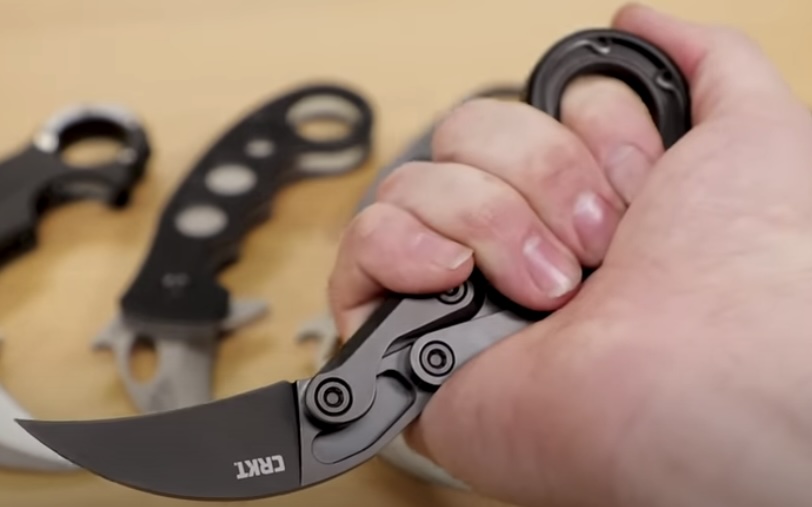
The unique design of the karambit—its curved blade, typically with a finger ring for grip—often leads to specific questions about its legality. The interpretation largely hinges on whether it’s classified as a fixed-blade knife or a folding knife, and how it can be deployed.
The Fixed Blade vs. Folding Karambit Distinction
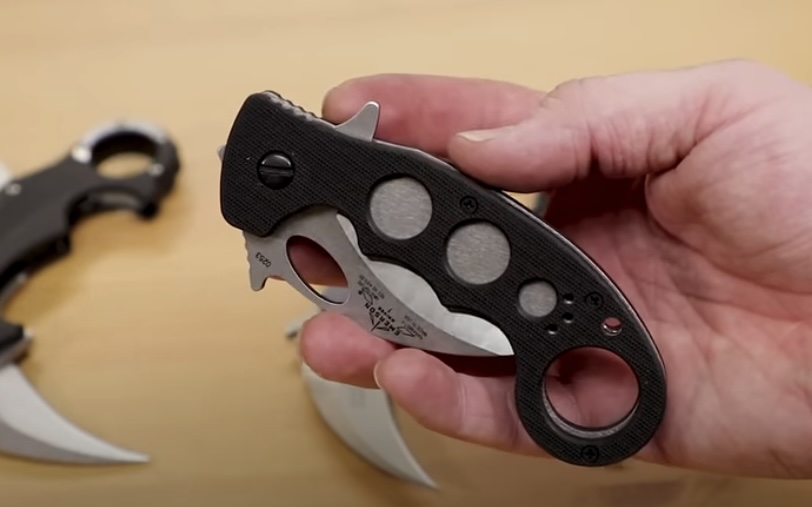
Many karambits are fixed-blade knives. If a traveler carries a fixed-blade karambit, it must be openly carried in a sheath on the waist. Concealing it in any manner—in a bag, under clothing, or even in a vehicle’s glove compartment—can be considered illegal concealed carry of a dirk or dagger. Given the karambit’s inherent design as a weapon, law enforcement is likely to classify it as a dirk or dagger.
Folding karambits introduce another layer of complexity. If a folding karambit is designed to open automatically (a switchblade mechanism), by gravity, or by inertia (a “flipper” or “wave” opener that allows one-handed rapid deployment), and has a blade longer than two inches, it would be illegal as a “switchblade.” Even if under two inches, some aggressive opening mechanisms might still draw scrutiny. If it’s a manual folder that requires two hands to open or a deliberate thumb stud action and doesn’t lock in an open position easily usable as a stabbing weapon, it might be permissible to carry concealed, similar to a regular folding pocket knife. However, its aggressive appearance and design intent might still lead to legal challenges.
Intent and Context: More Than Just the Blade
Beyond the physical characteristics of the karambit, the intent of the person carrying it and the context in which it is carried can heavily influence legal outcomes. While California law generally doesn’t require “intent to use as a weapon” for a concealed dirk/dagger charge, an officer’s perception of intent can play a role in their decision to question or arrest. If a traveler is found with a karambit in a situation that suggests malicious intent, or if they are involved in suspicious activity, the presence of such a knife will undoubtedly escalate the legal consequences.
For instance, carrying a karambit while engaged in a legitimate martial arts class or competition might be viewed differently than carrying it concealed late at night in a high-crime area. However, the default legal position remains: if it’s a fixed blade karambit, it must be openly carried. If it’s a folding karambit with rapid deployment capabilities and over two inches, it’s likely illegal. Travelers should not rely on “intent” as a defense for illegal possession.
Practical Advice for Travelers and Karambit Owners
For any traveler considering bringing a karambit to California, or purchasing one while visiting, a cautious and informed approach is vital. The potential legal ramifications, including fines, confiscation, and even jail time, far outweigh the convenience or perceived need to carry such an item without proper knowledge.
Before You Travel: Research and Preparation
The most effective strategy is prevention. Before embarking on your California journey:
- Consult Official Sources: Check the most current version of the California Penal Code (specifically sections related to dirks, daggers, switchblades, and concealed weapons). Also, review the municipal codes for any specific cities or counties you plan to visit, such as Los Angeles or San Francisco, as local laws can be stricter.
- Assess Your Karambit: Determine if your specific karambit is a fixed blade or a folding knife, its blade length, and its opening mechanism. This will help you identify which sections of the law are most relevant.
- Consider Alternatives: If you are unsure or if your karambit falls into a grey area, it’s generally best to leave it at home. For self-defense purposes, non-lethal alternatives may be more appropriate and legally safer for travelers.
During Your Stay: Best Practices
If you do decide to travel with a karambit, assuming it is a fixed-blade karambit and you intend to openly carry it where permissible:
- Maintain Open Carry: Ensure your fixed-blade karambit is always openly carried in a sheath on your waist and is not obscured by clothing or anything else.
- Avoid Prohibited Zones: Be scrupulous about avoiding schools, government buildings, airports, and any other clearly marked prohibited areas while carrying any knife.
- Vehicle Transport: If transporting a karambit in a vehicle, it should ideally be stored in a locked container, inaccessible to the driver and passengers, separate from ammunition. Simply placing it under a seat or in the glove compartment is likely to be considered concealed carry.
- Exercise Discretion: Even if legal, openly carrying a karambit, an item often associated with martial arts or combat, can draw unwanted attention or concern from the public and law enforcement. Consider whether it’s truly necessary for your travel plans.

Consequences of Non-Compliance
Violating California’s knife laws, particularly those related to concealed carry of dirks or daggers, can lead to serious consequences. These offenses are often chargeable as misdemeanors or felonies, depending on prior offenses, the specific circumstances, and the type of knife. Penalties can include significant fines, confiscation of the weapon, and incarceration. For travelers, an arrest and legal proceedings can derail an entire trip, incur substantial legal fees, and create a permanent criminal record, potentially impacting future travel.
Ultimately, while the desire to carry a specific tool or self-defense item is understandable, the onus is on the individual traveler to ensure full compliance with the laws of their destination. When it comes to karambits in California, the legal landscape is complex, favoring caution and clear understanding over assumption.
LifeOutOfTheBox is a participant in the Amazon Services LLC Associates Program, an affiliate advertising program designed to provide a means for sites to earn advertising fees by advertising and linking to Amazon.com. Amazon, the Amazon logo, AmazonSupply, and the AmazonSupply logo are trademarks of Amazon.com, Inc. or its affiliates. As an Amazon Associate we earn affiliate commissions from qualifying purchases.