
Understanding property taxes is a fundamental aspect of owning or considering a long-term stay in California. For individuals and families seeking to establish roots, purchase an investment property, or simply comprehend the full scope of housing costs, a clear grasp of the state’s property tax system is essential. California’s approach to property taxation is notably distinct, primarily shaped by a landmark constitutional amendment passed decades ago. This guide illuminates the intricacies of how these taxes are assessed and levied, offering clarity for anyone navigating the state’s real estate landscape.
The Foundation: Proposition 13 and Assessed Value
The bedrock of California’s property tax system is Proposition 13, a voter-approved initiative from 1978. This amendment fundamentally altered how property values are assessed and taxed, creating a system that is both predictable for homeowners and, at times, complex for newcomers to understand. Its core tenets dictate how your property’s taxable value is established and how much it can increase over time.
Understanding Proposition 13
Proposition 13 set the statewide property tax rate at a base of 1% of the property’s assessed value. More significantly, it established that the assessed value of a property is typically its market value at the time of purchase or new construction. This “acquisition value” approach is critical because it means that properties bought decades ago often have a much lower assessed value, and thus lower property taxes, than comparable properties purchased more recently. The philosophy behind Proposition 13 was to provide tax relief and stability for homeowners, preventing rapid increases in property taxes that could force long-term residents out of their homes. This stability, however, also means that two identical homes in the same neighborhood, perhaps in a place like Los Angeles County or San Diego, could have vastly different property tax bills simply because one was purchased more recently than the other.
Initial Assessed Value and Annual Increases
When a property is purchased or undergoes new construction, the county assessor determines its new base year value, which is typically the purchase price or the fair market value. This becomes the new “full cash value” for tax purposes. After this initial assessment, Proposition 13 limits how much this assessed value can increase each year. Specifically, it can rise by no more than 2% annually, or the percentage change in the California Consumer Price Index (CPI), whichever is lower. This is often referred to as the “inflation factor.” This limitation protects property owners from steep tax hikes due to rising market values. For instance, if a property’s market value skyrockets by 10% in a given year, its assessed value for tax purposes can still only increase by a maximum of 2%.
However, there are exceptions. If a significant change in ownership occurs (e.g., sale of the property), or if new construction or major improvements are completed, the property’s assessed value will be reassessed to its current market value. Minor repairs or maintenance generally do not trigger a reassessment. This aspect of Proposition 13 means that property taxes are essentially “reset” upon a sale, making the true cost of long-term accommodation highly dependent on the timing of a property’s acquisition.
Determining Your Property Tax Rate
While Proposition 13 sets the base rate, the final property tax bill in California is often higher due to additional voter-approved levies. These extra charges contribute to local services and infrastructure, making the effective tax rate vary slightly from one jurisdiction to another, even within the same county.
The 1% Base Levy
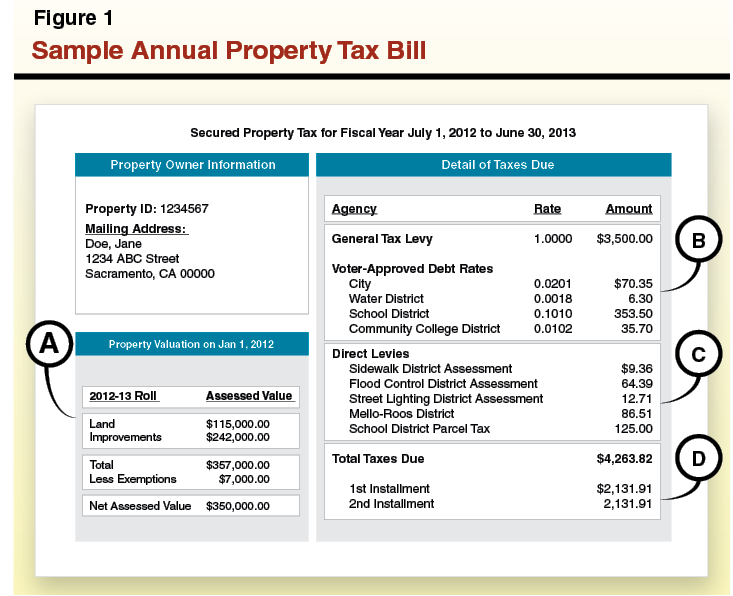
The primary component of your property tax bill is the 1% base levy on your property’s assessed value. This percentage is uniform across all counties in California and is directly attributable to the provisions of Proposition 13. This portion of the tax revenue is distributed among various local government entities, including cities, counties, and school districts, to fund essential services. For example, a home in Orange County with an assessed value of $700,000 would incur a base tax of $7,000 annually from this levy alone.
Local Bonds, Levies, and Special Assessments
Beyond the 1% base rate, property owners in California are also subject to additional levies for voter-approved general obligation bonds and special assessments. These additional charges are crucial for funding local infrastructure projects, school improvements, parks, libraries, and other community services. Each local jurisdiction – be it a city like San Francisco, a school district, or a special district (e.g., for water or fire services) – can propose these additional levies, which must then be approved by a supermajority of local voters.
These additional charges are calculated as a percentage of your property’s assessed value or as a fixed amount per parcel, depending on the nature of the levy. They are itemized on your annual property tax bill and can incrementally increase your effective tax rate. For instance, a school bond might add an extra 0.1% to your tax rate, while a special assessment for street improvements might add a fixed $200 per year. The cumulative effect of these various local bonds and assessments means that the total property tax rate can range from roughly 1.1% to 1.5% or more of the assessed value, depending on the specific location of the property.
Total Tax Rate in Practice
When considering a long-term accommodation, it is vital to inquire about the precise tax rate in a specific area. While the 1% base is constant, the cumulative effect of local bonds and assessments can vary significantly between neighboring cities or even different parts of the same city. For example, a property in Sacramento might have a different effective tax rate than one just outside the city limits due to differing school districts or municipal services. These additional rates are not subject to the 2% annual increase cap of Proposition 13 and can sometimes fluctuate based on the specific bond repayment schedules or new approvals. Therefore, relying solely on the 1% base rate for budgeting future long-term accommodation costs would be a significant oversight.
Property Tax Bills and Payments

Once the assessed value and the applicable tax rates are determined, the county issues property tax bills. Understanding the payment schedule and the consequences of late payment is crucial for maintaining good standing as a property owner in California.
When and How Payments Are Made
Property tax bills in California are typically issued by the county tax collector annually, usually in October. The bill is divided into two installments. The first installment is due by November 1st and becomes delinquent if not paid by December 10th. The second installment is due by February 1st and becomes delinquent if not paid by April 10th. These dates are strict, and payments must be received, not just postmarked, by the delinquency deadlines. Many property owners, especially those with mortgages, have their property taxes paid through an impound or escrow account managed by their lender. The lender collects a portion of the estimated annual property taxes with each monthly mortgage payment and then pays the installments directly to the county on the homeowner’s behalf. For those without an impound account, payments can be made directly to the county tax collector via mail, online portals, or in person.
Consequences of Non-Payment
Failing to pay property taxes by the delinquency dates carries significant penalties. A 10% penalty is applied to any delinquent installment. If the second installment becomes delinquent, an additional $10 penalty is usually added. More severe consequences arise if taxes remain unpaid over several years. After five years of delinquency, the property becomes subject to the “power to sell” by the county tax collector. This means the county can sell the property at a public auction to recover the unpaid taxes, penalties, and interest. This is a drastic measure, but it underscores the importance of timely property tax payments for anyone planning a long-term property ownership in California.
Exemptions and Relief Programs
California offers several exemptions and relief programs that can help reduce property tax burdens for eligible homeowners, making long-term accommodation more affordable for certain groups. These programs are designed to provide financial assistance and recognize specific contributions or circumstances.
Homeowners’ Exemption
The most common and widely utilized exemption is the Homeowners’ Exemption. If you own and occupy your home as your principal place of residence on January 1st, you may be eligible for a reduction of $7,000 from your property’s assessed value. While $7,000 might seem like a small amount compared to current California home values, it can translate into a tax saving of approximately $70 to $100 annually, depending on the local tax rate. To claim this exemption, homeowners must file an application with their county assessor. It’s a one-time application, and the exemption typically remains in effect as long as the property remains your primary residence.
Other Potential Exemptions (e.g., Disabled Veterans)
Beyond the basic Homeowners’ Exemption, California provides various other exemptions for specific populations. The Disabled Veterans’ Exemption is a significant benefit for veterans who are totally disabled (100% service-connected disability or compensation at 100% due to a service-connected disability) or their unmarried surviving spouses. This exemption can reduce the assessed value of their primary residence by a substantial amount, currently over $150,000, which can result in significant tax savings. There are also exemptions for religious organizations, educational institutions, public libraries, and certain charitable organizations. Each of these exemptions has specific eligibility requirements and application processes that must be followed through the county assessor’s office.
Understanding Tax Relief for Seniors and Disabled
While not direct exemptions that reduce assessed value, California also offers property tax postponement programs primarily for eligible senior citizens (age 62 or older), blind individuals, or disabled persons. Under this program, the state pays the annual property taxes on behalf of the eligible homeowner. The postponed taxes, along with interest, become a lien on the property and are due when the homeowner sells the property, moves, or dies. This program provides crucial financial relief, allowing eligible individuals to maintain their long-term accommodation without the immediate burden of annual property tax payments. It’s a vital safety net for those on fixed incomes struggling with the high cost of living in the state.
The Impact on Long-Term Accommodation Costs
Property taxes represent a recurring and substantial expense for property owners in California, directly impacting the overall cost of long-term accommodation. Understanding this impact is crucial for accurate financial planning, whether you’re purchasing a home or renting.
Budgeting for Ownership
For prospective homeowners, factoring in property taxes is as critical as budgeting for mortgage payments, insurance, and maintenance. Given the acquisition value basis of Proposition 13, new buyers will face property taxes based on their recent purchase price, often making their tax bills significantly higher than those of long-term neighbors. A general rule of thumb for budgeting is to estimate property taxes at roughly 1.25% of the purchase price, though this can vary depending on local levies. This percentage, applied to often high California home prices, translates to thousands of dollars annually. For example, a $1 million home could incur $12,500 in annual property taxes. Failing to accurately account for this can lead to unexpected financial strain, making it harder to sustain long-term accommodation in your desired area.

Property Taxes in Rental Rates
Even for those who choose long-term renting as their preferred form of accommodation, property taxes indirectly influence their costs. Landlords factor all property-related expenses, including property taxes, into the rent they charge. In areas with high property values and, consequently, high property tax assessments for recently acquired rental units, a portion of these taxes will inevitably be passed on to tenants through higher rental rates. While renters do not directly pay property tax bills, they are an embedded component of the overall housing expense. This dynamic is part of why long-term rental costs in desirable California locations can be substantial, making it important for renters to understand the underlying cost structures, even if they aren’t directly managing the tax payments themselves.
LifeOutOfTheBox is a participant in the Amazon Services LLC Associates Program, an affiliate advertising program designed to provide a means for sites to earn advertising fees by advertising and linking to Amazon.com. Amazon, the Amazon logo, AmazonSupply, and the AmazonSupply logo are trademarks of Amazon.com, Inc. or its affiliates. As an Amazon Associate we earn affiliate commissions from qualifying purchases.