
Embarking on a journey from the rainy charm of Seattle, Washington to the sunny sprawl of Los Angeles, California is a quintessential West Coast adventure. Whether you’re planning a quick business trip, a leisurely road trip, or seeking a new beginning, understanding the distance and various travel options between these two major United States cities is the first step in successful planning. The journey offers a diverse range of experiences, from swift flights over mountains and coastline to epic road trips through varied landscapes, each with its own appeal and challenges.
The Straight Line: Understanding Aerial Distance
When contemplating the directness of a journey, especially one spanning significant geographical expanses, the aerial distance, or “as the crow flies,” provides the most fundamental measure. This metric is particularly relevant for air travel, offering a baseline for flight durations and logistical planning.
Geographical Overview
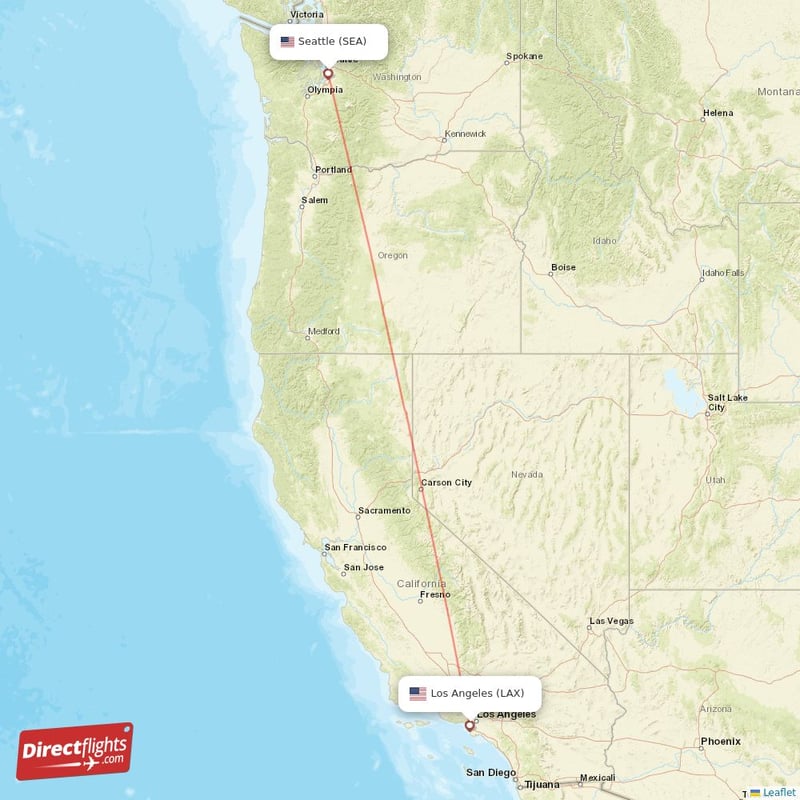
Seattle, nestled in the Pacific Northwest, and Los Angeles, a southern California metropolis, are separated by roughly 950 miles (approximately 1,530 kilometers) in a direct line. This considerable distance highlights the sheer scale of the West Coast and the varied terrain that lies between them. The route essentially follows the Pacific coastline, albeit with mountainous regions and vast agricultural lands inland. Washington state, known for its evergreen forests and maritime climate, contrasts sharply with the arid and Mediterranean climates of southern California, creating a geographical and cultural gradient that is fascinating to observe, even from above.
Implications for Air Travel
For travelers prioritizing speed and efficiency, air travel is unequivocally the most practical choice. Given the aerial distance of 950 miles, direct flights typically clock in at around 2 hours and 30 minutes to 3 hours. This duration makes it feasible for day trips or quick turnarounds for business travelers.
Major airports serving this route include Seattle-Tacoma International Airport (SEA) in Seattle and Los Angeles International Airport (LAX) in Los Angeles. Both are major hubs offering numerous daily direct flights. Popular airlines servicing this corridor include Southwest Airlines, Alaska Airlines, and Delta Air Lines, among others. While the flight time itself is minimal, travelers should always factor in additional time for commuting to and from airports, security checks, and potential delays, which can easily add several hours to the overall travel experience. Despite these considerations, flying remains the undisputed champion for covering the distance swiftly and comfortably.
The Scenic Route: Driving Between Two Major West Coast Hubs
For those who view the journey itself as part of the destination, a road trip between Seattle and Los Angeles offers an unparalleled opportunity to explore the diverse landscapes and vibrant communities of the West Coast. This epic drive takes you through three distinct states, each with its unique character.
The I-5 Corridor: The Primary Artery
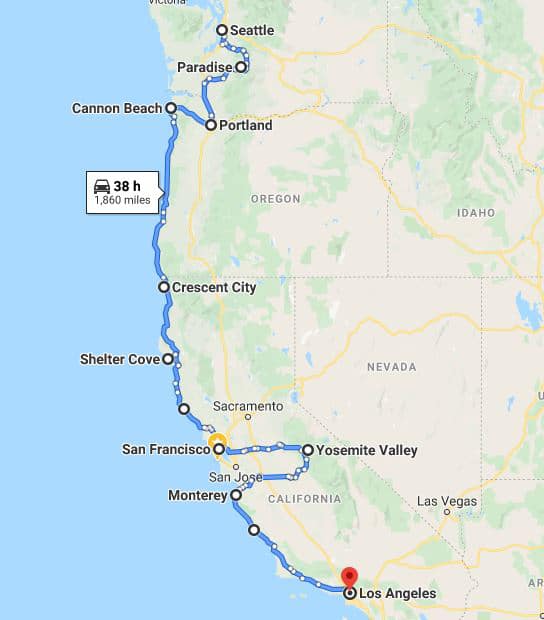
The most direct and frequently utilized driving route is via Interstate 5 (I-5), which stretches from the Canada border in Washington all the way down to the Mexico border in California. This major north-south artery serves as the backbone of West Coast road travel, offering a relatively straightforward path with consistent signage and infrastructure. The I-5 corridor will guide you through the heart of Oregon and then traverse the length of California before reaching Los Angeles.
Estimated Driving Time and Distance
The total driving distance along I-5 from Seattle to Los Angeles is approximately 1,135 to 1,200 miles (1,825 to 1,930 kilometers), depending on your exact starting and ending points within each metropolitan area. This journey, without significant stops for rest or sightseeing, would take an estimated 16 to 18 hours of continuous driving. However, to ensure safety and enjoyment, breaking this trip into at least two days is highly recommended. Many travelers opt for an overnight stop, typically in or around Southern Oregon or Northern California, which comfortably divides the long hours behind the wheel. Factors such as traffic, especially around urban centers like Portland, Sacramento, and the approach to Los Angeles, as well as road construction, weather conditions, and personal preferences for rest stops, can significantly impact the overall travel time.
Key Stopovers and Attractions Along the Way
A road trip offers the invaluable freedom to explore. Here are a few notable stops along the I-5 corridor:
- Portland, Oregon: Roughly three hours south of Seattle, Portland is a vibrant city known for its eclectic culture, thriving food scene (especially food trucks), craft breweries, and independent bookstores like Powell’s City of Books. It makes for an excellent first major stop to stretch your legs and grab a bite.
- Southern Oregon: As you continue south through Oregon, areas like Ashland (home to the Oregon Shakespeare Festival) and Medford offer charming small-town experiences and access to natural beauty.
- Mount Shasta, California: Entering California, the majestic, snow-capped Mount Shasta dominates the skyline, offering breathtaking views and a spiritual aura. It’s a fantastic place to pause for photographs and appreciate the natural grandeur. For those with extra time, a detour to Redwood National Park (though significantly off I-5 to the west) is an unforgettable experience amidst ancient giant trees.
- Sacramento and the San Joaquin Valley: Further south, you’ll pass near Sacramento, California’s capital, though I-5 bypasses the city center. The expansive San Joaquin Valley provides a stark contrast with its vast agricultural fields, particularly in areas around Fresno and Bakersfield. While not as scenic, it’s a critical part of California’s economy and offers numerous fuel and food stops.
- Grapevine: As you approach Los Angeles from the north, you’ll encounter “The Grapevine,” a mountain pass that often experiences heavy traffic and, in winter, can be subject to closures due to snow. Successfully navigating this stretch signals your imminent arrival in the sprawling Southern California landscape.
Alternative Travel Methods: Air, Rail, and Bus
While driving and flying represent the most common ways to travel between Seattle and Los Angeles, other options cater to different budgets, time constraints, and preferences for the travel experience itself.
Flying: The Fastest Option
As established, flying is by far the quickest method, transforming a multi-day drive into a journey of mere hours. With numerous daily departures from Seattle-Tacoma International Airport (SEA) to Los Angeles International Airport (LAX), travelers have ample flexibility. Beyond the core flight time of 2.5 to 3 hours, consider the total time investment, which includes travel to and from airports, check-in, security screening, and baggage claim. For many, the ability to minimize transit time on a long journey far outweighs the potential inconveniences associated with airport procedures, especially for business trips or short leisure breaks. Booking in advance usually yields the best fares, and being flexible with travel dates can also lead to significant savings.
Rail Travel: A Journey Through Landscapes
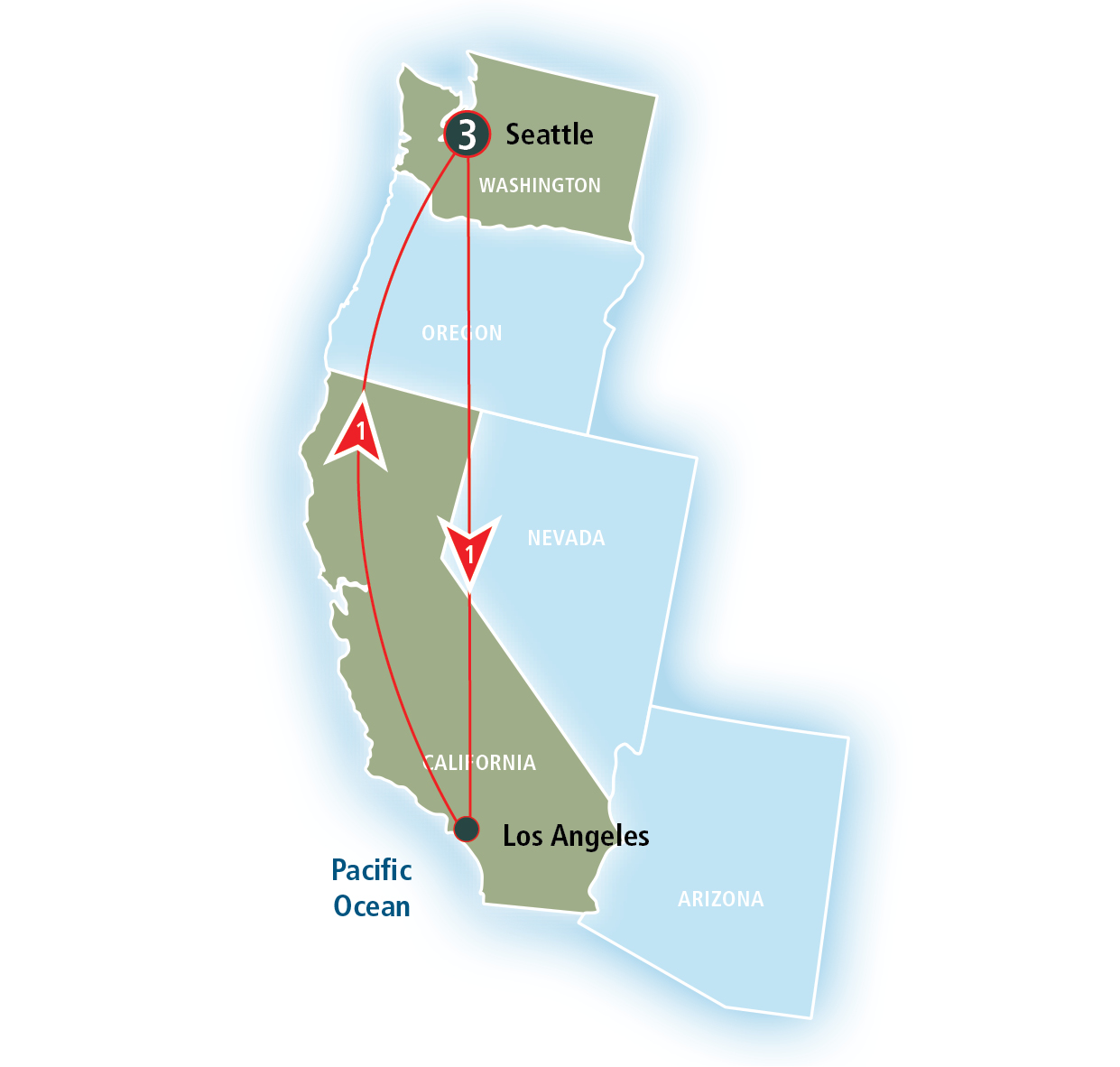
For those seeking a more leisurely and scenic journey, rail travel offers a unique alternative. Amtrak operates the iconic Coast Starlight service, which connects Seattle to Los Angeles directly. This journey is an experience in itself, celebrated for its breathtaking views of the Pacific coastline, the Cascade Mountains, and lush forests.
The Coast Starlight typically takes approximately 30-35 hours to complete the route. While significantly longer than flying or even driving, it provides a unique perspective on the West Coast. Passengers can relax in comfortable seats, enjoy meals in the dining car, or socialize in the observation lounge, which features floor-to-ceiling windows. For an elevated experience, sleeper cars are available, offering private accommodations. Rail travel is often favored by those who enjoy slow travel, wish to avoid the stresses of driving or flying, or are simply looking for a nostalgic journey through America’s heartland.
Bus Services: Budget-Friendly and Accessible
Bus travel presents the most economical option for traversing the distance between Seattle and Los Angeles. Companies like Greyhound and BoltBus offer regular services along this route.
The total travel time by bus is usually around 20-24 hours, often including several stops and potentially a transfer. While longer than driving due to scheduled stops and varying traffic conditions, it eliminates the need for personal vehicle maintenance, fuel costs, and the fatigue of driving. Bus services generally offer basic amenities such as Wi-Fi, power outlets, and reclining seats, making the long journey more bearable. This option is particularly popular among budget-conscious travelers, students, or those who prefer not to drive long distances but still want to see the scenery. Despite the extended travel time, the affordability and direct connectivity to city centers make it a viable choice for many.
Planning Your Journey: Essential Considerations
Regardless of your chosen mode of transport, a well-planned trip ensures a smoother and more enjoyable experience. From seasonal factors to budgetary allocations, a few key considerations can significantly impact your journey from Seattle to Los Angeles.
Best Time to Travel
The ideal time to undertake this journey largely depends on your travel method and preferences.
- Summer (June-August): Offers the most consistently pleasant weather for driving and sightseeing, especially in Oregon and Northern California. However, this is also peak tourist season, meaning higher prices for flights and accommodations, and potential traffic congestion, especially around popular attractions and major cities.
- Spring (April-May) and Fall (September-October): These shoulder seasons often present the best balance. The weather is generally mild, crowds are thinner, and prices for flights and lodging tend to be more favorable. For road trips, the scenery during spring blooms or fall foliage can be stunning.
- Winter (November-March): While possible, winter travel, particularly by car, can be challenging due to unpredictable weather. Mountain passes along I-5 (like “The Grapevine” in California or parts of Oregon) can experience snow and ice, leading to delays or closures. Flights can also be affected by winter storms. However, if you’re flying, winter often offers the lowest fares outside of holiday periods.
Packing Smart
Given the significant climatic differences between Seattle’s often cooler, wetter conditions and Los Angeles’s warmer, drier environment, smart packing is crucial. Layers are your best friend, allowing you to adapt to temperature fluctuations throughout your journey. Include waterproof outerwear for Seattle and Oregon in non-summer months, and lighter clothing for Southern California. Comfortable walking shoes are essential, regardless of whether you’re exploring city streets or taking a scenic hike.
Budgeting for Your Trip
Establishing a realistic budget is a critical step.
- Flights: Prices vary widely based on airline, time of year, and how far in advance you book. Expect anywhere from $70-$300+ for a one-way ticket.
- Driving: Factor in fuel costs (significant for 1,100+ miles), potential overnight accommodation, food, and car rental if you don’t own a vehicle. A typical road trip budget might range from $300-$600+ depending on car efficiency and stopover choices.
- Train/Bus: These options are generally more predictable in cost. Bus tickets can be as low as $50-$100, while Amtrak tickets, especially for sleeper accommodations, can range from $100 to several hundred dollars.
- Hidden Costs: Don’t forget incidentals like snacks, drinks, souvenirs, and admission fees to attractions if you plan to sightsee along the way. Always allocate a contingency fund for unexpected expenses.
Safety and Preparedness
For road trippers, ensure your vehicle is in excellent condition, with tires, fluids, and brakes checked. Carry an emergency kit, including a first-aid kit, jumper cables, blankets, water, and non-perishable food. For all travelers, keeping loved ones informed of your itinerary and having travel insurance can provide peace of mind. Staying aware of local conditions and traffic reports, especially when driving, is also key to a smooth journey.
Whether you prefer the rapid ascent of air travel, the contemplative pace of a train, the freedom of the open road, or the cost-efficiency of a bus, the route from Seattle to Los Angeles offers a rich tapestry of experiences. Understanding the distance and planning accordingly will ensure your travel is as enjoyable as the destinations themselves.
LifeOutOfTheBox is a participant in the Amazon Services LLC Associates Program, an affiliate advertising program designed to provide a means for sites to earn advertising fees by advertising and linking to Amazon.com. Amazon, the Amazon logo, AmazonSupply, and the AmazonSupply logo are trademarks of Amazon.com, Inc. or its affiliates. As an Amazon Associate we earn affiliate commissions from qualifying purchases.