
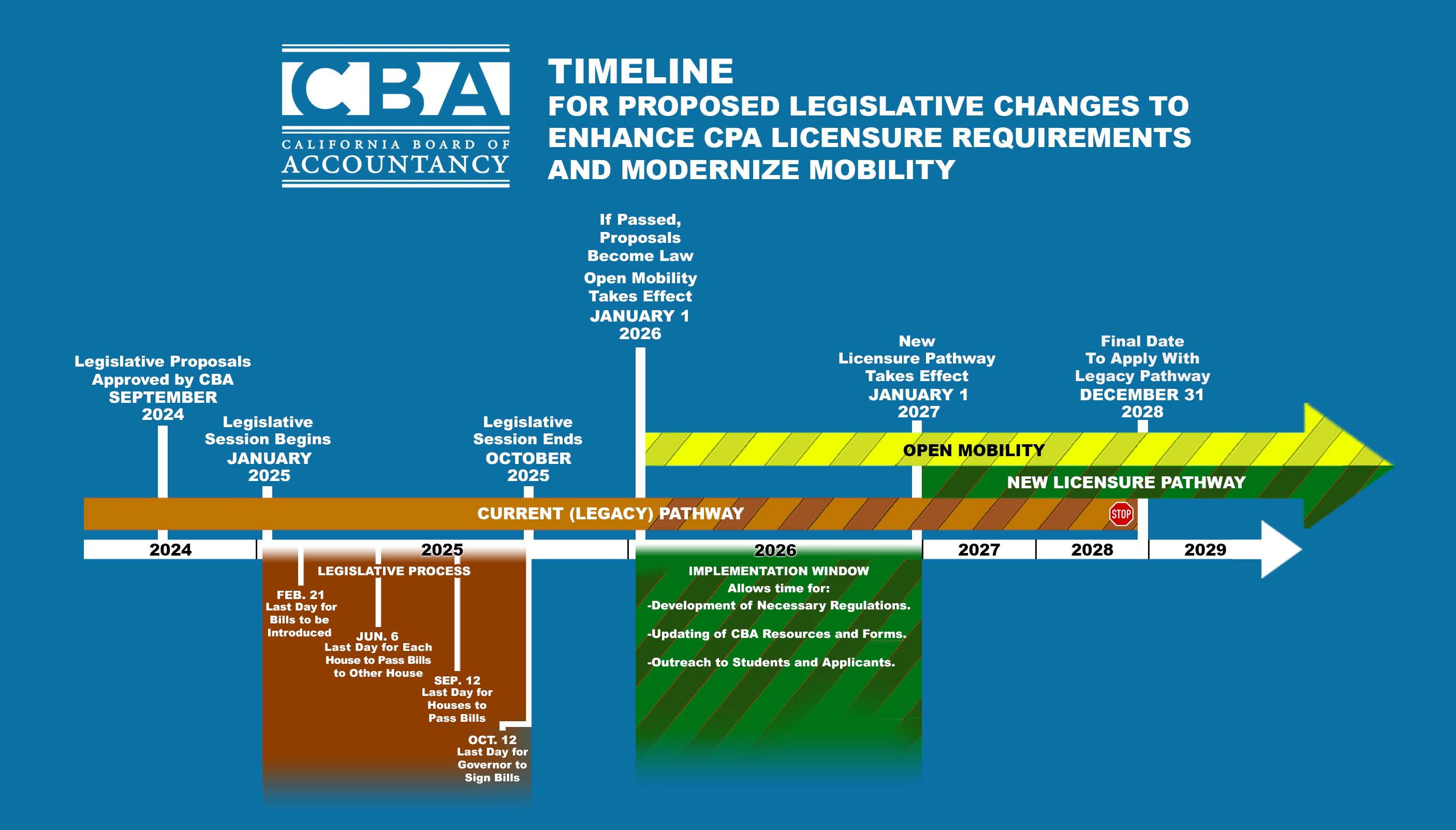
Becoming a Certified Public Accountant (CPA) in California represents a significant career milestone, opening doors to diverse opportunities across various industries. The designation is a testament to an individual’s expertise, ethical commitment, and rigorous adherence to professional standards in the field of accounting. California, with its robust economy and vibrant business landscape, offers a particularly fertile ground for CPAs, from tech startups in Silicon Valley to entertainment giants in Hollywood and agricultural powerhouses in the Central Valley. Pursuing CPA licensure in this dynamic state is a strategic lifestyle choice for those aiming for professional excellence and a rewarding career path. The journey is demanding, requiring a precise combination of education, examination, and experience, all overseen by the California Board of Accountancy (CBA). This guide outlines the essential steps and requirements to navigate the path to becoming a licensed CPA in California, providing aspiring professionals with a clear roadmap to achieve this esteemed designation.
Understanding the CPA Profession in California
The role of a Certified Public Accountant is multifaceted and critical to the financial health of businesses, individuals, and government entities. In California, CPAs are not merely bookkeepers or tax preparers; they are trusted financial advisors, auditors, forensic accountants, and strategic business consultants. They ensure financial transparency, help clients comply with complex tax laws, mitigate financial risks, and guide critical business decisions. The demand for skilled CPAs remains consistently high due to ever-evolving financial regulations, increasing corporate governance requirements, and the intricate nature of financial markets. Holding a CPA license in California signifies a deep understanding of generally accepted accounting principles (GAAP), auditing standards, tax laws, and business ethics.
The prestige associated with the CPA designation in California translates into enhanced career prospects, higher earning potential, and greater professional credibility. Employers across all sectors—public accounting firms, corporations, non-profits, and government agencies—actively seek CPAs for their specialized knowledge and commitment to professional integrity. Furthermore, many CPAs choose to establish their own practices, offering a pathway to entrepreneurship and greater autonomy. This flexibility in career paths, coupled with the intellectual challenge of the work, makes the CPA profession an attractive and sustainable lifestyle choice for those with an aptitude for finance and a dedication to lifelong learning. The journey to becoming a CPA is rigorous but designed to ensure that only the most qualified individuals are entrusted with significant financial responsibilities, ultimately benefiting the public and reinforcing trust in the financial system.
Educational Requirements for CPA Licensure
The foundation for becoming a CPA in California is laid through a stringent educational requirement, designed to ensure candidates possess a comprehensive understanding of accounting principles and business acumen. The California Board of Accountancy mandates that all applicants complete 150 semester hours of college coursework. This is typically 30 semester hours beyond a standard bachelor’s degree, which generally comprises 120 semester hours. These 150 hours must include specific concentrations in accounting study and related business subjects.
Specific Coursework Breakdown
The 150-semester hour requirement is not just a matter of accumulating credits; it specifies particular areas of study that must be covered:
- 24 Semester Hours of Accounting Study: These credits must focus on core accounting subjects. Acceptable courses include financial accounting, auditing, taxation, cost accounting, governmental accounting, and accounting ethics. These courses provide the foundational knowledge necessary for the Uniform CPA Examination and the practice of public accountancy.
- 24 Semester Hours of Business-Related Subjects: Beyond pure accounting, candidates must demonstrate a broad understanding of the business environment. This category typically includes courses such as economics, business law, marketing, management, finance, business communications, and statistics. These subjects equip future CPAs with the context and skills to understand business operations and provide valuable financial advice.
- 20 Semester Hours of Accounting Study (Upper Division or Graduate Level): This is a critical component, requiring advanced coursework. These credits must be above the introductory level and often involve deeper dives into specific accounting fields or graduate-level studies. This ensures that candidates have a sophisticated understanding of complex accounting issues.
- 10 Semester Hours of Ethics Study: California places a strong emphasis on professional ethics. These credits must be specifically in accounting ethics or ethics-related subjects. Courses in philosophy, morality, and even certain business law courses with a strong ethical component may qualify. This requirement underscores the CPA’s role as a trusted professional who upholds the highest standards of integrity.
Candidates often achieve the 150-semester hour requirement by pursuing a master’s degree in accounting (MAcc) or business administration (MBA) with an accounting concentration, or by taking additional undergraduate courses after their bachelor’s degree. It is crucial to verify that all coursework comes from accredited institutions recognized by the CBA to ensure eligibility. Prospective applicants should meticulously plan their academic trajectory to meet these detailed requirements before proceeding to the examination phase.
The Uniform CPA Examination
After fulfilling the educational prerequisites, the next formidable hurdle on the path to becoming a Certified Public Accountant in California is passing the Uniform CPA Examination. This comprehensive exam is developed and graded by the American Institute of Certified Public Accountants (AICPA) and administered by the National Association of State Boards of Accountancy (NASBA). It is universally recognized as one of the most challenging professional licensure exams, designed to test the knowledge and skills necessary for entry-level public accountants.
Structure of the CPA Exam
The CPA Exam is divided into four distinct sections, each requiring a deep understanding of specific accounting and business principles:
- Auditing and Attestation (AUD): This section covers the professional responsibilities, planning engagements, internal controls, obtaining sufficient appropriate evidence, and forming conclusions and reporting. It assesses a candidate’s ability to perform audits, reviews, and compilations, as well as attestation engagements.
- Business Environment and Concepts (BEC): Focused on the general business environment, BEC tests economic concepts, financial management, information technology, operations management, and corporate governance. This section emphasizes the broader business context in which accounting functions.
- Financial Accounting and Reporting (FAR): Often considered the most challenging section, FAR covers financial accounting for business enterprises, governmental entities, and not-for-profit organizations. It includes complex topics such as financial statements, conceptual framework, and various transactions.
- Regulation (REG): This section encompasses ethics, professional and legal responsibilities, business law, and federal taxation. A thorough understanding of tax principles for individuals, corporations, and partnerships is crucial, along with a grasp of the U.S. legal system and its impact on business.
Candidates must pass all four sections within an 18-month rolling window, meaning that the clock starts ticking from the date the first section is passed. A score of 75 or higher on each section is required to pass. The application process involves applying to the California Board of Accountancy to verify educational eligibility, followed by registration with NASBA to schedule the exams at Prometric testing centers. Effective preparation, often involving dedicated study programs and practice exams, is paramount for success on this rigorous examination.
Experience Requirements and Ethics Exam
Passing the Uniform CPA Examination is a monumental achievement, but it is only one component of becoming a licensed Certified Public Accountant in California. The California Board of Accountancy also requires candidates to gain practical work experience and pass a specific ethics examination to ensure they are well-prepared for the professional responsibilities of a CPA. These requirements are crucial for bridging the gap between theoretical knowledge and real-world application, emphasizing competency and integrity.
Supervised Work Experience
To qualify for licensure, candidates must accumulate a minimum of 1,000 hours of general accounting experience. This experience must be completed within the public accounting field, private industry, or governmental accounting. The work must be performed under the supervision of an active U.S. CPA, who is responsible for verifying the nature and quality of the experience. The CBA specifies that this experience should include a variety of tasks that demonstrate an understanding and application of accounting principles and practices, such as:
- Attestation Services: These involve services like auditing, reviews, and other attest engagements. This experience is particularly valuable for those aiming for a career in public accounting.
- Tax Preparation: Preparing federal and state income tax returns for individuals, corporations, partnerships, and other entities.
- Financial Statement Preparation: Assisting in the preparation of financial statements in accordance with Generally Accepted Accounting Principles (GAAP).
- Consulting and Advisory Services: Participating in engagements that involve financial planning, business valuations, or other advisory roles.
The experience period is designed to provide practical exposure to the diverse aspects of the accounting profession, allowing candidates to develop critical thinking, problem-solving, and communication skills essential for success as a CPA. The supervising CPA must document the experience and attest to the candidate’s professional conduct and competence.
The California CPA Ethics Examination
In addition to the practical experience, candidates for a California CPA license must pass the Professional Ethics for CPAs (PETH) examination. This is a separate, open-book examination administered by the AICPA. Unlike the Uniform CPA Examination, the PETH exam specifically focuses on ethical issues encountered in the accounting profession, particularly those relevant to California law and CBA regulations. The exam ensures that prospective CPAs are not only technically proficient but also possess a strong moral compass and an understanding of their ethical obligations to clients, the public, and the profession. Passing this exam is a prerequisite for licensure and underscores California’s commitment to maintaining high ethical standards within its CPA community.
Maintaining Your CPA License
Obtaining the Certified Public Accountant license in California is a significant achievement, but it marks the beginning of a commitment to continuous professional development. The accounting profession is dynamic, with constant changes in tax laws, auditing standards, technological advancements, and ethical guidelines. To ensure that CPAs remain competent and uphold the integrity of the profession, the California Board of Accountancy mandates ongoing Continuing Professional Education (CPE). This requirement is a cornerstone of professional lifestyle for licensed CPAs, ensuring that their knowledge and skills stay current and relevant throughout their careers.

Continuing Professional Education (CPE) Requirements
California CPAs are required to complete a specific number of CPE hours within each reporting period. The standard requirement is:
- 80 hours of CPE every two years: This is the overall minimum.
- At least 20 hours of CPE per year: Ensures continuous learning rather than cramming at the end of the two-year cycle.
- 4 hours of Ethics CPE: Must be completed every two years, focusing specifically on professional ethics. This reflects California’s strong emphasis on ethical conduct, reinforcing the lessons learned from the initial Professional Ethics for CPAs exam.
- 4 hours of California regulatory review: Also required every two years, this ensures CPAs are up-to-date with the specific laws and regulations governing the practice of accountancy in California.
- Specialized Areas: Depending on the CPA’s practice area, additional specialized CPE might be required. For instance, CPAs performing governmental audits might need specific Yellow Book CPE.
CPE hours can be earned through various approved activities, including attending seminars, workshops, and conferences, completing self-study courses, teaching accounting courses, or writing published accounting articles. The CBA provides detailed guidelines on what qualifies as acceptable CPE, and CPAs are responsible for maintaining accurate records of their completed hours.
Beyond meeting the minimum requirements, actively engaging in CPE offers significant professional benefits. It allows CPAs to specialize in emerging areas, develop new skills, stay abreast of technological innovations, and network with peers. This commitment to continuous learning is not just a regulatory obligation; it is a fundamental aspect of the CPA lifestyle, fostering career growth, adaptability, and the ability to provide increasingly valuable services to clients and employers in California’s competitive professional landscape. Failure to meet CPE requirements can result in the suspension or revocation of a CPA license, underscoring the importance of diligent adherence to these ongoing professional responsibilities.
LifeOutOfTheBox is a participant in the Amazon Services LLC Associates Program, an affiliate advertising program designed to provide a means for sites to earn advertising fees by advertising and linking to Amazon.com. Amazon, the Amazon logo, AmazonSupply, and the AmazonSupply logo are trademarks of Amazon.com, Inc. or its affiliates. As an Amazon Associate we earn affiliate commissions from qualifying purchases.