
Starting a non-profit organization in California is a deeply rewarding endeavor, offering a pathway to address societal needs, champion causes, and build lasting community impact. While the journey requires dedication and a clear vision, navigating the legal and administrative landscape can seem daunting. This comprehensive guide outlines the essential steps to establish your non-profit, ensuring compliance with both state and federal regulations, and setting a solid foundation for your mission-driven work.
Understanding the Non-Profit Landscape in California
Before diving into the intricate details of formation, it’s crucial to grasp the fundamental concepts and advantages associated with non-profit status in California. This initial understanding will guide your strategic decisions and ensure your organization is set up for long-term success.

Defining Your Mission and Vision
Every successful non-profit begins with a compelling mission statement and a clear vision. Your mission statement succinctly describes your organization’s purpose, what it does, for whom, and why. It’s the driving force behind all your activities. The vision statement, on the other hand, paints a picture of the future you aspire to create—the ultimate impact your organization seeks to achieve. These statements are not just formalities; they serve as your organizational compass, attracting like-minded individuals, volunteers, and donors. Take ample time to articulate these foundational elements, ensuring they are specific, measurable, achievable, relevant, and time-bound (SMART).
The Benefits of Non-Profit Status
The primary allure of non-profit status, particularly the 501(c)(3) designation, lies in its tax-exempt privileges. This status means your organization is exempt from federal income tax on activities related to its charitable purpose, and often from state income tax as well. Crucially, 501(c)(3) status allows your organization to receive tax-deductible donations, a significant incentive for individual and corporate donors. Additionally, non-profits are eligible for public and private grants, often unavailable to for-profit entities. Beyond financial benefits, non-profit status lends credibility and trust, signaling to the public that your organization is dedicated to a public good rather than private gain.
Key Legal Considerations
The legal framework for non-profits in California involves both state and federal requirements. At the state level, your organization must incorporate as a non-profit public benefit corporation. Federally, you will seek tax-exempt status, most commonly under section 501(c)(3) of the Internal Revenue Service (IRS) code. Understanding the distinction between state incorporation (which grants legal existence) and federal tax-exempt status (which grants tax benefits) is paramount. Furthermore, non-profits are subject to specific rules regarding governance, financial transparency, fundraising, and lobbying, all designed to ensure they operate in the public interest.
The Foundational Steps: Incorporation and Bylaws
Establishing the legal structure of your non-profit is a critical phase. This involves formalizing your organization’s existence with the state and defining its operational framework.
Choosing a Name and Registering with the California Secretary of State
The first tangible step is to choose a unique and distinctive name for your non-profit. The name should reflect your mission and be easily recognizable. Once chosen, you must check for its availability with the California Secretary of State. This can typically be done through their website. After confirming availability, you may reserve the name for a limited period. The formal registration involves filing Articles of Incorporation with the California Secretary of State, officially creating your non-profit public benefit corporation. It’s important to note that this step only establishes your legal entity at the state level; it does not grant federal tax exemption.
Drafting Articles of Incorporation
The Articles of Incorporation are the foundational legal document that officially forms your non-profit corporation in California. This document includes vital information such as the corporate name, the purpose of the organization, and the name and address of the initial agent for service of process (the person designated to receive legal documents on behalf of the corporation). For those seeking 501(c)(3) status, specific language regarding the organization’s purpose, dissolution clause, and limitations on activities must be included in these articles, adhering strictly to IRS requirements. The California Secretary of State provides standard forms, but customizing them to meet federal tax exemption criteria is essential.
Developing Comprehensive Bylaws
While the Articles of Incorporation are filed with the state, your organization’s Bylaws are an internal governing document. They lay out the operational rules and procedures for your non-profit. Bylaws typically address:
- Membership: If applicable, defining membership classes, rights, and responsibilities.
- Board of Directors: How many directors, their terms, election process, duties, and powers.
- Meetings: Procedures for annual, regular, and special meetings of the board and/or members, including notice requirements and quorum rules.
- Officers: Duties of the president, secretary, treasurer, and other officers.
- Committees: Provisions for standing or ad hoc committees.
- Fiscal Management: Rules for financial oversight, budgeting, and audits.
- Amendments: Procedures for amending the Bylaws themselves.
- Dissolution: How the organization’s assets would be distributed if it ceases to exist.
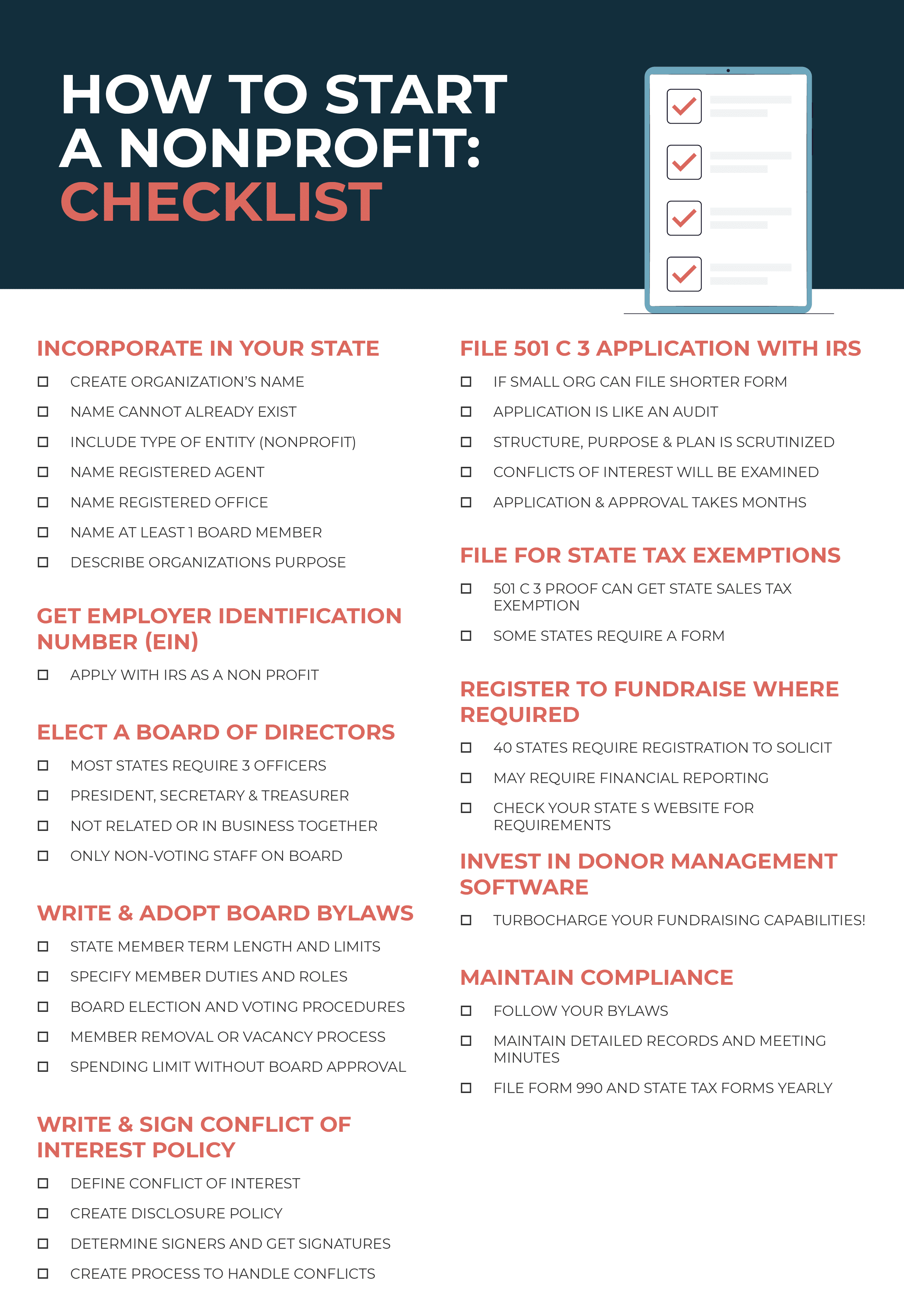
Well-crafted Bylaws provide clarity, prevent disputes, and ensure good governance. They should be adopted by the initial Board of Directors during their first meeting.
Appointing Your Initial Board of Directors
A strong and committed Board of Directors is the backbone of any non-profit. The board is legally and ethically responsible for overseeing the organization’s operations, finances, and mission fulfillment. California law requires a minimum of three directors. When selecting your initial board, look for individuals who bring diverse skills, experience, and a passion for your cause. Their roles will include strategic planning, financial oversight, fundraising, and ensuring legal and ethical compliance. The initial board will hold an organizational meeting to adopt the Bylaws, elect officers, and officially commence the non-profit’s activities.
Securing Federal and State Tax Exemptions
Once your non-profit is formally incorporated at the state level, the next critical step is to obtain tax-exempt status from both federal and state authorities. This is where the true benefits of non-profit status are realized.
Applying for 501(c)(3) Status with the IRS
To become federally tax-exempt under section 501(c)(3) of the Internal Revenue Service (IRS) code, your organization must file Form 1023, Application for Recognition of Exemption Under Section 501(c)(3). This is a comprehensive and often lengthy application that requires detailed information about your organization’s purpose, activities, financial data, and governance structure. You will need to submit your Articles of Incorporation, Bylaws, conflict of interest policy, and financial statements (actual or projected). The IRS scrutinizes these applications to ensure the organization genuinely serves a public purpose and meets all criteria for 501(c)(3) status. It is highly recommended to seek professional assistance from an attorney or consultant experienced in non-profit law for this crucial step to avoid common pitfalls and ensure a successful application.
Obtaining California State Tax Exemption
Even after securing federal 501(c)(3) status, your organization typically needs to apply separately for state income tax exemption in California. This is done by filing Form 3500, Exemption Application, with the California Franchise Tax Board (FTB). In most cases, if your organization has been granted federal 501(c)(3) status, the FTB will mirror that exemption. However, simply having federal status does not automatically grant state status; a separate application is usually required. This exemption covers state income taxes but does not necessarily exempt you from other state taxes like sales tax or property tax, which may require separate applications.
Other Essential Registrations and Filings
Beyond federal and state income tax exemptions, several other registrations are typically required for non-profits operating in California:
- Charitable Trust Registration: If your organization solicits contributions from the public, it must register with the California Department of Justice, Office of the Attorney General, Registry of Charitable Trusts. This involves filing Form CT-1, Initial Registration Form. Annual renewal filings are also required.
- Employer Identification Number (EIN): Even if you don’t plan to have employees initially, your non-profit needs an EIN from the IRS for banking purposes and for filing your Form 1023. This is like a social security number for your organization.
- Seller’s Permit: If your non-profit plans to sell goods, even occasionally, you may need a seller’s permit from the California Department of Tax and Fee Administration.
- Local Registrations: Depending on your city or county, you might need local business licenses or permits.
Operational Readiness and Compliance
Once the legal groundwork is complete, maintaining your non-profit status and ensuring effective operation requires ongoing attention to compliance, fundraising, and organizational development.
Fundraising Strategies and Compliance
Fundraising is the lifeblood of most non-profits. Develop a diverse fundraising strategy that may include individual donations, corporate sponsorships, grants, events, and online campaigns. Always ensure your fundraising activities comply with federal and state regulations, particularly those concerning disclosure requirements and prohibitions against private inurement or excessive lobbying. Proper accounting and donor stewardship are vital for long-term success. Your registration with the California Department of Justice for charitable solicitations is a key compliance aspect here.
Maintaining Annual Filings and Records
Maintaining your tax-exempt status is an ongoing responsibility. Federally, most 501(c)(3) organizations are required to file an annual information return with the IRS (Form 990, 990-EZ, or 990-N, depending on gross receipts). In California, you will generally need to file an annual information return with the Franchise Tax Board (Form 199 or 199N) and an annual registration renewal with the California Department of Justice, Registry of Charitable Trusts (Form RRF-1). Additionally, maintain accurate financial records, meeting minutes, and other organizational documents. Consistent record-keeping not only ensures compliance but also fosters transparency and accountability.

Building a Strong Organizational Culture
Beyond the legal and administrative requirements, fostering a strong organizational culture is paramount for your non-profit’s sustainability and impact. This involves cultivating an environment that values transparency, ethical conduct, collaboration, and a shared commitment to the mission. Invest in your board members, staff, and volunteers, providing training, clear roles, and opportunities for growth. A positive and purpose-driven culture will attract and retain talent, enhance productivity, and ultimately amplify your non-profit’s ability to effect meaningful change in California and beyond. Starting a non-profit is more than just forming a legal entity; it’s about building a movement.
LifeOutOfTheBox is a participant in the Amazon Services LLC Associates Program, an affiliate advertising program designed to provide a means for sites to earn advertising fees by advertising and linking to Amazon.com. Amazon, the Amazon logo, AmazonSupply, and the AmazonSupply logo are trademarks of Amazon.com, Inc. or its affiliates. As an Amazon Associate we earn affiliate commissions from qualifying purchases.