
The history of California is rich with pivotal figures whose tenures profoundly shaped the state’s trajectory and, in many cases, the nation’s. Among these, the governorship of Ronald Reagan stands as a landmark period, not only for its immediate impact on the Golden State but also for its role in propelling him onto the national and international stage. Ronald Reagan served as the 33rd Governor of California for two terms, from January 2, 1967, to January 6, 1975. His eight years in the state’s highest office were a transformative era, marked by significant policy shifts, ideological battles, and the emergence of a political philosophy that would redefine American conservatism.

The Ascent to Sacramento: A New Chapter for California
In the mid-1960s, California was a state in flux, grappling with rapid population growth, social unrest, and burgeoning economic challenges. The political landscape was ripe for change, and a new breed of leader was beginning to emerge, challenging the established order. It was into this dynamic environment that Ronald Reagan, a former actor with a burgeoning reputation as a conservative voice, launched his gubernatorial campaign. His victory in the 1966 election marked a significant turning point, signaling a shift in the political currents of the most populous state in the Union. His campaign successfully tapped into public frustration over rising taxes, perceived governmental inefficiency, and the tumultuous social movements of the era, presenting himself as an outsider ready to bring common-sense solutions to Sacramento.
From Hollywood to the Statehouse
Ronald Reagan’s journey to the governorship was unconventional. Prior to his political career, he was a well-known actor in Hollywood, starring in numerous films and later becoming a television host. This background provided him with exceptional communication skills and a unique understanding of public sentiment, which proved invaluable in his political ascent. His transition from entertainment to politics was catalyzed by his increasing involvement in conservative causes, notably his televised speech in support of Barry Goldwater during the 1964 presidential election. This speech, known as “A Time for Choosing,” introduced him to a national audience as a powerful orator and a champion of conservative principles. Two years later, he leveraged this newfound political prominence to challenge incumbent Democratic Governor Pat Brown in California.
The political climate of California in the mid-60s was complex. The state was experiencing explosive growth, leading to strain on its infrastructure and public services. Universities, particularly the University of California, Berkeley, were hotbeds of anti-Vietnam War protests and the Free Speech Movement, which often devolved into confrontations with authorities. Many Californians, particularly in suburban areas, felt a sense of unease with the rapid social changes and perceived governmental liberalism. Reagan’s campaign resonated with these anxieties, promising to “send the welfare bums back to work” and to clean up “the mess at Berkeley.” His election, with nearly 58% of the vote, was a clear mandate for a new direction, marking the beginning of a conservative resurgence in the state and foreshadowing broader national trends.
The Reagan Era in California: Policies and Impact (1967-1975)
During his two terms as governor, Ronald Reagan confronted a myriad of challenges, from persistent state budget deficits to widespread student unrest. His approach to governance was characterized by a commitment to fiscal conservatism, limited government intervention, and a firm stance on law and order. These eight years were a critical proving ground for his political philosophies, demonstrating his ability to navigate complex issues and implement his agenda in a large, diverse state. He inherited a state budget with a significant deficit and made fiscal reform a cornerstone of his administration, advocating for reduced spending and more efficient government operations.
Navigating Fiscal Crises and Social Change
One of Reagan’s immediate priorities upon taking office was to address the state’s chronic budget shortfalls. Despite his initial campaign rhetoric of cutting taxes, he eventually presided over several tax increases, including a significant hike in 1967, which was necessary to balance the budget and ensure the solvency of state programs. He justified these actions by arguing that they were essential to stabilize the state’s finances and to prevent even larger increases in the future. His administration also implemented welfare reforms, tightening eligibility requirements and capping benefits, under the belief that such measures would reduce dependency and encourage self-sufficiency. These reforms, while controversial, were largely successful in slowing the growth of the welfare rolls and became a template for later national welfare reform efforts.
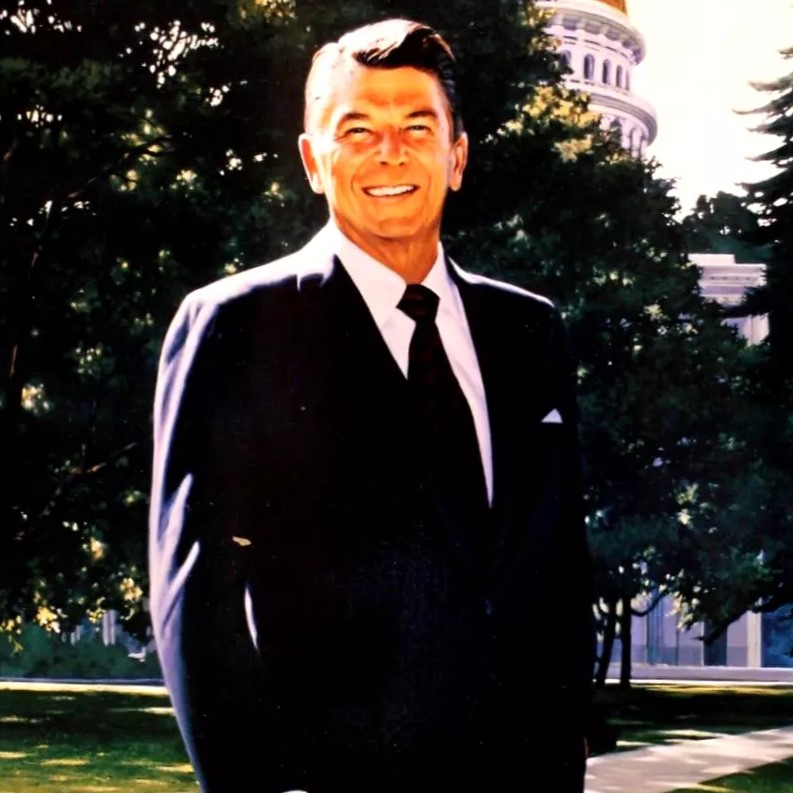
Simultaneously, Reagan faced intense social upheaval, particularly from student protests. His famous directive to “lower tuition and raise admission standards” reflected his skepticism of the burgeoning higher education system and its perceived permissiveness. His response to the unrest at Berkeley, including calling in the National Guard during “People’s Park” demonstrations in 1969, solidified his image as a strong leader committed to maintaining order. These actions, while alienating some, endeared him to a significant portion of the electorate weary of the perceived chaos of the era. His tough-on-crime stance also led to legislative changes aimed at strengthening law enforcement and criminal penalties, reflecting a broader societal shift towards a more punitive justice system.
Educational Reforms and Environmental Stewardship
Reagan’s governorship also touched upon education and the environment. While he initially proposed deep cuts to the state’s higher education budget, his administration ultimately oversaw substantial investments in the University of California and California State University systems, albeit often with accompanying tuition increases. His vision for education emphasized accountability and fiscal prudence, seeking to ensure that public funds were utilized effectively.
Regarding environmental issues, Reagan’s record was more complex. While he often expressed skepticism about aggressive environmental regulations, his administration did oversee the creation of the California Air Resources Board (CARB), which has since become a powerful and influential agency in setting air quality standards. He also signed legislation preserving significant natural areas within California. However, his overall philosophy leaned towards balancing environmental protection with economic development, a stance that would characterize much of his later political career. His actions on these fronts, whether by initiating new policies or responding to existing pressures, profoundly shaped California’s historical trajectory and set precedents for future governors.
A Governor’s Legacy: Shaping California’s Future and National Politics
Ronald Reagan’s eight years as Governor of California laid the groundwork for his eventual rise to the presidency. His governorship served as a testing ground for the conservative policies and principles that would later define his time in the White House. He demonstrated an ability to govern a large, complex state, manage fiscal challenges, and respond to social upheaval, all while articulating a clear ideological vision. The “Reagan Revolution” that swept the nation in the 1980s had its genesis in California during the late 1960s and early 1970s.
Building a National Profile
The experience gained in Sacramento proved invaluable for Reagan’s national aspirations. He honed his communication skills, refined his conservative message, and built a network of supporters that would form the core of his presidential campaigns. His success in California, a state often seen as a bellwether for national trends, demonstrated that a conservative agenda could win broad appeal. He proved that an articulate, charismatic leader could effectively challenge the liberal consensus that had dominated American politics for decades. The policies he pursued in California—from welfare reform to a tough stance on crime and a commitment to fiscal conservatism—became central tenets of his national platform. These were not merely state-level experiments but rather fundamental principles he believed could be applied to solve national problems.

Enduring Influence on California’s Political Landscape
Even after his departure for the presidency, Ronald Reagan’s governorship left an indelible mark on California’s political and economic landscape. His legacy continues to be debated and analyzed, but there is no denying his profound impact. He cemented a conservative counter-narrative within the state, influencing subsequent Republican governors and shaping policy discussions for decades. His approach to governance, emphasizing individual responsibility and limited government, continued to resonate with a significant portion of the electorate, even as California became increasingly diverse and politically complex.
Today, the most prominent physical landmark dedicated to his legacy in California is the Ronald Reagan Presidential Library and Museum in Simi Valley. This institution serves as a historical repository, an educational center, and a testament to the life and career of a man who transitioned from a Hollywood actor to the governor of the nation’s most populous state, and ultimately, to the President of the United States. It stands as a reminder of the historical period from 1967 to 1975 when Ronald Reagan governed California, leaving behind a legacy that continues to inform our understanding of American political history.
LifeOutOfTheBox is a participant in the Amazon Services LLC Associates Program, an affiliate advertising program designed to provide a means for sites to earn advertising fees by advertising and linking to Amazon.com. Amazon, the Amazon logo, AmazonSupply, and the AmazonSupply logo are trademarks of Amazon.com, Inc. or its affiliates. As an Amazon Associate we earn affiliate commissions from qualifying purchases.