
Camp Pendleton, a name synonymous with the enduring strength and training prowess of the United States Marine Corps, represents more than just a military installation; it stands as a colossal landmark defining a significant stretch of Southern California. Its sheer scale, strategic importance, and unique ecological footprint cement its status as a pivotal geographic and historical entity within the state. Understanding its precise location unveils layers of its operational significance, environmental role, and influence on the surrounding civilian communities.
The Strategic Nexus of Southern California
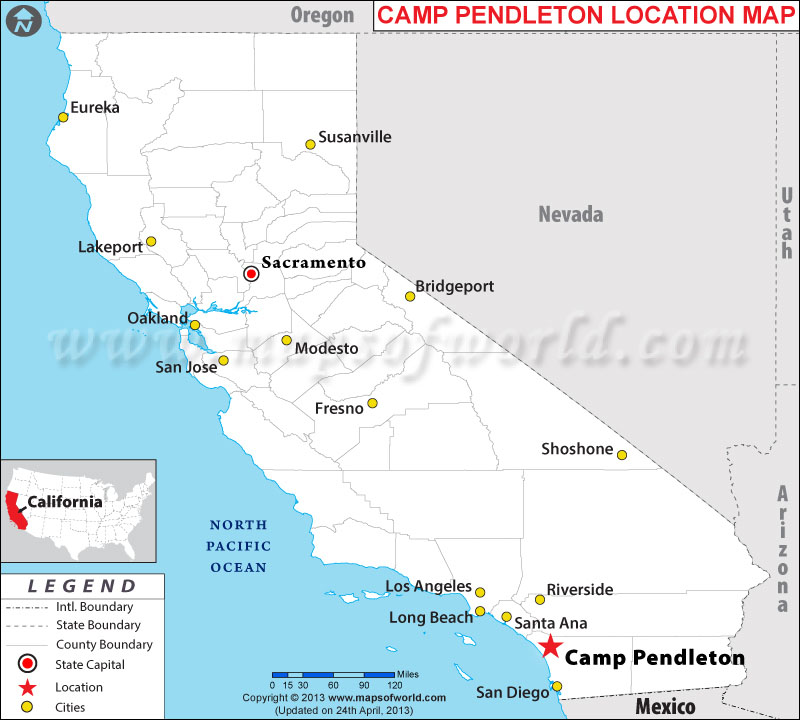
Camp Pendleton is strategically positioned along the picturesque coast of Southern California, serving as a crucial buffer between the densely populated urban areas of Orange County to its north and San Diego County to its south. Specifically, the base spans an impressive 125,000 acres, encompassing a vast and diverse landscape that stretches approximately 17 miles along the Pacific coastline and extends inland for varying distances. This unparalleled coastal frontage and expansive territory make it the primary amphibious training base on the West Coast, providing the ideal terrain for the multifaceted training requirements of the Marines.

The base’s northern boundary directly abuts the city of San Clemente in Orange County, where the iconic San Mateo Point marks a distinct transition from civilian life to military dominion. To the south, Camp Pendleton shares a lengthy border with the city of Oceanside in San Diego County, a community deeply intertwined with the military presence. Inland, its eastern borders are contiguous with smaller, often rural communities like Fallbrook and parts of the Cleveland National Forest, creating a mosaic of natural beauty and human activity. This distinctive location, offering direct access to the ocean, varied topographical features—from rugged hills and mountains to vast open plains, canyons, and even marshlands—is unparalleled. It allows for comprehensive training exercises ranging from amphibious landings to urban warfare simulations, making it an indispensable landmark for national defense and military readiness. The sheer physical presence of Camp Pendleton on the map is a testament to its critical role, shaping the geographic and cultural landscape of a significant portion of coastal California.
A Legacy of History and National Defense
The historical roots of Camp Pendleton are deeply intertwined with the exigencies of World War II and the evolving needs of the United States Marine Corps. Established in 1942, the base was named in honor of Major General Joseph H. Pendleton, a visionary leader who was a fervent proponent of establishing a Marine Corps base on the West Coast. Prior to its acquisition by the government, the vast property was part of the Rancho Santa Margarita y Las Flores, a historic Spanish land grant cattle ranch dating back to 1841. This transformation from a working ranch to a premier military training facility highlights its dynamic history as a landmark.
Since its inception, Camp Pendleton has served as the West Coast’s principal training base for the United States Marine Corps, playing a pivotal role in every major American conflict and humanitarian operation since World War II. Marines from Camp Pendleton have deployed to battlefields across the globe, from the Pacific Theater and Korea to Vietnam, the Persian Gulf, Afghanistan, and Iraq. The base’s expansive training areas, state-of-the-art firing ranges, and specialized facilities have continually adapted to modern warfare, ensuring that Marines are prepared for the complex challenges of contemporary combat. This continuous evolution underscores its importance not just as a static historical site, but as a living, breathing landmark of national defense. Its legacy is not merely etched in stone but actively forged through the rigorous training and deployments of countless service members, symbolizing a continuous commitment to national security and global stability. The presence of Camp Pendleton serves as a constant reminder of the sacrifices and dedication of the military, a landmark of enduring American resolve.
Beyond the Barracks: Ecological and Architectural Significance
While primarily known for its military function, Camp Pendleton is also an extraordinary ecological landmark and a self-contained architectural marvel. Its vast, undeveloped tracts of land in an otherwise heavily urbanized region of Southern California represent an unparalleled conservation success story, albeit an unintentional one.
A Biodiversity Hotspot

The diverse topography of Camp Pendleton encompasses a variety of critical ecosystems, including extensive wetlands, pristine coastal sage scrub, chaparral, oak woodlands, and riparian habitats. These environments support an impressive array of flora and fauna, many of which are endangered or threatened species. The base is home to several federally protected species, such as the Least Bell’s Vireo, the California Gnatcatcher, and various species of endemic plants. The strategic decision to preserve these natural habitats, even amidst intensive military training, has inadvertently transformed Camp Pendleton into one of the largest coastal nature preserves in California. Its waterways, including the Santa Margarita River and San Onofre Creek, are vital to regional hydrology and biodiversity. The base’s environmental management programs are among the most comprehensive in the Department of Defense, balancing military readiness with stringent conservation efforts, making it a unique ecological landmark. This commitment to stewardship demonstrates that even a facility dedicated to defense can serve as a sanctuary for nature.
Architectural Footprint and Infrastructure
The sheer scale of Camp Pendleton necessitates a vast and complex infrastructure, effectively functioning as a self-sufficient city within a city. While it may not boast traditional architectural landmarks like historical cathedrals or skyscrapers, its internal design and development are a testament to military engineering and functional aesthetics. The base comprises numerous cantonment areas, each featuring barracks, administrative buildings, dining facilities, and recreational spaces that reflect the practical and durable construction typical of military installations. Beyond housing, it includes multiple airfields, deep-water port facilities capable of supporting amphibious operations, extensive road networks, hospitals, schools, and even a dedicated rail line. The architecture is primarily utilitarian, designed for efficiency and resilience, yet certain structures, particularly those from its World War II era, possess a historical significance, reflecting the rapid expansion and mobilization efforts of that period. These interconnected structures, spread across a vast and varied landscape, form a unique architectural footprint, a sprawling military cityscape that is a landmark of logistical planning and strategic development.
Visiting and Engaging with a Military Landmark
Given its status as an active military installation, public access to Camp Pendleton is inherently restricted compared to traditional tourist landmarks. The primary mission of the base is national defense and military training, which necessitates strict security protocols. However, there are specific avenues through which civilians can engage with or visit this monumental landmark, offering insights into its operations and historical significance.
One of the most notable public interactions occurs during sanctioned events. Camp Pendleton occasionally hosts public spectacles, such as the annual Ironman 70.3 Oceanside triathlon, which includes portions of the race taking place on base, allowing athletes and spectators controlled access. Additionally, the base may open its gates for specific community outreach programs, air shows, or historical reenactments, providing rare glimpses into the life and training of a Marine. For those with official business, such as contractors or families of service members, access is granted through designated entry points and requires proper identification and sponsorship.
The Camp Pendleton Historical Society plays a vital role in preserving and sharing the base’s rich history. While a dedicated public museum might have limited operating hours or require special arrangements for visits, the society often organizes events or maintains archives that tell the story of the ranch, the base’s establishment, and its contributions through various conflicts. Observing the base from its perimeter, particularly from nearby areas in San Clemente or Oceanside, offers a sense of its vastness and strategic location. From these vantage points, one can witness the expansive beaches where amphibious training occurs or see military vehicles moving along internal roadways. While not a typical tourist destination, its role as a living monument, integral to national security and regional identity, invites respect and a unique form of engagement for those interested in military history and landmark geography.
The Broader Impact: An Economic and Cultural Anchor
The physical location and continuous operation of Camp Pendleton have profound and far-reaching impacts that extend well beyond its immediate boundaries, positioning it as a significant economic and cultural anchor in Southern California. Its presence fundamentally shapes the demographic, economic, and social fabric of the surrounding communities, making it an indispensable landmark not just in terms of geography and history, but also in its ongoing societal influence.
Economically, Camp Pendleton is a colossal engine for the regional economy. As one of the largest employers in San Diego County, it generates billions of dollars annually through salaries, contracts with local businesses, and direct spending by military personnel and their families. The demand for housing, retail services, healthcare, and education in adjacent cities like Oceanside and San Clemente is heavily influenced by the constant influx and turnover of military personnel. This economic symbiosis creates a robust, albeit specialized, job market and a resilient local economy that benefits from federal investment and the stability of a major government operation.
Culturally, Camp Pendleton fosters a unique blend of military and civilian lifestyles. The communities surrounding the base are often characterized by a strong sense of patriotism and support for the armed forces. Veterans and active-duty military families contribute significantly to the cultural diversity and community spirit, bringing a global perspective and a deep sense of service to the region. Events like Memorial Day and Veterans Day take on heightened importance, and local organizations frequently support military families and outreach programs. The base also serves as a visible symbol of national pride and defense, impacting the collective identity of Southern California. Its imposing presence, the sight of military aircraft overhead, or convoys on nearby highways, all reinforce its status as a dynamic landmark that continually reminds residents of the vital role it plays in protecting the nation and shaping the local way of life.
LifeOutOfTheBox is a participant in the Amazon Services LLC Associates Program, an affiliate advertising program designed to provide a means for sites to earn advertising fees by advertising and linking to Amazon.com. Amazon, the Amazon logo, AmazonSupply, and the AmazonSupply logo are trademarks of Amazon.com, Inc. or its affiliates. As an Amazon Associate we earn affiliate commissions from qualifying purchases.