
California is renowned for its sun-kissed beaches, innovative industries, and vibrant culture, yet it consistently ranks among the most expensive states for long-term accommodation in the United States. For those dreaming of making the Golden State their home without breaking the bank, identifying the least expensive places to live requires a deep dive into its diverse regions, moving beyond the allure of metropolitan hubs like San Francisco, Los Angeles, and San Diego. The quest for affordable long-term accommodation in California often leads away from the coveted coastlines and into the state’s interior, where the cost of living, particularly housing, significantly decreases.
Navigating California’s Accommodation Cost Landscape
The stark reality of California’s housing market is its incredible variability. Coastal regions, driven by high demand, limited supply, and robust job markets, command exorbitant prices for both rentals and home purchases. Conversely, inland areas, especially those further from major economic centers, offer a more attainable cost of living. When evaluating the least expensive places, we focus primarily on housing costs—median rent for apartments and median home prices—as these represent the largest portion of long-term accommodation expenses. However, other factors like utilities, transportation, and groceries also contribute to the overall cost of living, and these tend to correlate with housing prices.
The Central Valley: A Hub of Affordability
The Central Valley stands out as California’s most consistent region for affordable long-term accommodation. This vast, agricultural heartland stretches hundreds of miles through the state’s interior, offering a significantly lower cost of living compared to coastal areas. While the pace of life might be slower and access to major cultural attractions less immediate, the trade-off in housing costs is substantial.
Bakersfield
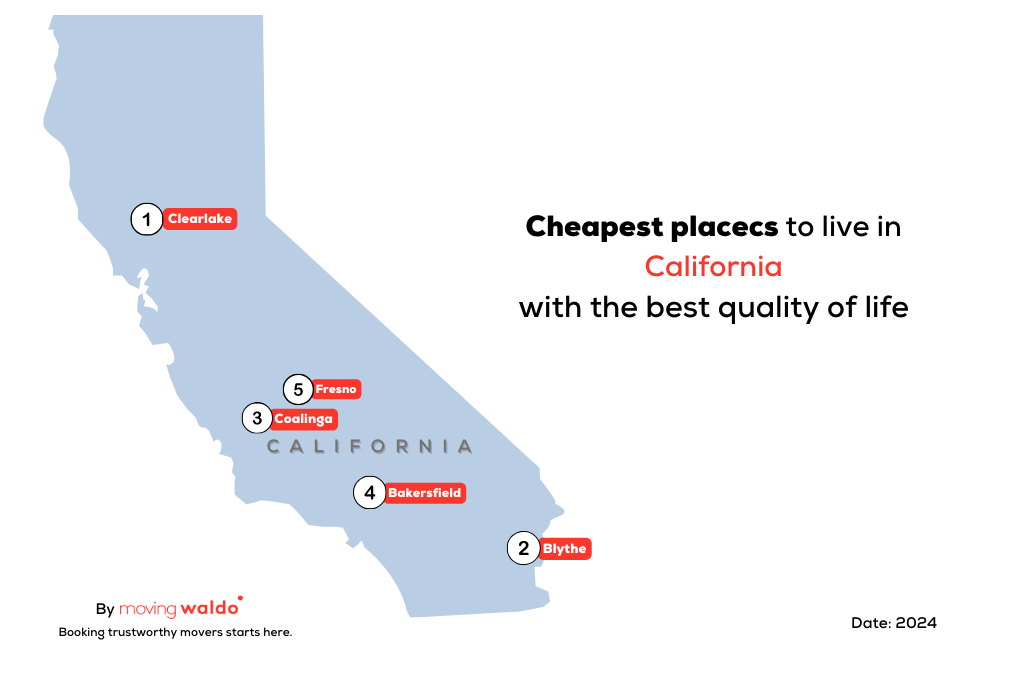
Often cited as one of California’s most affordable large cities, Bakersfield in Kern County provides a surprisingly low cost of living given its size. Median rents for a one-bedroom apartment can be hundreds of dollars less than in coastal cities, and home prices are often less than half of the state’s average. The city offers a range of accommodation options, from single-family homes to apartment complexes, catering to various long-term stay needs. Its economy, historically rooted in agriculture and oil, is diversifying, offering some job opportunities.
Fresno
Further north in the Central Valley, Fresno offers a similar appeal for budget-conscious residents. As the fifth-largest city in California, Fresno boasts a vibrant community with a lower cost of living than many smaller coastal towns. The housing market here is competitive but far more accessible. Rental rates are notably lower, and purchasing a home remains a viable option for many families and individuals who would be priced out elsewhere in the state. Fresno’s location also provides relatively easy access to national parks like Yosemite, Kings Canyon, and Sequoia, adding a lifestyle benefit to its affordability.
Modesto and Stockton
Cities like Modesto and Stockton, situated closer to the San Francisco Bay Area, present a unique proposition. While slightly more expensive than Bakersfield or Fresno, they still offer significant savings. Many residents choose to live in these cities and commute to higher-paying jobs in the Bay Area, making them attractive for those seeking a balance between employment opportunities and affordable accommodation. The rental markets in both cities are more active, but home prices remain considerably lower than in neighboring metropolitan areas.
Emerging Pockets of Affordability in Other Regions
Beyond the Central Valley, other regions of California also offer relatively inexpensive long-term accommodation, often with their own unique environmental or community characteristics.
The Inland Empire
East of Los Angeles, the Inland Empire encompasses vast areas of Riverside and San Bernardino counties. While experiencing growth and increasing property values, cities within the Inland Empire such as Riverside, San Bernardino, and Ontario still offer more affordable accommodation options than coastal Southern California. The cost savings here are attractive for those who wish to remain within commuting distance of Los Angeles or Orange County job markets without paying a premium for a coastal address. Rental apartments and single-family homes are generally more accessible, though competition can be fierce in popular areas.
Far Northern California
The northernmost counties of California, often overlooked, present some of the state’s lowest costs of living. Cities like Redding, Eureka, and Chico offer substantially cheaper accommodation. This region is characterized by its natural beauty, including redwood forests and mountain ranges, appealing to those who prioritize outdoor lifestyles over urban amenities. However, job markets can be more limited, and access to specialized services might require travel to larger cities. Redding, in particular, stands out for its affordability, with home prices and rents significantly below the state average, making it an attractive option for long-term residents.
Desert Communities
California’s vast desert regions, particularly the Antelope Valley in Los Angeles County and cities in the Mojave Desert, also offer some of the most budget-friendly accommodation. Cities such as Palmdale, Lancaster, and Victorville provide housing costs that are a fraction of what you’d find closer to the coast. These areas are growing, offering various housing types from apartments to single-family homes. For those who don’t mind the extreme summer temperatures and a more suburban or rural feel, these communities can be a pragmatic choice for affordable long-term living, especially for commuters to parts of Los Angeles County. Further east, cities like Twentynine Palms and El Centro offer even lower costs, though they are more remote.
Factors Influencing Long-Term Accommodation Costs
Understanding the underlying factors that drive accommodation costs is crucial for anyone seeking an inexpensive place to live in California. It’s not just about finding a cheap rent; it’s about evaluating the long-term sustainability of that cost within a broader economic and social context.
Rental Market Dynamics
The rental market in California is highly competitive, especially in desirable areas. Even in the more affordable regions, demand can fluctuate, influencing prices. Factors like population growth, job creation, and the availability of new housing developments directly impact rental rates. In cities like Bakersfield or Fresno, where the supply of housing tends to better meet demand compared to coastal hubs, rental prices remain more stable and affordable. Long-term renters should research local vacancy rates and average rent increases to anticipate future accommodation expenses.
Homeownership Versus Renting
For long-term residents, the decision between buying and renting heavily influences the overall cost of accommodation. While renting offers flexibility, homeownership can be a path to building equity. In expensive markets, the barrier to entry for homeownership (down payments, mortgage rates) is significantly higher. However, in the least expensive parts of California, such as the Central Valley or Far Northern California, homeownership is a much more attainable goal. Lower home prices translate to smaller down payments and more manageable monthly mortgage payments, often making homeownership a more cost-effective long-term accommodation strategy than renting in higher-cost areas.
Cost of Utilities and Services
Beyond rent or mortgage, utility costs significantly contribute to long-term accommodation expenses. California’s climate means that heating and air conditioning can be substantial costs, particularly in the extreme temperatures of the Central Valley and desert communities. Access to affordable internet, water, and trash services also varies by location. While these costs don’t fluctuate as dramatically as housing prices between regions, they are an important consideration when calculating the true cost of living in an area.
Practical Strategies for Budget-Friendly Long-Term Stays
Beyond selecting an inherently affordable location, there are strategies individuals and families can employ to reduce their long-term accommodation costs in California.
Shared Living Arrangements
Opting for shared living—renting a room in a larger house or finding roommates for an apartment—is a highly effective way to cut down on monthly rent, even in moderately expensive areas. Websites and local community boards often feature listings for shared housing opportunities, which can significantly reduce the individual financial burden. This strategy is particularly common among students, young professionals, and those new to a city.
Exploring Smaller Communities and Rural Areas
While major cities in affordable regions offer specific advantages, looking at smaller towns surrounding these cities can reveal even lower accommodation costs. Rural areas often have a slower pace, fewer amenities, but also significantly cheaper housing. This requires careful consideration of transportation needs and access to work, but for those with remote work capabilities or local employment, it can be a highly viable option.
Utilizing Public Transportation and Walkability
The cost of transportation, particularly car ownership and fuel, can add hundreds of dollars to monthly expenses. Choosing long-term accommodation in areas with good public transportation options or within walking/biking distance of work and essential services can lead to substantial savings. While California is largely car-dependent, some of the more populated affordable cities do offer improving transit systems.
Ultimately, finding the least expensive place to live in California means embracing trade-offs. It often involves prioritizing affordability over immediate access to coastal attractions or the bustling job markets of major tech hubs. The Central Valley and certain parts of the Inland Empire and Far Northern California consistently emerge as the most viable options for those seeking manageable long-term accommodation costs, offering a more accessible entry point to the Californian dream. By carefully researching specific locales and adopting smart living strategies, residing in California on a budget is not only possible but increasingly a reality for a growing number of residents.
LifeOutOfTheBox is a participant in the Amazon Services LLC Associates Program, an affiliate advertising program designed to provide a means for sites to earn advertising fees by advertising and linking to Amazon.com. Amazon, the Amazon logo, AmazonSupply, and the AmazonSupply logo are trademarks of Amazon.com, Inc. or its affiliates. As an Amazon Associate we earn affiliate commissions from qualifying purchases.