
The name California evokes images of golden sunshine, towering redwoods, and a vibrant cultural landscape. Yet, few realize that the origin of this iconic name lies not in geographical discovery or an indigenous tongue, but in the fantastical pages of a 16th-century Spanish chivalric romance. Far from being named after a specific person, the vast expanse of California owes its moniker to a mythical queen and her island kingdom, born from the imagination of a Spanish author.
The Literary Genesis: A Mythical Island Paradise
The true origin of the name California can be traced directly to a widely popular work of fiction from the early 1500s. In an era when tales of knights, sorcerers, and faraway lands captivated the European imagination, one particular book stood out, influencing the very nomenclature of a future global landmark.

Garci Rodríguez de Montalvo’s “Las Sergas de Esplandián”
Published around 1510, “Las Sergas de Esplandián” (The Adventures of Esplandián) was a sequel to the even more famous “Amadis de Gaula.” Written by Garci Rodríguez de Montalvo, this chivalric romance captured the spirit of discovery and adventure that was sweeping through Spain at the time. The book describes an island called California, located “at the right hand of the Indies, very close to the terrestrial paradise.” This description immediately placed the island in a mythical, yet geographically plausible (to the 16th-century mind) location that explorers were actively seeking.
Queen Calafia and Her Amazonian Warriors
The island of California in Montalvo’s novel was not merely a backdrop; it was a character in itself, ruled by the fierce and magnificent Queen Calafia. She was portrayed as a powerful Black Amazon queen, leading an army of courageous female warriors. Her island was rich in gold, pearls, and mythical creatures like griffins. The descriptions of Queen Calafia and her realm were vivid and exotic, depicting a land of immense wealth and formidable inhabitants. This fictional paradise resonated deeply with the aspirations and fantasies of Spanish conquistadors, who were constantly searching for new lands, treasures, and exotic civilizations in the recently discovered New World. The idea of a golden island, guarded by warrior women, served as a powerful metaphor for the unknown riches and challenges that lay westward.
Spanish Exploration and the Coining of a New Land
The early 16th century was a period of intense exploration for Spain. Driven by the pursuit of wealth, glory, and the expansion of the Catholic faith, explorers sailed westward into uncharted waters, mapping new coastlines and claiming territories. It was during this fervent period that the name from Montalvo’s novel made the leap from fiction to geographical designation.
The Arrival of Hernán Cortés and His Expeditions
The famed conquistador Hernán Cortés, having conquered the Aztec Empire in Mexico, turned his attention northward and westward. Rumors of a rich island to the west, potentially brimming with pearls and gold, fueled his expeditions. In 1533, one of his captains, Fortún Jiménez, sighted what he believed to be an island in the Gulf of California (then known as the Sea of Cortés). This land was, in fact, the Baja California peninsula, but the initial perception was that it was an island. This discovery, coupled with stories of riches and exotic inhabitants, strongly echoed the descriptions in Montalvo’s novel.
Mapping the Baja Peninsula and the Adoption of “California”
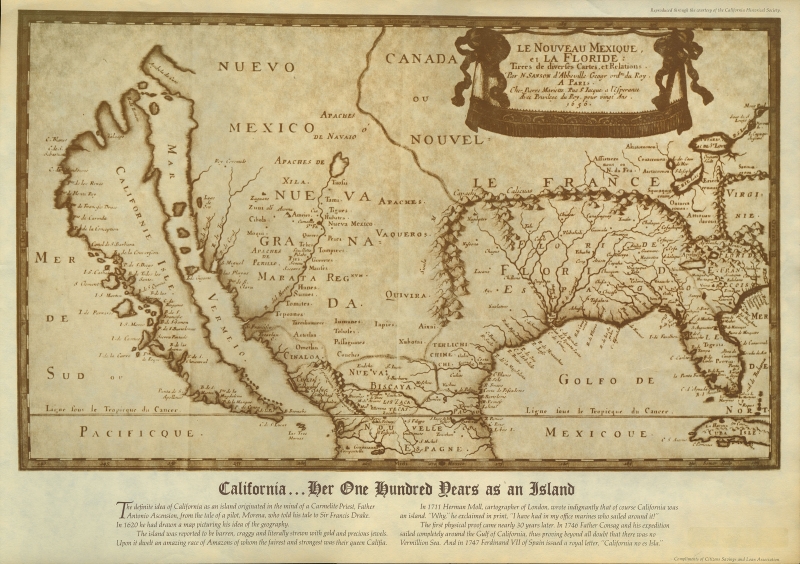
It was Cortés himself who, in 1535, landed on the eastern coast of the Baja California peninsula and established a small settlement near what is now La Paz. While his attempts at colonization were largely unsuccessful and the promised gold remained elusive, the name “California” began to be associated with this newly encountered land. It’s highly probable that Cortés or his men, familiar with Montalvo’s popular romance, consciously or unconsciously, applied the name of the mythical golden island to this new, arid, and seemingly isolated peninsula. The exotic nature of the novel’s island, with its perceived wealth and remoteness, aligned perfectly with the impression the Spanish explorers had of this new territory. Early maps and accounts from the mid-16th century began to label the peninsula as “Isla California” or “Las Californias,” solidifying its place in geographical lexicon despite its fictional origins.
From Fictional Realm to Geographical Reality
The initial misidentification of Baja California as an island persisted for nearly two centuries, largely due to cartographical inaccuracies and the sheer scale of the region being explored. This enduring belief only further cemented the literary name’s hold on the vast North American Pacific coast.
Early Spanish Maps and the Island Belief
For generations of European cartographers, California was depicted as a massive island, separated from the North American mainland by the Sea of Cortés or Gulf of California. Maps from the 17th century, such as those by Hondius and Sanson, famously showed California as a distinct insular landmass. This cartographical error, fueled by early incomplete explorations and the compelling narrative of Montalvo’s novel, meant that the name “California” became deeply ingrained in the European geographical consciousness as an isolated, potentially rich, and mysterious land on the edge of the known world. It was only in the mid-18th century, through more thorough explorations like those of Father Eusebio Kino, that the peninsular nature of Baja California was definitively established, dispelling the centuries-old “island of California” myth.
The Persistence of the Name
Despite the rectification of the geographical error, the name “California” had already taken root. It was used to refer not only to the peninsula but also to the broader, unexplored regions to its north. The Spanish colonial administration eventually divided the territory into Baja California (Lower California), which is now part of Mexico, and Alta California (Upper California), which would eventually become the U.S. state of California. The romance of the name, its association with a land of potential wealth and exoticism, ensured its survival and ultimate prominence. It was a name steeped in literary fantasy that, through the lens of exploration and colonial ambition, found its permanent home on the map.
The Evolution of a State’s Identity
The journey of the name “California” from a fictional island to one of the most recognized states in the United States is a testament to the powerful interplay between literature, exploration, and history. It stands as a unique example of how a work of fiction can inadvertently shape the geographical identity of a vast and significant landmark.
Upper and Baja California
The historical distinction between Baja California and Alta California is crucial to understanding the name’s evolution. Initially, the entire region, stretching from the tip of the peninsula northwards, was broadly referred to as “Las Californias.” As Spanish colonization progressed, the need for administrative divisions became clear. Baja California encompassed the peninsula itself, a relatively arid and challenging landscape that was difficult to colonize effectively. Alta California, on the other hand, represented the territories further north, which would later prove to be incredibly fertile and rich in resources, particularly after the Gold Rush. Both regions inherited the name, carrying forth the legacy of Queen Calafia and her legendary island. When Mexico gained independence from Spain in 1821, these divisions remained, and eventually, Alta California was ceded to the United States in 1848, becoming the 31st state in 1850.
A Legacy of Imagination and Discovery
The name “California” is more than just a label; it is a historical landmark in itself, encapsulating centuries of human endeavor, fantasy, and geographical realization. It began as a dream of a far-off land of riches and powerful women, a beacon for ambitious explorers. The name, steeped in myth and romance, was then serendipitously applied to a newly encountered land that, while not an island of Amazons, did eventually reveal immense wealth and opportunity. Today, the state of California continues to be seen as a land of dreams and innovation, a modern-day terrestrial paradise in the minds of many, echoing the very sentiments that led to its naming over 500 years ago. The story of California’s name is a fascinating journey that reminds us how deeply intertwined our perceptions of the world are with the narratives we create and consume, proving that sometimes, fiction can indeed become a defining part of our reality.
LifeOutOfTheBox is a participant in the Amazon Services LLC Associates Program, an affiliate advertising program designed to provide a means for sites to earn advertising fees by advertising and linking to Amazon.com. Amazon, the Amazon logo, AmazonSupply, and the AmazonSupply logo are trademarks of Amazon.com, Inc. or its affiliates. As an Amazon Associate we earn affiliate commissions from qualifying purchases.