
For many Muslim travelers, understanding the local prayer times is a fundamental aspect of planning any trip, ensuring their spiritual obligations are met while exploring new destinations. Chicago, a vibrant metropolis known for its stunning architecture, world-class museums, and diverse culinary scene, is a popular destination for tourists from all walks of life. For those who observe the five daily Islamic prayers, knowing the precise time for Fajr – the dawn prayer – is crucial, as it dictates the beginning of the day’s spiritual rhythm and often influences travel itineraries.
The timing of Fajr in Chicago, like any location, is intrinsically linked to the position of the sun. As the first prayer of the day, Fajr begins at dawn, specifically when the first light of day becomes visible across the horizon, just before sunrise. This timing is critical because it also marks the end of the pre-dawn meal (suhoor) during the holy month of Ramadan and the start of the fasting period. Navigating prayer times in a new city can be a thoughtful exercise, but with the right resources, visitors to Chicago can seamlessly integrate their spiritual practice into their travel experience, enriching their journey with a sense of cultural immersion and personal reflection.

Understanding Fajr Prayer and Its Significance for Travelers
The Fajr prayer is more than just a ritual; it’s a profound spiritual anchor that commences the day for millions of Muslims worldwide. For a traveler, especially one exploring a dynamic city like Chicago, integrating this prayer into their schedule can transform their trip from a mere sightseeing venture into a more holistic and culturally aware experience. It provides a unique lens through which to engage with the local Muslim community and understand a vital aspect of Islamic culture.
The Spiritual Rhythm of Daily Life
Fajr sets the spiritual tone for the day. Its timing, which changes daily with the sun’s position, serves as a natural clock for observers. For the Muslim tourist, this means waking up before sunrise, performing ablution (wudu), and engaging in prayer and reflection. This early start can offer a serene perspective of Chicago before the city fully awakens. Imagine witnessing the first light over Lake Michigan or seeing the quiet grandeur of Downtown Chicago at dawn—moments that might otherwise be missed. This commitment not only fulfills a religious obligation but also fosters discipline and mindfulness, qualities that can enhance the overall travel experience, allowing for deeper appreciation of the destination.
Planning Your Day Around Fajr
Knowing the exact Fajr time is essential for practical itinerary planning. It influences wake-up calls, breakfast timings (especially during Ramadan), and the commencement of morning activities. If a traveler plans to visit attractions like the Art Institute of Chicago or walk through Millennium Park early, factoring in Fajr ensures a smooth start to the day. Moreover, if traveling with family or a group, coordinating prayer times can prevent scheduling conflicts and ensure everyone’s needs are met. This consideration extends to selecting accommodations; while not always a priority, being near a mosque or having a quiet space within a hotel can be beneficial. Understanding this aspect of local culture enriches the traveler’s experience, enabling them to move through Chicago with purpose and peace.
Factors Influencing Fajr Times in Chicago
Calculating prayer times, particularly Fajr, is a precise science rooted in astronomy and Islamic jurisprudence. In a city like Chicago, situated in the northern hemisphere of the United States, several factors come into play, making daily times unique and subject to seasonal change.
Geographical Location and Daylight Hours
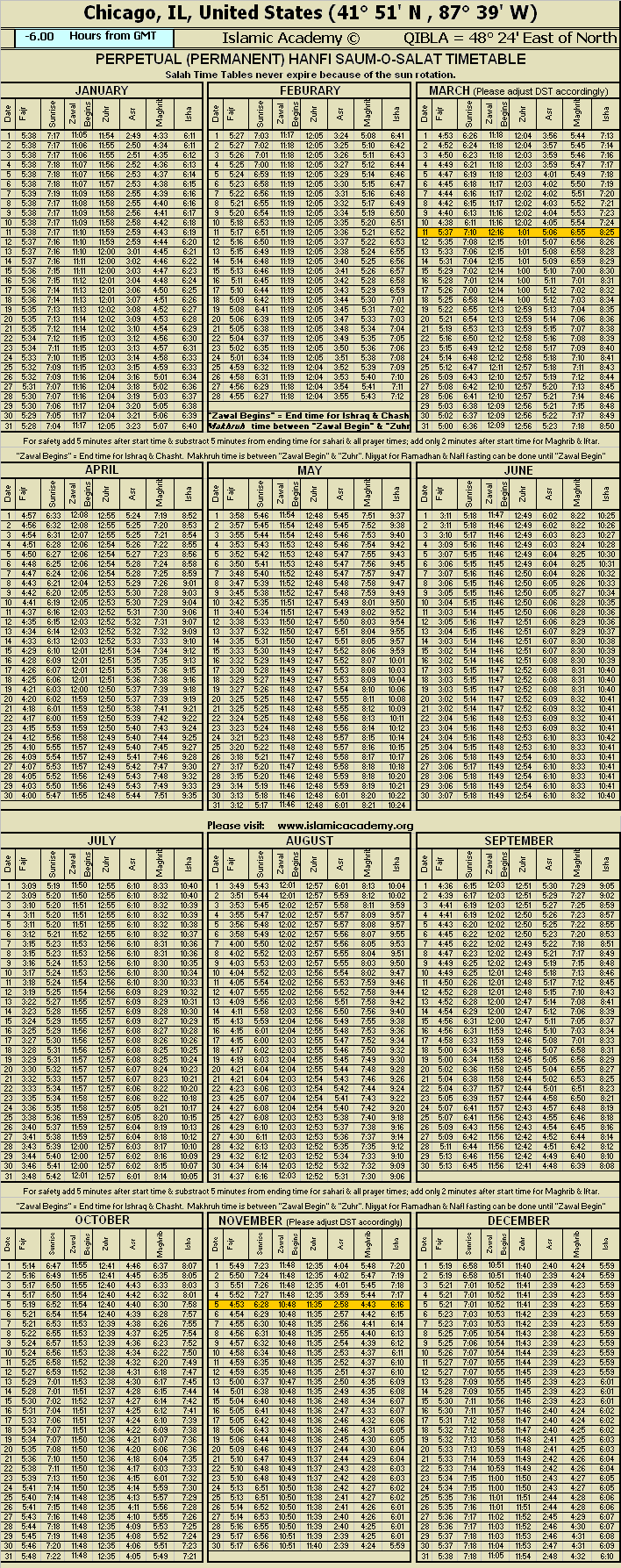
Chicago’s latitude (approximately 41.87° N) significantly impacts the duration of daylight throughout the year. During the summer months, the sun rises much earlier, resulting in a very early Fajr time and a longer period of daylight. Conversely, in winter, Fajr occurs later as daylight hours shorten. This seasonal variation is a crucial consideration for travelers. For instance, a summer visit might mean a Fajr time as early as 3:30 AM, while a winter trip could see it closer to 6:00 AM. Awareness of these shifts is vital for proper planning and maintaining one’s spiritual routine.
Calculation Methods and Islamic Jurisprudence
Unlike countries closer to the equator where twilight phases are relatively consistent, locations like Chicago experience significant variations in twilight, sometimes leading to prolonged or absent astronomical twilight during peak summer. This phenomenon, known as the “white nights” or continuous twilight, poses challenges for determining Fajr and Isha (night) prayer times based solely on astronomical definitions.
To address this, various Islamic scholarly bodies and organizations have developed different calculation methods. The most commonly used methods in North America and specifically in Illinois include:
- Islamic Society of North America (ISNA): This method uses fixed angles of the sun below the horizon (15 degrees for Fajr and 15 degrees for Isha). It’s widely adopted due to its practicality and consistency across the continent.
- Muslim World League (MWL): Employing a 18-degree angle for Fajr and 17 degrees for Isha, this method is also prevalent in some communities.
- University of Islamic Sciences, Karachi: This method uses an 18-degree angle for Fajr and 18 degrees for Isha, often preferred by communities with a South Asian background.
- Fiqh Council of North America (FCNA): This council often issues recommendations for prayer times, sometimes adjusting angles or using a “midnight” method during extreme latitudes to avoid overly early Fajr or late Isha times. Their guidance aims to provide ease and avoid undue hardship for Muslim communities.

Different mosques and communities in Chicago may adhere to one of these methods, leading to slight variations in published prayer times. It is advisable for travelers to check with the specific mosque they plan to attend or use a reliable prayer time application that allows selecting the desired calculation method.
How to Find Accurate Fajr Times in Chicago
In today’s digital age, finding accurate prayer times in any major city like Chicago is remarkably straightforward. However, understanding the best sources and recognizing potential variations is key for a seamless spiritual experience during your travels.
Digital Resources and Mobile Applications
The most convenient way to ascertain Fajr times is through mobile applications and websites dedicated to Islamic prayer times. Popular apps like “Muslim Pro,” “Athan,” or “Salatuk” allow users to input their location (Chicago) and automatically calculate daily prayer times, often providing options to select different calculation methods (e.g., ISNA, MWL, FCNA) to match local community practices. These apps typically offer daily updates and notifications, ensuring you’re always informed. Many Islamic websites also provide monthly prayer schedules for major cities, which can be useful for planning longer stays. Always ensure your device’s location services are accurate for the most precise readings.
Local Mosques and Community Centers
For the most authentic and precise local times, consulting a mosque in Chicago is highly recommended. Mosques often publish monthly or weekly prayer schedules, either on their physical notice boards or on their official websites. Visiting or contacting local mosques like the Mosque Foundation of Chicago in Bridgeview, or smaller masajid closer to Downtown Chicago, provides not only accurate prayer times but also an opportunity to connect with the local Muslim community. This personal connection can enhance your travel experience, offering insights into local culture and potentially guiding you to other Muslim-friendly amenities.
Seasonal Variations and Adjustments
As mentioned, Chicago’s northern latitude means Fajr times fluctuate considerably throughout the year. In summer, the pre-dawn meal (suhoor) must conclude very early, sometimes before 4:00 AM, making early mornings a reality for observant Muslims. In winter, Fajr shifts later, allowing for a more conventional early start to the day. Travelers should be prepared for these significant shifts. During periods of extreme daylight or darkness, some communities may adopt alternative methods for calculation, such as following the prayer times of the nearest normal latitude or using a ‘fixed time’ approach. Always cross-reference multiple sources, particularly during peak summer or winter months, to ensure you have the most practical and accepted times.
Experiencing Muslim Culture and Hospitality in Chicago
Beyond prayer times, Chicago offers a rich tapestry of experiences for Muslim travelers seeking to immerse themselves in local culture and find amenities that cater to their needs. The city’s diverse population means there are vibrant Muslim communities and resources readily available.
Halal Dining and Community Spaces
Chicago boasts a thriving halal food scene, ranging from casual eateries to upscale restaurants. Areas like Devon Avenue in the West Ridge neighborhood are renowned for their South Asian and Middle Eastern cuisines, offering numerous halal options. Here, you can find everything from flavorful biryanis and kebabs to delicious falafel and shawarma. Beyond Devon Avenue, halal restaurants are scattered throughout the city, including in the Loop and near popular tourist attractions. Many mobile apps and online guides specifically cater to finding halal food in major cities, making it easy to locate suitable dining options. These places are not just about food; they are often community hubs where travelers can observe local life and interact with residents, adding a rich layer to their cultural exploration.
Mosques as Centers of Worship and Connection
Chicago’s mosques serve as spiritual centers and vital community hubs. Beyond fulfilling prayer obligations, visiting these mosques can offer a glimpse into the local Muslim community’s life and architecture. The Mosque Foundation of Chicago is one of the largest and most established, known for its community services and welcoming atmosphere. Others, like King Fahd Mosque or Mosque Maryam, each have their unique histories and community focus. Travelers are often welcome to observe prayers, attend lectures, or simply appreciate the peaceful atmosphere. Many mosques also host interfaith events or open houses, providing an opportunity for broader cultural exchange and understanding. For travelers arriving at Chicago O’Hare International Airport or Midway International Airport, prayer rooms are also available, ensuring spiritual needs can be met immediately upon arrival or before departure.
Exploring Chicago’s Diverse Fabric
Chicago is a city that celebrates its diversity, and the Muslim community is an integral part of this vibrant mosaic. From the architectural marvels along the Magnificent Mile to the artistic wonders of the Art Institute of Chicago and the panoramic views from the Willis Tower, the city offers countless attractions. Incorporating Fajr prayer and seeking out halal dining are ways for Muslim travelers to tailor their experience, ensuring their journey is both spiritually fulfilling and culturally enriching. Whether you’re admiring the Bean in Millennium Park or enjoying the lively atmosphere of Navy Pier, Chicago invites you to explore its depths while staying true to your personal values and practices.
LifeOutOfTheBox is a participant in the Amazon Services LLC Associates Program, an affiliate advertising program designed to provide a means for sites to earn advertising fees by advertising and linking to Amazon.com. Amazon, the Amazon logo, AmazonSupply, and the AmazonSupply logo are trademarks of Amazon.com, Inc. or its affiliates. As an Amazon Associate we earn affiliate commissions from qualifying purchases.