
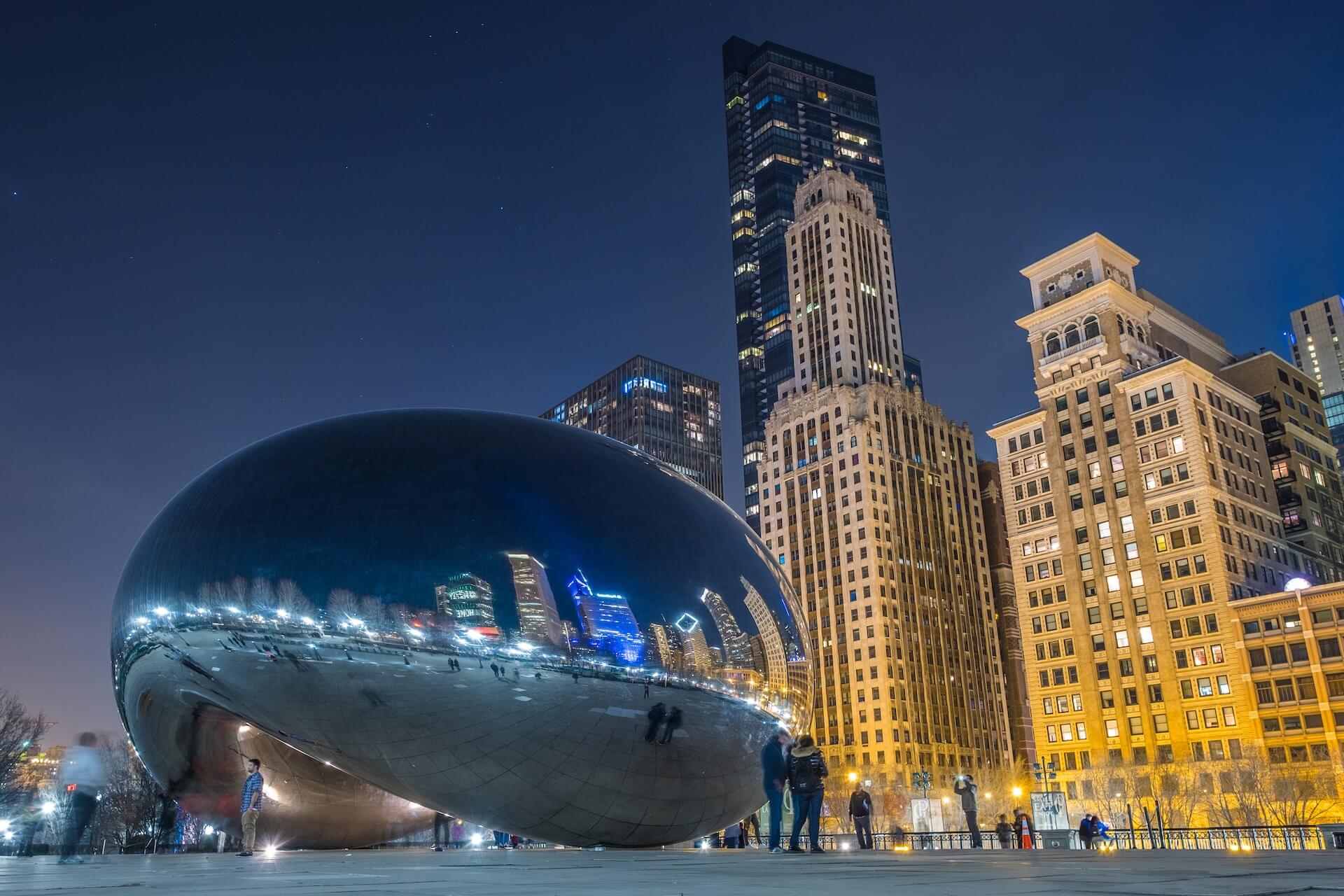
The iconic sculpture affectionately known worldwide as “The Bean” in Chicago is officially titled Cloud Gate. This monumental work of public art has become synonymous with the city, drawing millions of visitors annually to its reflective surface. Far from being a mere decorative piece, Cloud Gate is a testament to groundbreaking design, innovative engineering, and profound artistic vision. The genius behind this beloved landmark is the renowned British artist Anish Kapoor. His vision transformed a public space into an interactive mirror, reflecting the dynamic urban landscape and the ever-changing sky, captivating onlookers with its seamless, highly polished exterior.
The Visionary Artist: Anish Kapoor’s Creative Spark
Born in Mumbai, India, in 1954, Anish Kapoor later moved to London, England, where he established his prolific career. He is celebrated globally for his large-scale sculptures that often explore themes of duality, reflection, and the manipulation of space and light. Kapoor’s artistic philosophy frequently involves creating forms that seem to dissolve or emerge from their surroundings, inviting viewers to question their perception and experience of the artwork. His sculptures are known for their minimalist aesthetic combined with an overwhelming physical presence, engaging both the intellect and the senses.
Before embarking on Cloud Gate, Kapoor had already garnered international acclaim for works such as “Marsyas” at Tate Modern in London and “Sky Mirror,” which has been exhibited in various locations, including New York City. These earlier works demonstrated his fascination with convex and concave surfaces, which distort reflections and create immersive visual experiences. The selection of Kapoor to create a centerpiece for Chicago’s ambitious Millennium Park was a bold move, aimed at securing an artist whose work would not only stand out but also integrate deeply with the park’s innovative spirit and the city’s architectural grandeur. The commission for Cloud Gate was a competitive process, but Kapoor’s proposal, with its unique blend of form, material, and conceptual depth, ultimately won over the selection committee. He envisioned a sculpture that would not just sit in the park, but would actively engage with it, reflecting the city’s skyline, the sky above, and the people below, creating a unique, constantly evolving portrait of Chicago.
From Concept to Reality: The Engineering Marvel of Cloud Gate
The journey of Cloud Gate from a conceptual sketch to a tangible, polished masterpiece was an extraordinary feat of engineering and craftsmanship. Kapoor’s design called for a seamless, highly reflective surface, a challenge that required unprecedented precision and innovation. The sculpture, weighing approximately 110 tons, is made up of 168 stainless steel plates, each custom-cut and welded together. The true marvel lies in the fact that the welding seams are virtually invisible, creating a monolithic appearance that mirrors its surroundings with stunning clarity.
The Fabrication Process
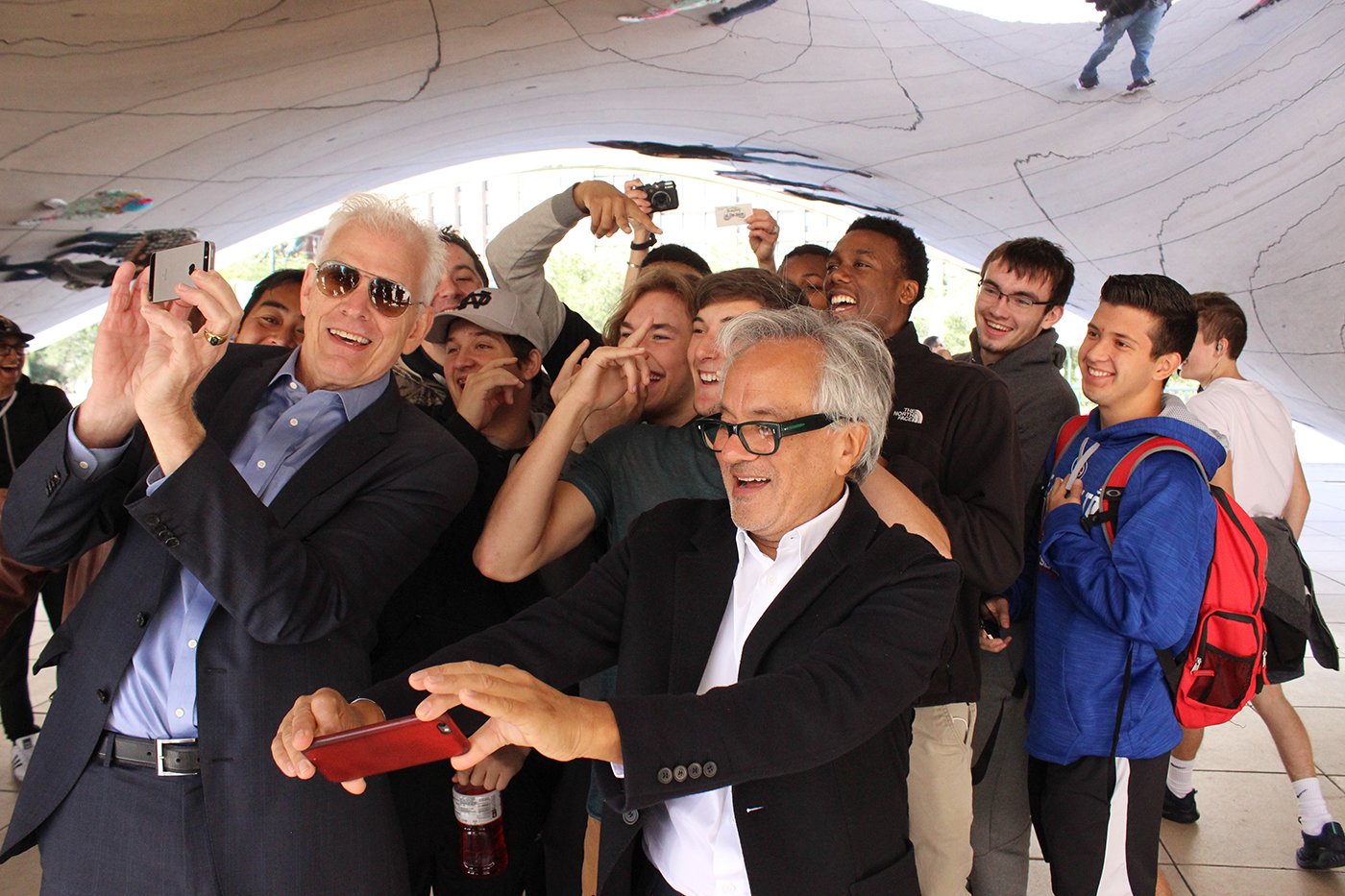
The fabrication of Cloud Gate was handled by Performance Structures Inc. of Oakland, California. The process was meticulous and incredibly complex. First, a vast internal stainless steel frame was constructed to support the enormous weight and precise curvature of the outer shell. This skeletal structure was crucial for maintaining the sculpture’s distinctive shape. Then, the individual stainless steel plates, each varying in size and shape, were meticulously fitted and welded. This welding process was critical; the goal was to achieve a perfectly smooth surface without any visible joins. Skilled welders spent countless hours grinding and polishing the seams, first by hand and then with specialized machinery, to achieve the desired seamless effect. The final polishing alone took several months, resulting in the mirror-like finish that allows Cloud Gate to reflect its environment so flawlessly.
Structural Ingenuity
The engineering challenges extended beyond the seamless surface. The sculpture needed to withstand the extreme weather conditions of Chicago, from scorching summers to brutal winters. Its internal structure was designed to allow for expansion and contraction of the metal without compromising its integrity or appearance. Furthermore, the underbelly of “The Bean,” which creates a concave “omphalos” (navel) effect, required an equally complex internal support system to maintain its inverted arch. This particular feature invites visitors to walk underneath the sculpture, where they encounter a mesmerizing, kaleidoscopic reflection of themselves and the sky above, a truly immersive experience that blurs the lines between art and viewer. The commitment to achieving Kapoor’s vision, despite the immense technical hurdles, truly defines the collaborative spirit between artist, fabricators, and the city itself.
Cloud Gate’s Place in Chicago’s Millennium Park
Cloud Gate is not just an isolated piece of art; it is an integral component of Millennium Park, one of the largest green roofs in the world and a premier civic space in Chicago. Unveiled officially in 2006, the sculpture quickly became the park’s centerpiece, drawing visitors to an area that also features other notable landmarks like the Jay Pritzker Pavilion, the Crown Fountain, and the Lurie Garden. The park itself, an initiative led by former Chicago Mayor Richard M. Daley, aimed to transform an underutilized railyard and parking lot into a vibrant public space that celebrates art, architecture, and landscape design.
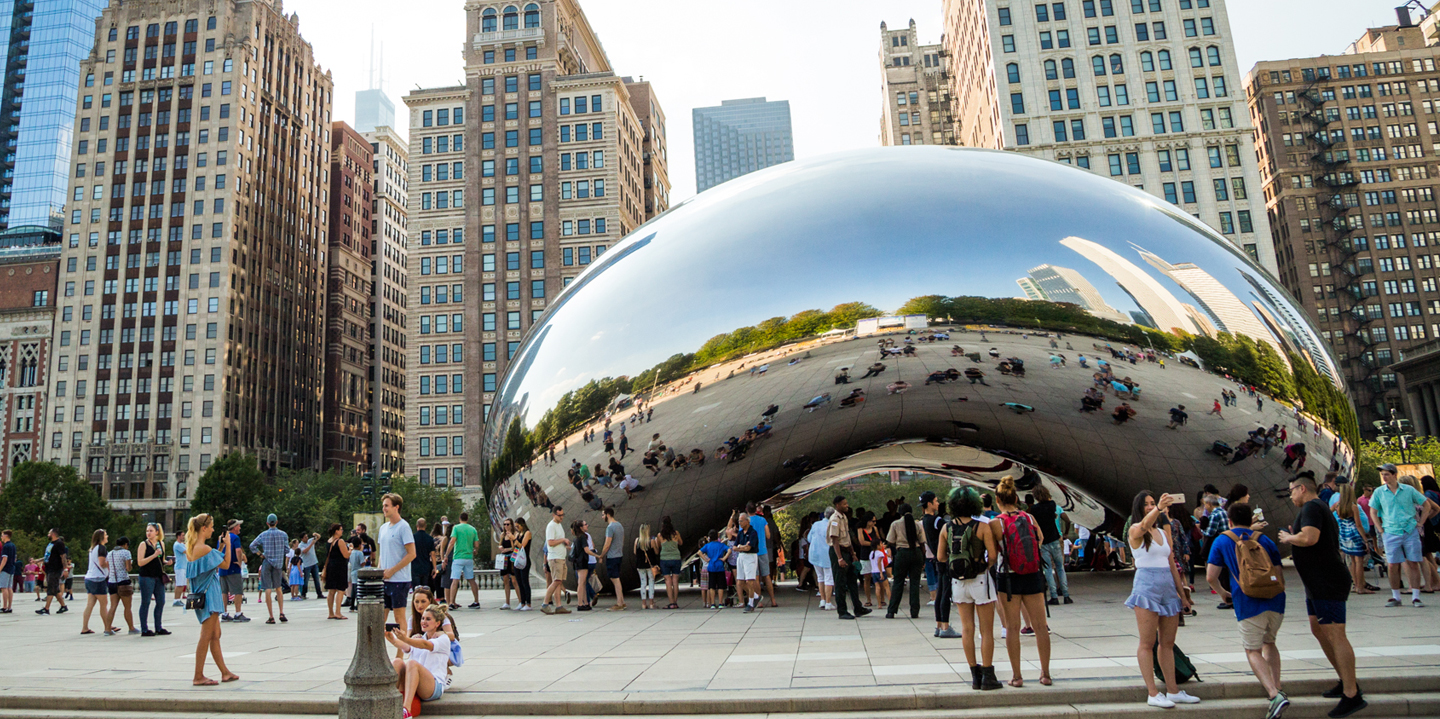
Kapoor’s sculpture perfectly complements the park’s ethos. Its reflective surface captures and distorts the surrounding urban landscape, including the soaring skyscrapers of Chicago’s loop and the intricate facade of the historic Art Institute of Chicago. This interaction creates a dynamic visual dialogue between the natural elements of the park, the contemporary art, and the historic architecture of the city. Visitors are drawn to photograph their distorted reflections, the sweeping panoramas of the skyline, and the ever-changing play of light on its surface. It serves as an impromptu photography studio, a meeting point, and a quiet place for contemplation, all simultaneously. The sculpture’s accessibility and interactive nature contribute significantly to the park’s reputation as a democratic public space, where art is not confined to gallery walls but is part of the everyday urban experience. It encourages engagement, wonder, and a renewed appreciation for the city’s beauty.
Lasting Legacy and Cultural Impact
Since its installation, Cloud Gate has transcended its status as a mere art piece to become a global icon and a powerful symbol of Chicago. It epitomizes modern public art’s capacity to transform urban environments and capture the collective imagination. The sculpture has been featured in countless movies, television shows, and advertisements, cementing its place in popular culture. Its nickname, “The Bean,” adopted by locals and tourists alike, speaks to its approachable and universally recognizable form, making it a beloved landmark even for those unfamiliar with contemporary art.
The success of Cloud Gate has inspired other cities and artists to consider how monumental, interactive sculptures can redefine public spaces. It demonstrates the enduring power of art to create community, stimulate economic activity through tourism, and provide a sense of civic pride. For Chicago, “The Bean” is more than just a tourist attraction; it’s a reflection of the city’s innovative spirit, its dedication to public art, and its vibrant urban landscape. It is a landmark that continues to evolve with each passing season, each changing sky, and each new visitor, offering a fresh perspective on a city that constantly reinvents itself. Anish Kapoor’s masterpiece remains a testament to what can be achieved when artistic vision meets engineering prowess, leaving an indelible mark on the global art scene and the heart of Illinois.
LifeOutOfTheBox is a participant in the Amazon Services LLC Associates Program, an affiliate advertising program designed to provide a means for sites to earn advertising fees by advertising and linking to Amazon.com. Amazon, the Amazon logo, AmazonSupply, and the AmazonSupply logo are trademarks of Amazon.com, Inc. or its affiliates. As an Amazon Associate we earn affiliate commissions from qualifying purchases.