
Decoding the Journey: Understanding Distance to Denver
Embarking on a journey to the Mile High City, Denver, Colorado, naturally begins with a fundamental question: “How many miles?” While seemingly straightforward, the answer is a dynamic one, heavily dependent on your starting point, chosen mode of transportation, and even the specific route you decide to traverse. Denver, nestled at the eastern foot of the Rocky Mountains, serves as a pivotal hub for travelers heading west, east, north, or south, making it a crucial destination for both leisurely road trippers and time-sensitive business travelers. Understanding the approximate mileage is the first step in planning an efficient and enjoyable trip, influencing everything from fuel budgets and driving times to overnight stops and the overall duration of your adventure. This guide aims to provide a comprehensive overview of the distances from various major U.S. cities, alongside critical factors that extend beyond mere mileage to shape your travel experience. Calculating the raw distance is just the beginning; factoring in elevation changes, potential scenic detours, and even unexpected weather patterns can significantly alter the perceived “miles” of your journey. Denver’s unique geographical position means that approaches from any direction offer distinct landscapes and challenges, transforming a simple distance query into an intricate travel planning exercise.
Popular Routes and Estimated Travel Times to Denver
The diverse tapestry of the United States means that a trip to Denver can originate from nearly anywhere, each starting point offering its own unique set of distances and driving experiences. Below, we break down popular routes from major U.S. regions, providing estimated mileages and approximate driving times under ideal conditions, without significant stops.
From the West Coast: Los Angeles and San Francisco
Traveling from the sun-drenched coasts of California to the high plains of Colorado is a classic American road trip.
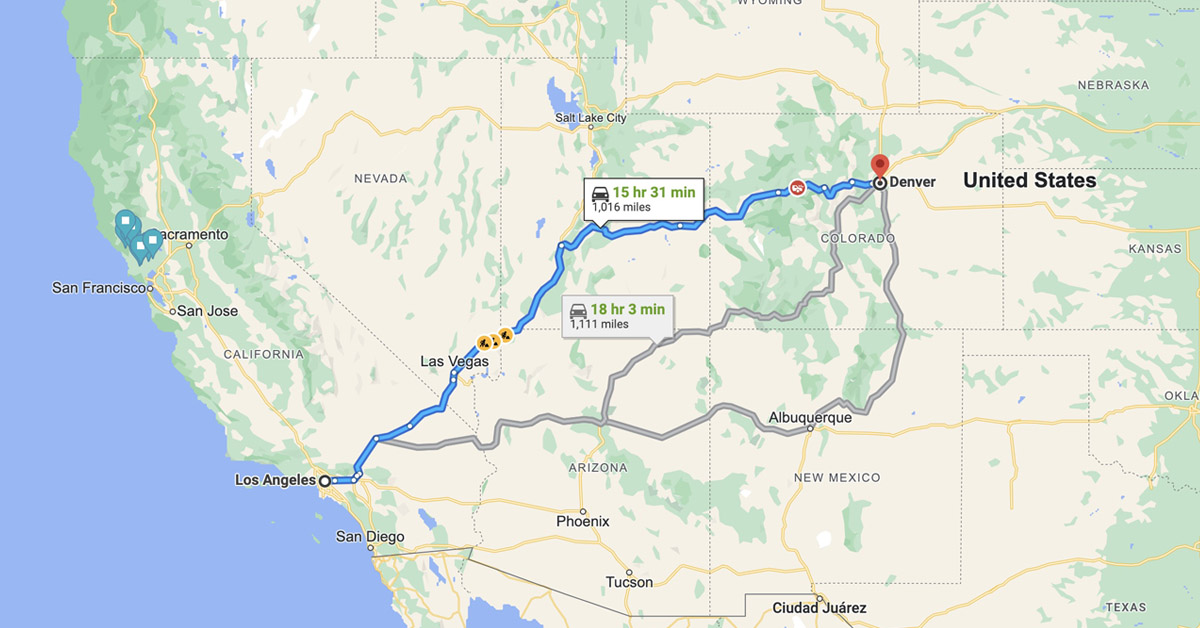
- From Los Angeles, California: The distance to Denver is approximately 1,000 to 1,020 miles, depending on the exact route. This journey typically takes around 15-16 hours of pure driving time. Most travelers opt for Interstate 15 North through Las Vegas, then connecting to Interstate 70 East. This route offers a diverse landscape, from desert vistas to mountain passes. Many choose to break this trip into a two-day drive, with an overnight stop in a city like Las Vegas or St. George, Utah, allowing for a more relaxed pace and time to enjoy the journey.
- From San Francisco, California: The drive from San Francisco is slightly longer, ranging from 1,200 to 1,250 miles. This translates to about 18-20 hours of driving. The most common route involves Interstate 80 East through Reno and Salt Lake City, then connecting to Interstate 70 East. This is unequivocally a two-day trip, with Salt Lake City often serving as a convenient midpoint. Travelers can anticipate traversing diverse terrain, from the Sierra Nevada mountains to the vast plains of Utah and Colorado.
From the East Coast: New York City and Washington D.C.
For those starting from the bustling metropolises of the East Coast, the journey to Denver is a cross-country endeavor, promising vast landscapes and multiple state crossings.
- From New York City, New York: The distance to Denver is approximately 1,775 to 1,800 miles, requiring around 26-28 hours of continuous driving. This is a multi-day trip, typically taking at least three days. Common routes involve taking Interstate 80 West through Pennsylvania, Ohio, Indiana, and Nebraska, or combining parts of Interstate 70 West. Key overnight stops might include cities like Chicago, St. Louis, or Omaha, offering diverse cultural experiences along the way.
- From Washington D.C.: The mileage from the nation’s capital to Denver is roughly 1,600 to 1,650 miles, with an estimated driving time of 24-25 hours. This, too, is a significant multi-day journey, generally spread over two to three days. Interstate 70 West is the primary artery for this route, passing through Maryland, Pennsylvania, Ohio, Indiana, Missouri, and Kansas. St. Louis or Kansas City often serve as logical midpoints for an overnight stay.
From the Midwest: Chicago and Kansas City
The Midwest provides a more direct, albeit still substantial, path to Denver, often characterized by long stretches of open road.
- From Chicago, Illinois: Denver is approximately 990 to 1,000 miles from Chicago, translating to about 14-15 hours of driving. This can be accomplished in a very long single day, but most travelers prefer to split it into two days. The most direct route involves Interstate 80 West to Interstate 76 West, primarily traversing Iowa and Nebraska. The drive is relatively flat and straightforward, offering ample opportunities for a steady pace.
- From Kansas City, Missouri: This is one of the closest major cities to Denver. The distance is around 600 miles, taking approximately 9-10 hours of driving. Interstate 70 West is the exclusive highway for this entire stretch. This journey is easily manageable in a single day, making Denver a popular weekend getaway destination for those in Kansas City. The drive through Kansas is known for its expansive plains and often strong winds.
From the South: Dallas and Houston
Travelers from the southern states will experience a shift from humid plains to arid landscapes before reaching the foothills of the Rocky Mountains.

- From Dallas, Texas: The distance to Denver is approximately 790 to 800 miles, requiring about 12-13 hours of driving. This trip can be done in a single long day or comfortably over two days. The most common route involves Interstate 35 North to Oklahoma City, then connecting to Interstate 40 West and eventually north on US-287 or I-25. Alternatively, taking US-287 directly north from Dallas through the Texas panhandle is also a viable option.
- From Houston, Texas: Denver is about 1,050 to 1,070 miles from Houston, typically taking 16-17 hours of driving. This is almost always a two-day trip. Routes generally involve taking Interstate 45 North to Dallas and then following the path mentioned above, or taking more western routes through New Mexico via Amarillo, Texas, and Santa Fe, New Mexico.
Beyond the Miles: Factors Influencing Your Trip to Denver
While mileage provides a foundational understanding, a truly comprehensive travel plan to Denver necessitates considering several other critical factors. These elements can profoundly impact your travel time, budget, and overall experience, often outweighing the raw distance in practical planning.
Mode of Transportation: Driving vs. Flying
The choice between driving and flying is perhaps the most significant decision after identifying your starting point.
- Driving: Offers flexibility, the ability to carry more luggage, and the opportunity to explore sights along the way. However, it requires more time, vehicle maintenance checks, and accounts for fuel costs, potential overnight stays, and road tolls. For shorter distances (e.g., from Kansas City or Omaha), driving can be competitive with flying in terms of overall travel time once airport procedures are factored in.
- Flying: Significantly reduces travel time, especially for long distances. Denver International Airport (DIA) is a major hub, offering numerous direct flights from across the country. However, flying incurs costs for airfare, baggage fees, and often requires additional ground transportation from the airport to your final destination in Denver. The convenience often comes at a premium, and the experience is less about the journey and more about the destination itself.
Scenic Detours and Road Trip Planning
One of the great advantages of driving to Denver is the potential for unforgettable scenic detours. Depending on your route, you could incorporate visits to national parks, historic sites, or charming small towns.
- Travelers from the west might consider detours to Arches National Park or Canyonlands National Park in Utah, or even Mesa Verde National Park if approaching from the southwest.
- Those coming from the Midwest could integrate a visit to Mount Rushmore in South Dakota by slightly altering their route through Nebraska.
- Even approaches from the east via Interstate 70 can lead to stops at various state parks or historical markers across Kansas and Missouri. These detours add miles and time but enrich the travel experience significantly, transforming a mere commute into a memorable adventure.
Weather and Seasonal Considerations
Colorado’s weather is notoriously unpredictable, especially when driving into or through the Rocky Mountains.
- Winter Travel: From late fall through early spring, snowstorms can severely impact travel on Interstate 70, particularly west of Denver through the mountain passes. Road closures, chain laws, and hazardous conditions are common. Travelers planning winter trips must stay informed about weather forecasts and road conditions, which can add significant delays to even short journeys.
- Summer Travel: While generally more pleasant, summer months can bring afternoon thunderstorms, hailstorms, and increased traffic, especially on weekends as visitors flock to the mountains. Construction season also peaks during warmer months, leading to potential lane closures and slowdowns.
- Elevation: As you approach Denver and especially if you venture into the Rocky Mountains beyond, changes in elevation can affect vehicle performance and passenger comfort.
Budget and Logistics
The true cost and effort of a trip extend beyond the odometer reading.
- Fuel Costs: Fluctuating gas prices can significantly impact the budget for long drives. Consider the mileage of your vehicle and factor in potential price differences at gas stations across states.
- Accommodation: For multi-day drives, budgeting for overnight stays in hotels or motels is crucial. Researching options in advance can save both money and stress.
- Vehicle Maintenance: A pre-trip inspection of your vehicle’s tires, fluids, and brakes is highly recommended, particularly for long distances and mountain driving. Unexpected breakdowns can lead to significant delays and expenses.
- Tolls: Some interstates and turnpikes have tolls, which should be factored into your travel budget.
Arriving in Denver: Your Gateway to Colorado Adventures
Upon successfully navigating the miles and myriad factors, you’ll arrive in Denver, a vibrant city that perfectly blends urban sophistication with easy access to outdoor adventures. Situated just a stone’s throw from the majestic Rocky Mountains, Denver serves as an ideal base for exploring Colorado’s diverse offerings. Whether your journey brought you 600 miles from Kansas City or over 1,800 miles from New York City, the effort to reach this dynamic destination is consistently rewarded. From skiing and hiking in the nearby mountains to exploring Denver’s thriving culinary scene, craft breweries, and cultural attractions, the city provides an unparalleled gateway to unique experiences. The question of “how many miles” quickly fades as you immerse yourself in the opportunities that await, proving that sometimes, the journey itself is as significant as the destination.
LifeOutOfTheBox is a participant in the Amazon Services LLC Associates Program, an affiliate advertising program designed to provide a means for sites to earn advertising fees by advertising and linking to Amazon.com. Amazon, the Amazon logo, AmazonSupply, and the AmazonSupply logo are trademarks of Amazon.com, Inc. or its affiliates. As an Amazon Associate we earn affiliate commissions from qualifying purchases.