
Understanding Common Law Marriage in the Context of Modern Lifestyles
The concept of common law marriage often conjures images of historical eras or specific cultural practices, where couples live together as spouses without a formal ceremony. For many contemplating a move or a long-term future in Florida, understanding the legal standing of such arrangements is critical to their lifestyle and future planning. As relationships evolve and diverse living arrangements become more common, the legal framework surrounding marital status plays a significant role in individuals’ financial, medical, and personal well-being.
A Brief History of Common Law Matrimony
Historically, common law marriage emerged from practical necessities, particularly in times and places where access to formal ceremonies was limited or inconvenient. It typically requires three key elements: an agreement between two people to be married, their cohabitation as husband and wife, and their “holding out” to the public as a married couple. This means presenting themselves to friends, family, and the community as if they were legally wed. The intent to marry is paramount; it’s not simply about living together. This form of marriage offered legal recognition and protections that would otherwise be absent for couples unable or unwilling to undergo a traditional ceremony.
The Evolving Landscape of Relationships and Legal Recognition
In today’s world, relationships manifest in myriad forms. Many couples choose to live together for extended periods without formalizing their union, driven by personal preference, financial considerations, or a gradual progression of their commitment. This contemporary lifestyle often leads to questions about how their relationship might be recognized legally, especially when crossing state lines or dealing with significant life events like property acquisition, healthcare decisions, or estate planning. For those seeking to establish a life or retire in Florida, knowing whether their existing or prospective common law marriage will be recognized is a fundamental aspect of securing their lifestyle. The implications stretch across various facets of daily life, from shared assets to inheritances, making clarity on this legal point indispensable.
Florida’s Stance: A Clear Legal Position
For individuals establishing a lifestyle in the Sunshine State, it’s crucial to understand Florida’s definitive legal position on common law marriage. Unlike some other states, Florida has a clear, long-standing law that impacts how couples are recognized. This directly influences how residents and newcomers alike should approach their relationship status regarding legal protections and responsibilities. The absence of common law marriage status affects everything from property rights to healthcare directives, making it a pivotal piece of information for any couple envisioning a life together in the state.
The Repeal of Common Law Marriage in Florida
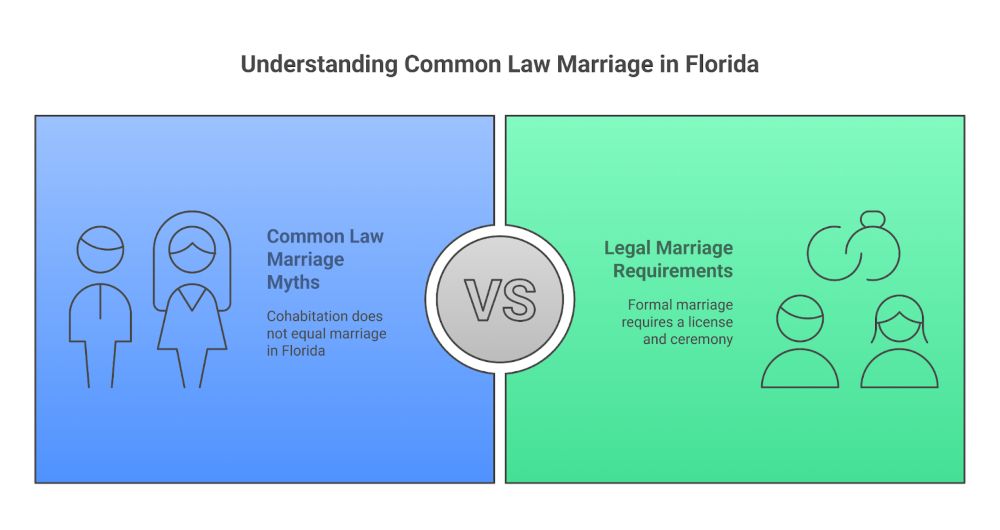
The definitive answer for those asking about common law marriage in Florida is that it is not legal if formed after January 1, 1968. On that date, Florida officially abolished common law marriage. This means that merely living together, even for an extended period and even if a couple holds themselves out as married, does not create a legally recognized marriage under Florida law if the relationship began on or after this date. To be legally married in Florida, couples must obtain a marriage license and have their marriage solemnized by an authorized person, such as a judge, clerk of the circuit court, or ordained minister. This requirement ensures a clear, verifiable record of the marriage, providing both parties with the legal rights and responsibilities that come with it. For those moving to Florida, this stark difference from states that do recognize common law marriage necessitates careful consideration of their legal status.
The Grandfather Clause: A Niche Exception
While common law marriage is largely obsolete in Florida, there is a significant, albeit rare, exception: the “grandfather clause.” Florida law will recognize a common law marriage if it was validly established before January 1, 1968, and the couple has continuously remained married since that time. This exception acknowledges the legal validity of relationships formed under the laws existing at the time they were initiated. However, proving such a marriage today can be exceptionally challenging. It requires compelling evidence that the couple met all the common law marriage requirements (intent, cohabitation, and public representation as spouses) before the 1968 cut-off date. This might involve historical documents, testimony from long-term acquaintances, or other records from that era. Given the passage of time, such cases are uncommon but represent a crucial historical footnote in Florida family law, primarily affecting older generations whose relationships predated the legal change.
Implications for Lifestyles and Long-Term Planning in the Sunshine State
For couples choosing to live together in Florida without formalizing their union through a traditional marriage, the absence of common law recognition has profound implications for their lifestyle and long-term planning. It means that many automatic legal protections and presumptions afforded to married couples simply do not apply. This necessitates proactive legal planning to ensure that individual and joint interests are protected, especially as partners build a life together, acquire assets, and face life’s inevitable challenges. Understanding these implications is crucial for making informed decisions that align with desired lifestyle outcomes.
Financial and Property Considerations for Unmarried Partners
Without legal marital status, unmarried partners in Florida lack automatic rights regarding shared finances and property. For instance, jointly acquired property, such as a home or vehicles, must be titled correctly to reflect both partners’ ownership, typically as “tenants in common” or “joint tenants with right of survivorship” to define inheritance outside of a will. There are no automatic rights to spousal support (alimony) if the relationship ends, nor automatic inheritance rights if one partner passes away without a will. This means that if an unmarried partner dies intestate, their property will be distributed according to Florida’s intestacy laws, which prioritize blood relatives over an unmarried partner, regardless of the length or depth of the relationship. To mitigate these risks, couples must execute clear legal documents like cohabitation agreements, wills, and trusts to define their financial arrangements, property division, and inheritance wishes. This level of meticulous planning becomes an integral part of their lifestyle management in Florida.
Healthcare and Decision-Making Authority
In times of medical crisis, marital status provides automatic legal authority for a spouse to make healthcare decisions on behalf of an incapacitated partner. For unmarried couples in Florida, this automatic authority does not exist. Without formal legal documents, a partner may be denied access to medical information or the ability to make critical decisions for their loved one, potentially leading to distress and legal battles. To circumvent this, unmarried partners must establish advance directives, such as a Designation of Health Care Surrogate or a Durable Power of Attorney for Healthcare. These documents legally appoint one partner to make medical decisions if the other becomes unable to do so, ensuring that personal wishes are respected and that the chosen individual has the necessary authority during a vulnerable time. This proactive measure is vital for maintaining a secure and supported lifestyle.
Children and Parental Rights
While children born to unmarried parents in Florida generally have the same rights as those born within a marriage, establishing parental rights and responsibilities can be more complex. Paternity may need to be legally established to ensure a father’s rights and responsibilities are recognized. For unmarried couples, decisions regarding custody, visitation, and child support often require formal agreements or court orders to provide clarity and legal enforceability. Without these, disputes can arise, impacting the stability and well-being of the children and disrupting the family’s lifestyle. Legal counsel can assist in drafting comprehensive parenting plans and obtaining necessary court orders to protect both parents’ and children’s interests, ensuring a structured and legally sound family dynamic in Florida.

Proactive Steps for Partners in Florida
For couples building a life together in Florida, understanding the legal landscape around common law marriage necessitates proactive planning. Whether choosing to marry or to remain unmarried, strategic legal steps can provide clarity, security, and protection for both partners. These measures are not just about legalities; they are about defining and safeguarding the lifestyle a couple wishes to lead, ensuring peace of mind and shared understanding regarding their future in the state.
Formalizing Relationships: The Marriage Option
For many couples, the simplest way to gain legal recognition and all the associated rights and protections in Florida is to formalize their relationship through a traditional marriage. Florida makes obtaining a marriage license relatively straightforward. Once married, couples automatically gain rights concerning inheritance, spousal support, property division upon divorce, healthcare decision-making, and tax benefits. This option provides a comprehensive legal framework that aligns with the expectations of many who envision a long-term, committed partnership. For those relocating to Florida or establishing their lives there, formal marriage eliminates ambiguity and provides a clear path to legal recognition that is understood across all jurisdictions.
Legal Instruments for Unmarried Couples
For couples who prefer not to marry but still desire legal and financial protections akin to those married partners enjoy, Florida offers several crucial legal instruments. These documents are essential for defining rights and responsibilities, ensuring that individual wishes are honored, and minimizing potential disputes in the future.
Cohabitation Agreements
A cohabitation agreement, often referred to as a “living together agreement,” is a contract between unmarried partners that outlines their financial responsibilities, property ownership, and how assets will be divided if the relationship ends. This agreement can cover everything from shared expenses and debt management to the ownership of real estate and personal property. It acts as a clear roadmap, providing legal clarity and helping avoid contentious disputes over finances and assets, which are not automatically resolved by law for unmarried couples in Florida.
Wills and Trusts
To ensure that property is distributed according to one’s wishes upon death, unmarried partners must create comprehensive wills and potentially trusts. Without these, Florida’s intestacy laws will dictate inheritance, often excluding an unmarried partner in favor of blood relatives. A well-drafted will allows each partner to designate the other as a beneficiary for specific assets, while trusts can provide more complex estate planning solutions, managing assets for future distribution or for specific purposes.
Powers of Attorney
Powers of Attorney are vital for designating a partner to make financial and healthcare decisions on one’s behalf if they become incapacitated. A Durable Power of Attorney for Finances grants authority to manage bank accounts, pay bills, and handle other financial matters. A Designation of Health Care Surrogate or Durable Power of Attorney for Healthcare allows a partner to access medical information and make treatment decisions. These documents are indispensable for ensuring that a partner’s wishes are respected during critical times, maintaining continuity in their lifestyle and care.
Beneficiary Designations
Reviewing and updating beneficiary designations on life insurance policies, retirement accounts (like 401ks and IRAs), and other financial assets is crucial. These designations often override wills and ensure that funds are paid directly to the intended partner upon death, avoiding probate and ensuring financial support for the surviving partner. Together, these legal instruments form a robust framework, enabling unmarried couples in Florida to create a lifestyle with security and defined parameters, mirroring many of the protections afforded by formal marriage.
Navigating Relocation: Common Law Marriages From Other States
A significant consideration for individuals moving to Florida from other jurisdictions is how their existing common law marriage might be recognized. While Florida does not permit the formation of common law marriages within its borders today, the principle of “Full Faith and Credit” under the U.S. Constitution generally mandates that states respect the public acts, records, and judicial proceedings of every other state. This often extends to valid marriages, including those established under common law in states where it is permitted. This aspect is vital for many lifestyles, especially for those who frequently move between states.
Full Faith and Credit Clause
Under the Full Faith and Credit Clause of the U.S. Constitution, if a common law marriage was legally and validly formed in a state where such unions are recognized, Florida is generally obligated to recognize that marriage. This means that a couple who entered into a common law marriage in a state like Colorado, Iowa, Kansas, Montana, New Hampshire (for inheritance purposes only), Oklahoma, Rhode Island, South Carolina, Texas, Utah, or the District of Columbia, and subsequently moved to Florida, would still be considered legally married by Florida courts. This recognition extends to the rights and responsibilities typically associated with marriage, such as property division, spousal support, and inheritance. This provision ensures that a couple’s marital status is consistent across state lines, preventing legal instability for individuals and families whose lifestyles involve interstate mobility.
Proving a Valid Out-of-State Common Law Marriage in Florida
While Florida will generally recognize an out-of-state common law marriage, the burden of proof falls squarely on the couple to demonstrate that they met all the legal requirements of the state where the common law marriage was originally formed. This can be a complex process, as each state has its own specific criteria for establishing a common law marriage, typically involving intent to marry, cohabitation, and holding themselves out to the public as married.
Evidence might include joint tax returns filed as “married,” joint bank accounts, shared insurance policies, property deeds listing them as spouses, and testimony from individuals who knew them as a married couple in the original state. If a dispute arises, for example, during a separation or upon the death of a partner, Florida courts will examine whether the criteria of the originating state were indeed satisfied. This often necessitates consulting with legal counsel experienced in family law, both in Florida and potentially in the state where the common law marriage was allegedly established, to ensure that the relationship is properly recognized and all associated rights and obligations are clearly understood. For any couple whose lifestyle involves a common law marriage formed elsewhere, seeking expert legal advice upon relocating to Florida is a prudent and necessary step.
LifeOutOfTheBox is a participant in the Amazon Services LLC Associates Program, an affiliate advertising program designed to provide a means for sites to earn advertising fees by advertising and linking to Amazon.com. Amazon, the Amazon logo, AmazonSupply, and the AmazonSupply logo are trademarks of Amazon.com, Inc. or its affiliates. As an Amazon Associate we earn affiliate commissions from qualifying purchases.