
The Dawn of Colonial Ambition: Early European Claims
The history of Florida is a tapestry woven with threads of exploration, conquest, and shifting geopolitical power, all of which profoundly shaped the land and its subsequent landmarks. Before its eventual acquisition by the United States, this strategically vital peninsula was a coveted prize among European empires, each leaving an indelible mark on its geography and culture. Understanding these earlier claims is crucial to appreciating the complex path that led to Florida’s integration into the American fold.
Spanish Forays and the First Settlements
The European story of Florida traditionally begins in 1513 with Juan Ponce de León, who, while searching for new lands and possibly the fabled Fountain of Youth, “discovered” the peninsula and named it “La Pascua Florida” (Flowery Easter) due to its lush landscape and the timing of his arrival. This initial claim, however, did not immediately translate into permanent settlement. It was not until 1565 that Spain firmly established its presence, founding St. Augustine. This city remains the oldest continuously inhabited European-established settlement in the continental United States, a living landmark that testament to the endurance of Spanish colonial ambition. Its cobblestone streets, colonial-era buildings, and the formidable coquina fortress, Castillo de San Marcos, stand today as powerful physical reminders of this foundational period. The Spanish colonial legacy extended beyond St. Augustine, with missions and small forts dotting the landscape, each a nascent landmark of European presence and interaction with indigenous populations. These sites, often rediscovered through archaeological efforts, offer tangible links to the earliest layers of Florida’s complex history.
British Interlude and Shifting Tides
Spain’s dominion over Florida was not unchallenged. The strategic location of the peninsula, commanding access to the Gulf of Mexico and key trade routes, made it a target for other European powers. Following the Seven Years’ War (known in North America as the French and Indian War), Great Britain emerged victorious. Through the Treaty of Paris in 1763, Spain ceded Florida to Britain in exchange for Havana, Cuba. The British divided Florida into East Florida, with its capital at St. Augustine, and West Florida, centered in Pensacola. While British rule lasted only twenty years, it spurred significant development, particularly in agriculture and land grants, attracting new settlers. However, the fortunes of war would shift once more. During the American Revolutionary War, Spain allied with France against Britain and successfully recaptured West Florida. At the subsequent Treaty of Paris in 1783, which officially ended the American Revolution, Great Britain returned both East and West Florida to Spain. This period of instability and shifting allegiances left its own marks on the landscape, with some British-era fortifications and settlements providing archaeological insights into a less remembered chapter of Florida’s monumental past.
The American Drive for Expansion: A Growing Desire for Florida
As the United States gained independence and began its westward expansion, the acquisition of Florida became an increasingly pressing strategic and economic imperative. The young nation viewed the Spanish-held territory as a constant source of instability, a haven for runaway slaves, and a base for Native American resistance, all of which threatened its southern borders. This growing desire for Florida was not merely about acquiring land; it was about securing the nation’s burgeoning territorial integrity and fostering its economic potential. The landmarks of this period are less about permanent structures and more about the contested landscapes themselves – the rivers, borders, and wilderness areas that became flashpoints of conflict and diplomacy.
Geographic Imperatives and Strategic Interests
From the perspective of the early United States, Florida was a crucial missing piece in its territorial puzzle. Its lengthy coastline provided strategic control over the vital shipping lanes of the Gulf of Mexico and access to the Mississippi River basin. Leaving Florida in foreign hands, particularly those of a weakened but still present colonial power like Spain, posed significant security risks. The territory was perceived as a potential launching point for hostile European forces and a refuge for pirates. Furthermore, the extensive wilderness and waterways of Florida served as a sanctuary for various Native American tribes, primarily the Seminoles, and runaway enslaved people, who often launched raids into American settlements in Georgia and Alabama. These incursions and the porous border created persistent tensions, fueling American calls for annexation. The Everglades National Park, while a natural landmark, embodies the geographical significance of Florida’s unique environment which played a role in shaping these historical conflicts and the strategies employed to control the territory.
Border Disputes and Filibustering Expeditions
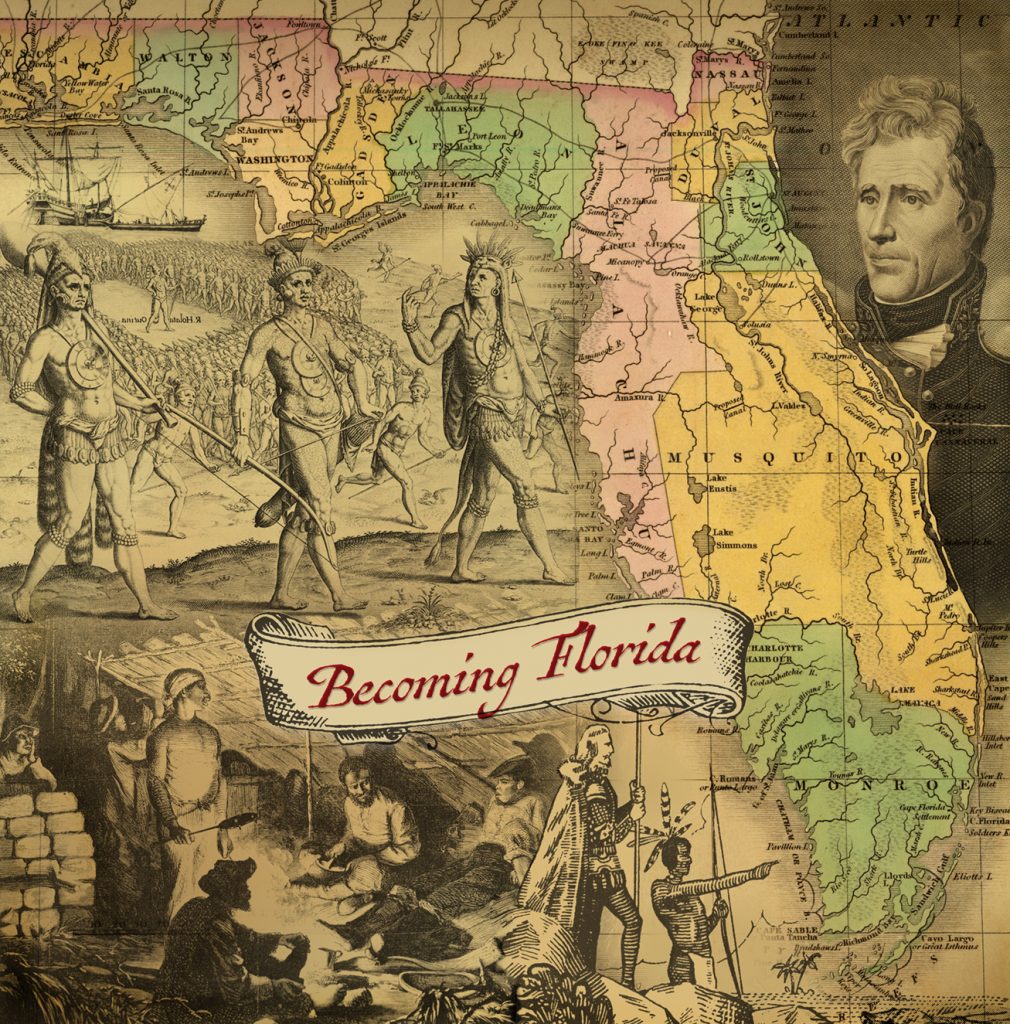
The early 19th century was marked by a series of escalating confrontations along the border between the United States and Spanish Florida. Spain’s inability to effectively police its vast, sparsely populated territory made it a constant source of frustration for American officials. The First Seminole War (1816-1819) epitomized this volatile situation. Triggered by border disputes, Native American raids, and the perceived weakness of Spanish authority, the conflict saw American forces, led by General Andrew Jackson, launch unauthorized incursions deep into Spanish territory. Jackson’s aggressive campaigns, which included capturing Spanish forts like Fort San Carlos de Barrancas in Pensacola, demonstrated Spain’s tenuous hold on Florida. These military actions, while controversial, effectively highlighted the strategic vulnerability of Spanish Florida and underscored the pressing need for a diplomatic resolution. Today, sites like Fort Clinch State Park or the remnants of other early forts across the state serve as physical landmarks, reminding visitors of the tense and often violent period that preceded Florida’s transfer to the United States.
The Adams-Onís Treaty: A Landmark Agreement
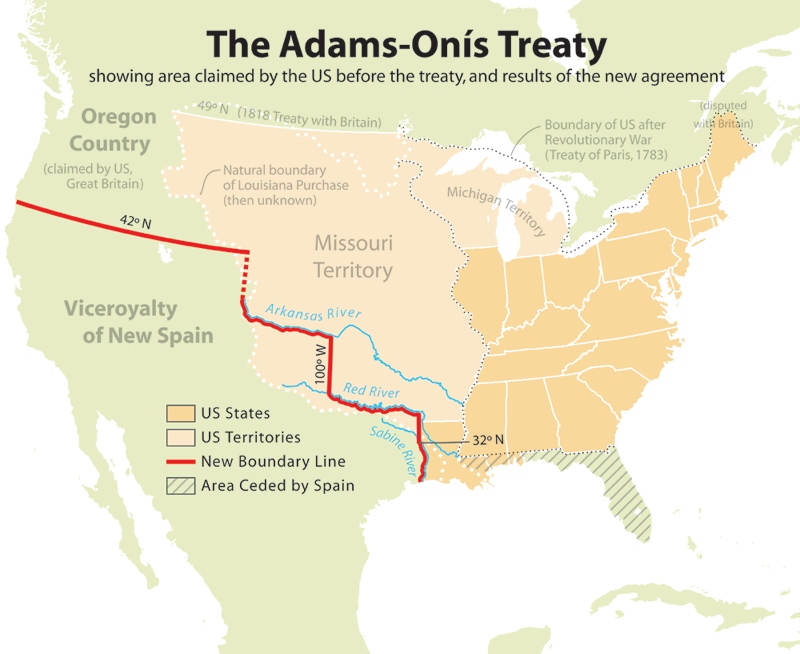
The culmination of decades of territorial disputes, diplomatic maneuvering, and military pressure came with the signing and ratification of the Adams-Onís Treaty. This pivotal agreement, named after the key negotiators, represented a significant landmark in American expansion and redefined the geopolitical map of North America. It resolved not only the question of Florida but also clarified the western boundaries of the Louisiana Purchase, shaping the future contours of the United States for generations to come. While not a physical monument, the treaty itself stands as a monumental achievement in diplomacy, its impact evident in the modern geographic and political landscape.
Diplomatic Maneuvers and Key Figures
The negotiations leading to the Adams-Onís Treaty were spearheaded by US Secretary of State John Quincy Adams and Spain’s Minister to the United States, Don Luis de Onís. Adams, a master diplomat, skillfully leveraged Spain’s weakened position and the ongoing unrest in its Latin American colonies. He presented Spain with a stark choice: either effectively govern Florida or cede it to the United States. The aggressive actions of Andrew Jackson in Florida, though technically unauthorized, further strengthened Adams’ negotiating hand, demonstrating the United States’ willingness to act decisively. In exchange for Florida, the United States agreed to relinquish its dubious claims to Texas (part of the Louisiana Purchase as understood by some) and to assume claims of American citizens against Spain up to $5 million. The treaty also precisely defined the western boundary of the Louisiana Purchase to the Pacific Ocean, a significant delineation that laid the groundwork for future territorial expansion and solidified the concept of a transcontinental United States.
The Cession of Florida (1819) and Ratification (1821)
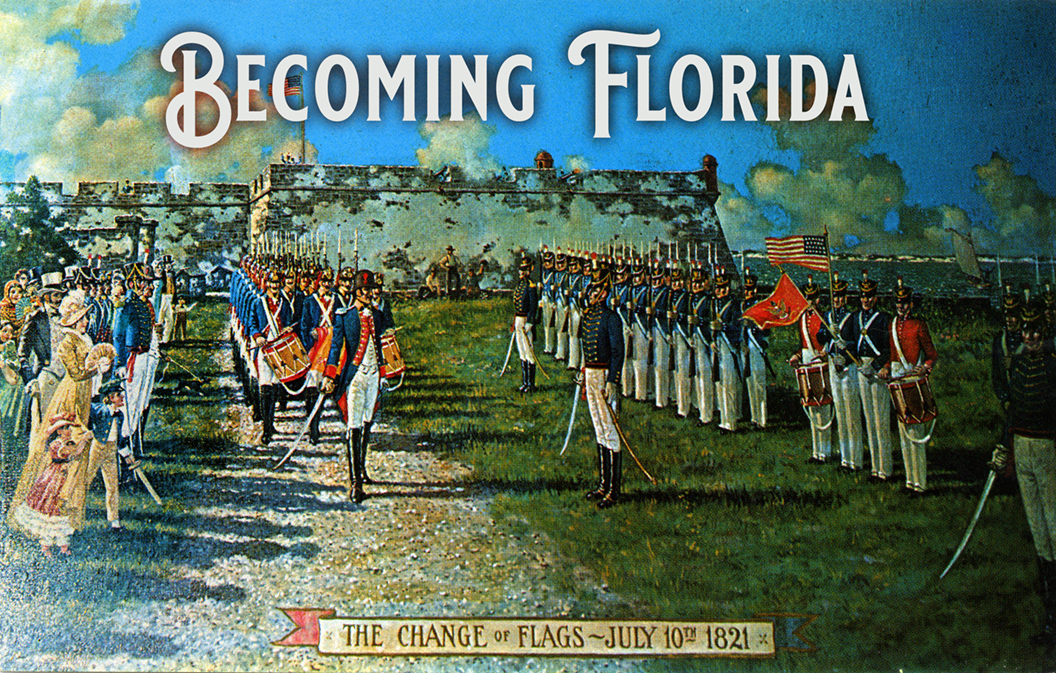
The Adams-Onís Treaty was signed in Washington, D.C., on February 22, 1819. This date marks the definitive moment when Spain officially agreed to cede Florida to the United States. However, diplomatic processes often involve a gap between signing and full implementation. Due to delays in ratification by the Spanish Cortes (parliament) and concerns over American claims to Texas, the treaty was not fully ratified until two years later. On February 22, 1821, after some political wrangling, Spain finally ratified the treaty. This formal exchange of documents solidified the transfer of sovereignty, bringing Florida officially into the possession of the United States. The actual formal transfer of power occurred on July 17, 1821, in St. Augustine, and on July 21, 1821, in Pensacola, when Spanish officials formally handed over control to American authorities. These dates, particularly February 22, 1819, and February 22, 1821, are historical landmarks marking the peaceful, if long-negotiated, acquisition of this vital territory.
Florida’s Integration into the United States and Enduring Legacy
With the formal transfer of Florida to the United States in 1821, the stage was set for a new chapter in its development. The integration process transformed the territory, laying the groundwork for its eventual statehood and shaping the modern landmarks that define its unique identity. This period saw the establishment of new administrative centers, the growth of American settlements, and the continued evolution of Florida’s diverse cultural and natural landscapes, all of which reflect the legacy of its acquisition.
Territorial Governance and Statehood
Upon its acquisition, Florida was organized as a U.S. territory in March 1822, with Andrew Jackson briefly serving as its military governor. The new American administration quickly moved to establish civic order and encourage settlement. The territorial capital was eventually established in Tallahassee, chosen for its central location between the former capitals of St. Augustine and Pensacola. The rapid growth of cities like Jacksonville and the expansion of agricultural endeavors characterized the territorial period. However, this Americanization often came at the cost of further displacement and conflict with the Seminole people, leading to the Second and Third Seminole Wars. Despite these conflicts, Florida’s population grew, and on March 3, 1845, it officially entered the Union as the 27th state, a momentous landmark in its journey from a Spanish colonial outpost to a full-fledged member of the United States. The Old Capitol Building in Tallahassee, with its distinct architectural features, stands today as a significant landmark representing Florida’s territorial and early statehood eras.
Historical Landmarks Reflecting a Complex Past
The historical journey of Florida – from indigenous lands to Spanish, British, and finally American rule – has left an extraordinary legacy of diverse landmarks. Fort Caroline National Memorial in Jacksonville commemorates the short-lived French presence, a lesser-known but pivotal early European claim. St. Augustine remains unparalleled with its Castillo de San Marcos and historic district, offering a tangible link to centuries of Spanish colonial life and its fortifications against imperial rivals. Natural landmarks like Paynes Prairie Preserve State Park, once a vast pasture and battleground, speak to the deep history of Native American presence and the subsequent conflicts that shaped the landscape. Even the iconic Everglades National Park, a testament to Florida’s unique natural environment, indirectly reflects the consequences of territorial expansion and the push-pull between development and preservation. These sites, along with countless archaeological digs, historical markers, and preserved architectural styles, tell the story of a land defined by its layered history. They invite visitors to explore not just the “When” of Florida’s acquisition by the United States, but the profound and lasting impact that momentous event had on the landscape, culture, and identity of the Sunshine State, making each historical site a crucial piece of the larger American narrative.
LifeOutOfTheBox is a participant in the Amazon Services LLC Associates Program, an affiliate advertising program designed to provide a means for sites to earn advertising fees by advertising and linking to Amazon.com. Amazon, the Amazon logo, AmazonSupply, and the AmazonSupply logo are trademarks of Amazon.com, Inc. or its affiliates. As an Amazon Associate we earn affiliate commissions from qualifying purchases.