
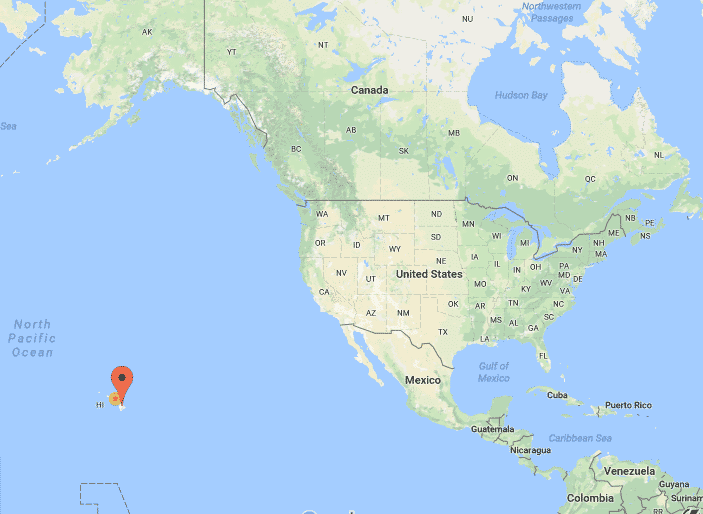
The dream of visiting the Hawaiian Islands is a universal one, fueled by images of emerald cliffs, crystalline waters, and the warm spirit of aloha. However, because this archipelago is situated in the central Pacific Ocean, it remains one of the most isolated populated landmasses on Earth. Understanding the logistics of travel duration is the first step in transforming that dream into a reality. Whether you are departing from the sun-drenched coast of California or the bustling streets of Tokyo, the time it takes to reach Hawaii varies significantly based on your mode of transport, your point of origin, and the specific island you intend to visit.
Flight Times from Major Global Gateways
Air travel is the most common way to reach the islands, with Daniel K. Inouye International Airport in Honolulu serving as the primary gateway for international and domestic arrivals. The duration of your flight is largely dictated by the “jet stream”—fast-flowing air currents in the atmosphere that can either shave time off a journey or add significant delays depending on the direction of travel.
Traveling from North America
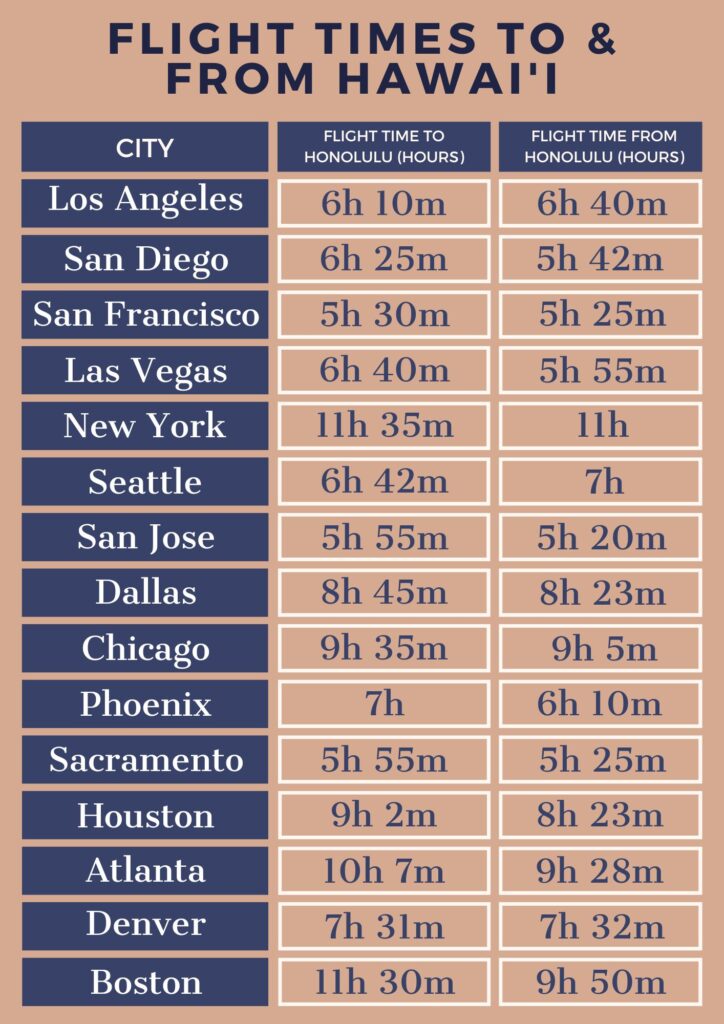
For travelers coming from the United States, the journey is often divided into West Coast and East Coast departures. If you are flying from California, Oregon, or Washington, you are looking at the shortest possible flight times. A direct flight from Los Angeles or San Francisco typically takes between 5 and 6 hours. From Seattle, the flight duration is roughly 6 hours, while departures from San Diego follow a similar timeline.
Moving further inland, the travel time increases. From Denver or Phoenix, expect to spend about 7 to 8 hours in the air. For those residing on the East Coast, the journey is a marathon. A non-stop flight from New York City via John F. Kennedy International Airport or Newark Liberty International Airport can last between 10 and 11 hours. If your departure city is Atlanta or Washington DC, the flight time is comparable, often exceeding 10 hours of consecutive flying.
International Departures from Asia and Oceania
Hawaii is a popular destination for travelers from Japan, Australia, and New Zealand. Due to the geography of the Pacific, these flights are substantial. A direct flight from Narita International Airport in Tokyo usually takes about 7 to 8 hours when heading east toward Oahu. However, the return trip can take up to 10 hours due to strong headwinds.
From the southern hemisphere, the journey is even longer. A flight from Sydney or Melbourne typically lasts around 10 to 11 hours. Travelers coming from Auckland in New Zealand can expect a flight time of approximately 9 hours. Seoul in South Korea and Taipei in Taiwan also offer direct routes, generally clocking in at 9 to 10 hours.
Connections and Layovers
If you are not flying from a major hub that offers non-stop service, your travel time will increase due to layovers. Common connection points include Los Angeles International Airport, Seattle-Tacoma International Airport, and Dallas-Fort Worth International Airport. A layover can add anywhere from 2 to 6 hours to your total journey. For international travelers from Europe, such as those leaving London or Paris, there are no direct flights. These travelers must connect through the mainland United States or Canada, resulting in a total travel time of 18 to 24 hours.
Traveling to Hawaii by Sea
While flying is the fastest method, some travelers prefer the leisurely pace of a cruise ship. This is a significantly different experience, where the journey itself becomes the primary attraction. Most cruises to Hawaii depart from the West Coast of North America.
Transpacific Cruises
Standard cruises departing from Long Beach, San Pedro, or Vancouver typically take 4 to 5 days of continuous sailing to reach the islands. During this time, passengers cross the North Pacific Ocean, enjoying onboard amenities as they distance themselves from the mainland. Lines like Princess Cruises, Holland America Line, and Celebrity Cruises frequently offer these routes.
Round-trip vs. One-way Journeys
Many travelers opt for a 15-day round-trip cruise, which includes 4-5 days of sailing each way and about a week spent island-hopping between Oahu, Maui, Kauai, and the Big Island. If you are looking for a shorter sea experience, you might consider flying to Honolulu and boarding a ship like the Pride of America operated by Norwegian Cruise Line, which stays within Hawaiian waters. This eliminates the multi-day transpacific crossing while still providing the nautical experience.
Factors That Influence Your Travel Time
The time it takes to “get to Hawaii” isn’t just about the hours spent on a plane or ship; it involves several logistical factors that can impact your itinerary.
Seasonal Variations and the Jet Stream
The atmosphere is a dynamic environment. During the winter months, the jet stream—a high-altitude wind moving from west to east—becomes much stronger. This means that flights traveling from Japan or Australia toward Hawaii often arrive faster than scheduled. Conversely, flights heading from Honolulu back to the United States mainland or Asia can face significant headwinds, adding an hour or more to the return trip.
Airport Logistics and Ground Transportation
When calculating travel time, one must also account for the “ground” portion of the journey. For a flight to Hawaii, especially an international one, it is recommended to arrive at the airport 3 hours early. Once you land at Kona International Airport or Kahului Airport, you must factor in time for baggage claim, car rental shuttles, and traffic. On Oahu, traffic in Honolulu can be particularly dense during rush hour, meaning the drive from the airport to Waikiki could take anywhere from 25 minutes to over an hour.
Time Zone Transitions and Jet Lag
Hawaii follows Hawaii-Aleutian Standard Time (HST), which does not observe Daylight Saving Time. This means the time difference between Hawaii and the mainland changes throughout the year. For instance, when it is 12:00 PM in Honolulu, it might be 3:00 PM in Los Angeles during the winter, but 2:00 PM during the summer.
For travelers from the East Coast, the 5 or 6-hour time difference can lead to significant jet lag. While the physical flight takes 11 hours, the “perceived” travel time can feel much longer as your body adjusts. Most travelers find that it takes one day of recovery for every time zone crossed to fully feel present in the destination.
Inter-Island Travel: Moving Within the State
Once you have arrived in the archipelago, your journey may not be over. Many visitors choose to explore multiple islands, and while they are close together, moving between them requires additional planning and time.
Flying Between Islands
There are no passenger ferries between the major islands, with the exception of a small ferry service between Maui and Lanai. Therefore, inter-island travel is almost exclusively done by air. Carriers like Hawaiian Airlines and Southwest Airlines offer frequent “shuttle” flights.
A flight from Honolulu to Kahului ( Maui ) or Lihue Airport ( Kauai ) takes approximately 30 to 45 minutes in the air. However, you must still clear security and arrive at the airport early. Total travel time from your hotel on one island to your hotel on another usually consumes about 3 to 4 hours of your day.
Exploring the More Remote Islands
If your destination is Molokai or Lanai, you might use smaller commuter airlines like Mokulele Airlines. These flights often depart from smaller terminals and use propeller planes. While the flights themselves are short—often 20 to 30 minutes—the schedules are less frequent, requiring more precise timing for your connections.
Preparing for the Long Haul
Given that the journey to Hawaii is rarely a short one, preparation is key to ensuring that the travel time feels like part of the vacation rather than a chore.
Amenities on Hawaiian Routes
Airlines servicing the Hawaiian routes often provide specific amenities to get travelers in the spirit. Hawaiian Airlines, for example, is known for providing complimentary meals even on domestic flights from the United States mainland, often featuring island-inspired cuisine. Many long-haul carriers like United Airlines, Delta Air Lines, and American Airlines utilize wide-body aircraft for these routes, offering better entertainment systems and more comfortable seating options to combat the fatigue of a 6-to-11-hour flight.
The Return Journey
It is important to remember that the flight home often takes longer than the flight to the islands. This is due to the aforementioned jet stream, which pushes against aircraft traveling westward but assists those traveling eastward. However, for Hawaii departures toward the United States mainland, the tailwinds usually help, making the flight to Los Angeles slightly faster than the flight to Honolulu. Conversely, if you are heading back to Asia, you will be flying into the wind, which can add significant time to your journey.
In conclusion, the time it takes to go to Hawaii is a reflection of its status as a remote paradise. From the 5-hour “hop” from the West Coast to the multi-day voyage across the Pacific on a cruise ship, every traveler must weigh their preference for speed versus the experience of the journey. By understanding the flight durations, time zone shifts, and inter-island logistics, you can better plan your itinerary and ensure that every moment of your trip—from takeoff to landing on the shores of Waikiki—is well spent.
LifeOutOfTheBox is a participant in the Amazon Services LLC Associates Program, an affiliate advertising program designed to provide a means for sites to earn advertising fees by advertising and linking to Amazon.com. Amazon, the Amazon logo, AmazonSupply, and the AmazonSupply logo are trademarks of Amazon.com, Inc. or its affiliates. As an Amazon Associate we earn affiliate commissions from qualifying purchases.