
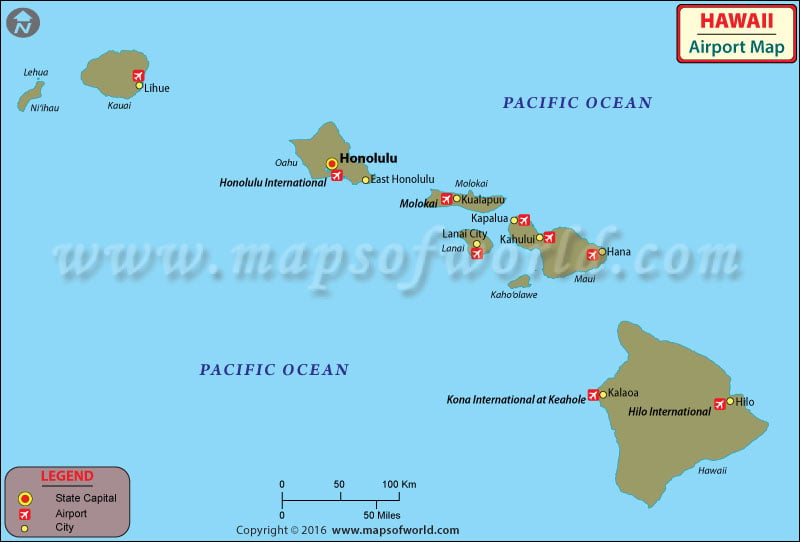
For travelers planning a journey to the middle of the Pacific Ocean, understanding the logistical landscape of the Hawaiian Islands is the first step toward a seamless vacation. While the archipelago consists of hundreds of islands spanning 1,500 miles, the vast majority of visitors focus on the eight main volcanic islands. To facilitate movement across this remote chain, Hawaii maintains a robust aviation network. Currently, there are 15 state-owned airports managed by the Hawaii Department of Transportation. These range from massive international hubs that welcome wide-body jets from around the globe to tiny, single-runway airstrips that serve remote communities and adventurous sightseers.

Navigating these gateways is essential because, unlike the mainland United States, there are no bridges or car ferries connecting the islands. Air travel is the “interstate highway” of the 50th state. Whether you are seeking the urban energy of Honolulu, the lush cliffs of Kauai, or the volcanic wonders of the Island of Hawaii, your journey begins at one of these specialized aerial portals.
The Major International Gateways
When most travelers book their flights to the islands, they will inevitably land at one of the four primary airports. these facilities handle the bulk of transpacific traffic from North America, Asia, and Oceania.
Daniel K. Inouye International Airport (HNL)
Located in Honolulu on the island of Oahu, Daniel K. Inouye International Airport is the largest and busiest airport in the state. It serves as the principal hub for Hawaiian Airlines and is the primary point of entry for international visitors. With its unique open-air terminals and garden courtyards, HNL offers a distinctive sense of place. It is the best choice for travelers heading to Waikiki, Pearl Harbor, or the famous surfing swells of the North Shore.
Kahului Airport (OGG)
On the island of Maui, Kahului Airport acts as the central hub for the “Valley Isle.” While smaller than Honolulu, it handles a significant volume of direct flights from the mainland. This airport is the starting point for travelers bound for the resort areas of Wailea, the historic streets of Lahaina, or the winding Road to Hana. Its proximity to central commerce makes it ideal for picking up rental cars and supplies before heading to the sunrise at Haleakala National Park.
Ellison Onizuka Kona International Airport (KOA)
Situated on the western side of the Island of Hawaii, Ellison Onizuka Kona International Airport is famous for its outdoor terminal. Passengers deplane directly onto the tarmac into the warm Kona sun. This airport is the gateway to the sun-drenched Kohala Coast and the coffee farms of Kailua-Kona. It is the preferred landing spot for those looking for luxury resorts and world-class snorkeling.
Lihue Airport (LIH)
The “Garden Isle” of Kauai is served by Lihue Airport. This smaller but efficient airport is located on the island’s southeast coast. It provides easy access to the southern resorts of Poipu and the northern wonders of Princeville. Since Kauai is largely inaccessible by road, many helicopter tours of the Napali Coast and Waimea Canyon originate from the vicinity of this airport.
Regional and Commuter Airports
Beyond the massive hubs, Hawaii features several regional airports that cater to specific geographic needs or smaller islands. These airports are essential for travelers looking to avoid crowds or those moving between islands on smaller aircraft.
Hilo International Airport (ITO)
While it carries the “International” designation, Hilo International Airport primarily handles inter-island flights and a few select mainland routes. Located on the eastern side of the Big Island, it is the most convenient airport for those visiting Hawaii Volcanoes National Park or the lush botanical gardens of Hilo. The atmosphere here is significantly more relaxed and “old Hawaii” than its counterpart in Kona.
Molokai Airport (MKK) and Lanai Airport (LNY)
The smaller islands of Molokai and Lanai are each served by a single primary airport. Molokai Airport, also known as Hoolehua Airport, sits on a high plateau and is the lifeline for the rural island. Lanai Airport serves the “Pineapple Island,” predominantly used by residents and guests staying at the high-end resorts owned by Larry Ellison. Flying into these airports usually involves smaller turboprop planes operated by Mokulele Airlines, providing spectacular low-altitude views of the Pailolo Channel.

Kapalua Airport (JHM)
For those staying in West Maui, Kapalua Airport offers a specialized alternative to the larger Kahului Airport. It is a commercial service airport restricted to small aircraft. Its location near Kaanapali and Kapalua saves travelers a long drive across the island, though flight options are more limited and typically cost a premium.
Specialized Airstrips and Remote Access
The list of 15 airports includes several smaller strips that serve very specific purposes. While the average tourist may never set foot in them, they are vital for local travel and specific adventures.
Hana Airport (HNM)
Deep in the heart of East Maui, Hana Airport serves the remote community of Hana. While most visitors choose to drive the scenic Hana Highway, a flight into this single-runway airport offers a quick alternative for those who want to maximize their time in the rainforest without the six-hour round-trip drive.
Waimea-Kohala Airport (MUE)
Located in the cattle country of Waimea on the Big Island, Waimea-Kohala Airport provides access to the cooler, mountainous interior of the island. It is primarily used by commuter services and private pilots, offering a gateway to the ranching heritage of Parker Ranch.
Kalaupapa Airport (LUP)
Perhaps the most unique airport in the system is Kalaupapa Airport, located on the Kalaupapa Peninsula of Molokai. This area is a National Historical Park and was once the site of a leper colony. Access to this airport is strictly regulated, and visitors must have a pre-arranged permit and tour. It remains one of the most isolated and poignant destinations in the United States.
Planning Your Inter-Island Travel
Understanding how many airports are in Hawaii is only half the battle; the other half is knowing how to use them effectively to enhance your travel experience. Island hopping is a popular way to see the diverse landscapes of the state, but it requires careful planning.
Choosing Your Carrier
For decades, Hawaiian Airlines has been the dominant force in inter-island travel, operating a fleet of Boeing 717 aircraft. However, the entry of Southwest Airlines into the market has increased competition and lowered prices between the major hubs like Honolulu, Kahului, Kona, and Lihue. For the smaller airports like Lanai or Hana, Mokulele Airlines is the primary provider, utilizing Cessna Grand Caravan aircraft that offer an intimate, flightseeing-style experience.
Timing and Security
While inter-island flights are short—often only 20 to 50 minutes in the air—travelers should not underestimate the time needed for security and logistics. Major hubs like Daniel K. Inouye International Airport can have long TSA lines, especially during peak morning and afternoon waves. Conversely, the regional airports offer a much faster experience, sometimes requiring only minutes to clear security.
Agricultural Inspections
A unique aspect of traveling through airports in Hawaii is the mandatory agricultural inspection. To protect the islands’ delicate ecosystems, all baggage heading from Hawaii to the mainland United States must be inspected by the USDA. This happens before you reach the check-in counter. When traveling between islands, there are also restrictions on moving certain plants and fruits to prevent the spread of invasive species like the Coffee Berry Borer or Rapid Ohia Death.
The Evolution of Hawaiian Aviation
The number and quality of airports in Hawaii continue to evolve. Recent years have seen massive modernization projects at Daniel K. Inouye International Airport, including the opening of the Mauka Concourse. On the Big Island, Ellison Onizuka Kona International Airport has undergone runway improvements to better accommodate long-haul international flights from places like Tokyo.
For the modern traveler, these airports are more than just transit points; they are the thresholds to adventure. From the moment you see the volcanic peaks of Diamond Head from your window seat to the final “Aloha” as you board your return flight, the aviation network of the islands plays a starring role in the Hawaiian experience. By choosing the right airport for your specific destination—whether it’s the bustling gates of Oahu or the quiet tarmac of Molokai—you ensure that your journey through the Pacific Ocean is as breathtaking as the islands themselves.
LifeOutOfTheBox is a participant in the Amazon Services LLC Associates Program, an affiliate advertising program designed to provide a means for sites to earn advertising fees by advertising and linking to Amazon.com. Amazon, the Amazon logo, AmazonSupply, and the AmazonSupply logo are trademarks of Amazon.com, Inc. or its affiliates. As an Amazon Associate we earn affiliate commissions from qualifying purchases.