
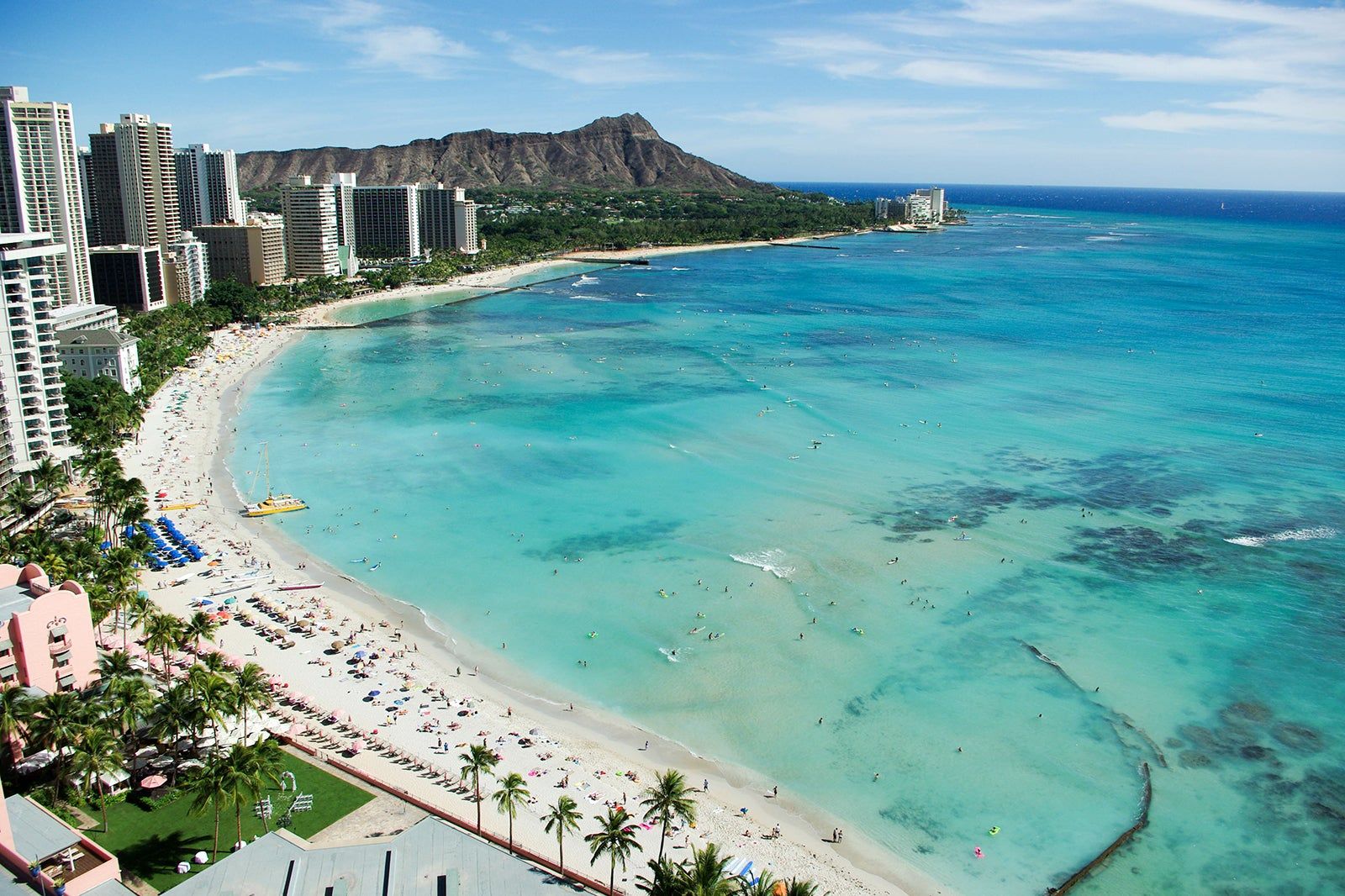
Waikiki Beach is perhaps the most recognized shoreline in the world, a crescent-shaped expanse of golden sand that has become the definitive image of paradise for millions. To understand where this landmark is located, one must look to the central Pacific Ocean, specifically to the Hawaiian Islands. Situated on the south shore of the island of Oahu, Waikiki Beach is a vibrant neighborhood and a premier landmark within the city of Honolulu. While many perceive it as a single beach, it is actually a collection of distinct coastal segments, each contributing to the cultural and geological tapestry of Hawaii.

The Geographic Orientation of a Pacific Icon
Geographically, Waikiki Beach is positioned at approximately 21.27 degrees North latitude and 157.82 degrees West longitude. It occupies a relatively small but densely packed area of Honolulu, bounded by the Pacific Ocean to the south and west, the Ala Wai Canal to the north and west, and the massive volcanic crater of Diamond Head to the east. This specific placement makes it a natural hub, protected from the harsher northern swells that hit the island during the winter months, creating the relatively calm, rolling waves that have made it famous for surfing.
The boundaries of the Waikiki district are well-defined. To the northwest lies Ala Moana, home to the expansive Ala Moana Center and the Ala Moana Beach Park. As one moves southeast along the coast, the urban landscape of Honolulu transitions into the high-rise skyline of Waikiki. The primary arterial road serving this landmark is Kalakaua Avenue, which runs parallel to the shoreline and provides the main navigational corridor for visitors and locals alike.
Proximity to Key Hubs
Waikiki Beach is remarkably accessible. It is located roughly nine miles southeast of the Daniel K. Inouye International Airport, the primary gateway to the United States from various Pacific nations. Its central location on Oahu puts it within a short drive of other major landmarks, such as the historic Pearl Harbor to the west and the scenic Nuuanu Pali Lookout to the north. This strategic positioning has historically made it the focal point of the Hawaiian tourism industry, serving as the base from which travelers explore the rest of the State of Hawaii.
The Physical Anatomy of the Waikiki Shoreline
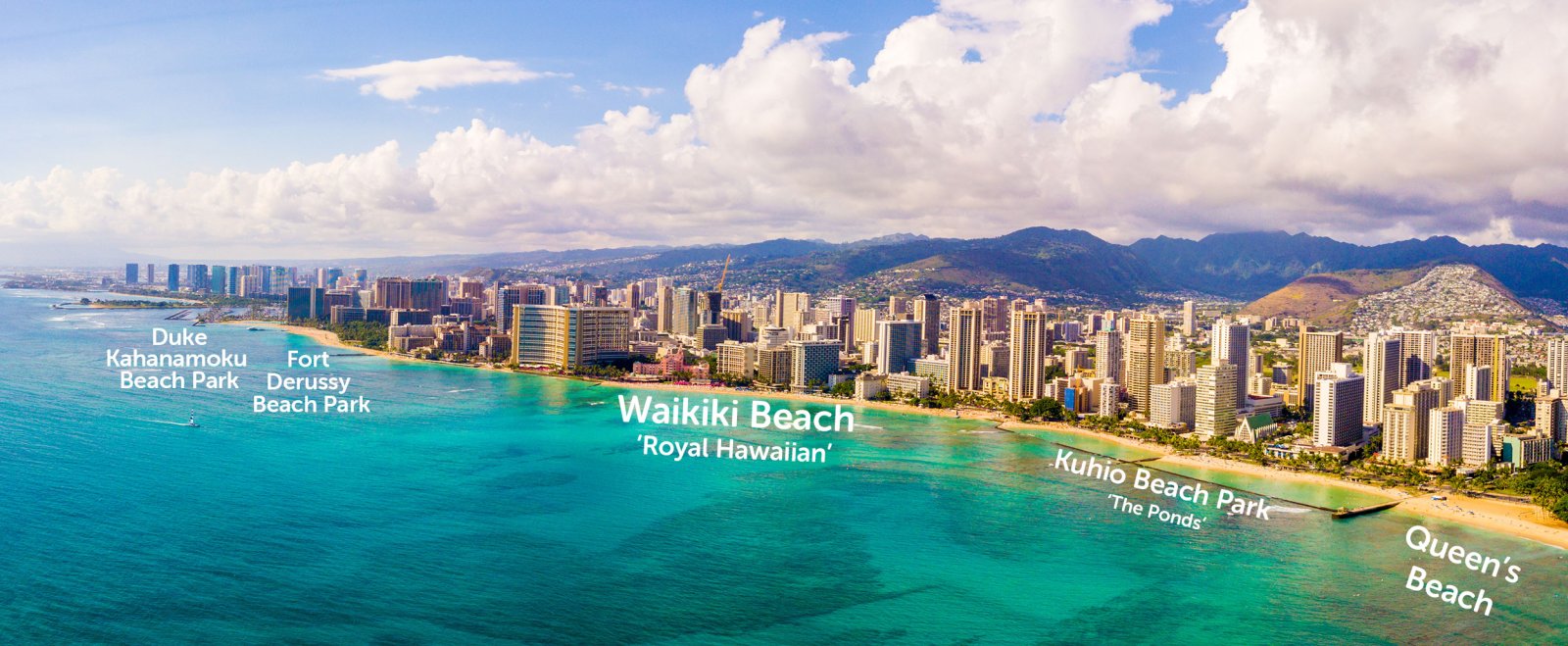
The landmark known as Waikiki Beach is not a monolith; it is a series of interconnected beaches, each with its own physical characteristics and historical names. Stretching roughly two miles, these segments offer different perspectives of the Honolulu coastline.
The Western Reach: Kahanamoku and Fort DeRussy
Starting at the western end near the Hilton Hawaiian Village, the first major segment is Duke Kahanamoku Beach. This area features a man-made lagoon and is named after the legendary surfer and Olympian Duke Kahanamoku. Moving eastward, travelers find Fort DeRussy Beach Park, a wide stretch of sand fronting a military reservation. This area is notable for its spacious grassy parks and the U.S. Army Museum of Hawaii, which highlights the military history of the islands.
The Central Core: Gray’s and Kuhio Beach
The central portion of the shoreline includes Gray’s Beach, which is often submerged at high tide due to its proximity to the historic hotels. Adjacent to this is Kuhio Beach, perhaps the most popular segment for families. Kuhio Beach is protected by a concrete breakwater known as “The Wall,” creating a calm swimming area that is safe from strong currents. This section is also the site of several cultural landmarks, including the Duke Kahanamoku Statue and the Wizard Stones of Kapaemahu.
The Eastern End: Queen’s and Sans Souci
As the shoreline curves toward Diamond Head, the beaches become more tranquil. Queen’s Beach is a favorite for bodyboarding and is located near the Honolulu Zoo. Further east, past the Waikiki Aquarium, lies Sans Souci Beach, a locals’ favorite that marks the transition into the residential neighborhood of Diamond Head. Throughout this entire stretch, the view is dominated by the majestic profile of Leahi, the traditional Hawaiian name for the Diamond Head crater.
Historical Evolution: From Wetlands to a Global Landmark
To fully understand where Waikiki Beach is, one must understand what it was. The name Waikiki translates to “spouting waters” in the Hawaiian language, referencing the numerous springs and streams that once fed into the area. In ancient times, this region was a vast wetland of marshes and fishponds, used by Native Hawaiians for sustainable agriculture, particularly for growing taro (kalo).
A Royal Retreat
In the 18th and 19th centuries, Waikiki served as a coastal retreat for Hawaiian royalty, or Ali’i. King Kamehameha established his residence here after conquering Oahu in 1795. Later, Queen Liliuokalani, the last reigning monarch of the Kingdom of Hawaii, maintained a home in the area. The presence of royalty cemented Waikiki as a place of high social and cultural significance long before the first hotel was ever built.
The Transformation of the 1920s
The landmark underwent a radical transformation in the early 1920s. To facilitate development and eliminate the perceived “swampy” conditions of the inland marshes, the Ala Wai Canal was constructed. This massive engineering project drained the wetlands, diverted the streams, and created the dry land upon which the modern Waikiki district now stands. While this allowed for the construction of high-rise buildings and roads, it also fundamentally changed the coastal ecosystem. Over time, erosion became a significant issue, leading to the periodic replenishment of sand to maintain the aesthetic of the beach that the world recognizes today.
Significant Cultural and Architectural Landmarks within Waikiki
While the sand and water are the primary attractions, Waikiki Beach is punctuated by landmarks that tell the story of Hawaii across centuries.
The Architecture of the “Pink Palace” and “First Lady”
Standing tall against the Honolulu skyline are two hotels that are landmarks in their own right. The Moana Surfrider, opened in 1901, is often called the “First Lady of Waikiki.” Its Beaux-Arts architecture and iconic banyan tree are central to the beach’s aesthetic. Nearby, the Royal Hawaiian Hotel, known as the “Pink Palace of the Pacific,” opened in 1927. Its Spanish-Moorish architecture and vibrant pink exterior have made it a visual anchor of the beach for nearly a century. These structures represent the early era of luxury travel to Polynesia.
The Duke Kahanamoku Statue
Located near the center of the beach, the Duke Kahanamoku Statue is a bronze monument with outstretched arms, welcoming visitors. Duke Kahanamoku was not only an Olympic swimmer but also a master of traditional surfing, credited with popularizing the sport globally. The statue serves as a focal point for cultural ceremonies and a reminder of the deep connection between the Hawaiian people and the ocean.
The Wizard Stones of Kapaemahu
Often overlooked by the casual passerby, the Wizard Stones of Kapaemahu are four large boulders situated on the sand. According to Hawaiian legend, these stones were infused with the healing powers of four Tahitian healers who visited Oahu long ago. They represent the spiritual and medicinal heritage of the islands and are among the most sacred landmarks in the Waikiki area.
Navigating the Greater Waikiki Area
Where is Waikiki Beach in relation to the rest of the city? It is bordered by several distinct neighborhoods that offer a broader context to the landmark.
North: The Ala Wai and Beyond
To the north, across the Ala Wai Canal, lies the residential area of McCully-Moiliili. This area provides a contrast to the tourist-centric shoreline, offering a glimpse into the daily lives of Honolulu residents. Further north, the mountains of the Koolau Range provide a dramatic backdrop, often shrouded in mist and rainbows.
East: Kapiolani Park and Diamond Head
To the east, the beach blends into Kapiolani Park, the largest and oldest public park in Hawaii. This green expanse was gifted by King Kalakaua and named after his wife, Queen Kapiolani. It houses the Waikiki Shell, an outdoor concert venue, and the Honolulu Zoo. Just past the park is the ascent to Diamond Head State Monument, where a hiking trail leads to the summit for a panoramic view of the entire Waikiki coastline.
West: The Gateway of Ala Moana
To the west, Waikiki is connected to the Ala Moana district. This area serves as the commercial heart of Honolulu, featuring the Ala Moana Center, which is the largest open-air shopping center in the world. The transition between these two areas is marked by the Ala Wai Boat Harbor, where sailboats and yachts line the docks against the sunset.
Waikiki Beach is much more than a destination; it is a geographic and cultural landmark that has evolved from a royal wetland into a global symbol of Hawaii. Whether viewed from the top of Diamond Head or felt through the sand underfoot near the Moana Surfrider, its location on the south shore of Oahu remains a cornerstone of the Pacific world. Understanding its placement and its components allows for a deeper appreciation of why this specific stretch of land continues to captivate the imagination of the world. From the historical legacy of the Ali’i to the modern energy of Kalakaua Avenue, Waikiki Beach is a landmark that bridges the gap between ancient tradition and contemporary life.
LifeOutOfTheBox is a participant in the Amazon Services LLC Associates Program, an affiliate advertising program designed to provide a means for sites to earn advertising fees by advertising and linking to Amazon.com. Amazon, the Amazon logo, AmazonSupply, and the AmazonSupply logo are trademarks of Amazon.com, Inc. or its affiliates. As an Amazon Associate we earn affiliate commissions from qualifying purchases.