
The concept of a hotel stay has evolved significantly over the last few decades. While traditional hotels are designed for short-term visits—typically ranging from a single night to a week—extended stay hotels cater to a different demographic altogether. These establishments are built to bridge the gap between a standard hotel room and a fully furnished apartment. Whether you are a business professional on a long-term assignment, a digital nomad exploring a new city, or someone in the midst of a residential relocation, the question of how long you can legally and practically stay in an extended stay hotel is central to your planning.
Defining the Limits of Extended Stay Living
In theory, you can stay in an extended stay hotel indefinitely. Most major brands are more than happy to accommodate guests for months or even years at a time, provided the guest continues to pay the agreed-upon rate and follows the house rules. Unlike residential apartments, which require a fixed-term lease, extended stay hotels offer a unique level of flexibility. However, there are nuances involving legal residency, corporate policies, and local regulations that guests should understand before checking in for the long haul.
The Legal Threshold of Residency
In many parts of the United States, there is a significant legal shift that occurs once a guest stays in a hotel for 30 consecutive days. In states like California, New York, and Florida, staying past the 30-day mark often grants the guest “tenant rights.” This means that the guest is no longer viewed simply as a transient occupant but as a legal resident of the establishment.
For the guest, this can be a double-edged sword. On one hand, it may offer protections against immediate eviction. On the other hand, some hotel managers are wary of guests reaching this threshold because it makes the process of removing a problematic guest much more complicated, requiring a formal eviction process through the court system rather than a simple request to vacate the premises. In certain cities like San Francisco or Miami, hotels may require guests to check out and check back in after 28 or 29 days to prevent these residency laws from taking effect, although this practice is becoming less common in dedicated extended-stay brands.
Corporate Policy vs. Individual Flexibility
While the law sets the framework, individual hotel brands have their own internal policies. Companies like Extended Stay America and Residence Inn are designed specifically for long-term stays, and their systems are built to handle guests who live on-site for six months or a year. In contrast, boutique hotels or luxury resorts in places like London or Paris may have internal caps on stay durations to ensure they maintain a steady turnover of higher-paying, short-term tourists.
If you plan to stay longer than 90 days, it is always advisable to speak directly with the general manager. Most long-term guests are highly valued because they provide a stable, predictable stream of revenue with significantly lower turnover costs for the housekeeping department.
Financial and Practical Incentives for Long-Term Guests
One of the primary reasons travelers choose extended stay hotels over traditional ones is the cost-to-value ratio. When booking for a duration that exceeds a week or a month, the pricing structure changes dramatically.
Tiered Pricing and Tax Benefits
The “Accommodation” industry operates on a tiered pricing model. A room that costs $150 per night for a weekend stay might drop to $90 per night if booked for 30 days or more. These “long-term stay” rates are often negotiated privately or found through specialized corporate booking channels.
Furthermore, there is a substantial financial benefit regarding taxes. In many jurisdictions, such as Texas and Illinois, guests are exempt from the “Hotel Occupancy Tax” once they stay for more than 30 consecutive days. Since these taxes can range from 10% to 17% of the total bill, the savings are significant. For a guest staying in Chicago or Austin, this tax exemption can equate to hundreds of dollars in monthly savings, making the hotel stay competitive with a traditional apartment rental.
Amenities Designed for Life, Not Just a Visit
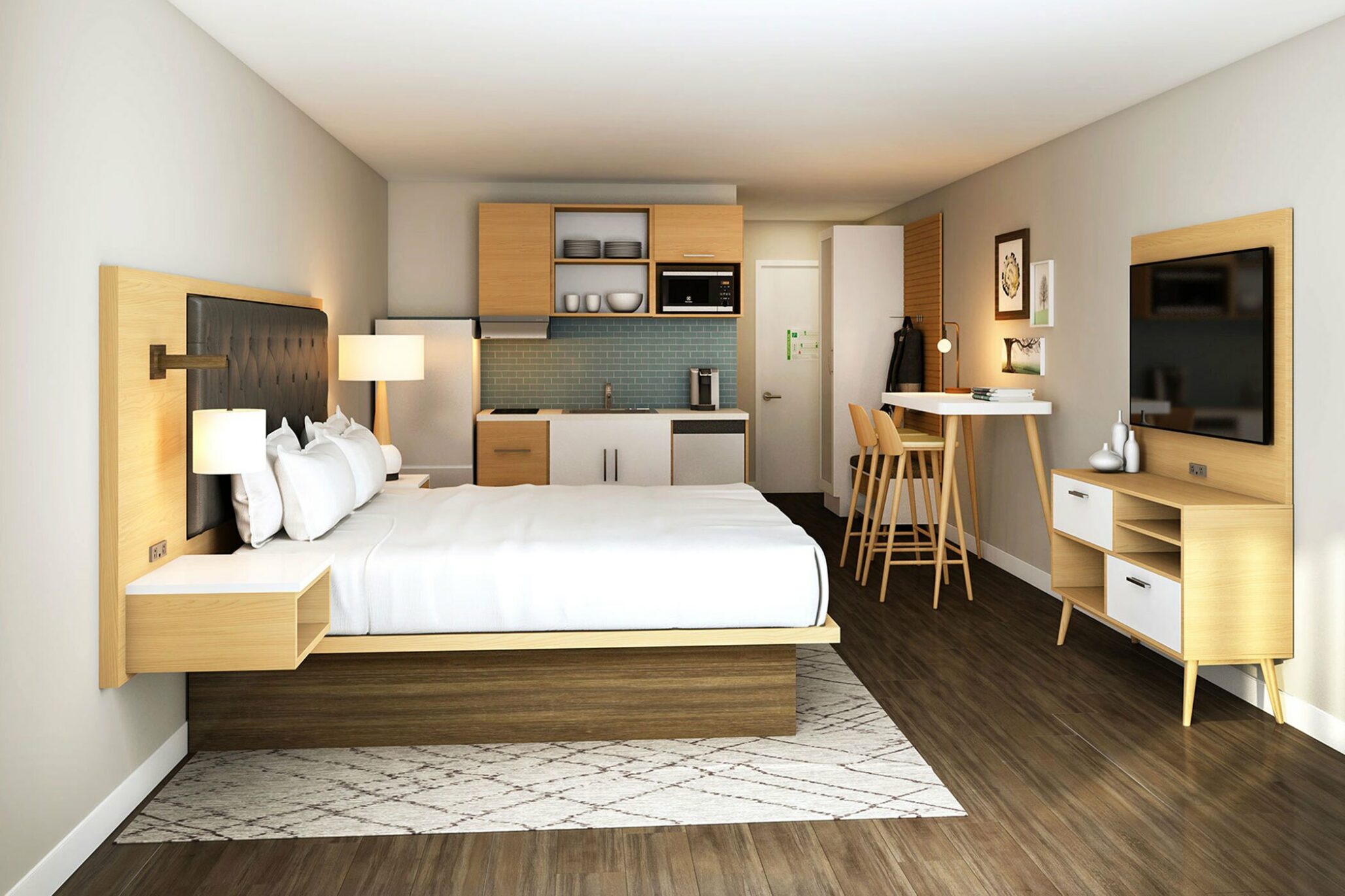
To stay in a hotel for a month or more, the environment must support daily living. Extended stay hotels differ from standard hotels by providing features that reduce the “friction” of long-term travel:
- Full Kitchens: Most units include a stovetop, full-sized refrigerator, microwave, and dishwasher. This allows guests to cook their own meals, which is essential for both health and budget management.
- On-Site Laundry: Instead of expensive valet dry cleaning, brands like Candlewood Suites or Staybridge Suites provide guest laundry facilities.
- Storage Space: Rooms are often equipped with larger closets and additional drawers to accommodate a full wardrobe, rather than just a suitcase.
- Workspace: A dedicated desk with ergonomic seating is a standard feature, catering to the professional needs of guests working remotely from Boston or Los Angeles.
Strategic Brand Selection for Long-Term Stays
Choosing the right brand is vital when planning a stay that lasts several months. Different chains cater to different budget levels and lifestyle expectations.
Economy and Mid-Scale Reliability
For those prioritizing budget, Extended Stay America is a staple across the United States. It offers the essentials at a lower price point, making it a favorite for traveling nurses and construction contractors. Similarly, Choice Hotels operates the MainStay Suites brand, which focuses on providing a home-like atmosphere with mid-scale pricing.
Wyndham Hotels and Resorts also provides options through their Hawthorn Suites brand, focusing on spacious layouts. These brands are often located in suburban areas near business parks or medical centers, providing convenience for those on professional assignments.
Upscale and Luxury Extended Stay Options
For a more refined experience, Marriott and Hilton dominate the upscale extended-stay market. Residence Inn by Marriott is widely considered the pioneer of the category, offering complimentary hot breakfasts and evening social hours that help foster a sense of community among long-term guests. Homewood Suites by Hilton provides a similar level of service, often featuring separate living and sleeping areas.
If you are looking for a more modern, eco-conscious aesthetic, Element by Westin focuses on wellness, with bright, airy rooms and saline pools. For those in Europe or major Asian hubs like Tokyo, Hyatt House provides sleek, apartment-style living that appeals to the high-end corporate traveler.
Navigating the Logistics of Living in a Hotel
Staying in a hotel for six months requires a shift in how you handle logistics. Unlike an apartment, you don’t have a mailbox on the street, and your “home” is technically a commercial property.
Mail, Packages, and Official Addresses
Most extended stay hotels allow guests to receive mail and packages at the front desk. This is a significant advantage over short-term rentals, where package security can be an issue. However, if you are using the hotel as your primary residence for legal purposes—such as for your driver’s license or voter registration—you should verify local regulations. Some states require a permanent residential address and may not accept a hotel address for certain official documents. In these cases, many long-term travelers use a private mailbox service in the city they are staying in, such as Seattle or Denver, to maintain a consistent mailing address.
Maintaining Quality of Life and Community
The biggest challenge of a multi-month hotel stay is not the space, but the potential for isolation. Successful long-term stayers often choose hotels that offer communal spaces. IHG Hotels and Resorts often includes outdoor “Gazebo Grills” at their Staybridge Suites locations, encouraging guests to interact while cooking outdoors.
For many, the ability to bring pets is a non-negotiable factor for long stays. Fortunately, the extended stay segment is generally pet-friendly. Brands like Home2 Suites by Hilton are designed with pets in mind, offering walking areas and durable flooring.
Making the Decision for Long-Term Accommodation
The question of how long you can stay in an extended stay hotel is ultimately answered by your own needs and budget. Whether you are staying for 31 days to take advantage of tax breaks in Canada or settling in for a year-long project in Germany, the modern hotel industry is better equipped than ever to provide a “home away from home.”
By understanding the legal nuances of residency, strategically choosing a brand that matches your lifestyle, and negotiating rates based on your length of stay, you can transform a hotel room into a functional, comfortable, and cost-effective residence. The flexibility of no-lease living, combined with the perks of professional hospitality, makes the extended stay hotel a premier choice for the modern, mobile world.
LifeOutOfTheBox is a participant in the Amazon Services LLC Associates Program, an affiliate advertising program designed to provide a means for sites to earn advertising fees by advertising and linking to Amazon.com. Amazon, the Amazon logo, AmazonSupply, and the AmazonSupply logo are trademarks of Amazon.com, Inc. or its affiliates. As an Amazon Associate we earn affiliate commissions from qualifying purchases.