
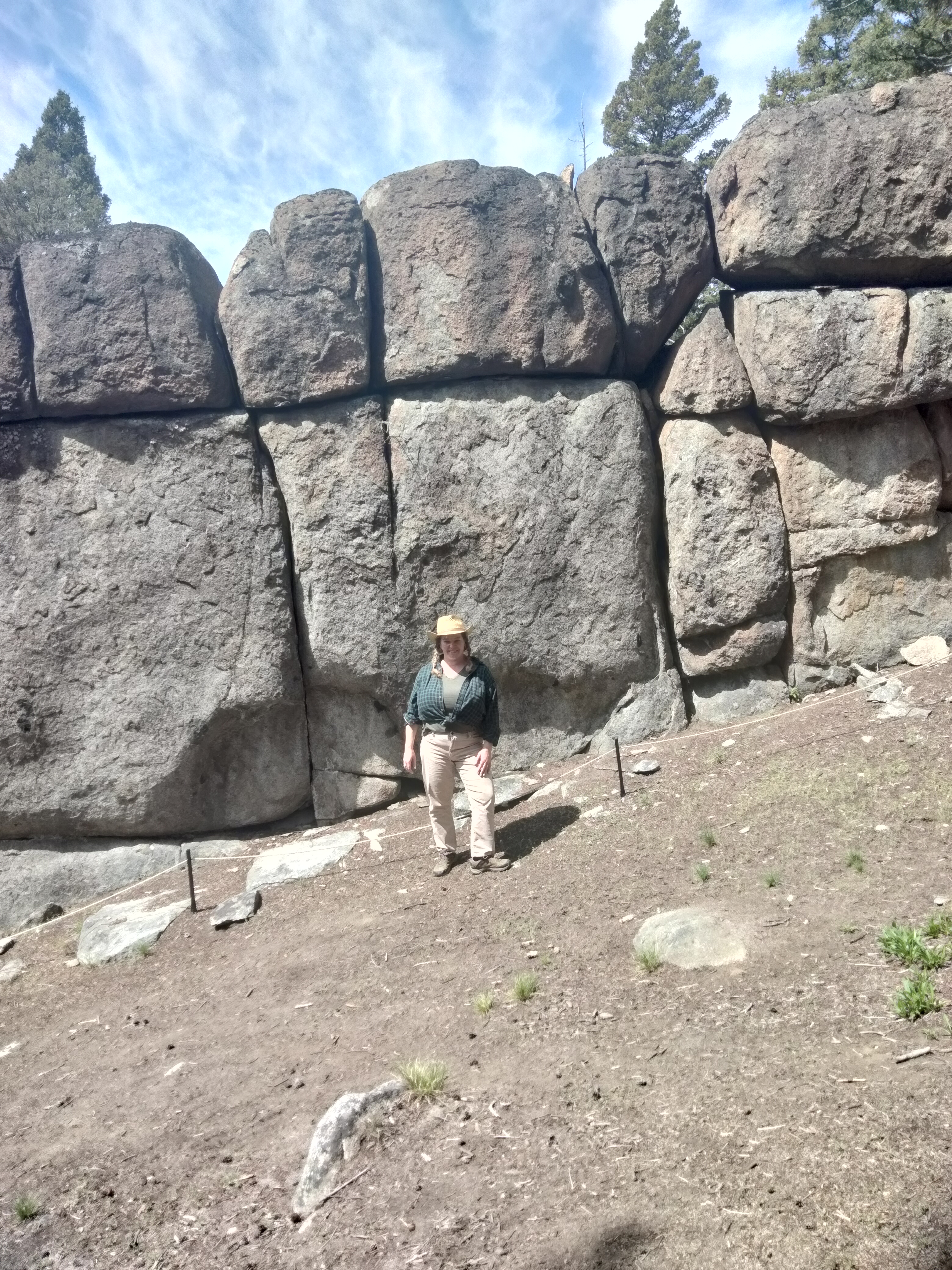
The vast and rugged landscapes of Montana are renowned for their dramatic beauty, from the towering peaks of the Rocky Mountains to the sweeping plains. Among its many geological wonders, one particular formation has captured the curiosity of visitors and locals alike: the enigmatic “Sage Wall.” This striking natural feature, often appearing as an almost impossibly straight, sheer cliff face, has sparked debate and wonder. Is this impressive structure a product of the slow, patient work of geological forces, or does it owe its distinct form to something else entirely? To understand the Sage Wall, we must delve into the geological history of the region and examine the processes that shape the land.

The Geological Canvas of Montana
Montana is a state blessed with a diverse and complex geological tapestry. The formation of its mountains, valleys, and rock formations is a story written over millions of years, involving tectonic plate collisions, volcanic activity, erosion, and glaciation. The bedrock of the state is a mosaic of ancient Precambrian rocks, Paleozoic sedimentary layers, Mesozoic deposits, and Cenozoic volcanic and sedimentary rocks. Each of these eras has left its indelible mark, contributing to the varied topography we see today.
Tectonic Forces and Uplift
The dominant force that sculpted much of Montana’s dramatic terrain is the Laramide Orogeny, a period of intense mountain-building that occurred roughly 80 to 55 million years ago. This orogeny was characterized by the collision of tectonic plates, which caused the Earth’s crust to buckle, fold, and fault. The resultant uplift pushed vast areas of land upwards, creating the impressive mountain ranges and high plateaus that define the state. This tectonic activity is responsible for the underlying structure of many geological features, including the strata that form cliff faces.
The Role of Erosion
While uplift creates the raw material for dramatic landforms, erosion is the sculptor that refines them. Over eons, wind, water, ice, and gravity have worked relentlessly to break down and shape the elevated land. Rivers carve canyons, glaciers scour valleys, and weathering weakens rock, allowing it to crumble and fall. The distinctive shapes of cliffs, mesas, and hoodoos are all testament to the power of erosional processes. Different rock types respond to erosion in different ways, leading to varied textures and forms. Harder, more resistant rocks tend to form sheer cliffs, while softer rocks erode more quickly, creating slopes and gentler features.
Unpacking the Sage Wall Phenomenon
The Sage Wall, wherever it may be situated within Montana, presents a particular visual puzzle. Its defining characteristic is often its apparent linearity and the abruptness of its rise from the surrounding terrain. This can lead some to question whether such a perfect edge could arise solely from natural processes.
Sedimentary Layers and Faulting
Many of Montana’s prominent cliffs are formed from sedimentary rock layers that have been uplifted and exposed. These layers, deposited horizontally over millions of years in ancient seas or riverbeds, can create distinct banding patterns and relatively flat upper surfaces. When these uplifted layers are subsequently subjected to erosion, particularly along fault lines or areas of structural weakness, they can be left standing as sheer cliffs.
Faulting, the fracturing and displacement of rock layers, is a common consequence of tectonic activity. If a fault line runs through sedimentary rock, it can create a significant break. Subsequent erosion along this fault can then reveal a dramatically straight edge where the rock has been displaced or fractured. This process can result in formations that appear remarkably artificial in their precision.
Differential Erosion
The concept of differential erosion is crucial to understanding many natural rock formations, including those that appear exceptionally straight. Different rock strata possess varying degrees of resistance to weathering and erosion. A harder, more resistant layer, such as certain types of sandstone or limestone, might form a caprock. Beneath this, a softer layer, like shale, will erode more rapidly.

As erosion proceeds, the softer rock is worn away, leaving the harder caprock overhanging. If the underlying structure of the uplifted rock was already somewhat planar, and the faulting or fracturing occurred along relatively straight lines, this process can result in the formation of a very straight cliff face. The harder, resistant rock forms the sheer, vertical or near-vertical face, while the softer rock below forms a slope or talus accumulation. The “Sage Wall” could very well be an example of such differential erosion acting upon uplifted and faulted sedimentary rock.
The Case for a Natural Origin
While the striking straightness of the Sage Wall might invite speculation, the geological processes at play in Montana are more than capable of producing such features. The sheer scale of geological time and the immense forces involved are often difficult for the human mind to fully grasp, leading to a perception of unnaturalness in formations that are, in fact, products of nature’s grand designs.
Examining the Evidence
To determine the natural origin of the Sage Wall, geologists would look for several key indicators:
- Stratification: The presence of distinct, horizontal or near-horizontal layers of sedimentary rock, visible in the cliff face, would strongly support a natural origin from uplifted seabed deposits.
- Fault Lines: Evidence of faulting, such as displaced rock layers or shattered rock, would indicate tectonic activity responsible for creating the break.
- Erosional Features: The presence of talus slopes (accumulations of rock debris at the base of the cliff), weathering patterns on the rock surface, or evidence of past water or ice action would all point to natural erosional processes.
- Absence of Human Artifacts: A thorough survey would confirm the lack of any tools, construction debris, or other evidence of human intervention.
- Surrounding Geology: The geological context of the Sage Wall, including the composition and structure of the surrounding landscape, would be analyzed for consistency with known natural formations.
In many cases, features that appear artificial are simply the result of intense geological forces acting over vast timescales. The straight lines we perceive may be the precise edges of ancient fault blocks or the result of exceptionally uniform erosion along hard strata.
Comparing to Known Natural Formations
The world is replete with natural formations that exhibit astonishing geometric regularity. The columnar basalt formations of the Giant’s Causeway in Northern Ireland, though formed by volcanic cooling rather than uplift and erosion, are famous for their hexagonal symmetry. In Utah, the towering sandstone cliffs of Zion National Park showcase immense, sheer walls carved by the Virgin River from uplifted sedimentary layers. These examples demonstrate that nature, through its fundamental forces, can create structures that rival human engineering in their precision and scale. The Sage Wall, within the geological context of Montana, is highly likely to be another such marvel.
The Sage Wall as a Natural Landmark
The allure of the Sage Wall lies not only in its visual impact but also in the sense of mystery it evokes. Its very existence prompts contemplation about the immense power and artistry of natural forces. Whether its straightness is primarily due to the precise alignment of a fault block or the uniform resistance of a sedimentary layer to erosive agents, it stands as a testament to geological history.
Experiencing the Sage Wall
For travelers seeking unique natural experiences in Montana, discovering formations like the Sage Wall offers a profound connection to the earth’s dynamic past. It serves as a reminder that the landscapes we explore are living entities, shaped by processes far beyond human comprehension. Such landmarks encourage a deeper appreciation for the natural world, inviting us to look beyond the surface and understand the stories etched into the rock. While the exact location and accessibility of specific “Sage Walls” can vary, the geological principles that create them are widespread throughout the Big Sky Country, waiting to be explored and appreciated by those who venture off the beaten path.
The Enduring Appeal of Natural Wonders
The debate over the origin of striking natural formations like the Sage Wall is, in essence, an exploration of the boundaries between nature and artifice. However, when examined through the lens of geology, the “unnatural” straightness often resolves into a perfectly understandable, albeit awe-inspiring, consequence of fundamental earth processes. The Sage Wall, therefore, firmly belongs in the category of natural landmarks, a profound geological feature that showcases the power, precision, and enduring beauty of the natural world. Its existence is a chapter in Montana’s epic geological saga, a story written in stone and shaped by the very forces that continue to mold our planet.
LifeOutOfTheBox is a participant in the Amazon Services LLC Associates Program, an affiliate advertising program designed to provide a means for sites to earn advertising fees by advertising and linking to Amazon.com. Amazon, the Amazon logo, AmazonSupply, and the AmazonSupply logo are trademarks of Amazon.com, Inc. or its affiliates. As an Amazon Associate we earn affiliate commissions from qualifying purchases.