
Central Park, a sprawling emerald oasis in the heart of Manhattan, is not merely a patch of green; it is an urban masterpiece, a testament to visionary urban planning, and a vital lung for the bustling metropolis of New York City. Its sheer scale is often underestimated, and understanding its dimensions reveals a fascinating insight into its design, its purpose, and its enduring impact on the millions who visit and inhabit its surroundings. To truly grasp the magnitude of Central Park, one must move beyond simple acreage and explore the intricate tapestry of its layout, its historical context, and the immense variety of experiences it offers.

The Tangible Dimensions: Acres, Miles, and Boundaries
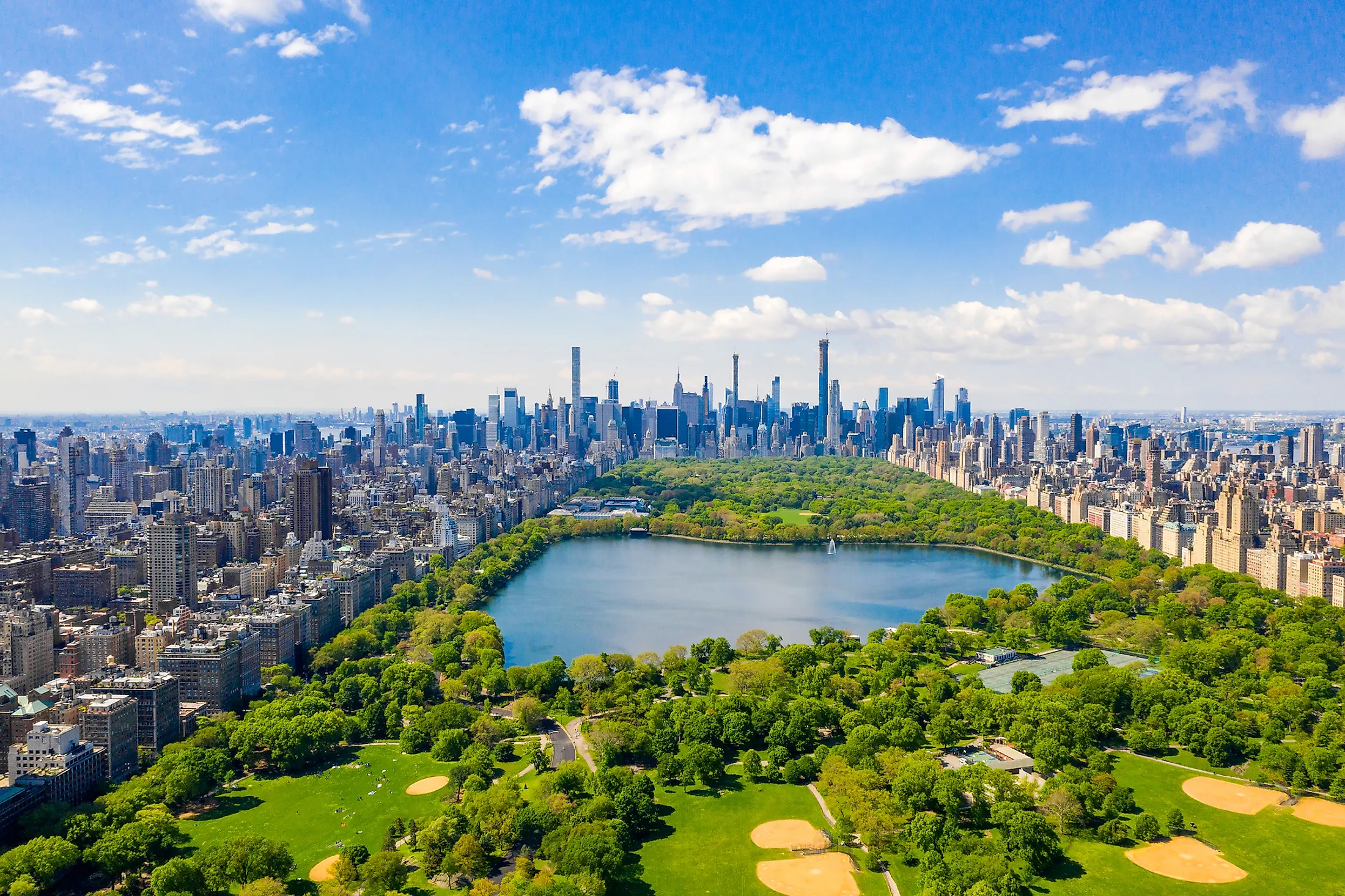
The most straightforward answer to “How big is Central Park?” lies in its physical measurements. The park encompasses approximately 843 acres, a considerable expanse that profoundly shapes its character and utility. To put this into perspective, 843 acres is equivalent to roughly 1.3 square miles. This vast area is carefully delineated by its iconic boundaries: Fifth Avenue to the east, Central Park West to the west, 110th Street to the north, and 59th Street to the south. This rectangular plot, meticulously planned and executed, is larger than the principality of Monaco and significantly dwarfs many other city parks around the globe.
A Rectangular Footprint in a Grid
The park’s rectangular shape is a deliberate consequence of its integration into Manhattan‘s rigid grid system. Designed in the mid-19th century by Frederick Law Olmsted and Calvert Vaux, the park was conceived as a democratic space, accessible to all citizens, a respite from the burgeoning industrialization and dense urban living. Its planned dimensions allowed for a grand, sweeping landscape that contrasts dramatically with the sharp, man-made lines of the surrounding city. The length of the park, stretching from 59th Street to 110th Street, covers 51 blocks, a distance of approximately 2.5 miles. Its width, from Fifth Avenue to Central Park West, spans an average of 0.5 miles. These figures, while impressive, only begin to tell the story of the park’s immensity.
Beyond the Perimeter: Internal Scale
The true scale of Central Park becomes more apparent when one considers the sheer variety of landscapes and features contained within its perimeter. While 843 acres might sound like an open field, the park is a complex mosaic of woodlands, meadows, lakes, ponds, formal gardens, and recreational areas. The meandering pathways, often mistaken for natural formations, stretch for approximately 58 miles, encouraging exploration and offering a sense of discovery with every turn. The intricate network of roads and bridges adds further layers to its spatial complexity, creating distinct zones and microclimates within the larger park.
Historical Context and Design Intent: Shaping the Scale
The immense scale of Central Park was not accidental; it was a foundational element of its conception and design. The visionaries behind the park aimed to create a space that could genuinely offer an escape from the urban environment, a place where one could feel transported to the countryside.
The Greensward Plan and its Ambitions
The winning design by Olmsted and Vaux, known as the “Greensward Plan,” was chosen in a design competition in 1858. Their ambition was to create a diverse and picturesque landscape, complete with rolling hills, tranquil bodies of water, and dense woodlands. Achieving this required a substantial land area. The plan meticulously detailed the placement of every feature, from the iconic Bethesda Terrace and Fountain to the more secluded Ramble. The scale was essential to accommodate the separation of different types of activities – carriage drives, pedestrian paths, and areas for active recreation – without conflict.
A Sanctuary of Scale
The sheer size of the park allowed for the creation of distinct ecological zones and the planting of thousands of trees, fostering a sense of natural immersion. This was a radical idea for its time, where public spaces were often formal and geometrically arranged. Olmsted and Vaux understood that to create a true sanctuary, a significant scale was necessary to buffer the noise and chaos of the city and to allow for the development of mature landscapes that would evolve over time. The 843 acres were not just a plot of land; they were a canvas for a grand ecological and social experiment.

Experiencing the Scale: Walking, Biking, and Exploring
The true appreciation of Central Park’s size comes from experiencing it firsthand. While maps and statistics provide an abstract understanding, the physical act of traversing its expanse offers an immersive realization of its grandeur.
Pedestrian Journeys: A Different Pace
A leisurely stroll through Central Park can easily consume hours, if not a full day. From the southern tip near Columbus Circle to the northern reaches near Harlem, the park offers a journey through vastly different terrains and atmospheres. One might spend a morning exploring the manicured lawns of the Great Lawn, have lunch near the Loeb Boathouse, and then wander through the dense, wilder sections of the Ramble in the afternoon. The 58 miles of paths ensure that no two walks are ever quite the same, revealing new vistas and hidden corners with each exploration.
Cycling and Skating: Covering More Ground
For those who wish to cover more of the park’s vastness, cycling and rollerblading offer efficient means of transport. The park’s roadways are famously closed to most vehicular traffic on weekends, creating a haven for cyclists and skaters. Covering the entire length of the park and back, perhaps deviating onto various paths, can easily be a 10-15 mile journey. This allows visitors to experience the transition from the bustling southern end, with attractions like the Central Park Zoo and Wollman Rink, to the more serene and residential northern sections, including the historic Harlem Meer.
Navigating the Grand Scale: Practical Considerations
Understanding the scale of Central Park also involves practical planning. Visitors often underestimate the walking distances between attractions. For instance, the Metropolitan Museum of Art on the east side is a considerable walk from the American Museum of Natural History on the west side, and both are located in the park’s midsection. Utilizing the park’s shuttle bus service or planning routes in advance can enhance the visitor experience and ensure that the vastness of the park feels manageable rather than overwhelming. The sheer size also means that different areas offer distinct experiences; the southern portion is often more crowded and geared towards iconic sights, while the northern section provides a more tranquil and natural escape.
Central Park: A Landmark Defined by its Expansive Presence
In conclusion, the question “How big is Central Park New York?” is answered not just by a simple figure of 843 acres, but by understanding the deliberate design, historical intent, and experiential impact of its considerable dimensions. It is a landmark whose scale is intrinsically linked to its function as a democratic retreat, a vibrant ecosystem, and an indispensable element of the urban fabric.
A Living, Breathing Monument
The 843 acres of Central Park are not static; they are dynamic, constantly changing with the seasons and the life that inhabits them. From the iconic Sheep Meadow to the more intimate Conservatory Garden, each section contributes to the overall grandeur and complexity. The park’s scale allows for the coexistence of diverse activities – from impromptu frisbee games and leisurely picnics to serious athletic pursuits and quiet contemplation. This ability to accommodate such a wide range of human and natural interactions is a testament to its expansive design.
An Enduring Legacy of Scale
The enduring legacy of Olmsted and Vaux is evident in how Central Park continues to serve its purpose, offering respite, recreation, and a connection to nature for millions. Its immense size ensures that despite the constant influx of visitors, there are always pockets of tranquility to be discovered. The park’s footprint is a significant part of its identity, a defining characteristic that shapes its character and its unparalleled importance within New York City and as a global icon of urban park design.
LifeOutOfTheBox is a participant in the Amazon Services LLC Associates Program, an affiliate advertising program designed to provide a means for sites to earn advertising fees by advertising and linking to Amazon.com. Amazon, the Amazon logo, AmazonSupply, and the AmazonSupply logo are trademarks of Amazon.com, Inc. or its affiliates. As an Amazon Associate we earn affiliate commissions from qualifying purchases.