
New York, a state synonymous with glittering cityscapes and rolling autumnal hills, also transforms into a winter wonderland each year. For many, the allure of a New York winter lies not just in the festive decorations and cozy ambiance, but in the magical snowfall that blankets its diverse landscapes. Understanding the typical snowfall patterns across the Empire State is crucial for both seasoned travelers and first-time visitors planning a winter escape. This guide delves into the nuances of New York’s snow, from the urban heart of New York City to the snow-laden peaks of the Adirondacks, offering insights into what to expect and how to best enjoy this seasonal spectacle.

Snowfall Patterns Across New York State
The amount of snow New York receives is far from uniform. Several geographical factors contribute to significant variations in snowfall totals from one region to another. The state’s topography, its proximity to large bodies of water like the Great Lakes and the Atlantic Ocean, and prevailing weather systems all play a role in determining how many inches of snow will fall and when.
Coastal vs. Inland Snowfall
Regions closer to the coast, including much of Long Island and the outer boroughs of New York City, generally experience milder winters with less snowfall. The proximity to the relatively warmer Atlantic Ocean can moderate temperatures, leading to more frequent rain or a mix of precipitation rather than heavy snow. While New York City can certainly experience significant snowstorms, the average annual accumulation is considerably less than in more northerly or westerly parts of the state.
Inland, the story changes dramatically. As one moves away from the coast and towards the state’s interior, snowfall totals tend to increase. This is particularly true for areas that lie in the path of lake-effect snow, a phenomenon that occurs when cold air masses move over the warmer waters of the Great Lakes.
Lake-Effect Snow Zones
The western and central parts of New York, especially those bordering Lake Erie and Lake Ontario, are prime areas for lake-effect snow. These systems can dump prodigious amounts of snow in localized bands, sometimes accumulating several feet in a matter of days. Towns and cities in this region, such as Buffalo and Rochester, are accustomed to frequent snow removal challenges and often boast some of the highest snowfall averages in the state.
Mountainous Regions and Snowfall
New York’s mountainous terrain also influences snowfall. The Adirondack Mountains and the Catskill Mountains are known for receiving substantial snow. Higher elevations generally experience colder temperatures, which are more conducive to snow accumulation. Ski resorts in these areas, such as those near Lake Placid or in the Hunter Mountain region, can count on a reliable snow base for winter sports enthusiasts. The Adirondacks, in particular, often receive the most snow in the state, with some areas averaging well over 100 inches annually.
Average Snowfall by Region
To provide a clearer picture, let’s break down the typical snowfall by major regions within New York State. These figures are averages and can fluctuate significantly from year to year and even within a single winter season.
New York City and Long Island
- Average Annual Snowfall: 25-30 inches.
- Characteristics: While major snowstorms can and do happen, often causing significant disruption, the majority of winter precipitation in New York City and on Long Island falls as rain or sleet. When snow does fall, it is often wet and heavy due to proximity to the coast. The warmer pavement and urban heat island effect in Manhattan can also contribute to quicker melting. Snowfall events here are often more memorable due to their impact on the bustling city rather than their sheer volume.
Central New York and the Mohawk Valley
- Average Annual Snowfall: 40-60 inches.
- Characteristics: This region, including cities like Syracuse, begins to see more consistent snowfall. Syracuse is often cited as one of the snowiest major cities in the U.S., benefiting from its inland location and proximity to Lake Ontario, which can enhance lake-effect snow bands. Winters here are typically colder and snowier than along the coast.
Western New York (Lake Erie and Lake Ontario Shores)
- Average Annual Snowfall: 60-100+ inches.
- Characteristics: This is the heartland of New York’s lake-effect snow. Cities like Buffalo and areas to its east, particularly south of Buffalo along the edge of Lake Erie, can experience extreme snowfall during lake-effect events. Accumulations can be measured in feet rather than inches over short periods. This region experiences a true winter climate with consistent snow cover for extended periods.
The Adirondacks and Northern New York
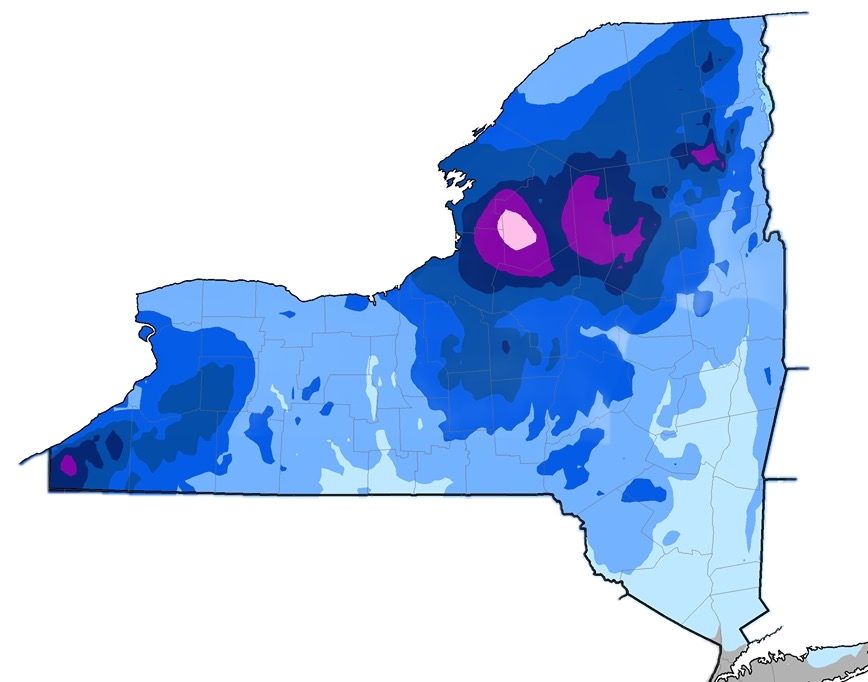
- Average Annual Snowfall: 80-120+ inches.
- Characteristics: The high elevations and northern latitude of the Adirondack Mountains make it the snowiest region in New York. Areas like Old Forge and mountain towns often receive the most snow. This consistent and abundant snowfall makes the Adirondacks a premier destination for winter sports, including skiing, snowboarding, snowshoeing, and snowmobiling. The snow cover here is typically deep and lasts throughout the winter months.
The Catskills and Southern Tier
- Average Annual Snowfall: 50-80 inches.
- Characteristics: The mountainous terrain of the Catskill Mountains and the higher elevations of the Southern Tier also receive significant snowfall. Areas that host ski resorts, such as near Hunter Mountain, can experience substantial accumulations, making them popular for winter recreation. These regions offer a more traditional winter experience compared to the coastal areas.
Planning Your Winter Visit Based on Snowfall
Understanding the snowfall patterns can significantly enhance your winter travel experience in New York. Whether you’re seeking urban charm dusted with snow or seeking the ultimate powder for winter sports, knowing where to go and what to expect is key.
For the Urban Explorer
If your primary interest is experiencing the festive atmosphere of New York City during winter, a moderate snowfall can add a picturesque quality to the iconic landmarks like Central Park or the Brooklyn Bridge. However, heavy snow can disrupt transportation and sightseeing. Planning for potential delays and checking weather forecasts diligently is advised. Consider accommodations that offer easy access to public transportation, such as hotels near Times Square or in areas served by multiple subway lines.
For the Winter Sports Enthusiast
For those who dream of hitting the slopes or exploring snow-covered trails, the Adirondacks and Catskills are your prime destinations. Ski resorts like Belleayre Mountain Ski Center or Windham Mountain Club rely on consistent snowfall. Visiting from December through March offers the best chance for ample snow. When planning a trip to these areas, ensure your accommodation is prepared for winter conditions, and be ready for potential road closures or travel advisories during significant snow events. Consider staying in charming mountain towns like Lake Placid or Woodstock for an immersive winter experience.
For a Lake-Effect Snow Adventure
If you’re fascinated by the sheer power of nature and want to experience intense snowfall, Western New York offers a unique perspective. Towns in this region often embrace their snowy reputation, with many local events and activities centered around the winter season. While it can be challenging for travel, the visual spectacle of a landscape transformed by feet of snow is unforgettable. It’s important to have flexible travel plans if venturing into these lake-effect zones, as storms can be unpredictable.
Preparing for a Snowy Trip
Regardless of your chosen destination within New York, proper preparation is paramount for a safe and enjoyable winter visit.
Packing Essentials
- Warm Layers: The key to staying comfortable in cold weather is layering. Pack thermal base layers, insulating mid-layers (like fleece or down), and a waterproof and windproof outer shell.
- Waterproof Footwear: Insulated, waterproof boots with good traction are essential for navigating snowy or icy conditions.
- Accessories: Don’t forget warm hats, gloves or mittens, and scarves.
- Snow Gear (if applicable): If you plan on participating in snow sports, ensure you have appropriate ski or snowboard attire.
Transportation Considerations
- Vehicle Preparedness: If driving, ensure your vehicle is equipped for winter conditions. This includes checking tire tread, having a full tank of gas, and carrying an emergency kit with blankets, food, water, a first-aid kit, a flashlight, and jumper cables. Snow tires or chains may be necessary in some areas.
- Flight and Train Delays: Be prepared for potential delays or cancellations if traveling by air or rail, especially during major storm events.
- Local Transportation: In cities like New York City, public transportation is usually efficient, but heavy snow can impact subway and bus services. In more rural or mountainous areas, you might need to rely on rental vehicles equipped for snow or local taxi services.

Staying Informed
- Weather Forecasts: Regularly check reliable weather forecasts from sources like the National Weather Service or local news channels.
- Travel Advisories: Pay attention to any travel advisories or warnings issued by state and local authorities, particularly for road conditions.
- Road Conditions: Websites and apps that provide real-time road condition updates can be invaluable for drivers.
By understanding the diverse snowfall patterns across New York and preparing accordingly, visitors can fully embrace the magic of a winter wonderland, whether their aim is to marvel at snow-dusted cityscapes or carve fresh powder down mountain slopes.
LifeOutOfTheBox is a participant in the Amazon Services LLC Associates Program, an affiliate advertising program designed to provide a means for sites to earn advertising fees by advertising and linking to Amazon.com. Amazon, the Amazon logo, AmazonSupply, and the AmazonSupply logo are trademarks of Amazon.com, Inc. or its affiliates. As an Amazon Associate we earn affiliate commissions from qualifying purchases.