
Navigating the landscape of education in New York can be an incredibly rewarding career path, offering the chance to shape young minds and contribute to the vibrant tapestry of the state’s learning institutions. However, to legally and effectively teach in New York‘s public or private schools, obtaining the appropriate certification is a mandatory and often complex process. This guide aims to demystify the requirements, outline the steps involved, and provide insights into becoming a certified educator in the Empire State, particularly for those looking to integrate their passion for teaching with the dynamic experiences New York offers. While this guide focuses on the certification process, understanding the educational environment within the state can significantly enhance your teaching journey, from the bustling classrooms of New York City to the more intimate settings in the Adirondacks.

Understanding New York State Teacher Certification
The New York State Education Department (NYSED) oversees all teacher certification. The system is designed to ensure that educators possess the necessary knowledge, skills, and ethical grounding to provide quality instruction. There are generally three main pathways to certification, each with specific requirements that cater to different educational backgrounds and experience levels. These pathways are: Initial Certification, Professional Certification, and Permanent Certification. For those new to the profession or seeking to transition into teaching, the Initial Certification is typically the first goal.
Initial Certification
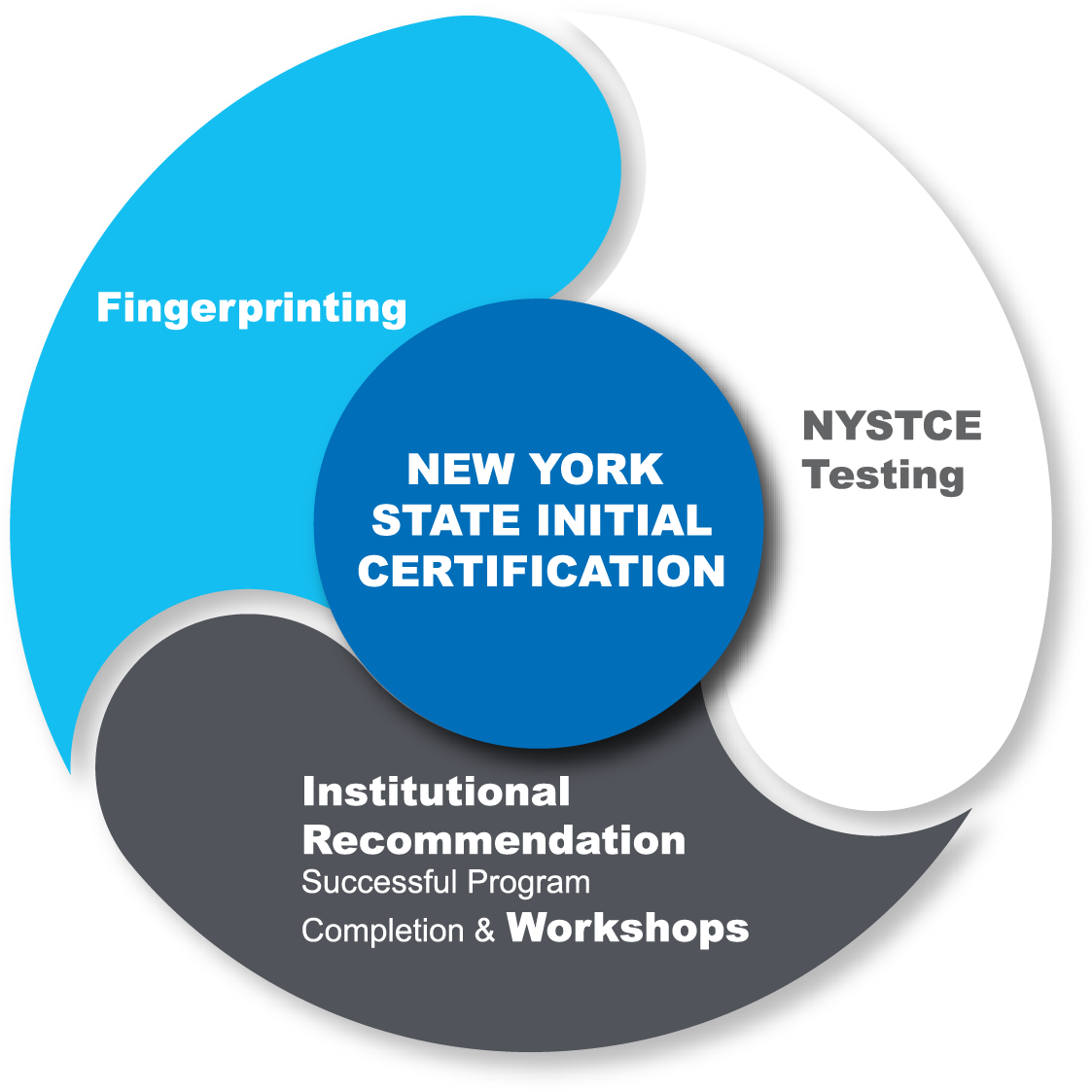
The Initial Certification is the entry-level credential for most aspiring teachers in New York. It signifies that an individual has met the foundational requirements for teaching in a specific subject area and grade level. To obtain an Initial Certificate, candidates must generally fulfill the following criteria:
Educational Requirements
A bachelor’s degree from an accredited college or university is the cornerstone of most New York teaching certifications. This degree must be in the subject area you intend to teach, or a related field that allows for specific coursework in your chosen subject. Beyond the bachelor’s degree, candidates must complete a registered teacher preparation program. These programs are offered by many colleges and universities across New York and often include coursework in pedagogy, child development, and teaching methods, alongside the subject-matter content. The program must be registered by the New York State Education Department.
Examinations
All prospective teachers in New York must pass a series of state-mandated examinations. These are designed to assess core academic skills, pedagogical knowledge, and subject-matter competency. The specific exams required depend on the certification area and grade level. Generally, candidates will need to pass:
- Educating All Teachers (EAT): This exam assesses understanding of pedagogical principles and teaching strategies applicable to diverse learners.
- Content Specialty Tests (CSTs): These exams evaluate your knowledge in the specific subject area you wish to teach. For instance, a candidate seeking to teach high school mathematics would need to pass the CST for Mathematics.
- Linguistically Diverse Students (LDS) or similar assessment: Depending on the program, there may be additional assessments related to working with English language learners.
Experience and Workshops
Most initial certification programs require supervised student teaching or a comparable fieldwork experience. This practical component allows candidates to apply their theoretical knowledge in a real classroom setting under the guidance of experienced educators. Additionally, candidates must complete specific workshops, including:
- Child Abuse Identification and Reporting: This workshop educates teachers on recognizing and reporting suspected child abuse and maltreatment.
- School Violence Prevention and Intervention (Project SAVE): This training focuses on creating safe school environments and addressing issues like bullying and violence.
- Autism Awareness: This workshop provides an overview of autism spectrum disorder and strategies for supporting students with autism.
Professional Certification
Once an individual has held an Initial Certificate for at least three years and has completed a minimum of three years of satisfactory teaching experience in New York public schools, they are eligible to apply for Professional Certification. This higher level of certification signifies advanced pedagogical understanding and a commitment to ongoing professional development. The requirements for Professional Certification include:
- Three years of satisfactory teaching experience in New York public schools under an Initial Certificate.
- Completion of a master’s degree in the subject area of your certification or in educational leadership from a registered graduate program. Alternatively, a master’s degree in a related field with 30 graduate credits in your certification subject may suffice.
- Completion of a professional development plan and participation in professional development activities. This demonstrates a commitment to continuous learning and staying current with educational best practices.
Permanent Certification
Permanent Certification was once the highest level of teaching credential in New York. However, it is no longer issued to new teachers. Individuals who held a Permanent Certificate prior to its discontinuation in 1983 retain it. For contemporary educators, the focus is on obtaining and maintaining Professional Certification, which requires ongoing professional development.
Navigating the Application Process
The application process for New York teacher certification is managed online through the NYSED’s TEACH (Teacher Online Application System). This system is used for everything from submitting applications to tracking your certification status. It is crucial to meticulously follow the instructions and ensure all required documentation is uploaded correctly.

Key Steps in the Application Process
- Create a TEACH Account: All applicants must create an account on the TEACH system. This will be your portal for managing your certification journey.
- Complete the Application: Select the appropriate application for the type of certificate you are seeking (Initial, Professional, etc.) and fill in all required personal and educational details.
- Submit Supporting Documentation: This includes official transcripts from all colleges and universities attended, verification of your teacher preparation program completion, and proof of passing scores for required examinations. If you are applying for Professional Certification, you will also need to submit verification of your teaching experience.
- Pay the Application Fee: There are fees associated with processing certification applications. These can be paid online through the TEACH system.
- Program Recommendation: For those completing a registered teacher preparation program, the institution will electronically recommend you for certification through the TEACH system.
- Review and Approval: NYSED will review your application and supporting documents. If everything is in order, your certificate will be issued. You can track the status of your application on the TEACH system.
Important Considerations for Applicants
- Program Registration: Ensure that any teacher preparation program you enroll in is registered with the New York State Education Department. Programs not registered in New York may require an evaluation to determine if they meet New York‘s requirements.
- Out-of-State Applicants: If you were certified in another state, you may be eligible for certification in New York through reciprocity. However, New York has specific requirements, and you will need to verify that your previous certification and preparation align with New York‘s standards. Some additional coursework or examinations may be required.
- Special Education and Bilingual Education: Teaching in specialized areas like Special Education or Bilingual Education requires additional certification and often specific coursework and examinations beyond the general teaching requirements.
- Substitute Teaching: A provisional or temporary license may be available for individuals seeking to substitute teach while completing certification requirements. These have specific limitations and durations.
- School Districts: While NYSED issues the certifications, individual school districts, such as the New York City Department of Education, have their own hiring processes and requirements. Understanding these can be beneficial when seeking employment.
Pathways Beyond Traditional Certification
For individuals who have significant experience in a specific field but lack a traditional teaching degree, New York offers alternative routes to certification. These pathways often leverage existing professional expertise and provide a more accelerated route to the classroom, allowing New York‘s rich professional landscape to inform its educational future.
Alternative Certification Programs
New York has several approved alternative teacher certification programs designed for individuals with bachelor’s or master’s degrees in fields other than education. These programs typically condense pedagogical coursework and emphasize practical, hands-on experience. Examples include:
- Teach For America: This well-known program recruits college graduates and young professionals to teach in high-need schools across the country, including New York. Participants receive intensive training and ongoing support.
- Residency Programs: Some districts and organizations offer residency programs that combine a master’s degree in education with a year-long, paid teaching apprenticeship under the guidance of an experienced mentor teacher.
- Specific Subject Area Programs: There are specialized programs focused on shortages areas, such as STEM (Science, Technology, Engineering, and Mathematics) or special education.
These programs often require a commitment to teach in underserved schools for a specified period. They are an excellent option for career changers looking to make a profound impact on students’ lives in vibrant communities like Buffalo or Rochester.
Teaching in Private Schools
While the New York State Education Department sets certification standards for public schools, private schools often have their own hiring criteria. Many private schools, particularly independent schools, value advanced degrees and specialized experience, and may not always require state certification. However, holding a New York State teaching certification can still be advantageous and may be preferred by many institutions. Researching the specific requirements of individual private schools is essential. This could range from prestigious institutions like The Brearley School to faith-based schools across the state.
Continuing Professional Development and Recertification
Obtaining an Initial Certificate is just the beginning of an educator’s journey in New York. To maintain and advance their teaching credentials, educators must engage in ongoing professional development.
Professional Development Requirements
- For Initial Certification: No specific professional development is required to obtain the Initial Certificate, but it is a prerequisite for Professional Certification.
- For Professional Certification: Once you hold a Professional Certificate, you are required to complete 175 hours of professional development every five years. This can include graduate courses, workshops, conferences, research, or professional learning communities. You will need to document these activities and submit them for renewal.
- Renewal: Certificates typically have an expiration date and require renewal. The process for renewal involves demonstrating completion of the required professional development hours and paying the renewal fee.
The Importance of Lifelong Learning
The educational landscape is constantly evolving, with new research, pedagogical approaches, and technological advancements shaping how students learn. Engaging in continuous professional development not only fulfills certification requirements but also enriches an educator’s practice, improves student outcomes, and keeps them at the forefront of their profession. Whether exploring innovative teaching methods inspired by the cultural richness of Saratoga Springs or mastering new educational technologies for online learning, lifelong learning is paramount for a successful and impactful career in teaching in New York.
Becoming a certified teacher in New York is a structured but achievable process. By understanding the requirements for Initial, Professional, and alternative certifications, diligently navigating the TEACH system, and committing to ongoing professional growth, aspiring educators can embark on a fulfilling career that contributes significantly to the educational future of the state.
LifeOutOfTheBox is a participant in the Amazon Services LLC Associates Program, an affiliate advertising program designed to provide a means for sites to earn advertising fees by advertising and linking to Amazon.com. Amazon, the Amazon logo, AmazonSupply, and the AmazonSupply logo are trademarks of Amazon.com, Inc. or its affiliates. As an Amazon Associate we earn affiliate commissions from qualifying purchases.