
Navigating the labyrinth of state tax refunds can often feel like a quest, especially when the promised financial boon seems to vanish into the ether. For residents of Oklahoma, the question “Where’s My Oklahoma Tax Refund?” is a common refrain as tax season winds down and the anticipation of a refund grows. Understanding the process, potential delays, and how to track your specific refund is crucial for managing personal finances and alleviating any tax-time anxieties. This guide delves into the intricacies of Oklahoma’s individual income tax refunds, providing a clear roadmap for taxpayers seeking their owed funds.

Understanding the Oklahoma Tax Refund Process
The Oklahoma Tax Commission (OTC) is the governing body responsible for processing individual income tax returns and issuing refunds. Once an individual files their state income tax return, typically by the April deadline, the OTC begins a multi-step review process. This process includes verifying the information provided on the return against various data sources, such as W-2s and 1099s, and ensuring mathematical accuracy.
Filing Methods and Their Impact
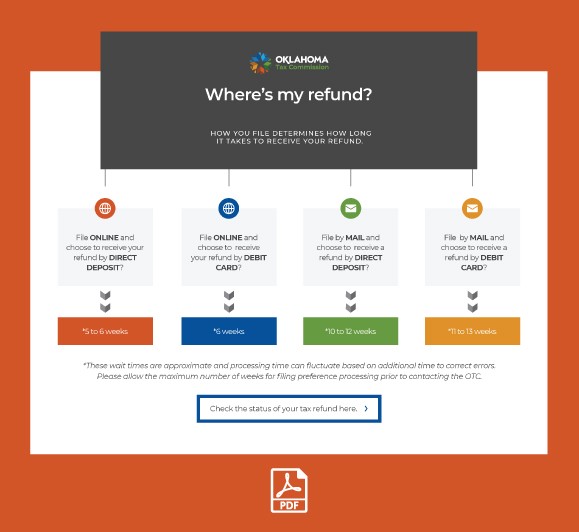
The method by which a taxpayer files their return can subtly influence the refund timeline.
Electronic Filing (e-file)
Filing electronically is overwhelmingly the fastest and most efficient method for submitting tax returns. When taxpayers use approved tax software or engage a tax professional who e-files, the return is transmitted directly to the Oklahoma Tax Commission’s systems. This significantly reduces the manual handling and processing time compared to paper filings. Refunds from e-filed returns are generally issued much quicker, often within a few weeks.
Paper Filing
For those who choose to mail in a paper return, the process inherently involves more steps and time. The Oklahoma Tax Commission must physically receive the return, scan it into their system, and then process the data. This can add considerable time to the refund cycle. While the OTC strives for efficiency, paper filers should anticipate a longer waiting period, potentially extending to several months, especially during peak filing seasons.
Refund Issuance Methods
Once the Oklahoma Tax Commission approves a refund, there are two primary methods by which it can be issued.
Direct Deposit
Direct deposit is the preferred method for many taxpayers due to its speed and convenience. If a taxpayer provides their bank account and routing numbers on their tax return and chooses direct deposit, the refund amount will be electronically transferred directly into their bank account. This bypasses the postal service entirely, often resulting in funds being available on the same day or the next day after the refund is approved and processed for direct deposit.
Paper Check
Alternatively, refunds can be issued in the form of a paper check, mailed to the taxpayer’s address on file. While this was the traditional method, it is generally slower than direct deposit. The check is printed, mailed, and then must be cashed or deposited by the taxpayer. The postal service’s delivery times can introduce further delays.
Tracking Your Oklahoma Tax Refund
The most common reason for asking “Where’s My Oklahoma Tax Refund?” is simply not knowing the status of the filing. Fortunately, the Oklahoma Tax Commission provides tools to help taxpayers track their refund progress.
The Oklahoma Tax Commission’s “Where’s My Refund?” Tool
The primary resource for tracking your refund is the Oklahoma Tax Commission’s official website. They offer an online “Where’s My Refund?” tool, which is designed to provide real-time updates on the status of your tax refund.
How to Use the Tool
To access this tool, taxpayers will typically need to visit the Oklahoma Tax Commission’s website. They will usually be prompted to enter specific identifying information, which generally includes:
- Social Security Number (SSN): Your personal SSN is a key identifier.
- Filing Status: This refers to your tax filing status (e.g., Single, Married Filing Jointly, Head of Household).
- The Exact Refund Amount: This is the amount you claimed as your refund on your tax return.
It is crucial to enter this information accurately, as incorrect details can prevent the system from locating your refund status or may lead to inaccurate information. The tool will then display the current status of your refund, which could be “Received,” “Processing,” “Approved,” or “Sent.”
When to Check Your Refund Status
It is advisable to wait a certain period after filing before attempting to track your refund. For e-filed returns, it is generally recommended to wait at least 2-3 weeks before checking the status. For paper-filed returns, this waiting period should be extended to 6-8 weeks, or even longer, due to the slower processing times. Checking too early might result in the system not having any updated information, leading to unnecessary concern.
Other Methods for Checking Status
While the online tool is the most efficient method, there might be instances where direct phone contact with the Oklahoma Tax Commission is necessary. However, it is always recommended to exhaust the online tracking options first. The OTC’s website will usually provide a customer service phone number for tax-related inquiries, but be prepared for potentially long wait times, especially during peak seasons.
Common Reasons for Oklahoma Tax Refund Delays
While the Oklahoma Tax Commission aims to process refunds promptly, several factors can lead to delays. Understanding these potential holdups can help taxpayers manage their expectations and know what steps to take if their refund is taking longer than anticipated.
Errors or Inaccuracies on the Tax Return
The most frequent cause of refund delays is an error or inconsistency on the tax return itself. This can range from simple mathematical mistakes to discrepancies in reported income or deductions.
Incomplete or Incorrect Information
Missing Social Security numbers, incorrect addresses, or improperly entered bank account details for direct deposit can all halt the refund process. The OTC must have accurate information to issue the refund correctly.
Discrepancies with Third-Party Data
The tax commission cross-references information provided on tax returns with data reported by employers (W-2s) and other payers (1099s). If there’s a mismatch – for example, if the income reported on your return doesn’t align with what your employer reported to the state – it will trigger a review and likely delay your refund until the discrepancy is resolved.
Underreported Income or Unpaid Tax Liabilities
If the Oklahoma Tax Commission identifies underreported income or discovers that you owe back taxes from previous years that haven’t been settled, your current refund may be offset or held. This is a standard procedure to ensure all tax obligations are met.
Identity Theft or Fraud Investigations
In cases where the Oklahoma Tax Commission suspects identity theft or fraudulent activity related to a tax return, the refund process will be significantly delayed. The commission will conduct an investigation to verify the legitimacy of the return before releasing any funds.
Complex Tax Situations
Returns that involve complex financial transactions, multiple sources of income, significant deductions, or credits can require more thorough review by the tax commission. This extended examination naturally leads to a longer processing time.
Changes in Tax Law or Processing System Updates
Occasionally, unforeseen system updates or significant changes in tax law can temporarily impact processing times. While these are less common, they can contribute to general delays across a larger number of refunds.
What to Do if Your Refund is Delayed
If you’ve checked the “Where’s My Refund?” tool and it indicates your refund is taking longer than expected, or if you believe there’s an issue, there are proactive steps you can take.
Review Your Tax Return Thoroughly
The first step is to meticulously review a copy of the tax return you filed. Look for any potential errors, omissions, or inconsistencies that you might have overlooked. Double-check Social Security numbers, names, addresses, and bank account details.
Verify Information with Employers and Payers
If you suspect a discrepancy with reported income, contact your employer or the payer who issued your W-2 or 1099 forms. Ensure they have accurately reported your earnings to the state.
Wait for Official Communication
If the Oklahoma Tax Commission identifies an issue with your return, they will typically send you a letter explaining the problem and what you need to do to resolve it. Do not ignore these official communications. Respond promptly and provide any requested documentation.
Contact the Oklahoma Tax Commission
If you have waited the recommended period and the online tool provides no helpful information, or if you have received a letter and need clarification, it is time to contact the Oklahoma Tax Commission directly.
Customer Service Channels
The OTC’s website usually lists their customer service phone number and may offer options for secure messaging or email inquiries. Be prepared to provide your identifying information and details about your tax return.
Be Patient and Persistent
When contacting the tax commission, it’s important to be patient. Hold times can be long, and resolving complex issues may take time. Keep records of all communications, including dates, times, and the names of representatives you speak with.
Consider Professional Assistance
If you are struggling to understand why your refund is delayed or how to resolve an issue, consulting with a qualified tax professional can be invaluable. They can help you interpret tax documents, identify errors, and communicate effectively with the Oklahoma Tax Commission.
Important Considerations for Your Oklahoma Tax Refund
Beyond simply tracking your refund, there are a few other important aspects to keep in mind regarding your Oklahoma tax refund.
Refund Anticipation Loans
Be wary of Refund Anticipation Loans (RALs). These are short-term loans offered by some tax preparers that allow you to get your refund faster. However, they come with high fees and interest rates that can significantly eat into your refund amount, often making it not worth the immediate cash. Direct deposit is usually much faster and free.
Unclaimed Refunds
If you move and forget to update your address with the Oklahoma Tax Commission, your refund check might be returned to the state. In such cases, your refund becomes unclaimed. The OTC has procedures for taxpayers to claim these funds. It’s essential to keep your contact information current with the state tax agency.

Tax Fraud and Scams
Unfortunately, tax-related scams are prevalent. Be cautious of anyone who contacts you claiming to be from the Oklahoma Tax Commission and requests personal information over the phone or via email, especially if they threaten immediate action or demand payment in an unusual way. Always verify the legitimacy of any communication by contacting the OTC directly through their official channels. The OTC will typically communicate through official mail for most matters.
By understanding the refund process, utilizing tracking tools, and knowing how to address potential delays, Oklahoma taxpayers can navigate the journey of their tax refund with greater confidence and efficiency.
LifeOutOfTheBox is a participant in the Amazon Services LLC Associates Program, an affiliate advertising program designed to provide a means for sites to earn advertising fees by advertising and linking to Amazon.com. Amazon, the Amazon logo, AmazonSupply, and the AmazonSupply logo are trademarks of Amazon.com, Inc. or its affiliates. As an Amazon Associate we earn affiliate commissions from qualifying purchases.