
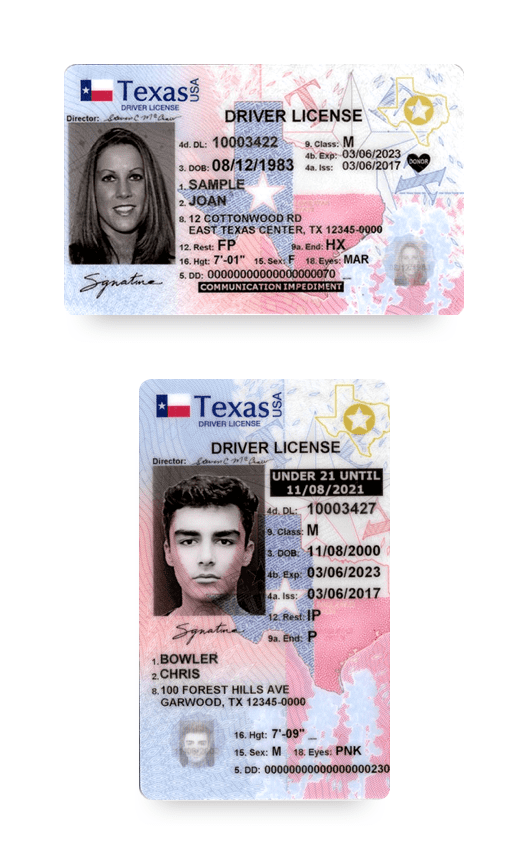
Navigating the landscape of official identification can often feel like deciphering a complex map, especially when it comes to ensuring you have the right credentials for travel. In Texas, this conversation frequently centers around the REAL ID Act, a federal mandate that has reshaped how state-issued identification is presented for specific purposes. Understanding what a Texas REAL ID looks like, and how it differs from a standard driver’s license or ID card, is crucial for any Texan looking to fly domestically or access certain federal facilities without a hitch. This guide will illuminate the visual cues and functional differences of this important identification.

Understanding the REAL ID Act and Its Texas Implementation
The REAL ID Act of 2005 was enacted by Congress following the September 11th terrorist attacks. Its primary aim is to establish minimum security standards for state-issued driver’s licenses and identification cards to be accepted for official purposes. These purposes include boarding federally regulated commercial aircraft and entering certain federal facilities. Prior to the REAL ID Act, there was a lack of uniformity in the security features and issuance procedures for state identification across the United States. This made it challenging to verify the identity and status of individuals presenting these documents.
In Texas, the implementation of the REAL ID Act has meant a significant overhaul of the identification card issuance process by the Texas Department of Public Safety (DPS). Residents who wish to obtain a REAL ID compliant card must provide a greater level of documentation than for a standard card. This includes proof of identity, social security number, and lawful status in the United States, as well as two proofs of Texas residency. The goal is to create a more secure and verifiable form of identification that meets federal standards.
Key Differences from Standard Texas IDs
The most significant difference between a standard Texas driver’s license or ID card and a REAL ID compliant card lies in its visual indicators and the underlying security measures. While both serve as proof of identity, only the REAL ID compliant card will be accepted for the aforementioned federal purposes after the enforcement deadline.
Visual Indicators:
The most prominent indicator on a REAL ID compliant Texas driver’s license or ID card is a small, gold star in the upper right-hand corner of the card. This star is not merely decorative; it signifies that the card meets the stricter federal security and identity verification requirements mandated by the REAL ID Act. A standard Texas driver’s license or ID card, which is not REAL ID compliant, will not have this gold star. Instead, it will typically display the words “NOT FOR FEDERAL IDENTIFICATION” or a similar designation, though the absence of the star is the primary visual cue.
Underlying Security and Data:
Beyond the visible star, the REAL ID compliant cards incorporate enhanced security features. These are often embedded within the card’s materials and design, making them more difficult to counterfeit. This includes more sophisticated printing techniques, holograms, and potentially other covert security elements that are not readily apparent to the casual observer but are verifiable by scanning equipment. The Texas Department of Public Safety ensures that the data stored and verified for a REAL ID compliant card is more robust, contributing to its federal acceptance.
Obtaining a REAL ID in Texas
The process of obtaining a REAL ID compliant driver’s license or ID card in Texas requires a deliberate approach to gather the necessary documentation. Unlike a standard renewal or initial application where the requirements might be less stringent, applying for a REAL ID requires proving identity, citizenship or lawful presence, social security number, and residency in a more comprehensive manner.
Required Documents:
Applicants typically need to present original or certified copies of documents that prove the following:
- Identity: A certified copy of a birth certificate, a U.S. Passport, or other primary identification document.
- Social Security Number: A Social Security card or a W-2 form with the applicant’s full name and Social Security number.
- Lawful Presence: If not a U.S. citizen, documentation of lawful presence in the United States, such as a permanent resident card or visa.
- Texas Residency: Two separate documents showing a Texas address. Examples include utility bills, bank statements, or lease agreements.

It is highly recommended that individuals visit the Texas Department of Public Safety website or contact their local office to obtain the most up-to-date and comprehensive list of acceptable documents, as requirements can sometimes be updated.
Application Process:
The application process for a REAL ID is usually completed in person at a local Texas driver license office. Applicants will need to fill out the necessary application forms, present their documentation for verification, have their photograph taken, and pay the required fees. Due to the detailed verification process, it’s advisable to schedule an appointment to minimize wait times. The Texas Department of Public Safety has made efforts to streamline this process, but thorough preparation with the correct documents is key to a successful application.
When is a REAL ID Necessary?
The necessity of a REAL ID compliant card hinges on specific federal requirements. While not everyone needs a REAL ID, it is becoming increasingly important for individuals who wish to engage in activities that are regulated by federal agencies.
Travel and Federal Access
The primary driver behind the REAL ID Act is its role in air travel. Starting from the federal enforcement deadline (which has been extended multiple times, but is ultimately expected to be fully in effect), individuals will need a REAL ID compliant driver’s license or ID card, or another acceptable form of identification like a passport, to board domestic commercial flights. This means that if you plan to fly within the United States and do not possess a valid U.S. passport, a REAL ID will be your essential credential.
Beyond air travel, REAL ID compliant cards will also be required to gain entry to certain federal facilities. This includes U.S. courthouses, federal prisons, and military bases that are not otherwise accessible by means of an existing installation pass. For individuals who work on or frequently visit such facilities, obtaining a REAL ID is a practical necessity.
Alternatives to a REAL ID
It is important to note that a REAL ID is not the only form of identification that will be accepted for federal purposes. Several other documents can serve the same function, offering flexibility for travelers and individuals needing to access federal sites. These include:
- A valid U.S. Passport or U.S. Passport Card
- A DHS trusted traveler program card (Global Entry, NEXUS, SENTRI, FAST)
- A U.S. Department of Defense ID, including an ID for spouses and dependents
- A Permanent Resident Card
- A Border Crossing Card
- An Employee ID badge that meets REAL ID standards, issued by a federally regulated airport
- An Identification card issued by a federally recognized Native American tribe
- A Driver’s license or ID card issued by a U.S. territory or possession (e.g., American Samoa, Guam, Northern Mariana Islands, Puerto Rico, U.S. Virgin Islands)
Therefore, while a REAL ID from Texas offers a convenient way to meet these federal requirements, travelers and individuals with other qualifying identification do not need to obtain a REAL ID specifically for these purposes. However, for many Texans, a REAL ID compliant driver’s license or ID card will become the most practical daily form of identification for federal access.
The Future of Identification in Texas
The adoption of the REAL ID Act represents a significant step towards a more standardized and secure national identification system. In Texas, this means that the driver’s license and ID card are evolving beyond just a tool for operating a vehicle or proving age. They are becoming a critical credential for participating in modern travel and accessing essential federal services.
The continued emphasis on enhanced security features and robust verification processes for REAL ID compliant cards signals a trend towards more secure and interoperable identification across the country. As the federal enforcement deadline approaches and becomes fully active, the gold star on a Texas driver’s license or ID card will become a familiar and indispensable mark for many residents looking to navigate their travels and access federal institutions with ease. Staying informed about the requirements and ensuring you have the correct documentation is key to a seamless experience in Texas and beyond.
LifeOutOfTheBox is a participant in the Amazon Services LLC Associates Program, an affiliate advertising program designed to provide a means for sites to earn advertising fees by advertising and linking to Amazon.com. Amazon, the Amazon logo, AmazonSupply, and the AmazonSupply logo are trademarks of Amazon.com, Inc. or its affiliates. As an Amazon Associate we earn affiliate commissions from qualifying purchases.