
Colorado’s journey to statehood is a fascinating chapter in American history, deeply intertwined with the nation’s westward expansion, the allure of mineral wealth, and the evolving political landscape of the mid-19th century. Understanding when the Centennial State officially joined the Union provides crucial context for appreciating its rich heritage and the enduring spirit of its people. This pivotal moment, marked by significant political maneuvering and the fulfillment of specific criteria, cemented Colorado’s identity as a distinct entity within the United States, paving the way for its future development as a premier destination for travel, tourism, and exploration.
The Path to Statehood: From Territory to Centennial State
The story of Colorado’s statehood is not a sudden event but rather a culmination of years of governmental organization, population growth, and the desire for self-governance. The region, largely unexplored by European Americans until the mid-19th century, experienced a dramatic influx of settlers following the discovery of gold in the Rocky Mountains. This rapid settlement necessitated a formal governmental structure, leading to the establishment of the Colorado Territory.
The Genesis of the Colorado Territory
The creation of the Colorado Territory was a significant step towards statehood. On February 9, 1861, President James Buchanan signed the act organizing the territory, just weeks before the outbreak of the American Civil War. The initial boundaries of the territory encompassed the present-day state, though its population was sparse and its infrastructure nascent. The Colorado Territory was established to provide a framework for governance, law enforcement, and the administration of justice in this rapidly developing frontier. Early territorial governors faced the monumental task of establishing order, promoting settlement, and managing the often-turbulent mining camps that dotted the landscape. The discovery of gold in areas like Central City and Black Hawk fueled this rapid expansion, drawing prospectors and entrepreneurs from across the nation and the world. The allure of riches and the promise of a new beginning created a dynamic and often lawless environment that demanded a structured territorial government.
The Role of the Civil War and Reconstruction
The American Civil War (1861-1865) had a profound impact on the trajectory of the Colorado Territory. While the territory was not a primary battleground, its resources, particularly its mineral wealth, were vital to the Union cause. Gold and silver mined in Colorado helped finance the war effort. During this period, there was considerable debate and political maneuvering regarding statehood. Territorial delegates actively lobbied Congress to grant Colorado statehood, viewing it as the natural progression for a region with a growing population and significant economic potential. However, the political climate of the Civil War and the subsequent Reconstruction era presented challenges. The requirements for statehood, particularly the population threshold and the acceptance of certain federal conditions, needed to be met and convincingly demonstrated. The period following the Civil War saw continued efforts to solidify the territory’s infrastructure and economy, making a stronger case for its admission as a state.
The Final Push: Meeting the Requirements for Statehood
Achieving statehood was not merely a matter of desire; it required meeting specific criteria set forth by the United States Congress. These criteria were designed to ensure that new states had a stable government, a sufficient population, and were aligned with the principles of the Union. Colorado’s path involved overcoming political hurdles and demonstrating its readiness to join the sisterhood of states.
Population and Economic Viability

A key requirement for statehood was a substantial and permanent population. The gold rushes had significantly boosted the population of the Colorado Territory, but fluctuations and the transient nature of some mining populations presented challenges. Territorial officials worked to demonstrate a stable and growing resident population that was capable of self-governance and contributing to the national economy. The development of agriculture in areas like the Arkansas River Valley and the expansion of railroad networks in the 1870s further solidified the territory’s economic viability and supported the argument for statehood. The economic diversification beyond mining indicated a more stable and sustainable future.
Political Will and Congressional Approval
The decision to grant statehood ultimately rested with the U.S. Congress. Throughout the 1860s and early 1870s, various statehood bills were introduced, debated, and often rejected. Political factions within Congress had different views on admitting new states, particularly during the volatile Reconstruction era. However, a persistent movement for Colorado’s statehood, championed by territorial delegates and influential figures, continued to press the issue. President Ulysses S. Grant, a strong advocate for westward expansion and the consolidation of federal authority, played a significant role in supporting Colorado’s bid. His administration recognized the strategic importance and economic potential of the region.
The Enabling Act and the Constitution
Before a territory could become a state, it typically needed an Enabling Act from Congress, which provided the framework and authorization for drafting a state constitution. Once an Enabling Act was passed, the territory’s citizens would elect delegates to a constitutional convention. These delegates would then draft a constitution that outlined the structure of the new state government, including its legislative, executive, and judicial branches. This constitution had to be approved by the residents of the territory and then ratified by Congress. Colorado’s constitutional convention took place in Denver in 1875. The resulting constitution, while undergoing some amendments over time, laid the foundation for the state’s governance and reflected the aspirations of its people.
The Moment of Admission: August 1, 1876
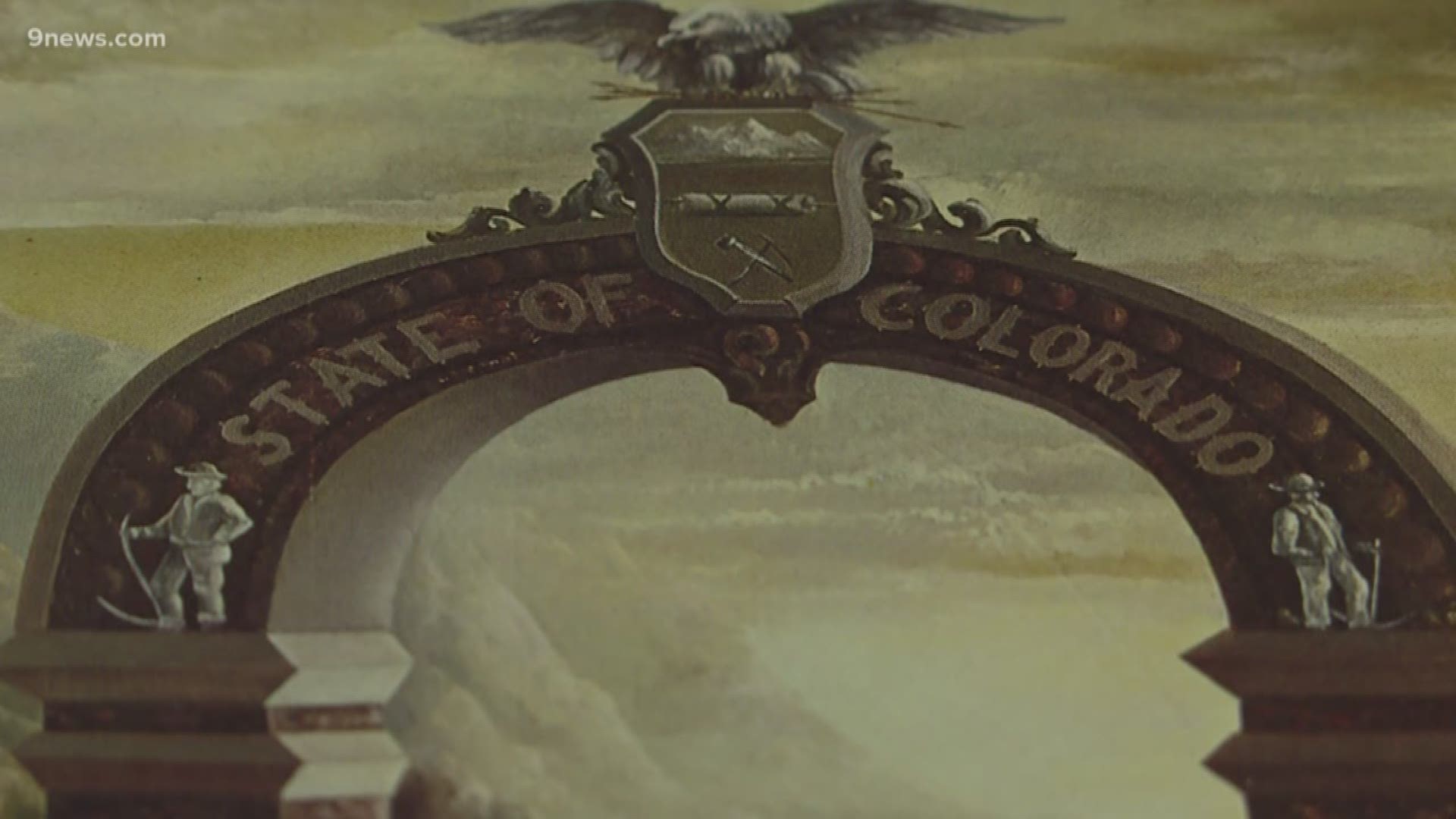
After years of effort, political negotiation, and the fulfillment of the necessary prerequisites, Colorado officially became the 38th state of the United States on August 1, 1876. This momentous occasion marked the culmination of a long and arduous journey from a sparsely populated frontier territory to a recognized state within the Union. The date itself carries significance, earning Colorado the nickname “The Centennial State” as it was admitted exactly 100 years after the signing of the Declaration of Independence.
Presidential Proclamation and Statehood Day Celebrations
On August 1, 1876, President Ulysses S. Grant signed the proclamation admitting Colorado into the Union. This act was the final official step, formalizing the state’s status. The news was met with immense celebration across the territory. Communities organized parades, fireworks displays, and public gatherings to commemorate this historic achievement. The admission of Colorado was not just a political event; it was a moment of profound pride and a testament to the resilience and determination of its inhabitants. The “Centennial State” moniker has since become synonymous with Colorado, a constant reminder of its auspicious entry into the United States. The state’s vibrant history and its eventual rise as a major hub for outdoor recreation, cultural experiences, and technological innovation can all be traced back to this foundational year. Visitors to Denver, the state capital, and other popular destinations like Aspen and Boulder can still feel the echoes of this historical moment, which continues to shape the state’s identity and appeal.

The Legacy of Statehood
The admission of Colorado as a state had profound and lasting implications. It granted the citizens of Colorado full representation in Congress, allowing them to have a direct voice in national policy. It also bestowed upon the state the authority to manage its own affairs, develop its resources, and establish its own laws. This newfound autonomy spurred further economic growth, infrastructure development, and cultural evolution. The legacy of statehood is evident in the diverse attractions that draw millions of visitors each year, from the majestic peaks of the Rocky Mountains to the vibrant arts scene in Denver and the historic mining towns that dot the landscape. The year 1876 remains a cornerstone of Colorado’s identity, a year that not only granted statehood but also set the stage for the state’s future as a dynamic and influential member of the United States, offering unparalleled experiences for travelers and tourists alike.
LifeOutOfTheBox is a participant in the Amazon Services LLC Associates Program, an affiliate advertising program designed to provide a means for sites to earn advertising fees by advertising and linking to Amazon.com. Amazon, the Amazon logo, AmazonSupply, and the AmazonSupply logo are trademarks of Amazon.com, Inc. or its affiliates. As an Amazon Associate we earn affiliate commissions from qualifying purchases.