
Navigating a divorce is one of life’s most significant transitions, profoundly impacting one’s personal, financial, and emotional landscape. For those in Arizona, understanding the legal framework and procedural steps is crucial to ensuring a smooth, fair, and informed journey toward a new chapter. While the process can seem daunting, particularly when dealing with the emotional weight of separation, Arizona law provides clear guidelines designed to facilitate the dissolution of marriage. This guide offers an insightful look into how individuals can effectively navigate the divorce process in the Grand Canyon State.
Understanding the Landscape: Divorce in Arizona
Arizona operates under a “no-fault” divorce system. This means that a person seeking a divorce does not need to prove marital misconduct (such as infidelity or abandonment) to dissolve their marriage. Instead, the petitioning spouse only needs to state that the marriage is “irretrievably broken,” with no reasonable prospect of reconciliation. This foundational principle aims to reduce conflict and focus on resolving the practical matters of separation rather than assigning blame.
Residency Requirements and Jurisdiction
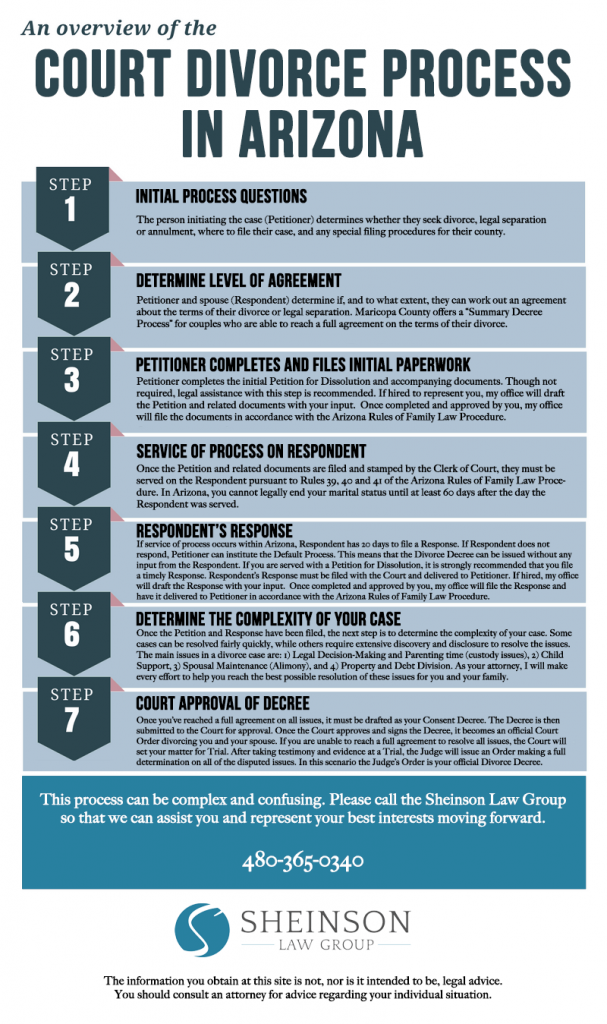
Before initiating a divorce, it’s essential to meet Arizona’s residency requirements. At least one of the parties must have resided in Arizona or been stationed in Arizona while a member of the armed forces for at least 90 days immediately preceding the filing of the petition for dissolution. The divorce case will be heard in the Superior Court of the county where the petitioner resides, for example, the Maricopa County Superior Court for residents of Phoenix or Pima County Superior Court for those in Tucson.
Types of Divorce: Contested vs. Uncontested
The path your divorce takes often depends on the level of agreement between you and your spouse:
- Uncontested Divorce: This occurs when both spouses agree on all key issues, including property division, debt allocation, child custody, child support, and spousal maintenance. An uncontested divorce is typically quicker, less expensive, and less emotionally draining, as it often involves submitting an agreed-upon settlement to the court for approval.
- Contested Divorce: If spouses cannot agree on one or more critical issues, the divorce becomes contested. This scenario usually requires more extensive legal proceedings, including discovery, negotiations, and potentially a trial, where a judge makes the final decisions on unresolved matters.
The Initial Steps: Filing for Dissolution of Marriage
The formal process begins with filing a Petition for Dissolution of Marriage. This document officially informs the court and your spouse of your intent to divorce and outlines your requested orders regarding property, children, and support.
Preparing and Filing the Petition
The Petition for Dissolution of Marriage must accurately reflect your marital circumstances and the orders you seek. It includes information such as:
- Names and addresses of both spouses.
- Date and place of marriage.
- Whether the residency requirements are met.
- Whether children are involved and details about them.
- A declaration that the marriage is irretrievably broken.
- Requests regarding the division of community property and debt, child custody (legal decision-making and parenting time), child support, and spousal maintenance (alimony).
Once completed, the petition, along with other required forms (such as a Summons), is filed with the clerk of the Superior Court in the appropriate county. There are filing fees associated with this step, though fee waivers may be available for eligible individuals.
Service of Process
After filing, the petitioner must legally “serve” the divorce papers on the responding spouse. This formal notification ensures the other party is aware of the legal action and has an opportunity to respond. Service typically involves a third party, such as a process server or sheriff’s deputy, personally delivering the documents. In some cases, if the spouse agrees, they can sign an “Acceptance of Service” to acknowledge receipt, streamlining the process. Once served, the responding spouse has a specific timeframe (20 days if served in Arizona, 30 days if served outside Arizona) to file their response with the court.
Navigating the Process: Key Stages and Considerations
The period following the initial filing and service often involves a series of procedures designed to gather information, facilitate negotiation, and, if necessary, prepare for litigation.
Temporary Orders
In many divorces, especially those involving children or complex financial situations, one or both parties may seek temporary orders. These orders address immediate needs while the divorce is pending, such as:
- Temporary child custody and parenting time schedules.
- Temporary child support and spousal maintenance payments.
- Orders regarding the use of marital property (e.g., who remains in the family home).
- Restraining orders for financial assets.
Temporary orders are crucial for establishing stability during a tumultuous period and remain in effect until a final agreement or court order supersedes them.
Discovery
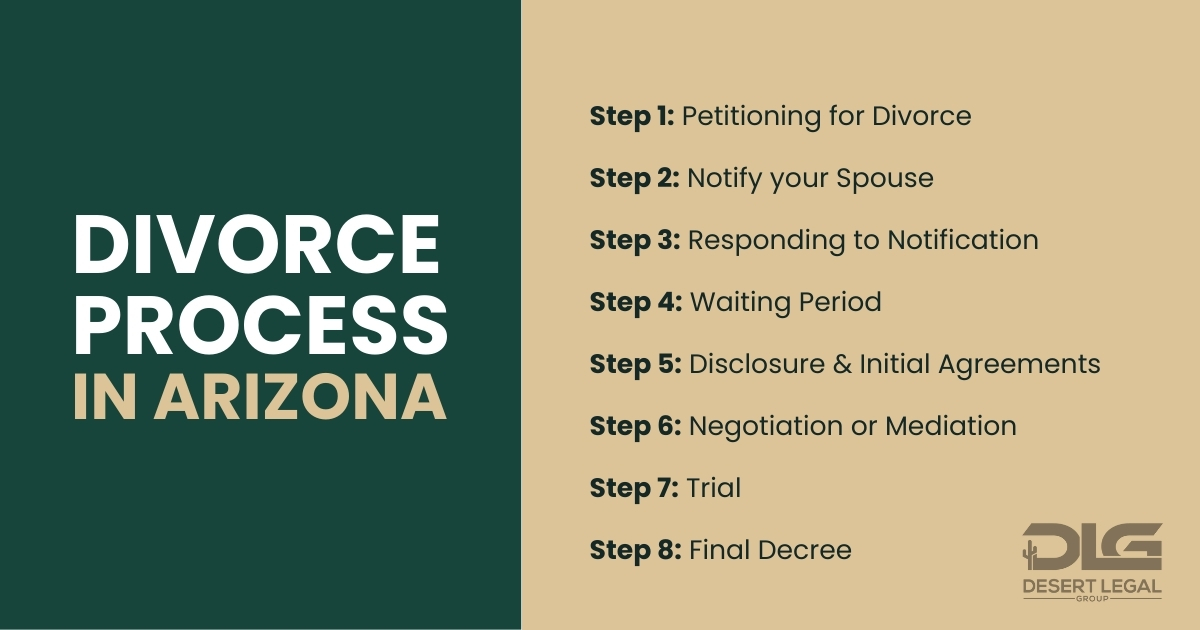
Discovery is the formal process by which both parties exchange information relevant to the divorce. This can involve:
- Interrogatories: Written questions that must be answered under oath.
- Requests for Production of Documents: Demands for specific financial records (bank statements, tax returns, pay stubs, retirement account statements) and other relevant evidence.
- Depositions: Out-of-court sworn testimonies.
- Subpoenas: Legal orders to third parties to provide documents or testimony.
The goal of discovery is to ensure full financial transparency and to gather all facts necessary for fair resolution of property, debt, and support issues.
Mediation and Settlement Conferences
Arizona courts strongly encourage, and often mandate, alternative dispute resolution methods to help spouses reach an agreement without a trial.
- Mediation: A neutral third-party mediator facilitates discussions between spouses, helping them identify common ground and craft a mutually acceptable settlement. This is a confidential process and can be highly effective for resolving contentious issues.
- Settlement Conferences: These are formal meetings, often attended by attorneys and sometimes a judge pro tem, aimed at negotiating a comprehensive settlement.
Reaching a settlement through mediation or a conference avoids the uncertainty and expense of a trial, giving both parties more control over the outcome.
Finalizing Your Divorce: Orders and Outcomes
If an agreement is reached, the terms are formalized into a Consent Decree. If not, the case proceeds to trial.
Property and Debt Division
Arizona is a community property state. This means that all assets and debts acquired by either spouse during the marriage (from the date of marriage to the date of service of the petition) are considered community property and are subject to equal division. Separate property (assets owned before marriage, or received as a gift/inheritance) generally remains with the original owner. Determining what constitutes community versus separate property can be complex, especially with commingled funds or assets that appreciate during the marriage.
Child Custody and Support
When children are involved, the court’s primary concern is their best interests. The court will establish:
- Legal Decision-Making: This refers to the right and responsibility to make important decisions about the children’s education, healthcare, and religious upbringing. It can be sole (one parent) or joint (both parents).
- Parenting Time: This outlines the schedule for when each parent will have the children.
- Child Support: Calculated using Arizona’s Child Support Guidelines, based on factors like parental incomes, number of children, healthcare costs, and childcare expenses.
A comprehensive parenting plan is often a required component of any divorce involving minor children, detailing how parents will co-parent post-divorce.
Spousal Maintenance (Alimony)
Spousal maintenance, often referred to as alimony, may be awarded if one spouse needs financial assistance to become self-sufficient after the divorce. The court considers various factors outlined in the Arizona Revised Statutes, including the length of the marriage, the earning capacities of both spouses, the standard of living during the marriage, and the age and physical and emotional condition of the spouse seeking maintenance. It is not automatic and is determined on a case-by-case basis.
The Final Decree
Once all issues are resolved, either through agreement or court order after a trial, the judge signs the Decree of Dissolution of Marriage. This is the final legal document that officially ends the marriage and makes all the terms regarding property, children, and support legally binding. There is a mandatory 60-day waiting period from the date the responding spouse is served before a divorce can be finalized in Arizona, even in uncontested cases.
Moving Forward: Life After Divorce in Arizona
A divorce is more than a legal procedure; it’s a profound life event that necessitates significant adjustments to one’s daily life, financial planning, and emotional well-being. Once the final decree is issued, you officially begin a new chapter.
Rebuilding Your Financial Foundation
Post-divorce, it’s crucial to establish a new financial plan. This includes updating beneficiaries on insurance policies and retirement accounts, creating new budgets based on altered incomes and expenses, and potentially consulting with financial advisors to secure your future. You may need to open new bank accounts, adjust your credit profile, and ensure all asset transfers mandated by the divorce decree are completed.
Adjusting to New Family Dynamics
For parents, co-parenting effectively becomes a central aspect of post-divorce life. Adhering to the parenting plan, fostering open communication with your former spouse about the children, and focusing on the children’s well-being are paramount. Children often thrive when parents can work collaboratively, even if their romantic relationship has ended. It also means establishing new routines and traditions that fit your revised family structure.
Embracing Personal Growth
Divorce often presents an opportunity for significant personal growth and self-discovery. It is a time to reassess priorities, explore new interests, and build a fulfilling independent lifestyle. Engaging in activities that promote well-being, connecting with support networks, and seeking professional guidance if needed can aid in this transition. Arizona’s diverse communities, from the vibrant cityscape of Phoenix to the natural beauty surrounding Sedona, offer myriad opportunities for new beginnings and personal enrichment.
Navigating a divorce in Arizona requires diligence, patience, and a clear understanding of the legal landscape. While challenging, approaching the process with knowledge and a focus on future well-being can pave the way for a strong, independent new lifestyle. Consulting with a qualified family law attorney in Arizona is highly recommended to ensure your rights are protected and the process is handled efficiently and effectively.
LifeOutOfTheBox is a participant in the Amazon Services LLC Associates Program, an affiliate advertising program designed to provide a means for sites to earn advertising fees by advertising and linking to Amazon.com. Amazon, the Amazon logo, AmazonSupply, and the AmazonSupply logo are trademarks of Amazon.com, Inc. or its affiliates. As an Amazon Associate we earn affiliate commissions from qualifying purchases.