
The saga of Miranda v. Arizona stands as an indelible landmark in the historical landscape of American jurisprudence, much like a foundational monument that defines a pivotal era. Far from being a mere legal case, it represents a critical turning point, a historical site where the rights of individuals confronted the powers of the state, resulting in a new architectural design for criminal justice. This 1966 decision by the Supreme Court of the United States reshaped police procedures and fundamentally altered the public’s understanding of constitutional protections, etching its place as an enduring symbol of due process. To comprehend Miranda v. Arizona is to explore a cornerstone of modern legal history, a testament to the ongoing evolution of liberty and justice in the United States.
A Legal Landmark in American Jurisprudence
Like ancient ruins that tell stories of past civilizations or towering structures that define a city’s skyline, certain legal decisions serve as landmarks, marking significant shifts in societal values and legal frameworks. Miranda v. Arizona is precisely such a landmark. Before its ruling, the landscape of criminal interrogations was largely unchartered territory, often leading to confessions obtained under duress or without the accused fully understanding their rights. The decision didn’t just clarify existing laws; it constructed a new, visible edifice of protection for individuals, ensuring that basic constitutional rights were actively communicated and understood during critical moments of state interaction. Its historical significance rivals that of any physical monument, serving as a constant reminder of the principles upon which the American justice system is built. It represents a pilgrimage point for legal scholars and civil rights advocates, examining how law evolves to safeguard fundamental freedoms.
The Historical Context: Pre-Miranda Landscape
To appreciate the monumental impact of Miranda v. Arizona, one must first journey back to the historical landscape that preceded it. In the mid-20th century, the procedures surrounding police interrogations were far less standardized than they are today. While the Fifth Amendment to the United States Constitution guaranteed the right against self-incrimination, and the Sixth Amendment ensured the right to counsel, these protections were often theoretical rather than practical for suspects in police custody. Many individuals, especially those with limited education or resources, were unaware of their rights and often found themselves in coercive environments without legal representation. Confessions, sometimes coerced or misunderstood, frequently formed the backbone of prosecutions, leading to convictions that later raised serious questions about fairness and justice. This era was marked by a growing public and judicial awareness of the potential for abuse in the interrogation room, setting the stage for a landmark intervention that would redefine the boundaries between state power and individual liberty.
The Road to the Supreme Court
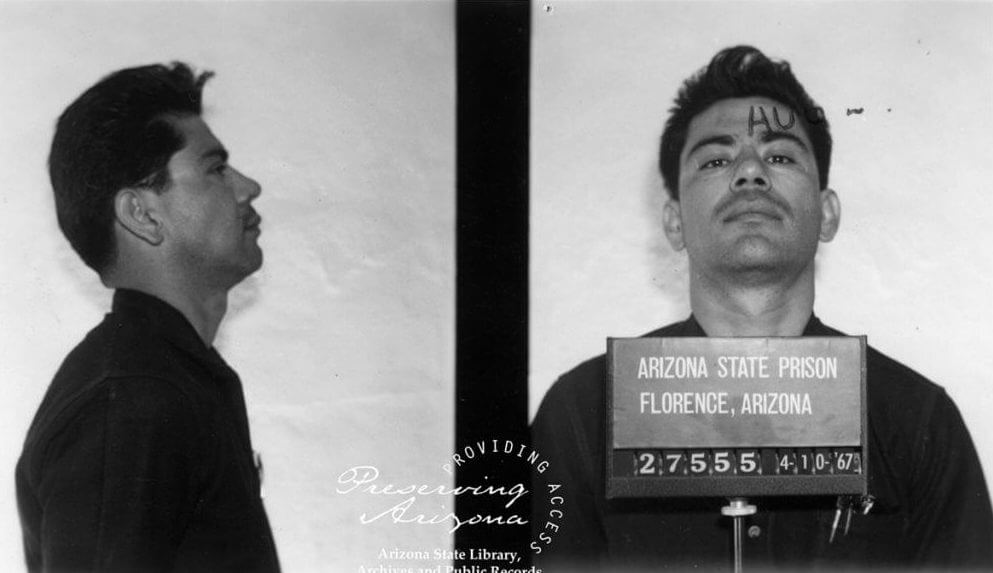
The journey of Miranda v. Arizona began in Phoenix, Arizona, with the arrest of Ernesto Miranda in March 1963. Miranda was accused of kidnapping, rape, and armed robbery. During a two-hour interrogation, he was not informed of his right to an attorney or his right to remain silent. He subsequently signed a confession to the crimes. This confession was then used against him at trial, leading to his conviction and a sentence of 20 to 30 years in prison. The case then navigated the appeals process, a legal pathway as intricate as any historical trade route. Miranda’s attorneys argued that his confession was obtained in violation of his constitutional rights, specifically his Fifth Amendment right against self-incrimination and his Sixth Amendment right to counsel. The Arizona Supreme Court affirmed the conviction, maintaining that Miranda had not specifically requested counsel. This decision paved the way for the case to reach the nation’s highest judicial body, where it would become one of the most significant legal battles in American history. The elevation of this particular case to the Supreme Court of the United States was a crucial step, transforming a local criminal matter into a national constitutional debate, effectively setting a new historical precedent.

The Architectural Impact: Building Blocks of Due Process
The Supreme Court of the United States’s ruling in Miranda v. Arizona was not merely a legal opinion; it was an act of legal architecture, designing a new framework for police interrogations. The Court, led by Chief Justice Earl Warren, recognized that the inherently coercive nature of custodial interrogations necessitated clear procedural safeguards. The core of the decision centered on the interpretation of the Fifth Amendment’s privilege against self-incrimination and the Sixth Amendment’s right to an attorney. The Court mandated that before any custodial interrogation, suspects must be informed of their constitutional rights, specifically the right to remain silent and the right to an attorney. These now-famous “Miranda warnings” became an immutable part of police procedure, a permanent monument in the landscape of law enforcement, ensuring that individuals are aware of their protections when confronting the authority of the state. This wasn’t about undermining law enforcement; it was about fortifying the foundations of justice by ensuring fairness and transparency at a critical juncture of the legal process. The architectural impact of this decision established a clear, standardized structure that continues to define the interactions between law enforcement and citizens to this day.
The Miranda Rights: A Foundation for Fairness
The specific components of the “Miranda warnings” are now globally recognized as a symbol of due process and fairness. They constitute a foundational pillar upon which modern criminal justice relies. These rights, which must be clearly and unequivocally communicated to a suspect in custody, typically include:
- The right to remain silent: An individual has the right to refuse to answer questions and to not provide any information that could be used against them.
- Anything said can and will be used against them in a court of law: This warns suspects that their words carry legal weight and can have severe consequences.
- The right to an attorney: Suspects have the right to consult with a lawyer and to have that lawyer present during interrogation.
- The right to a court-appointed attorney if unable to afford one: This ensures that economic status does not preclude access to legal representation, upholding the principle of equal justice.
These warnings serve a dual purpose: they inform suspects of their inherent constitutional protections, and they place a check on potential police overreach. By establishing these explicit requirements, the Supreme Court of the United States sought to ensure that any waiver of rights was truly voluntary, knowing, and intelligent. The impact of these rights extended far beyond the courtroom, becoming ingrained in popular culture through countless police dramas and legal thrillers, cementing their status as a universally understood element of the American legal system. They are the scaffolding that supports the integrity of interrogations, creating a fairer playing field and reducing the likelihood of unjust convictions.

Enduring Legacy: A Historical Site of Rights
The historical site that is Miranda v. Arizona continues to exert a profound influence on law enforcement, individual liberties, and the very fabric of American society. Its legacy is not static; it is a living, breathing part of the legal landscape, constantly referenced, debated, and refined. The “Miranda warnings” have become an indispensable part of police protocol, so deeply embedded that their omission can lead to the suppression of evidence, effectively rendering confessions inadmissible in court. This powerful exclusionary rule serves as a constant reminder of the decision’s gravitas and its role in upholding constitutional integrity.
Beyond its practical application, Miranda v. Arizona has become a key subject in legal education, a case study for understanding judicial activism, constitutional interpretation, and the delicate balance between public safety and individual freedoms. It informs public understanding of rights, empowering citizens with knowledge of their protections when interacting with law enforcement. Over the decades, subsequent cases, such as Michigan v. Mosley, Rhode Island v. Innis, and Dickerson v. United States, have clarified, limited, or affirmed aspects of the original ruling, further shaping the contours of this historical landmark. Each new ruling adds another layer to its rich history, demonstrating how a singular decision can spawn an entire legal doctrine. Like a protected historical monument, Miranda v. Arizona remains a vital touchstone, a permanent fixture in the ongoing dialogue about justice and liberty in the United States. Its impact is a testament to the power of the judiciary to construct and defend the foundational elements of a just society.
LifeOutOfTheBox is a participant in the Amazon Services LLC Associates Program, an affiliate advertising program designed to provide a means for sites to earn advertising fees by advertising and linking to Amazon.com. Amazon, the Amazon logo, AmazonSupply, and the AmazonSupply logo are trademarks of Amazon.com, Inc. or its affiliates. As an Amazon Associate we earn affiliate commissions from qualifying purchases.