
Navigating time zones can be a nuanced aspect of travel planning, but few destinations present a situation as uniquely intriguing as Arizona. Often dubbed the “Land of Perpetual Standard Time,” the Grand Canyon State offers a fascinating case study in timekeeping, particularly for those accustomed to the biannual ritual of Daylight Saving Time. For travelers, understanding Arizona’s time status is not just a matter of curiosity; it’s a practical necessity that profoundly impacts everything from flight schedules to sunset viewing, ensuring a seamless and well-coordinated journey through its stunning landscapes.
Understanding Arizona’s Unique Time Zone Status
At its core, Arizona’s time zone peculiarity stems from its decision not to observe Daylight Saving Time (DST). While the majority of the United States springs forward in March and falls back in November, most of Arizona remains steadfastly in Mountain Standard Time (MST) year-round. This means that for roughly half the year, from early March to early November, Arizona aligns with Pacific Daylight Time (PDT). During the winter months, from early November to early March, it matches Mountain Standard Time (MST). This constant state provides a predictable rhythm for residents but often presents a puzzle for visitors from other states or international travelers.

The Rationale Behind Remaining on Standard Time
The decision to forgo DST in Arizona is deeply rooted in practical and historical considerations, primarily driven by the state’s extreme summer heat. With average summer temperatures in Phoenix and Tucson regularly exceeding 100°F (38°C), the concept of extending daylight hours into the evening, as DST does, holds little appeal. Forcing people to start their days earlier in an already scorching climate would only exacerbate energy consumption for air conditioning and make outdoor activities during peak heat even more uncomfortable. Keeping the clock on MST year-round means that sunsets occur earlier in the evening during the summer months, allowing for cooler, more comfortable late-afternoon and evening activities. This translates to more opportunities for travelers to enjoy Arizona’s natural beauty without battling the intense midday sun. It enables cooler evening hikes, al fresco dining, and stunning stargazing experiences starting at a more reasonable hour.
The Anomaly of the Navajo Nation
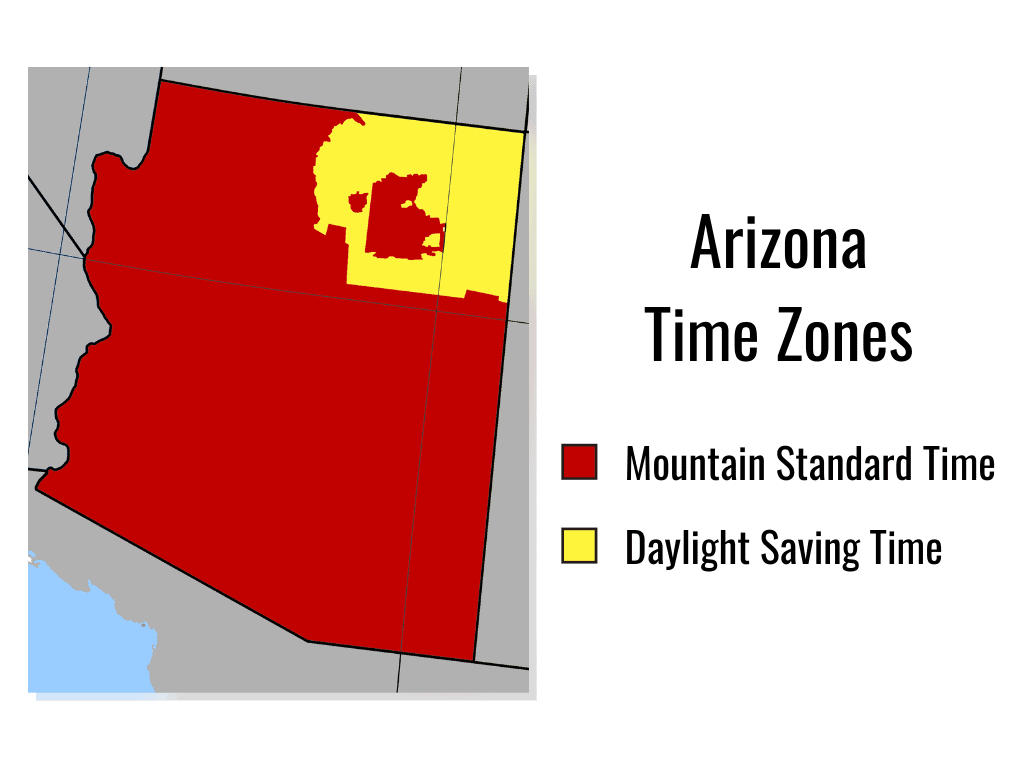
While the vast majority of Arizona sticks to its year-round MST schedule, there is one significant exception: the Navajo Nation. This expansive sovereign territory, covering portions of northeastern Arizona, New Mexico, and Utah, does observe Daylight Saving Time. The decision by the Navajo Nation to adopt DST is pragmatic, stemming from its interstate boundaries and the need for consistent timekeeping with tribal members and administrative offices located in neighboring states that do observe DST.
This creates a peculiar situation for travelers venturing into or through the Navajo Nation within Arizona. During the DST period (roughly March to November), the Navajo Nation is one hour ahead of the rest of Arizona. For example, when it’s 3 PM in Phoenix, it’s 4 PM on the Navajo Nation. This time shift can be particularly perplexing around areas like Monument Valley or the Grand Canyon’s East Rim, which border or lie within the Navajo Nation. To further complicate matters, the Hopi Reservation, an independent nation entirely encircled by the Navajo Nation, does not observe DST, making it an island of MST within the Navajo Nation’s MDT. While most travelers won’t experience the Hopi Reservation’s time difference directly, understanding these nuances is crucial for complex itineraries, particularly when coordinating tours or visits to specific tribal lands.
Practical Implications for Travelers to Arizona
For those planning a trip to Arizona, grasping this time zone dynamic is more than just academic knowledge; it’s an essential part of crafting a smooth and enjoyable itinerary.
Planning Your Arrival and Departures
The most immediate impact of Arizona’s time zone policy is felt upon arrival and departure. If you’re flying into Phoenix Sky Harbor International Airport or Tucson International Airport during the DST period, your internal clock might need an adjustment that’s different from what you expect. For example, if you’re traveling from California (PDT), you won’t experience a time change when you land in Phoenix in summer. However, if you’re coming from Denver (MDT), you’ll effectively “gain” an hour. Always double-check your flight times relative to Arizona’s current local time, particularly if you have connecting flights or tight schedules. This seemingly small detail can prevent missed connections, late arrivals for rental car pickups, or inconvenient delays in checking into your accommodation.
Coordinating Activities Across State Lines or within Arizona
Many travelers combine an Arizona adventure with visits to neighboring states like Utah, Colorado, or Nevada. Since these states generally observe DST, their time will be one hour ahead of most of Arizona during the summer. This is critical for activities such as white-water rafting tours that launch from Utah but operate on the Colorado River bordering Arizona, or day trips from Las Vegas to the Grand Canyon. A tour departing at 8 AM from Las Vegas (PDT) might arrive in Arizona at 8 AM local time, even though an hour has passed in actual solar time. Always clarify the time zone observed by the tour operator or attraction, especially if it’s located near a state border or within the Navajo Nation.
Business Hours and Event Schedules
Restaurants, museums, national parks, and other attractions in Arizona operate on local MST year-round. This means that during summer, attractions might close earlier by the clock than what you’re used to in a DST-observing state. A 5 PM closing time in Phoenix during July is effectively 6 PM PDT, which can lead to miscalculations for those accustomed to longer daylight hours in their home region. Conversely, in winter, a 5 PM closing time is truly 5 PM MST, aligning with many other western states. For events like concerts, sports games, or specific tour departure times, always confirm the local time in Arizona to avoid disappointment. This is particularly salient for popular sunrise or sunset tours at the Grand Canyon or Sedona, where precise timing is everything.

Navigating Time Across Arizona’s Diverse Regions
While the overarching rule of “no DST” applies to most of Arizona, understanding how this plays out in different regions can further refine your travel plans.
Phoenix and Tucson: Consistent Simplicity
The major metropolitan areas of Phoenix and Tucson, along with popular destinations like Sedona, Flagstaff, and Yuma, consistently observe Mountain Standard Time year-round. This makes planning within these regions relatively straightforward. Your phone or watch should automatically adjust to MST, and you can generally trust published schedules. The primary challenge here is simply remembering that for half the year, Arizona’s clock doesn’t “move.” This can be a boon for travelers seeking stability, as it removes the mental gymnastics of adjusting to different local times when moving between nearby cities within the state.
The Grand Canyon Region: Mostly Straightforward
Visiting the Grand Canyon National Park largely falls under the general Arizona time rule. The South Rim, North Rim, and popular towns like Tusayan and Williams all observe MST year-round. This simplifies planning for sunrise and sunset viewings at iconic spots like Mather Point or Lipan Point, as the times published by the National Park Service will always correspond to Arizona local time.
However, the complexities arise when venturing to the eastern parts of the canyon or specific tribal lands. Grand Canyon West, home to the Skywalk, is located on the Hualapai Indian Reservation. The Hualapai Reservation observes Mountain Standard Time year-round, aligning with the rest of non-Navajo Arizona. This means that for a trip to Grand Canyon West from Las Vegas (which observes PDT in summer), you’ll effectively “gain” an hour, making it an earlier start for activities at the canyon relative to Las Vegas time. This is a common point of confusion that tour operators often address explicitly.
The Navajo Nation: A Different Clock
The Navajo Nation within Arizona, which includes popular attractions like Monument Valley, Antelope Canyon, and parts of the Grand Canyon’s East Rim, operates on Daylight Saving Time. This means from March to November, it’s one hour ahead of the rest of Arizona. If you’re planning a guided tour of Antelope Canyon or a scenic drive through Monument Valley during these months, it’s crucial to confirm the time zone with your tour operator or accommodation provider. Many tour companies explicitly state whether their departure times are in “Arizona Time” (MST) or “Navajo Time” (MDT). Failure to account for this can lead to missed tours or appointments, significantly impacting your travel experience.
Essential Time-Saving Tips for Your Arizona Trip
To ensure your Arizona adventure is seamless and stress-free, here are some actionable tips regarding its unique time zone.
Always Confirm Local Times
When booking tours, making reservations, or planning specific activities, always ask or confirm if the times listed are in Arizona local time (MST year-round) or if they pertain to the Navajo Nation (MDT during DST). This is especially critical for activities that start early in the morning or have tight schedules. When traveling from bordering states during DST, mentally adjust your arrival or departure times by one hour. For instance, if you’re coming from California and have a 9 AM reservation in Arizona during summer, it’s effectively an 8 AM start for your body clock.
Use Reliable Time Zone Apps and Device Settings
Modern smartphones and GPS devices are generally excellent at automatically adjusting to local time zones. However, for Arizona’s unique situation, ensure your device’s “automatic time zone” setting is enabled. If you find yourself frequently crossing into the Navajo Nation or bordering states, consider a time zone widget or app that clearly displays multiple time zones. It’s also a good practice to manually verify your device’s time against a known reliable source (like a local bank or official website) if you’re uncertain, particularly after crossing into or out of the Navajo Nation.
Embrace the Constant Time
Perhaps the best tip is to simply embrace Arizona’s constant time. Once you land and your devices adjust, you can generally forget about the biannual clock changes that plague other regions. This consistency is a blessing for longer stays, allowing you to settle into a rhythm without the disruption of DST. Enjoy the earlier sunsets in summer that bring cooler evenings, perfect for exploring Phoenix’s vibrant restaurant scene or stargazing in the dark skies near Flagstaff. In winter, appreciate that your mornings aren’t artificially darker. Arizona’s time zone choice is deeply tied to its geography and climate, and understanding it enriches your travel experience, allowing you to fully appreciate the unique rhythms of this stunning desert state.
LifeOutOfTheBox is a participant in the Amazon Services LLC Associates Program, an affiliate advertising program designed to provide a means for sites to earn advertising fees by advertising and linking to Amazon.com. Amazon, the Amazon logo, AmazonSupply, and the AmazonSupply logo are trademarks of Amazon.com, Inc. or its affiliates. As an Amazon Associate we earn affiliate commissions from qualifying purchases.