
The Miranda v. Arizona case stands as a pivotal historical landmark in the annals of American jurisprudence, fundamentally altering the landscape of criminal procedure and individual rights within the United States. Decided by the Supreme Court in 1966, this landmark ruling enshrined specific protections for individuals undergoing custodial interrogation, ensuring that citizens are aware of their constitutional rights before being questioned by law enforcement. Its profound impact resonates through every arrest and interrogation to this day, making it an indispensable chapter in the history of civil liberties. Understanding the genesis, progression, and ultimate impact of this case is crucial for anyone seeking to grasp the intricate balance between state power and individual freedoms guaranteed by the U.S. Constitution.
The Genesis of a Legal Landmark
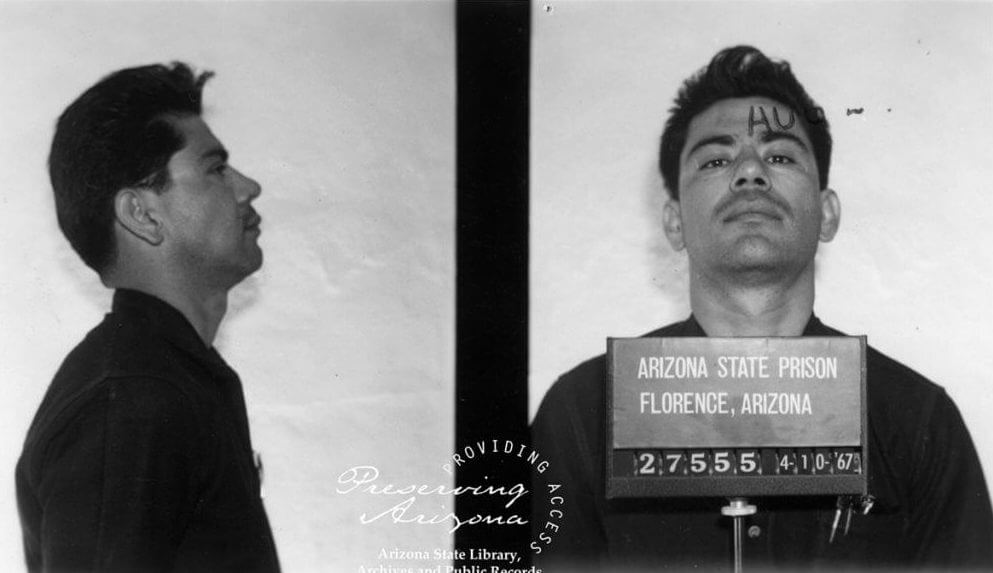
The story of Miranda v. Arizona begins with the arrest of Ernesto Miranda in March 1963. Miranda, a 23-year-old indigent man with a history of mental instability, was arrested by Phoenix, Arizona police and accused of kidnapping, rape, and armed robbery. The alleged victim identified Miranda, leading to his apprehension. Upon his arrest, Miranda was taken to a police station, where he was identified by the victim and subsequently interrogated by officers. During a two-hour interrogation, Miranda was not informed of his right to an attorney or his right to remain silent. He did not request a lawyer, nor was he advised that he had a right to do so.
Crucially, during this interrogation, Miranda signed a written confession that included a pre-typed paragraph stating that the confession was made voluntarily and with full knowledge of his legal rights. However, this statement was added after Miranda had already verbally confessed, and there was no evidence that he had been explicitly advised of these rights prior to or during the interrogation. This confession became the cornerstone of the prosecution’s case against him.
At his trial in an Arizona state court, his defense attorney objected to the admission of the confession as evidence, arguing that it was obtained in violation of Miranda’s Fifth Amendment right against self-incrimination and his Sixth Amendment right to counsel. The trial court overruled the objection, and Miranda was found guilty on all counts, sentenced to 20 to 30 years in prison. The Arizona Supreme Court upheld the conviction, contending that Miranda had not specifically requested an attorney and that signing the confession implied he understood his rights. This decision, however, set the stage for a monumental review by the nation’s highest court, highlighting a critical disagreement on the interpretation and application of constitutional protections during police interrogations.
The Path to the Supreme Court
The journey of Miranda v. Arizona from a local conviction to a landmark Supreme Court case underscores a broader legal struggle concerning the rights of individuals in police custody. Following the Arizona Supreme Court’s affirmation of Ernesto Miranda’s conviction, his legal team appealed to the United States Supreme Court. The Court agreed to hear the case, grouping it with three other similar cases: Vignera v. New York, Westover v. United States, and California v. Stewart. These cases all shared a common thread: confessions obtained from defendants who were interrogated without being explicitly informed of their constitutional rights.
The central question presented to the Supreme Court was whether the Fifth Amendment’s protection against self-incrimination, which states that no person “shall be compelled in any criminal case to be a witness against himself,” extended to police interrogation. Furthermore, the case touched upon the Sixth Amendment’s guarantee of the right to counsel, questioning when that right applies during the investigative process. Historically, the Court had dealt with coerced confessions under the “due process” clause, evaluating each case on a totality of circumstances to determine if a confession was truly voluntary. However, the Warren Court, known for its expansive interpretations of individual rights, sought to establish a clearer, more systematic framework.
Attorneys for Miranda argued that without explicit warnings, the inherently coercive nature of police interrogation environments made it impossible for a confession to be truly voluntary. They contended that suspects, especially those unfamiliar with legal procedures or possessing limited education, could easily be pressured into self-incrimination without knowledge of their rights. Conversely, the State of Arizona and various law enforcement advocates argued that such warnings would unduly hinder police investigations, making it exceedingly difficult to obtain confessions and effectively prosecute criminals. The stakes were incredibly high, promising to either uphold traditional police practices or introduce a revolutionary shift in criminal justice. The arguments highlighted a fundamental tension between the need for effective law enforcement and the imperative to protect individual constitutional liberties.
The Warren Court’s Groundbreaking Decision
On June 13, 1966, the Supreme Court, led by Chief Justice Earl Warren, delivered its landmark 5-4 decision in Miranda v. Arizona. The majority opinion, authored by Chief Justice Warren himself, declared that the prosecution could not use statements, whether exculpatory or inculpatory, stemming from custodial interrogation of the defendant unless it demonstrated the use of procedural safeguards effective to secure the privilege against self-incrimination. This ruling meant that prior to any questioning, a person taken into custody or otherwise deprived of their freedom of action in any significant way must be warned of specific rights.
The Miranda Warnings

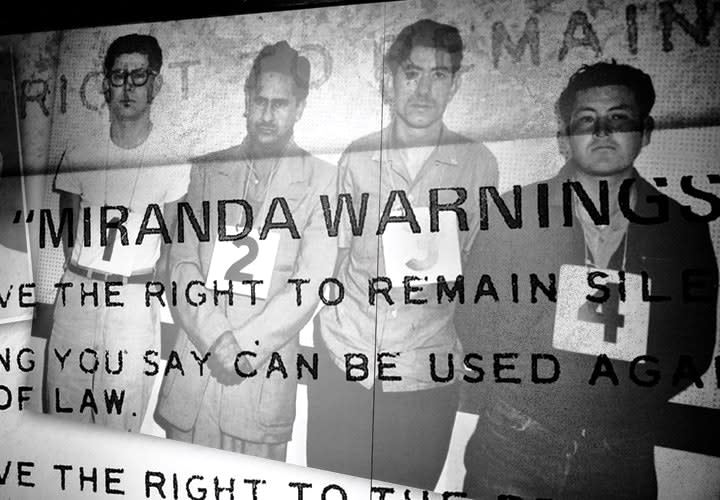
The Court outlined the now-famous “Miranda warnings” that law enforcement officers are required to give before any custodial interrogation:
- Right to Remain Silent: The individual must be clearly informed that they have the right to remain silent. This directly addresses the Fifth Amendment protection against compelled self-incrimination.
- Statements Used Against Them: The individual must be warned that anything they say can and will be used against them in a court of law. This warning reinforces the consequence of foregoing the right to remain silent.
- Right to an Attorney: The individual must be clearly informed that they have the right to consult with an attorney and to have the attorney present during interrogation. This stems from the Sixth Amendment right to counsel.
- Right to Appointed Counsel: If the individual is indigent and cannot afford an attorney, they have the right to have an attorney appointed to represent them prior to any questioning. This ensures equal protection under the law, regardless of economic status.
The Court emphasized that these warnings are not merely a suggestion but an absolute prerequisite to the admissibility of any statement made by a suspect during custodial interrogation. If these warnings are not given, and the suspect does not validly waive their rights, any subsequent confession or incriminating statement cannot be used by the prosecution in its case-in-chief. The decision was rooted in the recognition of the inherently coercive atmosphere of police station interrogations, where individuals, particularly those unversed in legal matters, could be easily overwhelmed and compelled to speak against their will. The Court aimed to provide a “bright-line rule” to ensure that any waiver of rights was truly voluntary, knowing, and intelligent.
The Enduring Legacy and Impact
The impact of Miranda v. Arizona was immediate and far-reaching, fundamentally reshaping police procedures across the United States. Initially, the decision was met with significant backlash from law enforcement agencies and some political figures, who argued that it would “handcuff” the police and lead to a dramatic increase in crime rates. Critics predicted a severe decline in conviction rates due to the perceived difficulty of obtaining confessions. However, empirical studies and decades of experience have largely refuted these dire predictions. While the initial adjustment period was challenging for police departments, law enforcement agencies quickly adapted, incorporating the “Miranda warnings” into their standard operating procedures.
Today, the recitation of Miranda warnings has become an iconic element of popular culture, frequently depicted in television shows and movies, often verbatim. This widespread cultural penetration underscores the ruling’s pervasive influence on public consciousness regarding legal rights. Beyond its cultural footprint, the Miranda decision had several profound practical implications:
Standardization of Police Procedures
Before Miranda, police interrogation practices varied widely and were often subject to subjective “voluntariness” tests, which led to inconsistencies and frequent challenges. Miranda provided a clear, objective standard for police conduct, creating uniformity in how suspects are informed of their rights during custodial interrogation nationwide. This standardization, though initially resisted, ultimately brought greater clarity and accountability to police work.
Enhanced Protection of Individual Rights
The ruling significantly bolstered the Fifth Amendment right against self-incrimination and the Sixth Amendment right to counsel. By requiring police to inform suspects of these rights explicitly, the Court ensured that individuals, regardless of their background or understanding of the legal system, had a meaningful opportunity to exercise their constitutional protections at a critical juncture in the criminal justice process. This was particularly vital for vulnerable populations, who might otherwise be coerced or unwittingly incriminate themselves.
Shift in Investigative Techniques
While confessions remain an important tool, Miranda encouraged law enforcement to develop and rely more heavily on other investigative techniques, such as forensic evidence, witness testimony, and physical evidence, rather than solely on obtaining confessions. This shift contributed to the professionalization of police work and a greater emphasis on comprehensive evidence gathering.
The legacy of Miranda is not without its complexities or ongoing debates, but its core principle — that an individual must be informed of their fundamental rights before being interrogated in custody — remains an unshakeable pillar of American criminal justice. It serves as a continuous reminder of the historical struggle to balance public safety with the protection of individual liberties, making it a true landmark in the history of the United States’ legal system.
Debates and Interpretations
Despite its iconic status, Miranda v. Arizona has been a subject of continuous debate and reinterpretation since its inception. The initial criticism from law enforcement and some political circles persisted for years, questioning its practical efficacy and constitutional basis. Critics often argued that the decision was a form of judicial activism, overstepping the Court’s role by creating rights not explicitly detailed in the U.S. Constitution.
One of the most significant challenges to Miranda came in the 2000 Supreme Court case of Dickerson v. United States. In Dickerson, the Court was asked to decide whether a federal statute (18 U.S.C. § 3501), which effectively sought to overrule Miranda by making the admissibility of confessions depend on whether they were voluntarily made under the totality of circumstances, was constitutional. Reaffirming Miranda, the Court, in a 7-2 decision, held that Miranda had “announced a constitutional rule” that Congress could not supersede legislatively. This ruling firmly entrenched Miranda as a constitutional requirement, not merely a prophylactic rule that could be altered by statute, thereby solidifying its status as a foundational principle of criminal procedure.
However, subsequent rulings have also clarified the boundaries and exceptions to Miranda. For instance, the “public safety exception,” established in New York v. Quarles (1984), allows police to question suspects without first reading Miranda warnings when there is an immediate threat to public safety. Additionally, the Court has held that while statements obtained in violation of Miranda cannot be used in the prosecution’s case-in-chief, they can be used to impeach a defendant’s testimony if the defendant chooses to take the stand (Harris v. New York, 1971). There have also been cases addressing what constitutes “custody” and “interrogation,” defining when Miranda warnings are actually required.
These ongoing interpretations highlight the dynamic nature of constitutional law and the continuous effort to refine the application of fundamental rights in evolving contexts. The essence of Miranda remains, however: law enforcement must inform suspects of their rights before custodial interrogation. This historical landmark continues to shape the daily interactions between citizens and the state, embodying a crucial commitment to due process and the protection of individual liberties in the United States. Its enduring presence in both legal practice and public consciousness solidifies its place as one of the most significant judicial decisions of the 20th century.
LifeOutOfTheBox is a participant in the Amazon Services LLC Associates Program, an affiliate advertising program designed to provide a means for sites to earn advertising fees by advertising and linking to Amazon.com. Amazon, the Amazon logo, AmazonSupply, and the AmazonSupply logo are trademarks of Amazon.com, Inc. or its affiliates. As an Amazon Associate we earn affiliate commissions from qualifying purchases.