
A Pivotal Moment in American History: The Site of the Boston Massacre
The question of how many people were injured in the Boston Massacre takes us directly to one of America’s most potent historical landmarks, a site steeped in the foundational narrative of the nation. Standing today on State Street in Boston, Massachusetts, before the venerable Old State House, it is impossible not to feel the weight of the events that transpired here on March 5, 1770. This location is not merely a point on a map; it is a tangible connection to the escalating tensions between British soldiers and American colonists that ultimately ignited the American Revolution. As a landmark, it serves as a crucial educational touchstone, allowing visitors to visualize and comprehend the profound impact of a night of violence that left an indelible mark on colonial consciousness.
The Old State House itself, dating back to 1713, stood as the seat of British colonial government in Massachusetts and, ironically, became the backdrop for an event that dramatically undermined British authority. The iconic red brick structure, with its lion and unicorn symbols of royal power, witnessed firsthand the tragic confrontation that occurred just steps from its doors. For anyone interested in American history, visiting this site along the Freedom Trail offers a unique opportunity to engage with the past, to stand where history was made, and to ponder the precise sequence of events that led to bloodshed. Understanding the casualties of the Boston Massacre is not just a matter of numbers; it is about recognizing the human cost at the heart of the burgeoning revolutionary spirit, a cost that turned a colonial grievance into a rallying cry for independence.
The Grim Tally: Unpacking the Casualties
The direct answer to how many people were injured in the Boston Massacre requires a careful look at both the immediate fatalities and those who suffered non-fatal wounds. On that fateful evening, five colonists ultimately lost their lives, becoming martyrs for the American cause. These individuals are remembered by name, their deaths solidifying the massacre’s place as a catalyst for revolution. The first to fall was Crispus Attucks, a seaman of mixed African and Native American descent, whose death is often cited as the first casualty of the American Revolution. Following him were James Caldwell, a sailor; Samuel Gray, a rope maker; and Samuel Maverick, a seventeen-year-old apprentice who died the following morning. The fifth fatality, Patrick Carr, an Irish immigrant, succumbed to his wounds nine days later.
Beyond these five deaths, historical accounts indicate that several other colonists were injured, though the exact number is less precisely documented than the fatalities. Sources generally suggest that six to eight additional individuals sustained injuries ranging from severe gunshot wounds to less critical ones. These injuries, though not resulting in immediate death, underscore the indiscriminate nature of the firing. For instance, a young boy named Christopher Monk was shot and permanently disabled, living with a bullet in his lung for the rest of his life. Another individual, Edward Payne, a merchant, also suffered a wound. These injuries, while not as widely recognized as the deaths of the five martyrs, were significant. They represented profound personal tragedies and further fueled the anti-British sentiment in Boston and across the colonies. The suffering of these injured individuals, alongside the outright deaths, painted a vivid picture of British military aggression and injustice, turning the scene before the Old State House into a symbol of oppression.
The Immediate Aftermath and Public Reaction
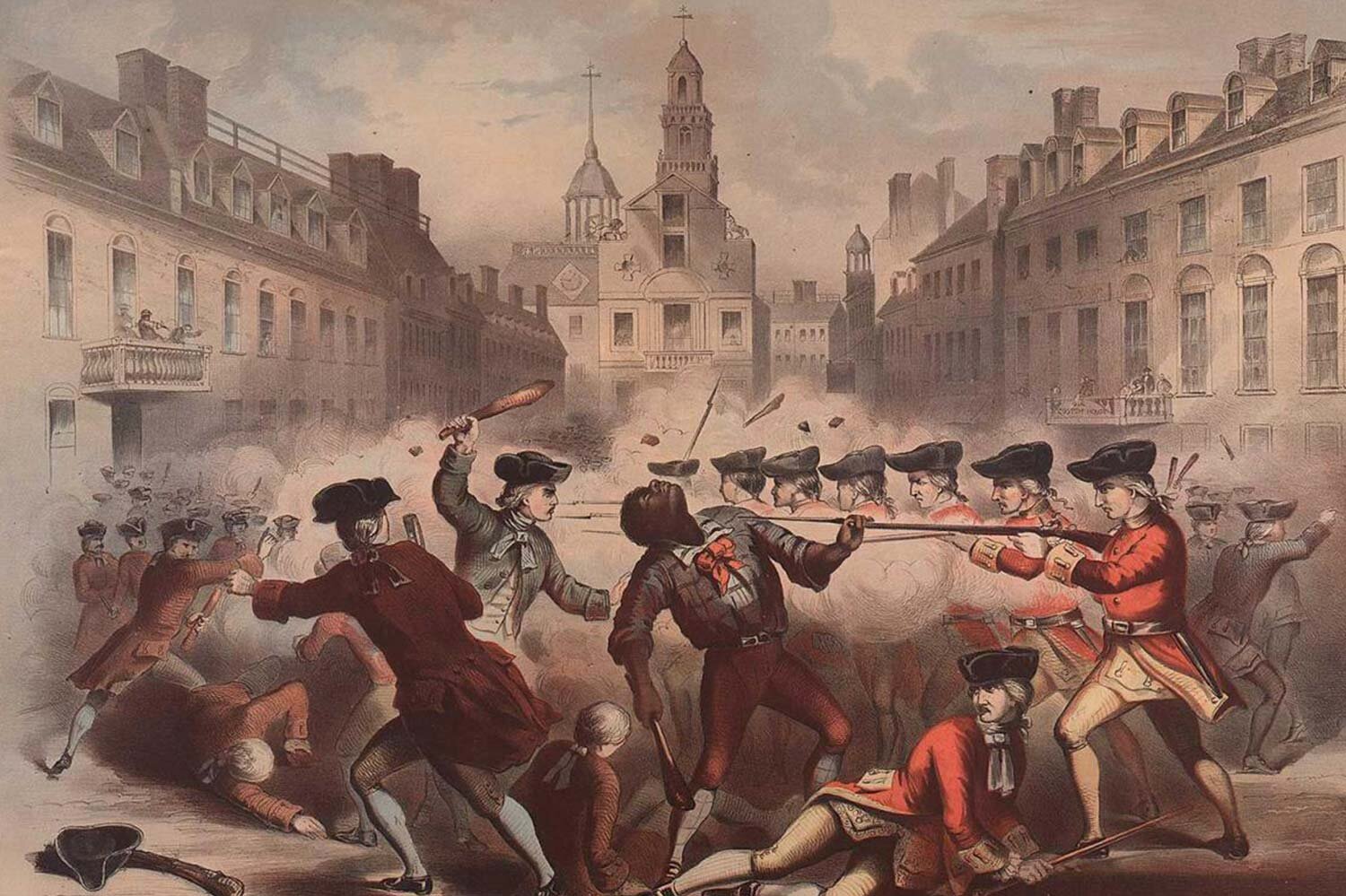
The immediate aftermath of the Boston Massacre was characterized by chaos, outrage, and swift political maneuvering. The sight of dead and wounded colonists lying on State Street sent shockwaves through the community. Church bells rang throughout Boston, summoning citizens to the scene. The public reaction was immediate and intense, shaping the narrative surrounding the event for decades to come. Patriot leaders quickly seized upon the incident, casting it as a brutal act of tyranny by the British military against unarmed civilians.

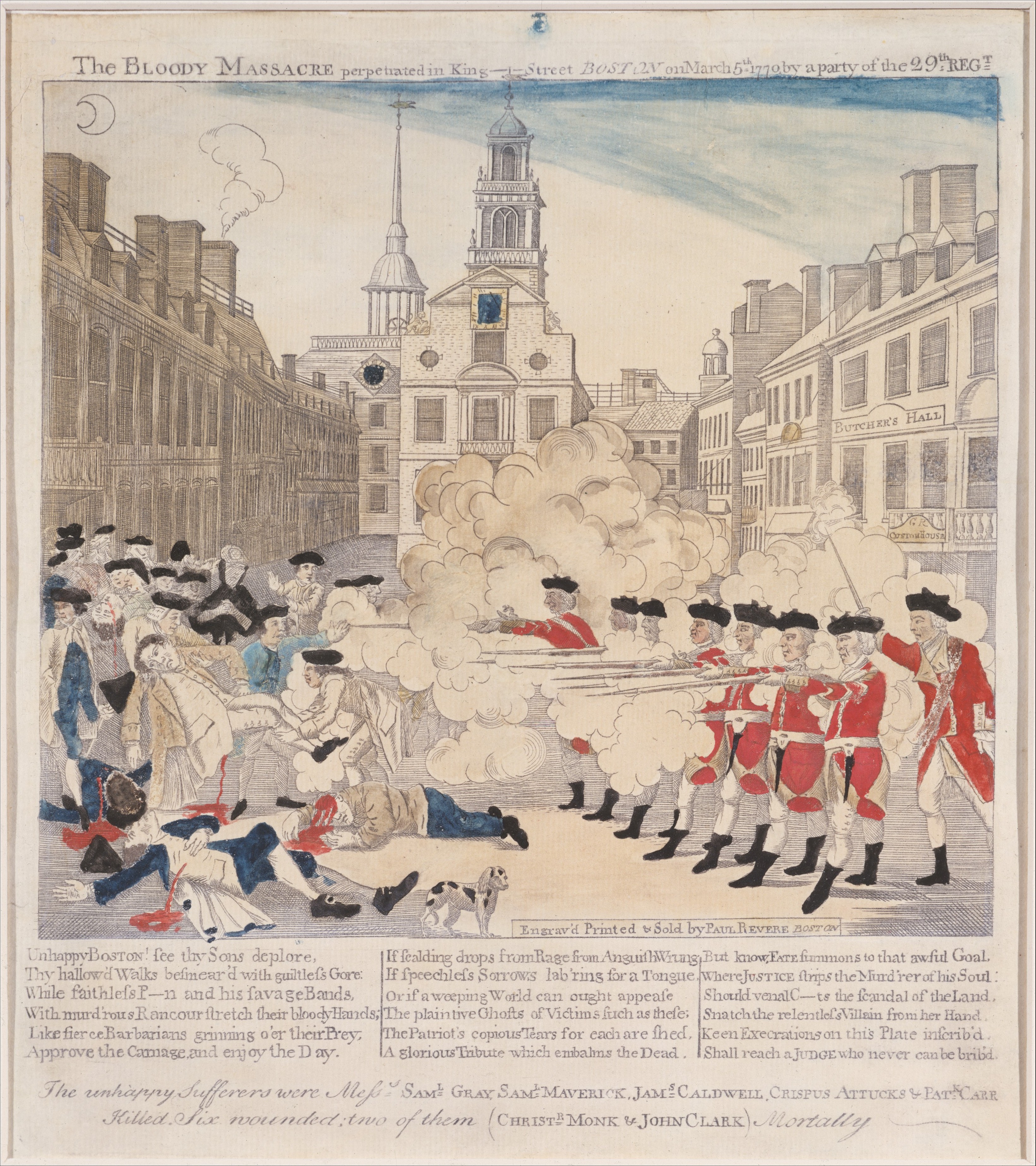
One of the most potent tools in shaping public opinion was the famous engraving by Paul Revere, titled “The Bloody Massacre in King Street Boston on March 5th 1770.” This widely circulated image, though propagandistic and not entirely accurate in its depiction, dramatically portrayed British soldiers firing a volleys into a defenseless crowd, solidifying the image of the massacre in the colonial mind. It depicted the soldiers as ruthless aggressors and the colonists as innocent victims, further inflaming anti-British sentiment. The bodies of the five deceased were honored with a public funeral, attracting thousands of mourners, transforming their deaths into a powerful symbol of colonial grievance and resistance. The event prompted the temporary removal of British troops from Boston, a testament to the immediate political pressure generated by the casualties.
The Trial and Its Legacy: Justice at the Scene of the Crime
In the wake of the Boston Massacre, the legal proceedings that followed became a landmark in their own right, demonstrating the complexities of justice even amidst intense political fervor. Captain Thomas Preston and his eight soldiers were arrested and charged with murder. What transpired next was a series of trials that would test the integrity of the colonial legal system and, perhaps surprisingly, showcase a commitment to due process that transcended partisan lines. The defense of the British soldiers was taken up by prominent colonial lawyers, notably John Adams and Josiah Quincy II. Adams, a staunch Patriot, famously accepted the case, arguing that every man, even a British soldier accused of killing colonists, deserved a fair trial. His decision was controversial but vital for establishing the rule of law.
The trials, held in Boston, were closely watched. Testimony was heard from numerous witnesses, attempting to piece together the chaotic sequence of events on State Street. The defense argued that the soldiers had been provoked by an unruly mob pelting them with snowballs, ice, and sticks, and that they had fired in self-defense. After lengthy deliberations, the verdicts were handed down. Captain Thomas Preston and six of the soldiers were acquitted, as there was reasonable doubt about who gave the order to fire. Two soldiers, Hugh Montgomery and Matthew Kilroy, were found guilty of manslaughter rather than murder. Their punishment was branding on the thumb, a relatively lenient sentence given the gravity of the accusations. These trials, unfolding in the very city where the massacre occurred, reinforced the idea of legal fairness even in the face of deep-seated animosity, becoming a fascinating chapter in the broader narrative of American justice.
Remembering the Fallen: Memorials and Commemoration
The memory of the five men who died, and the others who were injured, has been meticulously preserved through various memorials and commemorative efforts across Boston. These sites serve as enduring landmarks, ensuring that the human cost of the Boston Massacre is never forgotten. The victims, Crispus Attucks, James Caldwell, Samuel Gray, Samuel Maverick, and Patrick Carr, are interred together in a prominent grave at the historic Granary Burying Ground, one of Boston’s oldest cemeteries. This site, a popular stop on the Freedom Trail, allows visitors to pay their respects to these early martyrs of American independence. Their shared tombstone is a poignant reminder of the collective tragedy and sacrifice that spurred the revolutionary movement.
Furthermore, a significant monument, the Boston Massacre Memorial, stands on Boston Common. Erected in 1888, this impressive obelisk features a bronze relief sculpture depicting the massacre, with Crispus Attucks prominently featured. The memorial serves as a powerful civic landmark, not only honoring the dead but also encapsulating the spirit of resistance and the quest for liberty that defined the era. These commemorative sites, along with the very spot marked by a cobblestone circle on State Street where the first shots were fired, weave a rich tapestry of remembrance. They transform Boston into an open-air museum, where the injuries and deaths of that cold March evening are continually re-contextualized for new generations, emphasizing the profound impact of individual lives on the grand sweep of history.
Visiting the Site Today: Experiencing History at the Old State House
For those seeking to truly grasp the gravity of the Boston Massacre and its casualties, a visit to the Old State House and its surroundings is indispensable. Today, the immediate area on State Street directly in front of the Old State House is marked by a circular cobblestone pattern, signifying the exact spot where the British soldiers stood and fired into the crowd. Standing within this circle, one can imagine the chaos, fear, and eventual tragedy that unfolded there. This simple yet powerful marker transforms a bustling urban intersection into a solemn historical landmark, inviting reflection on the sacrifices made for freedom.
The Old State House itself now functions as a museum operated by the Bostonian Society, offering extensive exhibits that delve into the events leading up to and immediately following the massacre. Visitors can explore period rooms, view artifacts, and read firsthand accounts that bring the history to life. The museum carefully curates displays related to the Boston Massacre, including information about the injured and deceased colonists, the trials of the soldiers, and the enduring legacy of the event. Through these exhibits, the impersonal numbers of casualties are humanized, allowing visitors to connect with the individual stories of loss and courage. Walking through the Old State House, one can almost hear the echoes of colonial debates and the cries from State Street. It is a poignant experience, making the abstract concept of historical injury profoundly tangible, and cementing the Old State House as a vital landmark for understanding American identity and the origins of its fight for independence. The journey along the Freedom Trail culminates or begins for many at this iconic site, offering a holistic view of the forces that shaped a nation.
LifeOutOfTheBox is a participant in the Amazon Services LLC Associates Program, an affiliate advertising program designed to provide a means for sites to earn advertising fees by advertising and linking to Amazon.com. Amazon, the Amazon logo, AmazonSupply, and the AmazonSupply logo are trademarks of Amazon.com, Inc. or its affiliates. As an Amazon Associate we earn affiliate commissions from qualifying purchases.