
Navigating the legal landscape of firearm ownership and carry can be complex, especially when traveling across state lines. For those planning a trip to the Golden State, understanding California’s concealed carry laws is paramount. Unlike many other states, California maintains some of the most stringent gun control regulations in the United States, which significantly impacts both residents and visitors seeking to conceal carry. This guide aims to provide essential information for travelers, ensuring compliance and peace of mind during your visit to iconic destinations like Los Angeles, San Francisco, or San Diego.
Understanding California’s Concealed Carry Laws for Travelers
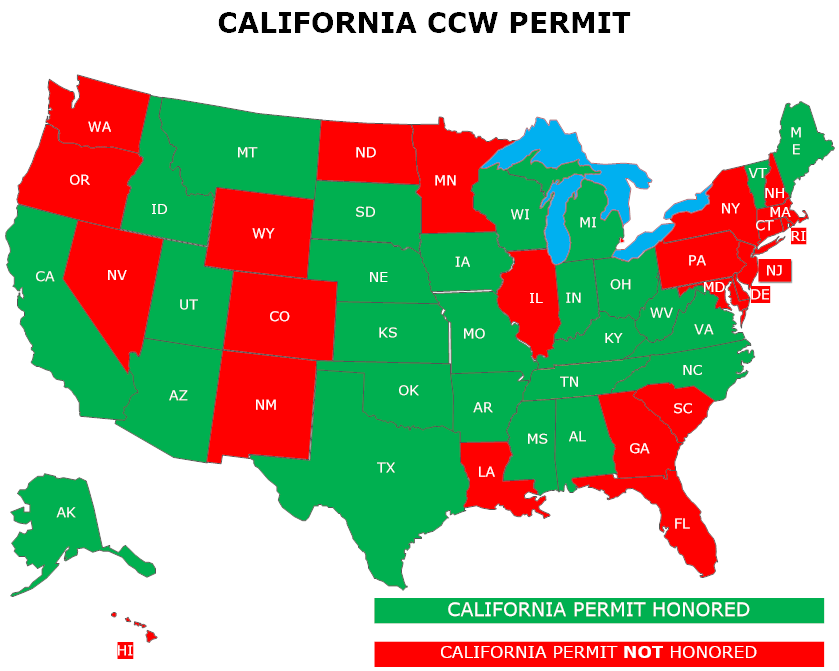
For any traveler considering concealed carry in California, the most crucial piece of information is that the state does not recognize concealed carry permits issued by any other state or jurisdiction. This means that if you hold a valid concealed carry weapon (CCW) permit from your home state, it is not valid within California’s borders. This lack of reciprocity is a fundamental aspect of California gun law that often surprises and confuses out-of-state visitors.

The Permitting Process: A State-by-State Overview
California operates as a “may-issue” state for concealed carry permits. This means that even residents must apply through their local sheriff’s department (for county residents) or police department (for city residents), and the issuance of a permit is at the discretion of the issuing authority, not an automatic right. Applicants must demonstrate “good cause,” “good moral character,” and complete a firearms training course. The interpretation of “good cause” can vary significantly from one county to another. For example, obtaining a CCW permit in rural counties might be more feasible than in highly populated urban centers like Los Angeles County or San Francisco County, where “good cause” is often very narrowly defined and difficult to prove.
For travelers, however, the resident-based permitting system largely renders applying for a California CCW permit impractical, if not impossible. The process is lengthy, requires residency, and is not designed for temporary visitors. Therefore, the default assumption for any out-of-state traveler is that they cannot legally conceal carry in California.
Reciprocity and Recognition: What Out-of-State Visitors Need to Know
As established, California does not recognize out-of-state CCW permits. This is a critical distinction for travelers accustomed to reciprocal agreements in other parts of the country. Consequently, an individual visiting California with a firearm must adhere to the state’s laws regarding the transportation and open carry of firearms, which are also highly restrictive.
Open carry, whether loaded or unloaded, of handguns is generally prohibited in most public places throughout California. There are limited exceptions, such as on private land with the owner’s permission or within designated shooting ranges. Similarly, the open carry of rifles and shotguns is also largely restricted in incorporated areas and certain unincorporated areas. For the average traveler, openly carrying a firearm is not a viable or legal option for personal protection while exploring the state’s attractions.
The implications for travelers are clear: unless you are a California resident with a valid, locally issued CCW permit, you generally cannot legally carry a loaded, unconcealed or concealed firearm in public.
Navigating Restricted Locations in the Golden State
Beyond the general prohibition on concealed carry for non-residents, California also designates numerous “sensitive places” or “gun-free zones” where firearms are strictly prohibited, regardless of whether an individual holds a CCW permit. Travelers must be acutely aware of these locations to avoid severe legal repercussions.
Sensitive Places: Where CCW is Strictly Prohibited
Even for California CCW permit holders, certain locations are off-limits for firearms. These restrictions are even more critical for travelers who, as discussed, generally cannot carry firearms in public in the first place. Common restricted areas include:
- Schools and Universities: This includes K-12 schools, colleges, and university campuses. The Gun-Free School Zones Act is a federal law, but California has its own stringent state laws regarding firearms near educational institutions.
- Government Buildings: Federal, state, and local government offices, courthouses, and legislative buildings (e.g., the State Capitol in Sacramento).
- Airports: Inside the sterile areas of airports, even unloaded firearms are prohibited unless properly cased and declared for checked baggage.
- Public Transit: On public transportation systems, including buses, trains, and subways, and within their facilities.
- Polling Places: During elections.
- Any building or portion thereof that is used for a public meeting or public deliberation.
- State and Local Parks/Recreational Areas: While specific rules can vary, many state parks, beaches, and designated recreational areas have restrictions on firearms. It is essential to check local regulations for any specific park or natural attraction you plan to visit.
- Child Care Facilities: Any licensed child care facility.
- Private Businesses: Many businesses, especially those serving alcohol or with policies against firearms, may prohibit weapons on their premises.
- Healthcare Facilities: Hospitals, clinics, and other medical facilities may have specific policies prohibiting firearms.
It is imperative for travelers to research the specific rules of any destination or attraction they plan to visit. A simple “no firearms” sign carries legal weight and must be respected. Violation of these prohibitions can lead to arrest, confiscation of the firearm, and felony charges.
Private Property Rights and Signage
While general public carry is largely prohibited for travelers, private property owners in California also have the right to restrict firearms on their premises. This means that even if a rare exception allows for open carry in a specific unincorporated area, a private business in that area can still prohibit firearms. It is common to see “no firearms” or “no weapons” signs posted at the entrances of restaurants, stores, and other establishments. These signs should always be heeded. Ignoring such signage can lead to trespassing charges, in addition to any potential firearm violations. When staying at a hotel or resort, inquire about their specific policies regarding firearms on their property, as policies can vary.
Specific Considerations for Travelers
Given California’s strict laws, travelers who wish to bring a firearm into the state for purposes such as sport shooting, hunting, or collecting must pay close attention to the rules for transportation and storage.
Transporting Firearms in Vehicles
For individuals transporting firearms through California or to a specific destination within the state (e.g., a shooting range or hunting ground), strict transportation laws apply.
- Handguns: Handguns must be transported unloaded in a locked container. The container must be fully enclosed and cannot be readily accessible from the passenger compartment of a vehicle. Acceptable locked containers include hard-sided cases, soft-sided cases with a lock, or the vehicle’s trunk. The ammunition must be stored separately, though it does not necessarily need to be in a locked container itself.
- Long Guns (Rifles and Shotguns): Long guns must also be transported unloaded. While they do not explicitly require a locked container by state law when transported in a vehicle, it is a recommended best practice for safety and to avoid any potential misinterpretation by law enforcement. Many local ordinances may impose stricter requirements.
- Concealed in Vehicles: Carrying a loaded, unconcealed or concealed firearm within a vehicle without a valid California CCW permit is generally illegal. Even an unloaded handgun must be in a locked container and inaccessible, as described above.
It’s important to remember that these are general state laws, and local jurisdictions (cities and counties) within California can and often do enact more restrictive ordinances. Always verify local regulations for your specific travel route and destination.
Air Travel and Firearms
If you are flying into or out of California with a firearm, you must adhere to federal Transportation Security Administration (TSA) regulations, as well as specific airline policies.
- Declaration: Firearms must be declared to the airline at the check-in counter.
- Unloaded and Locked: Firearms must be unloaded and encased in a hard-sided, locked container. The passenger must retain the key or combination.
- Checked Baggage Only: Firearms are only permitted in checked baggage, never in carry-on bags.
- Ammunition: Ammunition must also be securely packed in a proper container and can be placed in the same locked case as the firearm or a separate one, adhering to weight and quantity limits.
Travelers should contact their airline in advance to understand their specific firearm policies, as these can sometimes exceed TSA minimums. Upon arrival in California, remember that state laws regarding possession and transport immediately apply once you leave the airport’s sterile area.

Staying Informed: Best Practices for Visitors
Given the intricate and often counter-intuitive nature of California’s gun laws, especially for out-of-state visitors, the safest approach for travelers planning to bring a firearm is to be exceptionally well-informed and cautious.
- Assume “No Carry”: The default assumption for any out-of-state visitor should be that they cannot legally carry a loaded firearm, concealed or open, in California.
- Research Specific Destinations: Before traveling, thoroughly research the local ordinances of the cities and counties you plan to visit, as they can be more restrictive than state law.
- Consult Legal Counsel: If you have any doubts or complex circumstances, consulting with a California attorney specializing in firearm law is highly recommended.
- Prioritize Safety and Compliance: The penalties for violating California’s gun laws are severe and can include significant fines, imprisonment, and loss of firearm rights.
While the natural beauty and vibrant culture of California make it an incredibly appealing travel destination, understanding and respecting its unique legal framework regarding firearms is essential for a worry-free journey. For most travelers, leaving firearms at home is the simplest way to ensure compliance with the state’s strict regulations.
LifeOutOfTheBox is a participant in the Amazon Services LLC Associates Program, an affiliate advertising program designed to provide a means for sites to earn advertising fees by advertising and linking to Amazon.com. Amazon, the Amazon logo, AmazonSupply, and the AmazonSupply logo are trademarks of Amazon.com, Inc. or its affiliates. As an Amazon Associate we earn affiliate commissions from qualifying purchases.