
Embracing the Californian Outdoor Lifestyle
The essence of living in California is often inextricably linked to its vibrant outdoor culture. From sun-drenched patios in Southern California to verdant backyards in Northern California, residents prioritize creating harmonious and functional outdoor spaces. This pursuit shapes a distinct Californian lifestyle, one that values sustainability, aesthetic beauty, and resilience in the face of climatic challenges. As environmental awareness grows, particularly concerning water conservation, the choices made in landscaping become pivotal. Homeowners, designers, and enthusiasts are constantly seeking plants that not only thrive in the diverse Californian climate but also contribute to a low-maintenance, water-efficient, and visually appealing outdoor living area. The suitability of specific plants, like the popular Super Blue Liriope, becomes a central question in curating this sought-after lifestyle.

The Quest for Drought-Tolerant Beauty
A significant aspect of the Californian lifestyle is the conscious effort to integrate water-wise practices into daily living. This extends profoundly to landscaping, where the shift from thirsty lawns to drought-tolerant alternatives has become a necessity rather than a trend. The ideal plant for a Californian garden not only survives periods of minimal rainfall but also retains its lushness and appeal, providing continuous enjoyment without excessive resource consumption. This quest for drought-tolerant beauty drives many decisions, influencing everything from plant selection to irrigation system design. Homeowners look for species that offer year-round interest, require minimal supplemental water once established, and contribute positively to the local ecosystem. The success of a plant like Super Blue Liriope in this environment hinges on its ability to meet these demanding criteria while complementing the overarching aesthetic goals of a Californian landscape.
Designing for Serenity and Sustainability
The Californian lifestyle often emphasizes a connection to nature, even within urban settings. Designing outdoor spaces, therefore, becomes an art of balancing natural beauty with sustainable practices. Gardens are conceived as extensions of the home, places for relaxation, entertainment, and personal sanctuary. The plant palette chosen must support this vision, offering textures, colors, and forms that evoke tranquility and sophistication. Simultaneously, sustainability mandates dictate selecting plants that minimize water usage, reduce chemical inputs, and support biodiversity. This dual imperative means that every plant choice is scrutinized for its ecological footprint as much as its visual impact. The inclusion of versatile, hardy species like Super Blue Liriope in such designs speaks to a lifestyle choice that prioritizes both environmental responsibility and an aspirational sense of place.
Super Blue Liriope: A Lifestyle Plant for California?
Super Blue Liriope, often referred to as lilyturf, is a popular ornamental grass-like perennial cherished for its deep green, strap-like foliage and spikes of violet-blue flowers. Its appeal lies in its robustness, evergreen nature, and adaptability, qualities that make it a compelling candidate for the Californian landscape. However, its success is not universal and depends heavily on understanding its specific needs against the backdrop of California’s diverse microclimates. Evaluating Super Blue Liriope as a lifestyle plant involves assessing its inherent characteristics in relation to the state’s varied environmental conditions.
Understanding Liriope’s Native Habitat
Originating from East Asia, particularly China, Japan, and Korea, Liriope species thrive in woodlands and open forest settings. This natural habitat provides clues to its preferred growing conditions: dappled shade to partial sun, moist but well-draining soil, and a temperate climate. It is accustomed to seasonal rainfall patterns and moderate temperatures, exhibiting a remarkable tolerance for both heat and cold within its native range. Understanding these foundational preferences is crucial when attempting to transplant its success to a radically different climate like California, which features Mediterranean, desert, and alpine zones, often with prolonged dry seasons and intense sun exposure.
Climatic Compatibility in California
The true test for Super Blue Liriope in California lies in its compatibility with the state’s distinct climate zones. In coastal areas, such as San Diego or parts of the Bay Area, where temperatures are milder and humidity is higher, Super Blue Liriope generally performs very well, particularly in areas with some afternoon shade. It can tolerate full sun in these cooler microclimates, provided it receives adequate moisture.
Moving inland to hotter, drier regions like the Central Valley or Palm Springs, the plant’s resilience is more challenged. Here, full sun exposure can lead to scorched foliage and significant stress, requiring considerably more water to maintain its health and aesthetic appeal. In these environments, Super Blue Liriope is best relegated to shaded locations, such as under mature trees or on north-facing slopes, where it is shielded from the most intense afternoon sun. Its performance as a “drought-tolerant” plant diminishes significantly in these harsh conditions if not carefully sited and supplemented with irrigation.
Aesthetic Integration into Californian Gardens
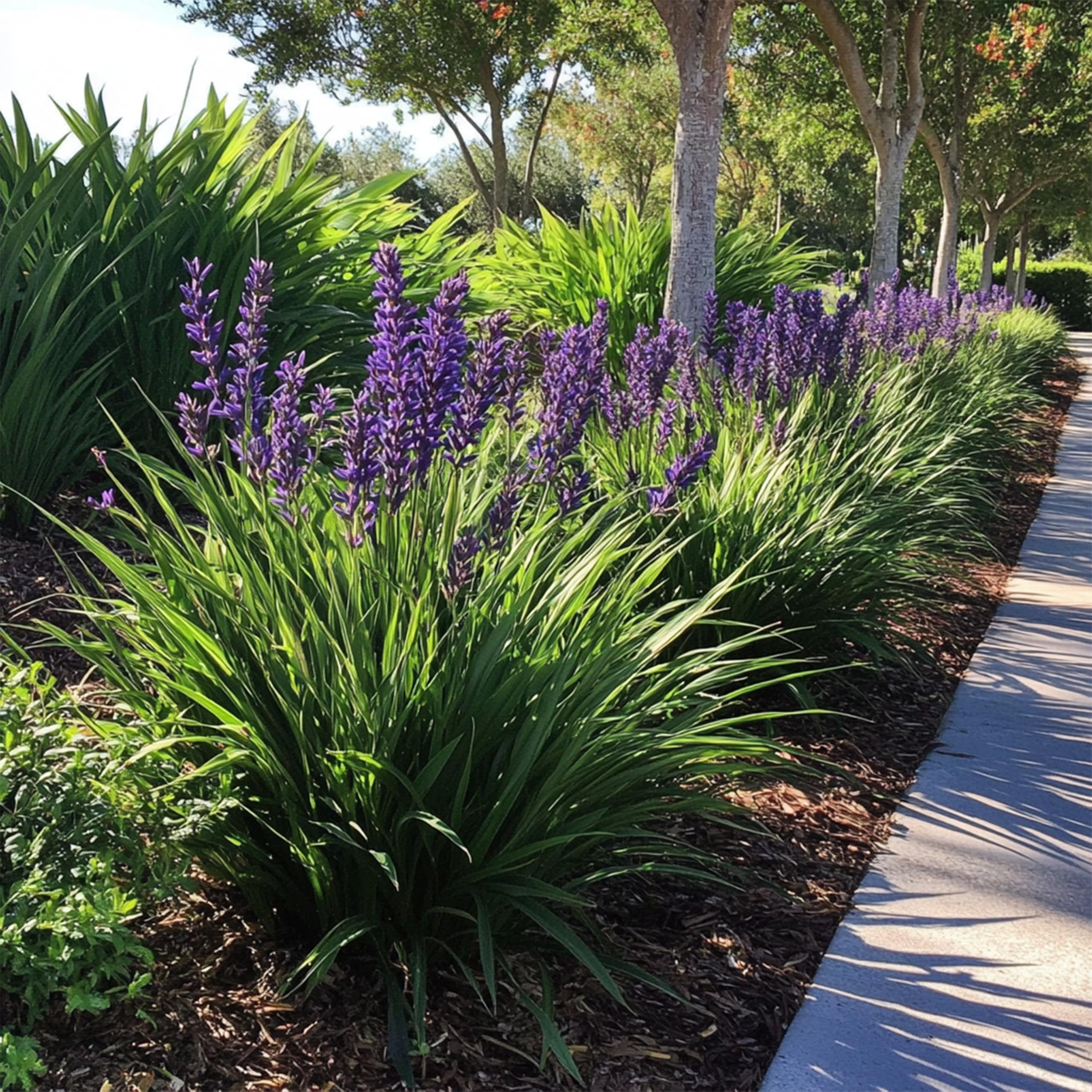
Beyond mere survival, the true measure of a plant’s success in a Californian lifestyle garden is its ability to integrate aesthetically. Super Blue Liriope’s neat, clumping habit makes it excellent for borders, mass plantings, ground cover, or as an accent plant. Its dark green foliage provides a consistent backdrop for more flamboyant bloomers, while its subtle purple flowers offer seasonal interest. In California, it harmonizes beautifully with architectural elements, modern hardscaping, and other drought-tolerant plants, enhancing the clean lines and naturalistic feel often favored in contemporary Californian landscapes. Its evergreen nature ensures year-round greenery, a desirable trait for maintaining vibrant outdoor spaces that support the indoor-outdoor living lifestyle prevalent throughout the state.
Cultivating Success: Practical Lifestyle Considerations

Successfully incorporating Super Blue Liriope into a Californian landscape, thereby supporting a desired lifestyle, requires attention to specific cultivation practices. It’s not simply about planting and forgetting; it’s about thoughtful planning and ongoing care tailored to California’s unique environmental context. These practical considerations are vital for the plant to truly thrive and contribute to a low-maintenance, water-wise garden.
Water-Wise Wisdom for Liriope
While often lauded as drought-tolerant, Super Blue Liriope’s water needs in California are nuanced. In coastal and cooler regions, once established (typically after its first year), it can indeed survive on minimal supplemental irrigation, often just once or twice a month during dry periods. However, for a truly lush appearance and robust flowering, more consistent watering may be desired, especially during prolonged dry spells.
In hotter inland areas, its “drought tolerance” is significantly reduced. Here, it will require more frequent watering, possibly once a week, to prevent leaf scorch and maintain vigor, especially if planted in sunnier locations. Drip irrigation systems are highly recommended to deliver water directly to the root zone, minimizing evaporation and maximizing efficiency – a core principle of sustainable Californian gardening. Mulching around the plants with organic material like bark chips also helps retain soil moisture, suppress weeds, and regulate soil temperature, further reducing the need for excessive watering.
Soil, Sun, and Californian Microclimates
Soil conditions are paramount. Super Blue Liriope prefers well-draining soil. California’s soils can range from heavy clays to sandy loams. Amending heavy clay soils with organic matter will improve drainage and aeration, crucial for preventing root rot. Conversely, in sandy soils, organic amendments will help improve water retention.
Sun exposure is the most critical factor influencing its performance across California’s varied microclimates. In the mild coastal strip, full sun is often tolerated. In the intense heat of inland valleys and desert regions (e.g., Palm Desert, Bakersfield), partial to full shade is essential, especially protection from the afternoon sun. Planting it in morning sun with afternoon shade or filtered light throughout the day will yield the best results. Overlooking this detail can lead to a less vibrant plant that contradicts the desired aesthetic of a healthy, thriving Californian garden.
Maintenance for a Lasting Landscape
One of the reasons Super Blue Liriope fits the low-maintenance aspect of the Californian lifestyle is its minimal care requirements. Annually, usually in late winter or early spring before new growth emerges, a quick trim to about 2-3 inches can remove old, tired foliage and encourage a fresh flush of growth. This practice maintains its tidy appearance and prevents it from looking leggy or brown. Fertilization is rarely needed, particularly if the soil has been amended with organic matter; an annual light application of a balanced slow-release fertilizer is usually more than sufficient if growth appears sluggish. Pests and diseases are generally not a major concern, further reducing the effort required to maintain a beautiful landscape.
Beyond the Basics: Liriope’s Role in Diverse Californian Lifestyles
Super Blue Liriope’s adaptability extends beyond climate tolerance, making it a versatile choice for a spectrum of Californian lifestyles, from compact urban living to sprawling estates and even broader community initiatives. Its ease of care and aesthetic flexibility align with various desires for outdoor spaces.
Urban Oases and Compact Living
For those embracing an urban Californian lifestyle in cities like San Francisco or Los Angeles, where space is at a premium, Super Blue Liriope offers an excellent solution. Its contained growth habit makes it ideal for small garden beds, container plantings on balconies, or narrow pathways where it can provide consistent greenery without encroaching on limited space. It can soften hard urban lines, add a touch of nature to minimalist designs, and create tranquil zones in bustling environments, proving that even small spaces can embody the serene Californian lifestyle.
Expansive Estates and Resort-Style Gardens
On the other end of the spectrum, Super Blue Liriope is equally at home in the expansive landscapes of Californian estates or resort-style gardens, such as those found in Santa Barbara or Napa Valley. Here, its ability to be mass-planted creates lush, undulating ground covers, defining borders, or forming elegant transitions between different garden rooms. It can be used to great effect around swimming pools, complementing the structured hardscaping, or beneath specimen trees, adding texture and interest to large understory areas. Its uniform appearance and low maintenance contribute to the sophisticated, polished look often desired in high-end Californian properties, allowing residents to enjoy a luxurious outdoor lifestyle without significant gardening burdens.
Sustainable Community Initiatives
Beyond individual homeowners, Super Blue Liriope also plays a role in broader sustainable community initiatives across California. Its resilience and drought-tolerant characteristics make it a viable option for public parks, streetscapes, and commercial developments aiming to reduce water consumption and maintenance costs. By integrating such plants into public spaces, communities promote a lifestyle of environmental stewardship and resource conservation, setting an example for residents and visitors alike. Its widespread use in these contexts reinforces the plant’s suitability and contributes to a collective Californian aesthetic that prioritizes both beauty and ecological responsibility.
In conclusion, Super Blue Liriope can indeed do well in California, provided that specific environmental factors are carefully considered and managed. It is a plant that supports the Californian lifestyle by offering aesthetic appeal, moderate drought tolerance, and ease of maintenance, fitting seamlessly into both private gardens and public landscapes across the diverse Golden State.
LifeOutOfTheBox is a participant in the Amazon Services LLC Associates Program, an affiliate advertising program designed to provide a means for sites to earn advertising fees by advertising and linking to Amazon.com. Amazon, the Amazon logo, AmazonSupply, and the AmazonSupply logo are trademarks of Amazon.com, Inc. or its affiliates. As an Amazon Associate we earn affiliate commissions from qualifying purchases.